Spectator Life

Spectator Life

An intelligent mix of culture, style, travel, food and property, as well as where to go and what to see.

The invasion of the vineyard robots

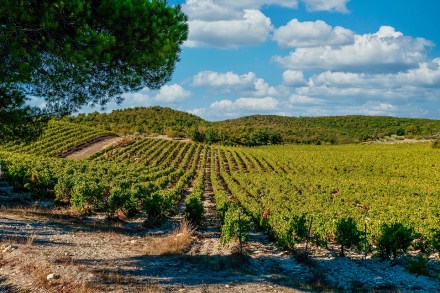
‘Autonomous machine operating here,’ says the sign. ‘Stay away.’ And instead of the chatter of the vendangeuses, there’s the hum of a robot. Welcome to southern France, 2024, just down the lane from my house, where, walking the dogs among the vines, I stumble upon Ted, a compact, green and white, battery-powered cultivator, guided by GPS satellites. Ted is not dissimilar in principle to a robot lawnmower or vacuum, but is the size of a family car. The French ban on chemicals has created a vast amount of work for growers He is toiling away, straddling the vines and chopping up the mauvaise herbes. He is neither cute nor friendly or even that smart, though he will stop dead in his tracks if he encounters a human obstacle.

I’m a rosé convert

Paris is more than a city. It is a state of mind, an aspiration. Though it glorifies the military, it remains feminine and beguiling. Its heroes moved effortlessly from triumphs on the battlefield to triumphs in the boudoir. The very stones of Paris seem redolent of the dreams and ecstasies of past lovers, and of their frustrations, follies and pains. Heloise and Abelard loved and suffered here. We had come to perform two simple tasks: sitting in judgment over wine and food In many respects, alas, contemporary Paris has fallen a long way from romance. Everyone has stories of rubbish, dirt and rats. The days when bon chic, bon genre set the tone for the Grands Boulevards are long gone. Today, the scruffiness is enhanced by McDonald’s and Starbucks. The very crimes lack grandeur.

French cheese is dying. Good riddance

Every Thursday morning at Washington Dulles Airport, a French government Airbus disgorges a metal freight container under diplomatic seal. Bypassing US customs inspection, it is transported directly to the French Embassy compound in Georgetown. At midday, elite French diplomats gather to watch as the precious content is unsealed. Spain thrashed France at the 2023 World Cheese Awards Along with the diplomatic papers, direct from the Quai d’Orsay, cheese is delivered weekly for French officials in the United States capital, a country where unpasteurised cheese is cruelly banned. Embassy staff put in their orders a week in advance and get delivered individual baskets of Comte, Reblochon and the soft, smoky goat’s cheese of Sainte-Maure de Touraine.

Britain’s Italian restaurants are rubbish

You are in an Italian restaurant when a waiter appears brandishing a giant pepper grinder. The spaghetti carbonara is made with cream and garnished with a sprig of parsley. You suddenly realise that you are not, after all, in the Tuscan hills, but somewhere in the UK. An Italian restaurant in London will serve you a cappuccino after dinner Is it possible for Italian restaurants in the UK to be authentic? Some of the Greek restaurants in London I’ve eaten in are so much the real deal that I have managed to forget I’m not in Athens. Similarly, some of the Spanish restaurants – such as those on Portobello Road – are indistinguishable from those in Spain, except for the weather and the smoking.

Rishi, please just have a snack

‘Nothing tastes as good as skinny feels,’ was an offhand comment made by Kate Moss 15 years ago, one that she is yet to live down and has had to repeatedly apologise for since. Ms Moss might not be Prime Minister Rishi Sunak’s obvious role model, but the recent proclamation that he fasts for 36 consecutive hours is certainly more Vogue than Downing Street. Fasting is good for the waist line but it also makes people irritable, erratic, and error prone The Prime Minister has revealed that he doesn’t eat from Sunday afternoon until Tuesday morning. He is an intermittent faster, in other words, and intermittent fasting is a fad that has risen in popularity in recent years.

The miracle of limoncello

Consider the paradox of lemons. In Italy, one associates them with scented groves. A few years ago, Helena Attlee wrote the book The Land Where Lemons Grow, in which citrus fruits become a golden thread running through the history of Italian agriculture. Yet though the lemon is arguably the most beautiful of fruits, its tart taste is bracing. A spremuta di limone finds a swift route to any shaving nicks. Most limoncello is produced on the Amalfi coast but there is an outlier from Godalming But the lemon can be sweetened, in the form of limoncello, an after-dinner drink of no great subtlety, good for pouring over puddings but hardly a match for the fortified wines of the Iberian peninsula. That said, there is an exception.

With Edward Stourton

25 min listen

Edward Stourton is a broadcaster who has worked as foreign correspondent for the BBC, Channel 4 and ITN. He is the presenter of BBC Radio 4's Sunday Program, and presented the Today Program for ten years. He has authored eight books including his most recent, Sunday: A History of Religious Affairs through 50 Years of Conversations and Controversies which is available now.  On the podcast, he recalls chocolate-stuffed baguettes on Swiss ski slopes, reveals the disappointing breakfast options in the Today Program green room, and explains why heaven is eating oysters to the sound of trumpets.

‘I pity MPs more than ever’: the Cinnamon Club, reviewed

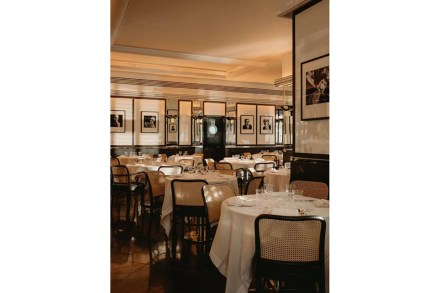
The Cinnamon Club appears on lists of MPs favourite restaurants: if they can still eat this late into a parliament. It lives in the old Westminster Library on Great Smith Street, a curiously bloodless part of London, and an irresistible metaphor wherever you are. When once you ate knowledge, you now eat flesh, but only if you can afford it. Now there is the Charing Cross Library, which lives next to the Garrick Theatre, and looks curiously oppressed. Perhaps soon it will be a falafel shack and knows it. There is also the Central Reference Library, which could be a KFC, and soon will be. Public spaces are shrinking. They will all be online soon, and we will see how that goes. (It will be bad.) The Cinnamon Club, which identifies as ‘fine dining’, seeks finesse. What for?

On the hunt for wild haggis

The haggis: Scotland’s most elusive wild animal, one that can jump six feet in the air and goes straight for the throat, according to the hunters that track the bat-faced, Peter Stringfellow-haired beasts ahead of Burns night. ‘Is that a haggis!?’ I screech at my guide. ‘No, that’s a dog,’ he says, adding that this is going to be a long walk. A year into my Scottish residency and having had an extremely unsuccessful Burns night in Glasgow during my first month here (a date with a Scot more interested in watching himself on YouTube than finding me any kind of haggis supper) I’ve decided to come straight to the source this year and catch my own. Or try to – because it’s no mean feat.   ‘Is that a haggis!?’ I shout, seeing a black animal in the distance.

This wine writer needed a detox

I’m just back from a week in Austria and feel on top of the world. Well, if not at the actual summit, maybe about two thirds up. After a lousy year made worse by a Covid Christmas, I was deep in Gloomstown, eating like a pig and drinking like a fish. At almost 64, I was a stone and half overweight and drowning in booze, clocking up an alarming 120 units during one festive week. I’ve never felt so sluggish nor so miserable. Something had to be done.

I’m raising a glass to the Tory party’s future

Wine stimulates the wits, emboldens debate, and inspires the mind. Judicious quantities, abetted by judicious quality, encourage the participants to attack the important questions. Thus it has been over the past few days, discussing God and the Universe. I was talking to an astronomer, whose day is spent contemplating the vastness of interstellar space. Consider one single light year, and how far that would take us from our own celestial neighbourhood. Then let your mind give way before the unimaginable distances. Already daunted, move onwards to the queen of the sciences, theology, and the question posed by that outstanding 20th-century theologian, Mr Prendergast in Decline and Fall. He could not explain why God had bothered to make the world.

With Alexandra Collier

24 min listen

Alexandra Collier is a Melbourne-based writer who has written for theatre, screen and print. She is a MacDowell fellow and a recipient of the RE Ross Trust playwrites' award. Her memoir Inconceivable, about her journey to becoming a solo Mum by choice, is out now.  On the podcast she tells Lara and Liv why restaurants are inherently theatrical places, discusses her experience with IVF, and explains that it takes a village to raise a child.  Photo credit: Karin Locke.

‘The lasagne is perfect’: Hotel La Calcina, Venice, reviewed

Pensione La Calcina is one of John Ruskin’s houses in Venice. He stayed here in 1877, after completing The Stones of Venice and going mad, and there is a plaque for him on the wall: a stone of his own. It is next to the Swiss consulate on the Zattere, but never mind them. I think the Zattere is for people who have tired of Venice. It has a view to the Giudeccacanal, and the waterbus to the airport: to the exit. You can breathe here. I am staying in San Marco, where I can’t. My son falls from a water gate into a canal, and Italian grandmothers tut at us, and we get sick, which my friend says is ‘very chic in Venice’. Before we get sick, we eat at La Calcina.

In search of the perfect chocolate cake

What Victoria is to a jam sponge, so is Sacher to chocolate cake. It’s a man, a hotel and a cake and, indeed, shorthand for a city. The lines of people outside the Sacher Hotel café in Vienna for chocolate cake with whipped cream on the side are looking for a Viennese experience, like schnitzel, Strauss waltzes or pictures by Klimt. Sacher cake is something you find everywhere, but this one is grounded in a particular place, the Café Sacher. The 360,000 Sacher tortes of varying sizes that are made yearly in its manufactory and dispatched in classy wooden boxes are the exemplars of a formula that has taken over the world. It’s not every hotel where you get chocolate cake for breakfast The cake predates the hotel.

My adventures in rosé

During the festive season, I usually spend far too much time thinking and talking about politics. But the latest was an exception. One hostess fixed me with a gimlet eye and announced that she had forbidden any discussion of Israel/Palestine. At a recent dinner party, the table had been repeatedly banged, someone had stormed out and others were now on non-speaks. I quoted the late Clarissa Eden. During the Suez crisis, she felt that the Canal was running through her drawing-room. This girl gave a hearty nod in agreement. I was happy to agree with the ban, but declared my surprise. How could anyone be so sure of the solution? The most I could come up with was ruminative gloom.

Could a 100-bottle limit help me cut down on drinking?

My New Year’s resolution is to cut down on my drinking. I’m not talking about bringing it within the NHS’s recommended limit, obviously. I’ve never met anyone who confines their alcohol intake to 14 units a week, which amounts to a bottle and a half of wine, ideally spread over many days. I’m thinking of something more in the region of two bottles a week. Why not simply stop altogether? Partly because I’ve tried that before and don’t have the willpower. The longest stretch I’ve gone without a drink was in the two years leading up to my marriage in 2001, because I didn’t think Caroline would go through with it if I didn’t take the pledge.

Farming is fighting its own culture wars

I have come late to farming. There was no epiphany, no eureka moment watching Clarkson’s Farm. The blame lies partly with my neighbour, who’s my running partner and a fellow Pony Club Dad. He’s an agronomist and would enliven our jogs along country lanes with talk of crop rotations. In the end, that other form of muck-raking – journalism – provided the shove I needed. After 24 years at Sky TV, I joined the first presenter line-up (of many) at GB News. I went in the hope of a fresh start at an exciting new channel, only to be thrown out of it when my ratings failed to pass muster. So, at 55, I am a student again. Or, as those who find themselves at the Royal Agricultural University in Cirencester prefer, an ‘agri’ at ‘siren’.

With Philip Hensher

31 min listen

Philip Hensher is a novelist and regular contributor to The Spectator’s books pages. His books cover a variety of subjects and often deal with important historical change, such as the fall of the Berlin wall and the war in Afghanistan. His most recent novel is To Battersea Park.  On the podcast, he discusses how he developed an affection for offal as a small child, the secret to an ‘austerely perfect’ carbonara, and why food is a such a great character device for novelists.

How to survive the post-Christmas slump

Elizabeth David was a cookery writer who led the British palate away from the grim days of stodgy, post-war rationing towards the adoption of a fresher, more Mediterranean diet. But she saved the most resonant advice of her six decade writing career for an observation on how to survive a typical British Christmas. Describing the festive period here as The Great Too Much that has also become The Great Too Long, David wrote: A ten-day shut-down, no less, is now normal at Christmas. On at least one day during The Great Too Long stretch, I stay in bed, making myself lunch on a tray. Smoked salmon, home-made bread, butter, lovely cold white Alsace Wine. A glorious way to celebrate Christmas.

The Elizabethan grandeur of Middle Temple Hall

It’s the most beautiful restaurant in London – and the oldest. Built in 1573, Middle Temple Hall is celebrating its 450th anniversary. It’s also where Shakespeare held the premiere of his Christmas play, Twelfth Night, in 1602. How strange that hardly anyone knows about the best Elizabethan hall in London. It’s mostly used by barristers but the public can eat there too, as long as you book ahead.  I looked up to high table to see a purple-faced bencher, glaring down at me The food is lovely, substantial, marvellously unponcey fare and fantastically good value for such a staggering spot – on the western edge of the City, on the banks of the Thames. When I was there this month, I had cream of mushroom and tarragon soup (£4.

Raise a glass to the age-old charm of port

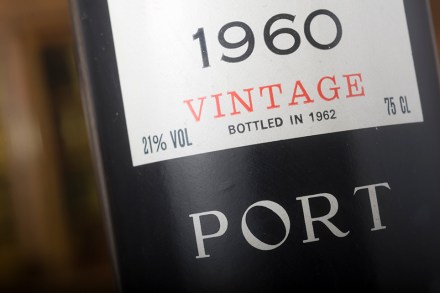
When Christmas comes, there are few guilt-free pleasures that match the sheer wonder of port (aside from re-watching Dr Strangelove in the wee hours on BBC2). Sweeter than a mince pie and more intoxicating than a pre-Christmas visit to your GP’s waiting room, a glass of port is guaranteed to lift your spirits. And by the time you’re onto your third, if you’re lucky, you should feel so elevated that either you’re on cloud nine or fast approaching it. It’s like the 18th century in a bottle – but the good parts of it, not the pox, the rotting teeth or gangrene That’s the joy of port. For more than 300 years, Britons have been devotees of this very special outpouring of Portugal’s Douro Valley.

With Michel Roux Jr

29 min listen

Michel Roux Jr. is an English-French chef and is the chef patron of Le Gavroche, the first restaurant in the UK to received one, two and then three Michelin stars. Earlier this year it was announced that Le Gavroche will close its doors in January.  On the podcast, he recalls how his father would hand churn vanilla ice cream, reveals his fondness for both traditional French custard and English packet custard, and tells Liv and Lara why Le Gavroche is closing.

Give sherry a chance

My grannie, a proud working-class woman, had a fake crystal decanter on display in a glass cabinet, filled with weak tea. We all assumed it was sherry, and she didn’t disabuse us. I discovered the truth when I opened the lock with a hairgrip and took a swift glug. My face must have been a picture. Grannie worked in service, cleaning the house of a well-to-do family on the other side of the tracks. I reckon they had a proper decanter filled with the real McCoy, and she would have had the odd swig of it to help her get through scrubbing the fire grates. My relationship with sherry had a terrible beginning.

‘The chocolate soufflé is too good for people’: Pavyllon at the Four Seasons Hotel, reviewed

One in, one out, as Rick says in Casablanca. Le Gavroche, which was the first restaurant in Britain to win three Michelin stars – and this was before Michelin stars indicated poor mental health in gifted chefs – closes in January, which is serious news in the land of London restaurants: a kind of Congress of Vienna with Michel Roux bowing out with the blood of infinite chickens on his knife. I don’t love Le Gavroche the way other critics do but I admire it, even if it means ‘urchin’, which is not witty when you consider its prices. There was a scandal involving staff’s tips going to management – an ongoing obscenity, though this one was resolved – and I also think that if you desire French food you could just go to France. It’s not far, at least in miles.

Let’s hope for good cheer this Christmas

A couple of years ago, I saw a charming cartoon. A boy and a girl aged about seven were in an earnest conversation. ‘Of course I don’t believe in Father Christmas,’ said the boy. ‘But we’ve got to keep up the pretence for the sake of the parents.’ This Christmas, all over the world, many parents will be especially keen to dwell on the great festival’s innocent joys. Innocence: in many places the fear is that the glory of birth will give way to the massacre of the innocents. Like the shepherds, a large number of people are sore afraid. Unlike the shepherds, their fear has no relief at hand from the Heavenly Host. A lot of friends have been converging on London, not all of them with glad tidings.

Ozempic has cured my alcoholism

Remember the lockdowns? I wish I didn’t, but I do. Especially that insanely grim third lockdown, the winter one, which went on and on and on and which bottomed out, for me, as I did my one allotted weekly walk along the Richmond riverside, in freezing horizontal drizzle. I made sure I had a thermos cup of mulled wine in my hand as I debated with my one permitted friend whether we were legally allowed to sit on a bench together. In the end, we decided best not and trudged further into the sleet. They may give you an extra chance of thyroid cancer – or not (though for me the much more proximate likelihood of liver failure makes that fairly irrelevant) I’ve learned many things from lockdowns, one of them is: that I am never locking down again.

How the English invented champagne

Is champagne a wine region or a state of mind? The small bubbles have a way of getting into the bloodstream and the imagination, creating a slightly euphoric sensation which encourages pleasant chatter. But who put the sparkling genie in the bottle? Who pioneered the intricate process of secondary fermentation in a bottle strong enough to withstand six atmospheres of pressure and contains all those wonderful bubbles of CO2, about 20 million per bottle?  In France, it is claimed that it was Dom Perignon (1638-1715), ‘Come quickly. I am tasting the stars,’ he is supposed to have said. Very romantic, a convenient sales pitch. The only problem is that the story is cobblers. Even eminent French wine historians now agree that there is no written evidence for it.

Six English sparklers to enjoy this Christmas

Before I started researching my book Vines in a Cold Climate, I had a particular image of English sparkling wine as consistent but rarely that exciting. It was all a bit formulaic, like big brand champagne but leaner. I am pleased to say that I could not have been more wrong as the wines now made all over southern England are incredibly diverse, offering a wide array of styles for every palate. If you’re spending between £25 and £50 then England actually offers, on the whole, much more interesting wines than Champagne. Here are six wines that show how different English sparkling wines can be. Westwell Wicken Foy NV (Westwell £27.50) I’m a big fan of Westwell not least because it’s one of the nearest vineyards to me.

It’s time to ditch the Christmas turkey

This year A Christmas Carol is 180 years old, first published in December 1843. It had sold out by Christmas Eve. And it has a lot to answer for, not simply ­­because it ultimately spawned Kelsey Grammer’s Christmas Carol musical, but because it is credited with having popularised the idea of turkey as a festive staple. As you’ll recall, turkey is what Scrooge has sent to his clerk Bob Cratchit once he’s had his Damascene moment – and the idea took off. Within a few short years (1861 in fact), Mrs Beeton had declared that ‘a Christmas dinner, with the middle classes of this empire, would scarcely be a Christmas dinner without its turkey.