Spectator Life

Spectator Life

An intelligent mix of culture, style, travel, food and property, as well as where to go and what to see.

Port is fashionable once again

I once drank some excellent port at Ted Heath’s table. The invitation came as a surprise, but it almost certainly had nothing to do with the monstre (un)sacré. The dinner took place during a Bournemouth party conference at the Close in Salisbury. Ted had an unofficial PPS, a then Tory MP called Robert Hughes. Rob had a sense of fun and mischief. There would have been little scope for either while he was enduring the sullen maunderings of the Incredible Sulk. Anyway, he was given a chance to amuse himself when asked to organise a dinner party. He included me. The young are being encouraged to drink port and even mix it – a criminal offence This would not have been Ted’s choice. I had never been polite about him in print, nor to him in person. But he was at one disadvantage.

Just say no to sourdough

One Sunday morning, in an upmarket bakery packed to the hilt with women clutching yoga mats and men proudly carrying papoose-swaddled babies, I glanced around in search of a fresh loaf to serve for lunch. I saw the myriad of shapes, sizes, colours and textures of the loaves on display, and then noticed something. All but one, a seeded rye, were variations on the dreaded sourdough. When it was my turn to be served, I asked ‘Is there anything in the shop except for damned sourdough?’ Judging by the disgusted looks that came my way, I might as well have been asking whether anyone fancied kicking a few homeless people for a laugh.

In praise of white trash cooking

I’m a born and bred Minnesotan, a state settled by Norwegians, Swedes and Germans and a spattering of Finns, Poles and Russians. They recognised their homeland in the frigid winter tundra and bountiful farmland and their hearty culinary traditions prevailed just as the homesteaders did. Up until a few decades ago, before organised religion took a real hit, the local Lutheran church basement was where families and friends congregated to share coffee, sweet baked goods and savory bites. And as renowned as the silver-haired grandmothers who ran the church’s Women’s Auxiliary were the massive amounts of strange delicacies they produced for expectant crowds. Lefse was generally reserved for special occasions.

‘Thinks of the diner, not the chef’: Claridge’s Restaurant, reviewed

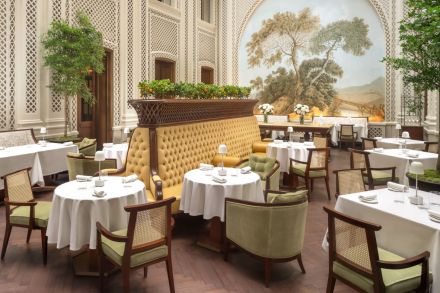
The BBC made a very odd documentary about the renovation of Claridge’s: The Mayfair Hotel Megabuild. They filmed, agog, as the hotel grew eight new storeys – three above, and five below – between 2014 and 2021 while staying open: guests slept and ate, unaware of ‘Narnia doors’ to the building site. (That Narnia is where guests aren’t indicates what Claridge’s employees cannot put into words without spontaneously combusting.) Labourers dug the basement by hand and impersonated the Artful Dodger when management toured. The BBC described the new penthouse at length without mentioning that it is gross, with a grand piano in a glass box on a terrace like a Richard Clayderman-themed nightmare. A roof was assembled off-site and stuck on as for a doll’s house.

Pavlova: the crumble of summer

Whenever I tell someone that I’m making a pavlova the response is the same: sheer joy. Even the most fervent pudding-denier struggles to resist a slice of pav. It makes sense – fragile, crisp meringue with a tender, mallowy centre, soft waves of cream and some kind of fruit is such a brilliant combination. You can turn whatever you have to hand into a glorious, celebratory pav You don’t often see pavlovas on restaurant menus. There’s a good reason for that. A little like a trifle, part of the joy of a pavlova is that it arrives at the table looking unruffled: fruit perched perkily on clouds of cream atop a mountain of meringue. Then, as soon as the spoon hits it, it’s a mess.

The real problem with Thomas Straker

Thomas Straker became famous for his TikTok recipes, although he doesn’t like it when people point that out. He protests that he’s a serious cook – he has worked at Elystan Street, Dinner by Heston Blumenthal and The Dorchester – but most people know him as the butter guy. It’s hard to avoid that label when his flavoured butter recipes have led to a following of 2.1 million people. His TikToks are perfectly constructed using schizophrenic jump cuts and ASMR narration and he likes to make viewers salivate over his Bloody Mary butter, Biscoff butter, tequila butter, and bone marrow butter. Here’s him doing something indecent with chicken skin:  https://www.youtube.com/watch?

Save our takeaways!

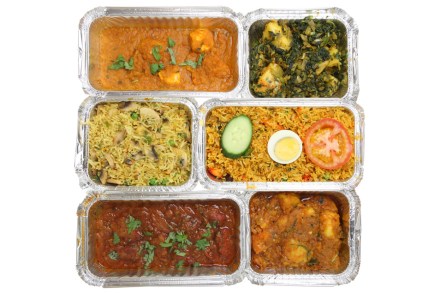
Rishi Sunak’s strategy for solving Britain’s crippling housing shortage has been revealed: converting redundant takeaway restaurants into homes. It was a strange role reversal for Sunak, so recently cast as the potential saviour of many of these outlets during his Rishi’s dishes period. Yet fast forward three years and here he is as Prime Minister announcing – not just the demise of many of these places – but their apparent imminent demolition in favour of a million new homes. Mains were made fresh to order, the fiddly sides like spring rolls and prawn toast all assembled painstakingly by hand The conversation of old takeaways was, significantly, the headline detail that was singled out in pre-announcement media briefings.

Come off it, English wine is delicious

I hate to pick a fight with a fellow Speccie scribe but, as this august organ’s drinks editor, I must take issue with Dr Andrew Cunningham and his recent dismissal of English wine. Andrew lives in West Sussex and I live in East Sussex. He explains that he’s near Nyetimber, Nutbourne and Kinsbrook (not to mention Ambriel, Roebuck and Tinwood); I’m near Breaky Bottom, Court Garden and Ridgeview (not to mention Artelium, Black Dog Hill and Bolney). There’s no question that we both live in bona fide wine regions.  I don’t drink English wine because it’s English, I drink it because I love it There are 950 vineyards in the UK and over 200 wineries, from Kent to Cornwall and from Devon to Denbighshire. There are a dozen alone in Yorkshire.

The beauty of a serious Burgundy

It was the English summer at its most perverse. We were drinking Pimm’s while hoping against hope for better news from Old Trafford. As the clock ticked and the rain was unrelenting, one of our number emitted a groan which seemed to start from his boot soles. ‘Why can’t there be a bit of global warming in Manchester?’ The girls were growing restive. ‘I can just about put up with you lot discussing cricket, but not if it’s an excuse to talk about the weather’ was one eloquent complaint. A fair comment, so we changed the subject, while keeping a surreptitious weather eye on Manchester. All unavailing. The caravan of tension now moves on to the Oval. How much more can the human nervous system endure?

How to increase your home’s value – with a sandwich

It is a tenet of neo-liberal economics that there is no such thing as a free lunch. This is obvious baloney. There are free lunches everywhere. The problem is that those free lunches are no longer served to people doing useful work. They are instead handed out to the owners of a few favoured asset classes through untaxed gains. We have created far more tax breaks for rent-seeking than for productive work… and then we wonder why Britain has a productivity crisis. Under a future Sutherland regime, there would be no tax paid on beer drunk in a pub I must admit I enjoy a few free lunches myself – literally.

Admit it, English wine isn’t worth it

Sales of English wine are booming, soaring by nearly 70 per cent over the least two years, at least according to the industry body. There are now shelves devoted to English wine in just about every large supermarket.   I even tried a red wine by a local producer, who had better remain nameless. It tasted like a cross between cough medicine and Vimto Since I live in West Sussex, the heart of one of the English wine-growing regions, I feel I ought to like it. No fewer than three of the major wine-producers – Nyetimber, Nutbourne and Kinsbrook – are nearby. The daily dog-walk takes me through their huge vineyards and I try to take some interest in the grapes and how they’re faring (they currently look like tiny green berries).

French tomato tart: a simple celebration of summer

Last year, we grew tomatoes for the first time. And we did so with our characteristic enthusiasm, lack of knowledge and ignoring of instructions. So inside our raised bed we planted out radishes and beetroot, chard and kale, tenderstem broccoli and Brussels sprouts – and one very busy row of tomatoes. We didn’t let this lack of real estate hold us back, oh no. We really went to town with the tomato seedlings. Crammed ’em in. ‘You should pinch those out,’ my father-in-law, a seasoned gardener, said more than once, with a hint of panic in his voice. We did not heed his advice.

Big Little Bavaria on Thames: Bierschenke bierkeller reviewed

I am not sure the vast Bierschenke bierkeller in Covent Garden is successful, even if it is skilful: I worry it is the wrong place for it. People go to Covent Garden to buy gym clothes, watch musical theatre and pick up men, not to find Wagner and pigs and the drumbeat of the earth: Covent Garden is more Kit Kat Club than Twilight of the Gods with sausage. I am not saying you must be into Götterdämmerung to enjoy this restaurant. It just helps. There is no atmosphere I can find, and I think this is deliberate: a beer hall is an existential void to fill  It used to be in the City of London, and that worked. City men are savages, mining for gold: they would absolutely kill a pig. That is what beer halls are, base: wheat, fat, sweat.

Hold the haggis: the changing face of Scottish food

Ask someone south of the border for their thoughts on Scottish cuisine and they’ll inevitably offer up thoughts of two Gaelic gastronomic inventions: haggis and deep-fried Mars bars.  Despite the wealth of produce available – and exported – from the country, Scottish fare has struggled to shake its tartan-clad clichés Despite the wealth of produce available – and exported – from the country, Scottish fare has struggled to shake its tartan-clad clichés. Take a table in London and you’ll find Orkney scallops, Isle of Mull oysters, highland venison and Outer Hebridean whisky on restaurant menus, while bonnie chefs like Quo Vadis’s charismatic Jeremy Lee and industry darling Adam Handling lead the capital’s kitchens.

With Jimi Famurewa

36 min listen

Jimi Famurewa is a British-Nigerian journalist, writer, broadcaster and food critic. In 2020 Jimi became chief restaurant critic for the Evening Standard and he has also won the restaurant writing awards at both the Fortnum and Mason and Guild of Food Writers awards. On the podcast they discuss Jimi's new book Settlers: Journeys Through the Food, Faith and Culture of Black African London, his earliest memories of food growing up in Lagos and how he came to become a restaurant reviewer.

How chefs cut costs in the kitchen

My grandmother, and many like her, kept an account book for household spending. This was not the product of an overbearing marriage or mistrust on anyone's behalf – it was simply how things were done at a time when habits had been formed during rationing after the second world war, and banking was manual and slow. I spent a lot of time observing her kitchen on childhood visits. It was where my lifelong obsession with cooking began, and I can still recall a sense of balance in how she shopped and cooked; she was fond of naughty treats and lavish cuts, but she kept a stock pot, knew her way around basic butchery and was reluctant to let anything go to waste.

Against the grain: why the Japanese are losing their taste for rice

It would be an insult to call rice the staple food of Japan. For centuries it has been so much more than that. In Japan, rice has long been treated with a respect that borders on reverence. The emperor blesses the rice crop each year and in Shinto culture rice and rice-based sake are two of the most common ceremonial offerings to the gods. Rice has supernatural power: the red glutinous variety will protect you from evil and bring good luck. And it must be handled with great care: the worst thing you can do during a Japanese meal is plant your chopsticks in the rice – a symbol, if not harbinger, of death. Rice, prepared and served in the correct manner, has been called the essence of Japan. For purists, occidental curiosities, such as instant rice and rice pudding, are abominations.

If the choux fits: the secrets of perfect profiteroles

Choux pastry can inspire fear in even the most confident of cooks. There's a good reason for it: it’s difficult to give a very precise recipe for choux pastry, as the amount of egg needed to create the correct texture depends on the flour you’ve used, how long the choux has rested, and how fast and how thoroughly you have cooked the choux mixture out. It’s the water content in the egg that primarily causes the choux to rise and puff in the oven into those distinctive domes or elegant eclairs: not enough and they will fall flat, but too much and the pastry will be too sloppy to pipe properly. It’s the Goldilocks of pastry recipes. I am not unfamiliar with choux-dread.

The rise of the open-fire restaurant

Burn the formal white tablecloths and fling open the kitchen doors. The latest craze in restaurant culture is open-fire cooking – where chefs sweat it out over roaring flames in full view of their customers. And the simple, raw nature of this method of food preparation seems to have set diners’ imaginations alight.  ‘Cooking outside over flames is primal and in our DNA as human beings,’ says Andrew Clarke, co-founder of Acme Fire Cult – one such restaurant in Dalston, north London. ‘The smell of woodsmoke and animal fats hitting the hot coals stirs up something deep inside.’ For Tomos Parry, chef and co-owner of Brat – another open-fire restaurant – the flavour that can be achieved from this style of cooking adds an extra dimension to most dishes.

Where to drink Tuscany’s finest summer tipples

Some subjects invite an eternal recurrence. One such is Tuscany. The other day, I wrote about that glorious region: its mastery of la dolce vita, its almost effortless command of civilisation. Indeed, Tuscan civilisation is a tautology. Since then, I have paid a brief visit. There was only one shadow. How can one find the words to equal the subject matter? Wine was produced here long before we Brits had even discovered woad My host was Grahame McGirr, a successful banker who has always been fascinated by wine, which led him to buy a vineyard near Monte-pulciano. I commented on some of his wines after a tasting in London. They were impressive: promise, stimulated by ambition. He pressed me to report on the promise in situ – the things one does for friends.

The insidious creep of plastic glasses

It was the afternoon of the first day of the second Ashes test at Lord’s. In the brief lull between overs, the camera panned, as it often does, to a recognisable face in the crowd: Jacob Rees-Mogg. The traditionalist Tory presented exactly as you’d expect: Savile Row suit, tie and cufflinks. But there was one wrong note: he was drinking from a plastic glass.  Say what you like about Mr Rees-Mogg – and people do – but one attribute that I think we can all agree he possesses in abundance is that he’s in touch, almost viscerally, with his own sense of how things should be done. And this sense, as I perceive it, would very much preclude drinking from a plastic cup.

The best alternatives to Diet Coke

British media wouldn’t be British media without endless stories of possible health risks in food and drink. The news cycle turns and we land on whether butter is good or bad, or whether having a glass of red wine in the evening is toxic or therapeutic. Another long-running, oft-studied and frequently-discussed topic of debate is aspartame, the artificial sweetener found in the likes of Diet Coke and Coke Zero. The latter is a favourite drink of mine.  Aspartame has suffered its fair share of derision in the past, but it is now being officially declared a ‘possible’ cancer risk by the International Agency for Research on Cancer, a World Health Organisation body.

My culinary journeys: restaurants worth travelling for

Whenever it is suggested travelling south or north of the Thames to visit an ‘amazing’ restaurant I usually start conjuring up excuses. Across London seems a journey too far for food – but going across an ocean for it can be worthwhile. In NYC last year, I found myself with an evening off and, staying in the Lower East Side, made my way to the Bowery Meat Company. The menu was perfect: steak and seafood, excellent cocktails, and sides which included sublime creamed spinach and whipped potato that threatened to float off the plate. I usually eat oysters naked, but Bowery’s version – baked under a parmesan crust – was irresistible. The steak was thick, juicy and cooked to perfection, the fries hot and crunchy.

How to make proper vanilla ice cream

I could map out my life geographically and temporally in scoops of ice cream. From the oyster delights handed over in tracing-paper napkins from Minchella’s hatch in South Shields on the beachfront, to the little silver coupe bowls of ice cream we ordered every night on family holiday in France (always the same, one ball of pistachio, one of blackcurrant). The perfect brown-bread ice cream I had at Andrew Edmunds in Soho when I first moved to London. An elder-flower ice cream with a damson swirl that we ordered on honeymoon in the Cotswolds; a strikingly memorable blue-cheese ice cream which was the first thing I ate upon arriving in Bilbao. A red-bean ice bar we were handed as we stepped out of a sweltering day in Georgetown into a cool and calm hotel.

A taste of 1997: Pizza Express reviewed

As the government withers this column falls to ennui and visits Pizza Express. As David Cameron, who left the world stage humming, said of Tony Blair: ‘He was the future once.’ So was David Cameron, and so was Pizza Express: I bet they meet often. It was founded in 1965 by Peter Boizot, who shipped a pizza oven from Naples and a chef from Sicily and opened in Wardour Street. That branch closed in 2020. Boizot grew up in Peterborough but lived in continental Europe for a decade, and he learnt three things: an Italian restaurant must be bright; good pizza must be slightly charred (burning food is underrated); children need restaurants too. These changes were sensational, and Pizza Express was launched on the stock exchange in 1993.

Where to find the best Michelin-starred meals on a budget

Even Michelin-starred chefs, it seems, aren’t immune from the cost-of-living crisis. In a bid to make fine dining more affordable, Jason Atherton has cut prices across the board at Pollen Street Social, his flagship Mayfair restaurant (the three-course set lunch now costs £49.50 – down from £75 – and wines start from £7.50 a glass). At two Michelin-starred Kitchen Table on Charlotte Street, the cost of a 20-course set menu has come down by a third (from £300 to £200).  But even before we all started squeezing our belts, there were options for enjoying high-end food at not-so-high prices – if you knew where and when to go. Follow our guide to the best-value Michelin-starred meals around the UK.

With Amy Newsome

38 min listen

Amy Newsome is a Kew-trained horticulturalist, beekeeper and author of the new book Honey: Recipe's from a beekeepers kitchen.  On the podcast, she tells Lara and Liv how beekeeping saved her mental health, why you should always keep at least four types of honey in your pantry and details her desert island meal.

When is a martini not a martini?

Considering its status as the canon’s most iconic cocktail, it’s remarkable that the martini doesn’t have a single agreed upon recipe. Like many great drinks it comes with more of a template than exact specifications, which basically dares us to riff on the formula. Historically, this has meant altering the garnish – swapping the olive for a cocktail onion, perhaps – or adding a dash of bitters. Today, though, a whole generation of bartenders is using the martini to channel their creativity, introducing bespoke ingredients and flavour combinations to this old favourite. But just how many times can you remix the martini and still retain its essential martini-ness? Gamely, I investigate.

How to barbecue like an American

Barbecue is a fact of life in America. Long summer evenings and reliably good weather make it an easy choice – plus turning on the oven heats up the house to an intolerable level, so if you want a hot meal, outdoors it is. When I was a kid my mom wouldn’t turn on the oven for the entirety of July and August. It was burgers, salads or quick quesadillas on the grill every night of high summer. Americans have been barbecuing pretty much since before the nation was a nation. The tradition came up from South and Latin America with the invading Spanish. Barbacoa they called it, and they’d use green wood so it cooked long and slow. Americans in the pre-Civil War South had big barbecues for 4 July, just like we do today.