Spectator Life

Spectator Life

An intelligent mix of culture, style, travel, food and property, as well as where to go and what to see.

Italian food purists need to calm down

Last year, a large group of young people gathered outside the Trevi Fountain, one of Rome’s most popular attractions, to protest against ‘food crimes’ committed by tourists in Italy. Armed with signs reading ‘No more cream in carbonara’, ‘No more cappuccino with pasta’, and ‘Putting chicken in pasta is a crime in Italy’, they drew the attention of a large crowd of tourists. The protest was sparked by complaints from a number of the city’s restaurant owners about non-Italians (Americans in particular) asking for unorthodox ingredients to be added to the classics.

The glory of German wines

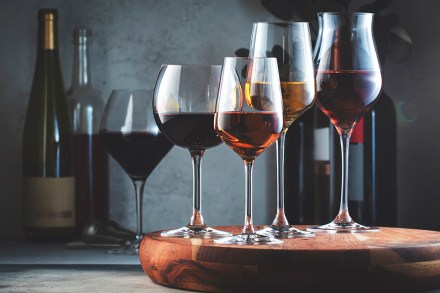
I have had three recent conversations, all lively if unrelated – and all well lubricated. The first concerned Anglo-Saxon England around ad 700. Recent discoveries of coin hoards suggested that economic activity during that period of the Dark Ages was more extensive than had been supposed. Without damaging the coins, it had been possible to establish that some of their silver content had come from Byzantium. Every timeI drink a German wine I am convinced that one should do so more often The main discussants were a couple of academics who had been disciples and friends of Philip Grierson, one of the greatest numismatists of all time: a scholar, collector and major benefactor of the Fitzwilliam in Cambridge. That reminded me of an embarrassing meeting.

Thank goodness pubs shut at 11

A group of four stagger out of a pub in Britain at around 11.20 on a Thursday night. The search begins for somewhere to have one more drink without a £20 entry fee. Men on doors say no by shaking their heads. Pubs show their appetite for more visitors by turning their lights up a little brighter than an exploding sun. There are bars open, but the mark-up on a glass of white seems out of sync with the occasion and the bank balance. Half an hour’s increasingly muted search ends halfway across the other side of town. Nothing is open. Google maps is opened. Everyone mutters goodbye. If we were given late-night pubs, it would be carnage for two weeks, and then we would shun them Some of us younger Brits have become agitated at how early everything shuts.

With Anna Jones

25 min listen

Anna Jones is a food writer, food stylist and author. She is known predominately for her focus on vegetarian cooking, and her new book Easy Wins celebrates a capsule pantry of twelve ingredients.  On the podcast she tells Lara about her way in to becoming a food journalist, cooking vegetarian at home, and her desert island meal.

Why celebrity restaurants so often fail

London has seen a string of celebrity restaurants, mostly with disappointing results. David Beckham and Guy Ritchie opened a pub in 2018 – the Walmer Castle – but it didn’t last. They handed it on in 2022 and the pub has changed hands three times since its opening. Ed Sheeran set up his grastropub, ‘Bertie Blossoms’ just two months before the pandemic, and while it is still open, Sheeran has admitted that it's not gone smoothly. He’s learned that unless you have a large chain, making money off a restaurant is very difficult. Lewis Hamilton and Leonardo DiCaprio have tried the chain business model, opening eight locations of their plant-based ‘Neat Burger’ in London and one each in Dubai, New York and Milan – but it doesn’t look like its working wither.

Stop worrying if your child is a picky eater

One parent in our class WhatsApp chat raised a pressing concern: her daughter was coming home every day with a full water bottle. Were other parents faced with the same unsettling discovery? There followed a lengthy discussion of how much water was left in each child’s bottle. Some children, when confronted, testified that they had drunk water during the day and then filled up the bottle at school. Anyone who expects children to enjoy cooked courgette has forgotten what it was like to be a child This was not good enough for the concerned parent. She took the matter to the teacher. ‘I am concerned my daughter is not given enough opportunity to drink water during the school day,’ read her message. She shared it with the group – and the teacher’s response.

Tricky but delicious: how to make the perfect pretzels

My husband is obsessed with pretzels. The joy that a slightly warm, soft baked pretzel brings him is disproportionate. And, unlike in Germany and the States, where soft pretzels are ubiquitous, they are hard to come by here. So, for a while I have been trying to perfect the pretzel. It has not been smooth sailing. Throwing your pretzels into a cauldron of water feels somewhere between heresy and madness Pretzels are tricky: as well as being made from bread dough, and therefore yeasted, they are boiled before baking, have a very distinctive flavour, and their shaping requires a certain knack. Getting them right was a labour of love. But now I’ve cracked it, which means you should be able to avoid my pitfalls.

‘Can’t help but exude warmth’: Paper Moon at the OWO, reviewed

Paper Moon is the Italian restaurant inside the Old War Office on Whitehall, now a hotel called Raffles London at the OWO. It has nine restaurants and bars, because it is a Disneyland for the 1 per cent in the fraying centre of the British state, which is enraging and hilarious. I reviewed Saison in November and found it as chilly and finessed as the British state pre-crisis. OWO reminds me of a theme park I visited in Georgia, Russia, two decades ago in winter. It was a fine endeavour but pointless, the happy children had fled. You can’t have a grand hotel inside a post-Imperial bin fire. It makes no sense. Paper Moon is grey, and Art Deco, of course: the pre-calamity aestheticof choice Paper Moon is rather better than Saison: perhaps Italian food can’t help but exude warmth.

The sad decline of BYOB

London’s food scene is a Petri dish of Michelin-starred bistros, gastropubs, and overpriced tourist traps where waiters crouch by the table and call you ‘bud’. The days of staying at home, watching Raffles, and eating tinned fruit with evaporated milk are long gone. London’s new culinary culture is an expensive one. But one institution has remained true throughout this tsunami wave of progress: BYOB restaurants. Or so I thought. It’s not that they don’t want us to finish our drinks, it’s that they can’t afford for us to finish our drinks BYOB stands for ‘bring your own bottle’ or, if you’re boorish like me, ‘bring your own booze’. I think the ‘bottle’ gives it an undeserved prestige.

Which came first? The egg, obviously

‘We English prefer brown eggs,’ wrote J. B. Priestley in the 1970s, ‘they seem to us to have a more reliable look of rusticity.’ The mottled chestnut shell of a Burford Brown is surely more genuine than the clinical, white-shelled variety favoured by the American market. It’s a charming point, but there’s really no relationship between shell colour and the egg itself. Eggs from the Chilean Araucana hen are a beautiful blue, and if you were to crossbreed an Araucana with a brown egg hen, the pigments mix and you get green eggs. The Chinese Cochin dapples her eggs with delicate yellow spots. The colour of yolks is enhanced in factories by adding dried marigold leaves to the chicken feed Yolks are deceiving too.

A fitting overture to Holy Week

Holy Week, but not everywhere. After reading that the diocese of Birmingham wanted to hire staff to help with deconstructing whiteness, only one conclusion is possible. Large parts of the C of E have become a theological and liturgical wilderness. The Devil is in charge and it is unholy week, 52 weeks a year. Anglican friends assure me that this is overdoing the pessimism. There are sound clerics – even the occasional sound bishop – and in some areas, traditions survive. Certainly Sherborne Abbey has just put on a superb Palm Sunday, and the procession included a donkey, the sweetest-natured of animals and a perpetual outlet for sentimentality.

With Gennaro Contaldo

24 min listen

Gennaro Contaldo is an Italian chef, cookbook author and television presenter. He is also known as Jamie Oliver's mentor and Antonio Carluccio's travel partner on Two Greedy Italians. His latest cookbook Gennaro's Verdure – which celebrates seasonal vegetables – is out now.  On the podcast he tells Liv and Lara about his upbringing on the Amalfi coast, what he's learnt from Jamie Oliver and how he came to love fish and chips.

The snobbery of lemon supremacists

I love certain sour flavours, such as the sprinkle of lemon on a piece of oily fish, or fatty meat. It is perfect with food that is naturally sweet, such as brown shrimp, scallops, or young, fresh peas. But spare me the heavy hand with the acid, which seems to be getting more and more frequent when it comes to pre-seasoned food in restaurants. Lemon juice should be a background note, helping the main flavours to stand out. It should not make you wince as though you are chewing a live wasp. We should resist drowning our food in lemon juice in the way that we would ketchup or salt I am just back from lunch at a lovely little Cypriot joint where every single thing is made from scratch.

The irresistible horror of the farm shop

Picture the scene; you’re Kate Middleton and it’s Saturday lunchtime. You’re out enjoying suburban Windsor. The Audi is safely stowed – along with hundreds of other cars mostly produced in Germany, the Czech Republic or the West Midlands – in a nearby car park the size of the deck of the USS Harry S. Truman and about as eco-friendly. The farm shop is a kind of Peppa Pig World for adults There’s a faux 1950s Citroen van-lookalike with corrugated panels from which a pair of stressed teens in brown aprons are selling overpriced macchiatos, almond lattes and stone-cold hot chocolates, to a lengthening queue of gilet-wearing mums and dads. Most of them are too busy pretending not to watch their children tormenting each other to notice they are being royally ripped off.

In defence of ready meals

Earlier this week I read that, from the moment of pulling into the car park to exiting it, the average supermarket shopper reads just seven words. Seven words. My initial reaction was: who are these Neanderthals? So, for want of something to talk about over supper after nearly 20 years of shackles, I ran this random fact past my husband. He was amazed anyone read as many as seven. My reaction this time was more fulsome: who is this Neanderthal, and why am I having dinner with him? When I was home from boarding school, I was positively relieved when she reached for an M&S carbonara rather than Delia These seven words are all the more stark when you know the average length of time spent in a supermarket: 37 mins.

The trouble with apple cider vinegar

The snake oil salesman is back in town with an old favourite: apple cider vinegar – or ACV as it’s called by those in the know. The ‘wonder-juice’ has been around for centuries, peddled by Greeks and Romans alike. In recent years, it has become something of a panacea, a social media ‘superfood’. But just how good is this cloudy, acidic liquid? The purported benefits range from weight loss to curing cancer. I’m no oncologist, but the cancer claims seem a little dubious. That said, let’s not dismiss apple cider vinegar entirely. The likes of Jennifer Aniston, Kim Kardashian, Katy Perry and Victoria Beckham swear by it – and if Brass Eye taught us anything, it’s that celebrities are always right.

Chicago doesn’t know what limits are

Chicago residents bristle when you ask them whether they eat deep-dish pizza. ‘Yeah’, they sigh, ‘we might occasionally when someone visiting wants to try it out’. Sigh. ‘We have great thin crust though’. But lots of places have good thin crust. I came to Chicago to try the deep dish. But deep-dish pizza is stupid. It’s not a pizza, more a dense pie: the sauce sits at the top, and the filling beneath is quicksandy cheese. Sausage meat, jalapeños, chorizo, bacon, red onions and mushrooms are thrown into it and expected to learn how to swim. I got a deep dish on my last day in Chicago and found it wasn’t good. Not for any explicable reason – something like this can’t taste bad — but from my own somewhat pompous sense that God must be against it.

What happened to the good old fashioned Chinese restaurant?

In 1909, London’s first Chinese restaurant was opened by Mr Chang Choy off Piccadilly Circus. Named simply ‘The Chinese Restaurant’ – so exotic! – Choy specialised in what was described as ‘imperial banquet’ style cuisine which required at least half a day’s notice to prepare. Customers were then required to pay a hefty deposit in advance to cover the purchase of ingredients for such imperial delights as ‘sturgeon bones’, ‘fish maws’, ‘gelatine’, ‘dried cabbage stalk peel’ and ‘chrysanthemum shoots’. A 1937 edition of Where to Dine in London declared that, ‘Englishmen who have spent their lives in the East will appreciate the traditional menu’. Hmm, I wonder.

Why the Romans loved asparagus

It is said that asparagus was Emperor Augustus’s favourite food. And France is, despite its Gallic spasms, a fundamentally Roman civilisation. Ask nine out of ten Frenchmen if they will have asparagus on their Easter table and they will say ‘mais oui’. The crunchy, slightly bitter stalk has enthralled humans for millennia due to its strange flavour and supposed medicinal properties. Those proto-French Romans were huge fans of the plant. You may even learn an asparagus recipe or two from studying their methods. The French smother their asparagus spears in hollandaise or béarnaise sauce Most of the information on Roman cuisine comes from visual depictions found in frescoes and mosaics that depict what went on during banquets at the time.

There is good news in the world – and it is mostly about wine

My last piece began with a one-word sentence: ‘Gloom.’ A dear friend reproached me. ‘In a world already abundant with gloom, surely you can find a way of cheering us up. After all, you’re not writing about politics – or at least you’re not supposed to be.’ I promised to try harder to propagate good news. When it comes to wine, that is not impossible. Twenty years ago, in Lisbon, I was treated to a bottle of Barca Velha. I was told that the Portuguese regarded it as their Château Latour. Needless to say, it was not that good but I remember thinking that it was a jolly decent drop of stuff, and – in those days – excellent value. Only half of that judgment still holds true. I tried a 2012 the other day and it was excellent: as good as a Bordeaux second growth.

Bored of generic hot sauce? Try these

Sick of sriracha? Try Sambal Oelek, an Indonesian chilli sauce that’s easy to make in minutes, by blending red chillies, salt and either vinegar or lime juice together. Or buy a jar ready-made. If I were to be consigned to a desert island and could take only one spicy condiment it would be molho apimentado from Brazil Will 2024 be the year of hot sauce? The Guinness Book of Records recently certified the world’s hottest chilli, Pepper X. In case you’re wondering, hot peppers are rated for heat on the Scoville Scale, created by American pharmacist Wilbur Scoville in 1912. It measures the amount of capsaicin (the chemical compound that causes spicy heat) in a pepper and assigns it an SHU (Scoville Heat Unit) rating.

With Alex Jackson

28 min listen

Alex Jackson is the founder of Sardine and currently head chef at Noble Rot, Soho. His cookbook Frontières: the food of France's borderlands is available now.  On the podcast, he tells Lara and Liv why the smell of chip fat reminds him of home, how his interest in cooking was ignited during time spent at university France, and divulges his desert island meal.

A Soviet guide to vodka

One of the perks – a perilous one – of visiting the Former Soviet Union in the 1990s was the cheapness of the vodka. I was used to paying London prices for it but in Estonia (where I lived for two years) you could find bunker-bars where they’d serve you a generous tumbler – enough to blitz you for an evening – for about 40 pence. Most people wanted nothing more from alcohol than that it should anaesthetise them and help them forget, and vodka was ideal for this. Unlike whisky or brandy, you couldn’t crow over its ‘vanilla overtones’, its ‘hints of butterscotch’ or its ‘aged in the wood’ qualities. It simply got you drunk, no more, no less. And the bars served it that way: doled out, clinic style, in a measuring beaker.

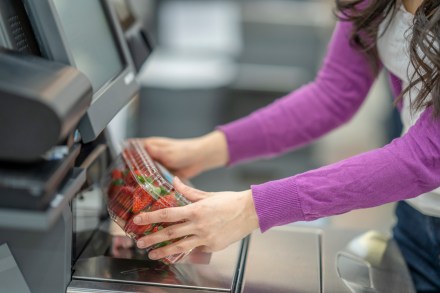
The problem with self-checkout tills

Our national malaise arises in part from the poor state of many of Britain’s private services. No, not a misprint. I mean private services. Many on the political right berate public services, implying that were they only to be privatised everything would be sweetness and light. Yet modern technology now makes it all too easy for companies to treat their customers with just as much high-handed disdain and bureaucratic inflexibility as any state enterprise. Drive into a pub car park and forget to record your number plate and you’ll receive a fine of £100. Contesting this requires several hours of your time trying to find a receipt to prove you bought a drink.

Idris Elba’s champagne makes the world seem less troubled

Gloom. Relentless rain out of a sullen sky enhanced an already pessimistic mood. We were talking geopolitics and agreeing that the West ought to brace itself for a hard landing. Try as we might, we could find no good news, anywhere. Where is the self-belief of the Reagan/Thatcher years? Instead, a culture war is taking place Some of us were veterans, one or two of whom had spent time in Washington in 1980, the build-up to the Reagan era and the prelude to the most successful decade in modern peacetime history, in which Margaret Thatcher played a crucial role.

With Thomas Robson-Kanu

29 min listen

Thomas 'Hal' Robson-Kanu is former professional footballer who was part of the Welsh team that reached the semi finals of Euro 2016, thanks largely to a memorable goal he scored against tournament favourites Belgium. He is also the founder of The Turmeric Co. On the podcast, Thomas tells Lara and Liv how his Welsh and Nigerian heritage influenced the food he ate as a child, how turmeric was the miracle cure to an injury-ridden early career and how footballers prepare nutritionally for big games.

Chelsea buns are the best of all buns

The Chelsea bun was first baked in the Bun House in Chelsea in the 18th century. It was a bakery which found particular favour with the Hanoverian royal family, as its pastries were reminiscent of those from whence they came. But these buns were for everyman: they were customarily bought by the poor on Good Friday along with hot cross buns. On these days, the demand was such that the buns were sold through an opening in the shutters, and a police presence was needed. The Bun House was headed up by Richard Hand who was known as ‘Captain Bun’; after his death, the shop passed on to one of his sons and then another. In 1839 there was no one left to take it on, and the shop closed.

‘You can stare at a cow you will soon eat’: The Newt, Hadspen, reviewed

The Newt is an idealised country house in Somerset which won the World’s Best Boutique Hotel award last year. It is small, beautiful and mind-meltingly expensive, even for the Bruton Triangle and its mooing art galleries. Poor Somerset! It never wanted to be monied enough to have a triangle, but the rich make their own mythology. Since they paint every-thing grey – and now green, I learn at the Newt – they need it. A triangle fills the day. The Newt is for people who think that Babington House is stupid (it is) and though the Newt has its own issues – like the King, its taste is almost too immaculate – you never feel that the chief executive of a media conglomerate will bounce past you on a space hopper eating a fishfinger sandwich and shouting into an iPhone.

Abolish the food hall

I remember going to Westfield Shepherd’s Bush to visit my first food hall, still a relatively new concept for British diners. They’re big rooms filled with shared seating and different kitchen stalls, serving everything from Thai to burgers, wontons to bratwurst. You can have a burrito and your friend can have a pizza. Oh, how I loved it. I was instantly gratified, gloriously free from the convention of menus, courses or ‘cuisines’. I was excited. These places were born in a boardroom to the sound of marketing ‘insights’ I was also a teenager. And that’s the problem: food halls are childish places. Surely the more choice there is, the better? Nope, it’s not true.