Spectator Life

Spectator Life

An intelligent mix of culture, style, travel, food and property, as well as where to go and what to see.

How am I supposed to remember what happened in The Tourist?

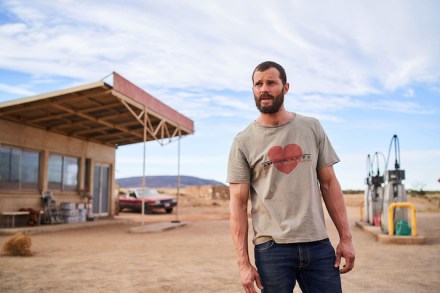
Hooray, I thought. There’s a new season of The Tourist. I remember liking that, I thought. It was that thing with the bloke in Australia, wasn’t it? And I was all set to settle down for a good binge, when I realised that I had almost literally no idea what had happened in the first season. This is a personal grumble, but I’d bet dollars to donuts I’m not the only one in this position.  One thing I knew is, it was confusing. There was a bloke in, yes, Australia, who had had a bump on the head and didn’t know who he was, except he was Jamie Dornan. I remember there was a bit with some LSD, and recalling the plot was quite like that too. Someone was trying to blow him up (or maybe he was trying to blow someone else up).
What critics get wrong about Zulu

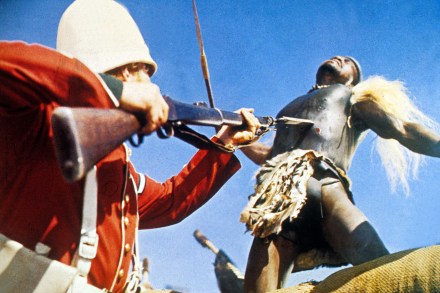
It is a great mystery how Zulu, a tale of imperial derring-do from the Anglo-Zulu war of 1879, has avoided being cancelled. On the face of it, this is a film that revels in one of the most heinous, most blood-thirsty chapters of our colonial past, one tinged with technologically enabled white supremacy. Here is a war film about 140 white Europeans who take on a Zulu force of 4,000 and defeat them, thanks largely to the rapid and orchestrated fire of short-chamber Martini-Henry rifles. (‘And a bayonet,’ as Nigel Green, as colour sergeant Bourne, puts it, ‘with some guts behind it.

Streaming killed the video star

One small but significant loss to culture that streaming sites like Netflix or Amazon Prime have ushered in is the slow death of the DVD commentary. Usually given by a film’s actors or director (or both), they could be played over the film and were packed with insights on filmmaking, the artists’ take on life or simply acute observations of human psychology. Masterclasses from people like Tarantino, Scorsese, Gary Oldman or Sharon Stone, DVD commentaries were, as Alexander Larman (of this parish) pointed out in a 2020 essay, often fascinating and ‘far cheaper and even more comprehensive than a film school degree.’ Their emergence, in fact, softened the blow of programmes like The South Bank Show and Arena (and what they represented) being sidelined so much in British cultural life.

What fiction can teach us about terrorism

The first decade of this century, following Al Qaeda’s attack on the Twin Towers and the Pentagon in September 2001, was something of a golden age for films about terrorism, a spate of them following in quick succession. In the light of Hamas’s 7 October mass-killing of innocent Israelis, it’s interesting and informative to watch one or two again – and see how the nature of terrorism changes little. We get the terrorist as preening popstar, surrounded by women, whose every act of violence is like the release of a new album A good place to start is Antonia Bird’s The Hamburg Cell (2004), which tells the story of the terrorists who flew the planes that day and had made the west German city their base.

At last, Hollywood mocks cancel culture

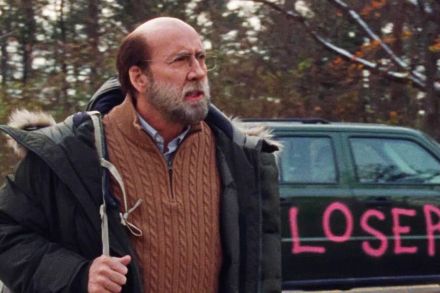
Dream Scenario is a film about modern celebrity culture and the terror of losing yourself to the internet’s virtual mob. It’s the story of evolutionary biology professor Paul Matthews, a balding, befuddled, bespectacled everyman who is the walking embodiment of anonymity – played by Nicholas Cage, the face that launched a thousand memes. At the start of the film, he gives a lecture on how zebras have adapted to avoid the mortal danger of standing out from the herd. Suddenly, in a supernatural, psychopathological epidemic, anorak-clad Paul finds himself appearing in everyone’s dreams. At first, he is just a benign bystander; in one dream, he stands there admiring a mushroom while his student is stabbed by a serial killer.

Why women still love Twilight

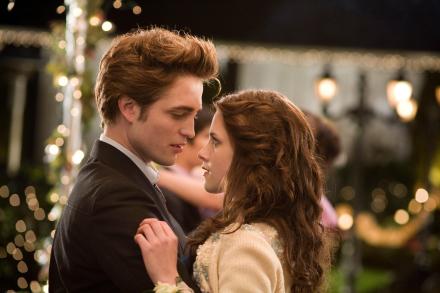
Anybody who has been a teenage girl will know how dark and swampy the sexual imagination of that demographic can be. At 14 and 15, after watching Baz Luhrmann's Romeo and Juliet (1996), and then James Cameron's Titanic (1997), I became so obsessed with Leonardo DiCaprio that I’d lie for hours on my bed hatching feverish plans for going to New York and meeting him; comparing fictional fling Kate Winslet to me (similar body type, I told myself) and broodingly calculating my chances. It wasn’t a funny light-hearted thing, but deadly serious, awash in life or death longing. The same quality applied to Will, Pete, Travis, Chris, and the other boys at school on whom I developed all-consuming crushes.

Is Napoleon anti-French?

The English director Ridley Scott has certainly produced a massive irritation to French amour-propre. Over the weekend, he said that criticism of his film Napoleon proved that the French ‘don’t even like themselves’. Whether Napoleon is a masterpiece is yet to be determined (it isn’t released until Wednesday) but opinion is already divided. As if the French were ever likely to appreciate the Anglo-Saxon appropriation of a French national hero. Doubtless some of the French outrage is contrived. The relationship of France to the Emperor is complicated and hard to explain as an interlude in the glorious republic Scott, who will be 86 this week, has created an epic row, as well as an epic film.

Why I’ll always love Big Brother

I’ve always been a Big Brother fan; I was hooked from the very first series way back in the year 2000, which featured Nasty Nick, Anna the lesbian nun and the winner, charming Scouse builder Craig Phillips who took the prize of £70,000 and promptly gave it all to his friend Joanne Harris for a heart and lung transplant. That first season – shown on Channel 4, as were the next ten – seems so wholesome now; the weekly shopping challenges included making mugs using a potter's wheel, and learning semaphore, as though the housemates were overgrown guides and scouts excitedly vying for badges.

The importance of London’s lost cinema

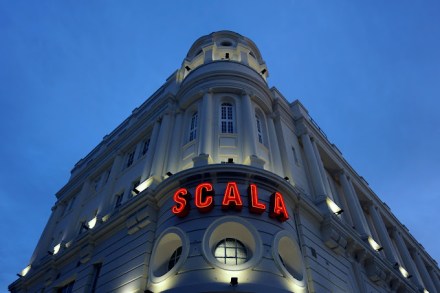
King’s Cross in the eighties was the scabbiest, dodgiest, scariest and most alternative place in central London – and the crumbling Scala cinema was its beating heart. Memories of this long-shut venue are being revived by the imminent release of a feature-length documentary tracing its brief, colourful history. The film is named after the cinema but its lengthy subtitle signals the kind of material it depicts: Scala!!! Or, the incredibly strange rise and fall of the world’s wildest cinema and how it influenced a mixed-up generation of weirdos and misfits. I’ve been back to The Scala to see bands there since. But it’s a different beast now This sounds an extravagant claim but it clearly was influential in the film world.

Are party holidays ever that fun?

Forget GCSEs or landing your first part-time job. Nothing screamed growing up in Britain like embarking on your first European party holiday, armed with an alarming lack of SPF or common sense but a suitcase packed full of skimpy outfits and condoms. Every summer, thousands of young Britons would jet off to Greece, Cyprus or Spain, having signed up for a week of raucous hedonism provided by travel companies like Club 18-30. They’re getting steadily less popular – Gen Z don’t really drink, after all – but the themes explored in Molly Manning-Walker’s new film, How to Have Sex, remain universal. Set in the Greek resort of Malia, Crete, Manning-Walker’s debut feature won the Un Certain Regard prize at this year’s Cannes.

We need an international University Challenge

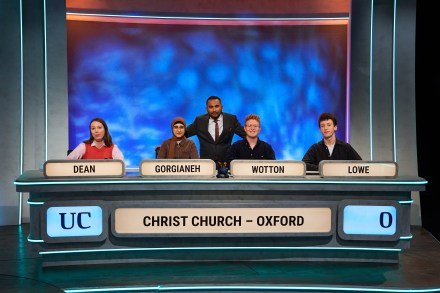
As the autumn nights close in and the heating goes, there are few pleasures so improving for body and soul than half an hour spent in the company of University Challenge. Not only do you learn a bit (well, until you forget it) but nothing makes a middle-aged man or woman of a certain disposition quite so happy as knowing that they can still best a bunch of 19-year-olds when it comes to elite trivia. So here’s a thought – why do we keep this beloved split-screen televisual wunder-quiz to ourselves? Why do we hoard it? After all, we were gracious enough to give the world the blessing of football. We gave them golf. We gave them rugby. We birthed the modern Olympics. We even gave the world badminton.

The forgotten genius of Dennis Price

This month marks the 50th anniversary of the sad death of the actor Dennis Price, star of the classic 1949 black comedy Kind Hearts and Coronets, regarded by many to be the greatest British film of all time. Price was only 58 when he died from cirrhosis of the liver and complications following a broken hip, in a public ward of Guernsey’s main hospital. In the same way his co-star Alec Guinness stole the limelight in Kind Hearts, so the shock break-out of the Arab-Israeli Yom Kippur war did the same on the day of his death. His debts caused him to ‘beat a strategic retreat’ to the Channel Islands where the booze was cheap and the taxman couldn’t bother him Price’s demise may not have been front-page news in 1973 but the sense of loss of all who knew him was great.

Sofia Coppola made girls sad

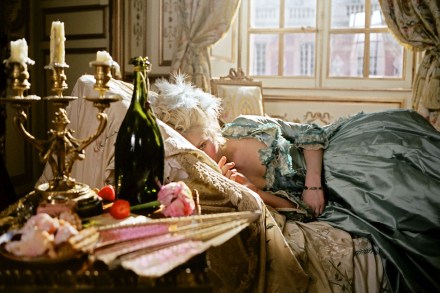
When Cecilia Lisbon, the youngest of the five Lisbon daughters in Sofia Coppola’s film The Virgin Suicides, winds up in the hospital having survived an attempt on her own life, the doctor tells her: ‘You’re not even old enough to know how bad life gets.’ ‘Obviously, doctor,’ Cecilia replies, ‘you’ve never been a 13-year-old girl.’ The dark edge of adolescence runs through Sofia Coppola’s films. You get a sense from even the most playful and romantic scenes that, behind the lustre of expensive clothes or dappled sunlight, girlhood is tragic and that its transformations are traumatic. Coppola’s eye for these contrasts makes her films brilliant.

The Beckham documentary is little more than PR

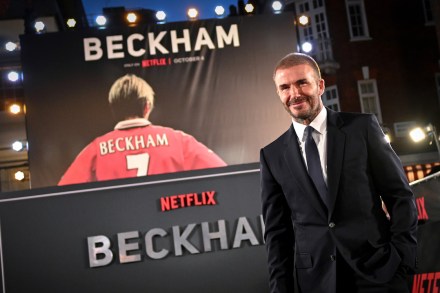
Let me start by saying I didn’t watch Beckham because I am a football fan. What I’m really interested in is the art of spinning gold from thin air, something David Beckham and his family have excelled at. So I zoned out when it came to discussing the intricacies of Beckham and Sir Alex Ferguson’s relationship in the 1990s, or the pain he felt when leaving Manchester United, the only club he ever wanted to play for.  The Beckhams have carefully curated what they were willing to share, all under the guise of being candid No, I was after the behind-the-scenes access to all things Brand Beckham. What does he really think of the fact Victoria has only eaten steamed fish and vegetables for over a decade?

The genius of John Betjeman’s Metro-Land

‘Over the points by electrical traction, out of the chimney pots into the openness, till we come to the suburb that’s thought to be commonplace, home of the gnome and the average citizen.’ Fifty years ago, the BBC documentary Metro-Land aired for the first time. These free-flowing dactyls, which mimic the motion of a train, were delivered over the footage by the newly appointed poet laureate, John Betjeman, as he rode the Metropolitan line out into the middle-class Arcadia of Middlesex. They don’t write voiceovers like that anymore.  The entire movement of poetry in the 20th century was towards finding beauty in unexpected places Hailed as a masterwork right off the buffers, Metro-Land was a hymn not only to Betjeman’s suburbia but also to the Tube that took him there.

What happened to the great British gangster film?

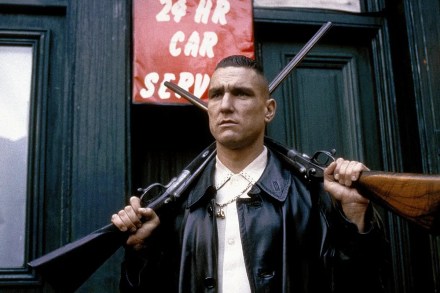
Cast your minds back 25 years, when Cher’s ‘Believe’ was the biggest hit of the year and Nokia dominated the mobile phone market. These were simpler times. They also happened to better times, at least from a movie perspective. We had The Truman Show, Saving Private Ryan, There's Something About Mary and American History X. 1998 also saw the release of Lock, Stock & Two Smoking Barrels, arguably the best British gangster movie of the 1990s, maybe even all-time. For some unfathomable reason, the Hatfield-born director, producer and screenwriter opted to ‘branch out’ and try his hand at making different types of movies Guy Ritchie’s debut feature, which celebrates its 25th birthday at the weekend, had it all: gangsters, guns, great jokes, and a compelling plot.

In praise of Michael Parkinson

Different generations will have different memories of Sir Michael Parkinson, who has died aged 88. If you’re a little older, you’ll remember that Parkinson led a golden age of chat shows when they were about the guests rather than the host. He was a master of the art and, though famous, never came across as a celebrity interviewing other celebrities. And never for the sake of a pre-prepared one-liner to get a cheap laugh. He would ask a question then sit back and let the interviewee answer, at length if need be He would ask a question then sit back and let the interviewee answer, at length if need be.

I’m bored of Disney feminism

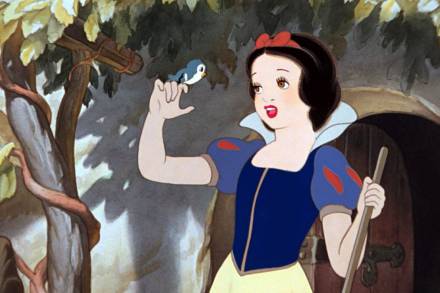
It is, I know, a bit early to be thinking about 2024, but to help with the forward planning, here’s a film to avoid next year: the Disney release of its new, non-animated, musical version of Snow White. The original animated version of 1937 was a classic if ever there were one. Stewart Steven, the late editor of the Evening Standard, remembered seeing it as a boy when it was released: ‘I was completely terrified’, he told me, speaking for a generation of children. It was a triumph of animation; the songs were terrific – the seven dwarves’ ‘Hi Ho, Hi Ho’ is immortal; and the episode where the princess, fleeing the huntsman through the trees, is tormented by clinging branches and malevolent eyes is fearful. It’s just a pity that most of us now see it on a small screen.

Move over, Lineker: quiz shows need a professional

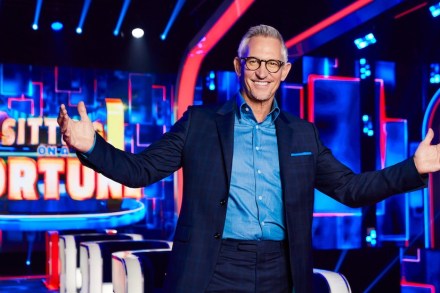
Your starter for ten: who on earth thought it a good idea to hire Ross Kemp to present a quiz show? Or Gary Lineker? Or Lucy Worsley? And don’t get me started on Amol Rajan. Back in the mists of time, the general rule was to hire either specialist  – Nicholas Parsons and Robert Robinson for instance, who had cut their teeth on similar roles before moving to TV – or popular stand-up comics such as Bob Monkhouse and Bruce Forsyth who knew how to ad lib. Now the television commissioners seem intent on ramming square pegs into round holes.

‘Your Honours, never again’: political trials in the movies

With former President of the United States Donald Trump now indicted on four counts relating to attempts to overturn the 2020 presidential election, here's a look at motion pictures where leaders are put on trial. To Kill a King (2003) – full movie available on YouTube https://www.youtube.com/watch?v=uViHCp-jytE&t=5444s I confess to possessing little sympathy with the plight of King Charles I in Mike Barker’s (Best Laid Plans, 1999) watchable English Civil War drama. As depicted by Rupert Everett, he’s arrogant, petulant, and totally untrustworthy. He seems to accept parliament’s mild terms for peace, all while plotting further bloodshed in the name of the 'divine right of Kings'. To his credit, Charles faces his end bravely.

Can Oppenheimer take on Barbie?

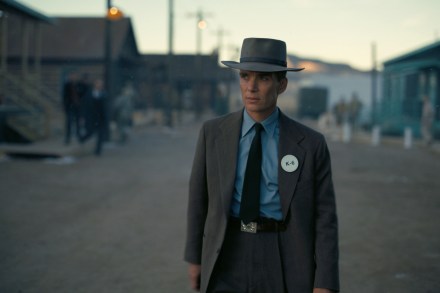
This week, two films are released simultaneously that could not be more different. In the pink corner is Greta Gerwig’s Barbie, a 114-minute long exercise in postmodern irony and camp revolving around the exploits of the much-beloved Mattel doll, given life and dragged into the real world. From the first trailer onwards, its mission has been clear: this is contemporary Hollywood at its most glitzy, mixing well-known intellectual property with a starry cast (led by Margot Robbie, who is overdue a hit) and a healthy dose of humour. https://www.youtube.com/watch?

Mission: Impossible – Dead Reckoning Part One is the action film of the year

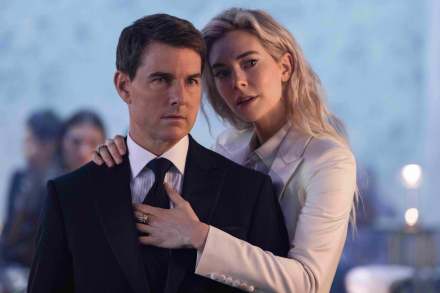
It is an unusual compliment to say of what will undoubtedly be the year’s best action film that the experience of watching it is rather like being punched in the face for the better part of three hours. But Mission: Impossible – Dead Reckoning Part One, which arrived in UK cinemas on Monday, is a bruising, visceral and wholly exciting ride that’s about as close as you can imagine to being put in a boxing ring with its star Tom Cruise. If the viewer is pummelled and bludgeoned into an ecstatic state of submission, then that’s the price you pay for this exceptional slice of filmmaking: a thriller that doesn’t just thrill, but exhilarates and wholly dominates its audience in the process.

The death of the sex comedy

After a few years in which she has been largely absent from cinemas – her appearance in Netflix’s climate-change black comedy Don’t Look Up aside – Jennifer Lawrence is returning with, of all things, a raunchy sex comedy, with the punning title No Hard Feelings. It has earned an R-rating in the US and 15 in the UK, and judging by its marketing materials, it is a 21st-century spin on Tom Cruise’s star-making role in Risky Business, focusing on an older woman (yes, Lawrence, at 32, is now classed as such by Hollywood) who is hired by a family via Craigslist to 'date' their socially awkward 19-year-old son Percy, 'date him hard', and thus introduce him to the adult world.

Anyone for tennis – on film?

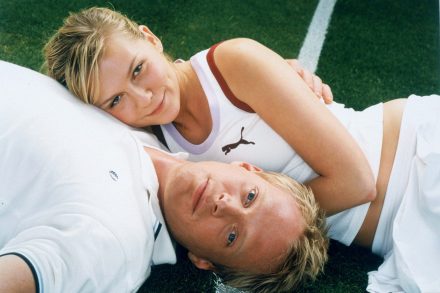
With Wimbledon fortnight upon us, what better time to explore tennis on the silver screen? Even more fortuitous is that Aidan Turner’s raunchy Amazon Prime series Fifteen Love will debut this summer, in which the Poldark star plays a tennis coach with a chequered past. Turner also features as moustachioed TV presenter Declan O'Hara (shades of Des Lynam as was) in Disney+’s upcoming adaptation of Jilly Cooper’s Rivals, a show apparently so steamy it needed two intimacy coaches. https://www.youtube.com/watch?v=MykuvVwtXtQ As an aspirational, largely middle-class game, tennis when depicted in the movies is largely free of the pile-ons, punch-ups and bad language of films about football, rugby and other contact sports. But, not as you’ll find out, wholly so...

How to enjoy Glastonbury from your sofa

More than 200,000 people have schlepped down the ley lines for another year of ‘Glasto’. It’s tempting to deride these people: they’ll stink, they’re anchorless hedonists, they’re blue-haired hippies. However, they’ve got tickets to Glastonbury and I haven’t, so they win.  Actually going to the festival, however, is a minority experience. More of us will be watching it on TV. And whether you dig the Glastonbury vibe or not, there’s plenty of good music for all across this weekend.  The most important thing to remember, though, is to watch as little of the coverage as possible. It’s fluff. For three whole days, everything is ‘fantastic’, everyone will ‘bring it’ and ‘vibes’ will always be ‘elite’ for the gawping BBC presenters.

Midsummer movies: what to watch on the longest day

The summer solstice (which falls today) has been a time of celebration and religious rituals since the dawn of mankind. Some associate the event with neo-druidic gatherings at Stonehenge and the like, others with ghastly human sacrifices to placate the Old Gods – while many see the solstice as simply a time to celebrate the longest day of the year with (relatively) innocent folkloric revels. But if you'd rather stay home and watch a film to mark the occasion, here are 15 worth your time. Midsommar (2019) – Netflix, Amazon Rent/Buy Ari Aster’s (Hereditary and upcoming Beau is Afraid) folk horror picture is very much in the vein of The Wicker Man (1973) – but with additional lashings of graphic violence and foreboding.

Glenda Jackson: a life in ten films

The actress and politician Glenda Jackson died last week at the age of 87. Her acting career moved effortlessly between stage, TV, and motion pictures, where Jackson proved a commanding presence in each. In 1992 she took a lengthy break from the acting world to become a Labour MP, exchanging the likes of co-stars George Segal, James Garner, and Jeff Goldblum for colleagues Dennis Skinner, Roy Hattersley, and John Prescott. Returning to stage, TV, radio, and film in 2015, Jackson had lost none of her thespian chops, continuing to rack up awards.

The art of the insult in movies

As Rishi Sunak and Boris Johnson trade insults, here’s a look at some of the best – and most wounding – barbs in film. Full Metal Jacket (1987) Amazon Rent/Buy https://www.youtube.com/watch?v=tHxf17yJsKs Gunnery Sergeant Hartman, the master of full-on, spittle-flecked abuse, eventually gets his comeuppance for belittling conscripted recruits in Stanley Kubrick’s Vietnam war classic. A prime example of Hartman’s cruelty is when he addresses Vincent D’Onofrio’s hapless Pyle: ‘Were you born a fat, slimy, scumbag puke piece o’ shit, Private Pyle, or did you have to work on it?’ R. Lee Ermey, who played Hartman, had previously been a US Marine drill instructor in Vietnam and – with Kubrick’s enthusiastic urging – ad-libbed much of his dialogue in the film.