Spectator Life

Spectator Life

An intelligent mix of culture, style, travel, food and property, as well as where to go and what to see.

Don’t bring back Frasier

At the end of the Frasier theme song, its star Kelsey Grammer always sang the words: 'Frasier has left the building!' And when the show finished in 2004, it felt as if Frasier, Niles, Daphne, Martin, Roz and the rest had indeed left the building. In truth, the popular programme did not end in glory. Ever since Niles and Daphne had become a couple, ending its greatest running joke, there was a sense of past glories being retrodden. By the time Daphne’s siblings appeared with the strangest 'British' accents ever known, it was hard to avoid the feeling that Frasier’s departure was past due.

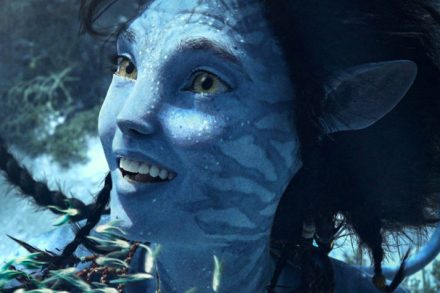
Why Avatar 2 has confounded the critics

The pundits called it long ago: Avatar 2: The Way of Water was going to be a flop. They did allow that betting against the so-called ‘king of the world’ James Cameron was rash – after all, Titanic and the first Avatar film overcame almost hysterically negative buzz in order to become box office behemoths. But there were too many reasons why the latest Avatar was going to fail. Nobody remembered the first film, they said. It wasn’t meme-able, they warned. Sam Worthington, its supposed star, was a nobody. There were too many blue people in it. The first film had had the novelty of 3D, but that was now a completely defunct format, popular only in China. People had moved on.

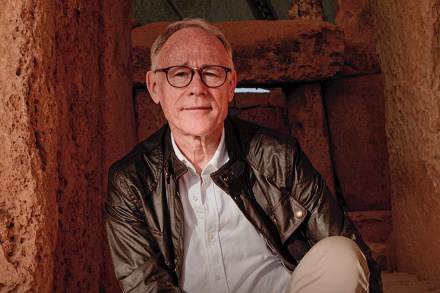
In defence of Netflix’s Ancient Apocalypse

British writer Graham Hancock has riled the archaeology community with his Netflix documentary, Ancient Apocalypse. The series follows Hancock to ancient sites around the world in pursuit of proof that an advanced human civilisation existed thousands of years before the first cities of Mesopotamia. Hancock, a former Economist correspondent, argues that most archaeologists are too stubborn to admit even the possibility of such a civilisation. Several archaeologists have rebuked Ancient Apocalypse since its release in November. They claim that it propagates false theories, avoids inconvenient facts and regurgitates old beliefs about ancient myths. One Guardian columnist called it ‘the most dangerous show on Netflix’.

The Spectator’s best TV shows of the year

The Offer (Paramount Plus) https://www.youtube.com/watch?v=iowLzO9-aew Even when you know the ending, this ten-part drama about the making of The Godfather, seen from the perspective of novice producer Albert S. Ruddy (Miles Teller), is outrageously gripping, gorgeously evocative of louche, cocktail-drenched late 1960s Hollywood, wittily scripted and superbly acted. Matthew Goode is especially watchable as superproducer Robert Evans. And this mostly true story has so many eye-popping moments – often involving the real mafia who at first resisted, then supported the movie – it feels more like the raciest and most implausible fiction. Reacher (Amazon) https://www.youtube.com/watch?

Films to watch out for in 2023

It would be fair to say 2022 was not a vintage year in cinema, reflected in UK box office receipts which remain around a third below the pre-pandemic year of 2019. That’s not to say there weren’t some enjoyable releases (such as The Banshees of Inisherin, Triangle of Sadness and The Northman) – but the biggest hits of the year consisted of superhero franchises and movie sequels (Top Gun: Maverick, Avatar: The Way of Water, Jurassic World Dominion, Fantastic Beasts: The Secrets of Dumbledore, etc).

The Spectator’s best films of 2022

Banshees of Inisherin: a magnificent cinematic metaphor https://www.youtube.com/watch?v=uRu3zLOJN2c The In Bruges writer-director Martin McDonagh has made another film starring Colin Farrell and Brendon Gleeson which, this time, is set in 1923 on the tiny Irish island of Inisherin. Colm (Gleeson) and Padraic (Farrell) are lifelong pals and drinking buddies until Colm abruptly decides that’s it, friendship over, and he’s deadly serious. If Padraic so much as approaches him he’ll cut off one of his own fingers.

Forget Love Actually: the best alternative Christmas films

It's become one of the traditions of the modern festive period: arguing about whether Die Hard is a Christmas movie. The explosive 1988 film features, you may recall, a vest-clad Bruce Willis confounding Alan Rickman and his terrorist cohorts’ evil plans in a Los Angeles skyscraper on Christmas Eve – and it’s peppered throughout with fir trees and tinsel.   Some claim this means it should take its place as a festive staple alongside more conventional classics of the season, It’s a Wonderful Life et al. Opponents furiously insist that a proper Christmas film shouldn’t feature machine guns and explosions, but instead depict rather more heartwarming scenes.

Peace on Earth? 10 films about Christmas on the front line

Christmas may ostensibly be a time of goodwill to all men, but war rarely takes a break for the festive season – as events in Ukraine sadly demonstrate. Here are ten films set during Yuletide where the front line is front and centre: Castle Keep (1968) – Amazon Rent/Buy https://www.youtube.com/watch?v=8uALKeb0C6U&t=1s Sydney Pollack’s (Three Days of the Condor) Castle Keep is set during the Germans’ failed Ardennes offensive of December 1944 and stars Burt Lancaster as one-eyed US Major Abraham Falconer. But if from that description you expect a meat-and-potatoes world war two actioner, think again.

The pick of this year’s Christmas TV

Has a certain media mogul had a visit from three ghosts recently? I only ask as this year’s Sky Christmas schedule is so packed with treats and big-hitters that it can't possibly be explained by hard-nosed commercialism. An outbreak of sudden seasonal generosity seems to be the only explanation. Whatever has triggered Sky's largesse, the result is a little something for everyone – including those of us best described as jaded anti-Christmas types. I was particularly pleased to see the return of Billie Piper in the deliciously sardonic I Hate Suzie. From Succession writer Lucy Prebble, it's the chaos comedy that makes Fleabag feel like Emily in Paris. If you need an outlet from seasonal niceties, this is it.

The best Oscar Wilde films

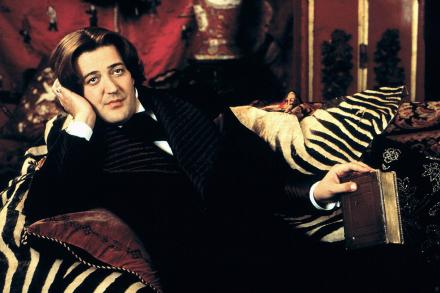
It is 122 years this week since Oscar Fingal O'Flahertie Wills Wilde died – in exile, poverty and disgrace – at Paris’s shabby St Germain Hôtel d'Alsace. His last words were said to be: ‘My wallpaper and I are fighting a duel to the death. One or the other of us must go.’ Despite Wilde’s precipitous fall from grace and the ignominy heaped upon him (his children had to change their surname to Holland), within a relatively brief time his plays were revived and books reissued to renewed popular acclaim. And more than a century later, that appeal hasn’t faded: this year in England alone, The Importance of Being Earnest toured the north and Richard Strauss’s adaptation of Salome was performed at the Royal Opera House.

On the trail of Gomorrah in Naples

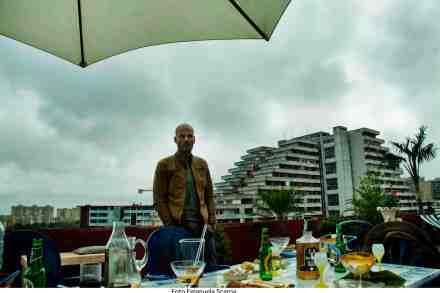
‘Isn’t Naples beautiful? I’ve always dreamt about it. I always wanted this city all for myself; I didn’t want to share it… I alone deserved it because of everything I lost and I would have done anything to get it.’ So says Ciro Di Marzio – nicknamed ‘the immortal’ because he has survived so much mafia bloodletting – in the hit TV crime drama Gomorrah.   He is not talking about the churches or castles, the arcades or theatres or museums. He may have been out on the bay at night when the words are uttered, but the Naples he knows, grew up in and by then controls is the Naples of Scampia and Secondigliano, places up on the ridgeline of the city: the Naples of high rises and concrete, the Naples of drugs and murder.

Why David Bowie was the model of a Renaissance Englishman

It’s hard to imagine how baffled the British public must have been by the arrival of David Bowie on to TV screens in the early 1970s. With his saffron hair, make-up and androgynous clothes, superficially he looked like a rejection of everything his post-war south London childhood had taught him. One of the most pivotal scenes in Moonage Daydream, the recent film about his life, is his 1973 interview with chat show host Russell Harty. Throughout this awkward cross-examination, Harty searches for a label he can stick on Bowie for the benefit of discomfited viewers. ‘Are those men’s shoes? Or women’s shoes? Or bisexual shoes?’ Harty inquires, looking down at Bowie’s strappy red and gold platform sandals. ‘They’re shoe-shoes, silly!

Time to check out: hotel horrors on screen

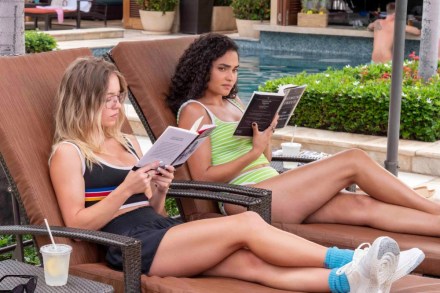
From Fawlty Towers to Psycho, hotel horrors have long provided a rich seam of material for big screen and small. HBO’s The White Lotus, which returns to Sky Atlantic tonight for its second series, swept the board at last month’s Emmys, with ten wins in the limited series category for its sharp social satire set at an upmarket holiday resort. Visiting the establishments you’ve seen on screen isn’t always a good move. I was excited to check in to Rome’s Grand Hotel Plaza, which has been used as a location for movies including L’innocente (1976), Gangs of New York (2002), Ocean’s Twelve (2004), The Man from U.N.C.L.E. (2015) and John Wick: Chapter 2 (2017). But I soon discovered why my suite was so heavily discounted.

Why the best horror films are silent

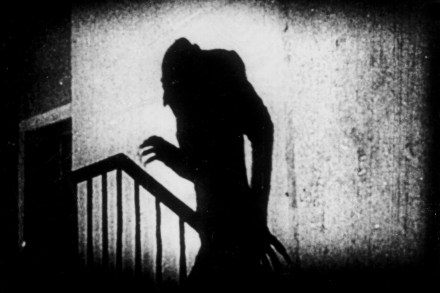
He is completely bald but his eyebrows are grotesquely hirsute; his ears and chin are both weirdly elongated, as are his bony fingers; and as he creeps up the stairs towards the bedroom of a young woman in white, his hunched frame casts a sinister shadow. Count Orlok in Nosferatu is as instantly recognisable a cinematic figure as Charlie Chaplin, Mickey Mouse or Superman. The F.W. Murnau silent film that created this image (and found itself at the centre of a copyright battle with the estate of Dracula author Bram Stoker) is celebrating its 100th anniversary this year. It continues to be regularly screened, showing at two different cinemas in London alone in the run-up to Halloween.

What The Banshees of Inisherin gets wrong about Ireland

It’s a rocky rural idyll on the edge of the Atlantic Ocean. The craggy sea cliffs – Europe’s highest – are swathed in the orange setting sun. Animals – sheep, cows, donkeys – gambol rather than walk on the ancient bog and jump over the babbling brooks. The sand is golden, the ocean as green as the land. Even when it’s lashing down, there’s a rainbow framing the fleet of three fishing boats in the quaint harbour. This verdant set for Martin McDonagh’s new film The Banshees of Inisherin is actually a sea-washed, beach-framed, dry-stone-walled island called Achill, off County Mayo on the West Coast of Ireland. (Inisherin literally translates as ‘Island Ireland’.) But despite its natural beauty, this island isn’t portrayed as a utopia.

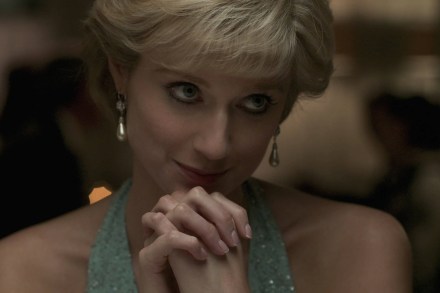
The Crown doesn’t need a disclaimer

The fifth series of Netflix’s The Crown will soon be upon us. Scripted, as ever, by Peter Morgan, the show will cover the travails of the royal family throughout the 1990s, spanning everything from the then Prince Charles and Princess Diana’s marital difficulties and eventual divorce to the rumours of Prince Philip conducting an affair with a much younger woman (his partner in carriage driving, we are told). Jonny Lee Miller, erstwhile Sick Boy from Trainspotting and Sherlock Holmes from Elementary, dons thick glasses and a grey wig to play former prime minister John Major, a decent man who never stood a chance. Later in the series, we are promised the first appearance of Bertie Carvel as Tony Blair, who will come into his own in the sixth and final instalment.

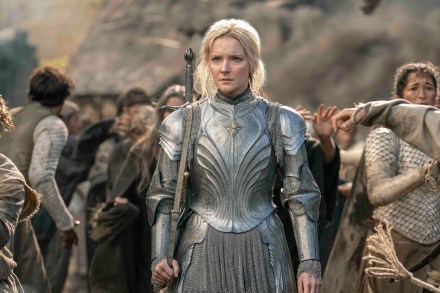
My Rings of Power remorse

As the credits rolled on the series finale of The Lord of the Rings: The Rings of Power, things got awkward. My partner turned to me to express his excitement for series two – just as I realised with absolute certainty that I couldn’t, in good conscience, watch the show again. My reaction came as a shock – to both of us. Hours earlier, I’d been champing at the bit to see the final instalment. Yes, the Amazon Prime programme has been widely panned by critics for everything from the CGI to the ‘colour-blind’ casting, but we’d loved it. In fact, it’s the first full series we’ve made it through as a couple, which only added to the disappointment of my decision. So, what led me here – to feelings of remorse so strong that The Rings are powerless?

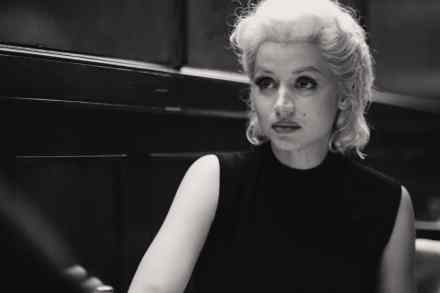
Blonde shows a Marilyn Monroe robbed of motherhood

Andrew Dominik’s film Blonde, a story of Marilyn Monroe's life based on an adaptation of a Joyce Carol Oates novel, has been the subject of much divisive discourse on both sides of the Atlantic. Caren Spruch of Planned Parenthood told the Hollywood Reporter that she sees the film as 'anti-abortion propaganda'. A tweet that went viral said filmmaker 'Andrew Dominik didn’t even try to conceal his anti-choice views and hatred for Marilyn'.

The sexing-up of Emily Brontë

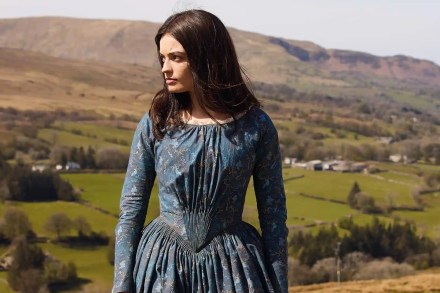
In a month that has seen more than its fair share of chaos, I had hoped the release of the first-ever Emily Brontë biopic would at last offer some cause for celebration. But Emily, which arrived in cinemas this week, has provided quite the opposite.  Frances O'Connor’s directorial debut focuses on a fling between Emily (played by Emma Mackey) and her father Patrick’s dishy assistant curate William Weightman (Oliver Jackson-Cohen), suggesting that their racy romance inspired Wuthering Heights.  Not only is there no evidence that this relationship took place, but there are clues that it was actually the youngest of the sisters, Anne, who caught Weightman's eye.

Is Will Smith too toxic to be taken seriously?

After 9/11, American comedians found themselves in a tricky situation. Make fun of any of the usual standbys of their trade – politicians, authority figures, Rudy Giuliani, anyone who wore a badge for a living – and they were liable to be shouted down in an angry chorus of: 'Too soon!' Yet if all the jokes they could tell were sanitised and tame, their reputations would decline in an instant. It was a bold comic who tried to argue that telling jokes was a natural human response to disaster; many audiences simply refused to find things funny. Will Smith now finds himself in a similar position. The one-time Fresh Prince of Bel-Air has been a Hollywood pariah since he assaulted Chris Rock on stage at the Oscars in March.

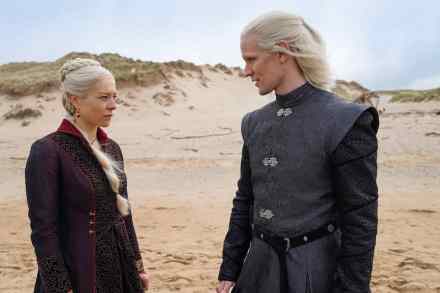
Does House of the Dragon hate its male viewers?

Mark Millar, creator of series including Netflix’s forthcoming American Jesus, has a theory that movie and TV fashions work in 11-year cycles and that we’re just starting a new one now. If he’s right – and I think he is – then it would explain a lot about the second-most disappointing series currently on TV, House of the Dragon.Up till now, I have been giving huge quantities of benefit-of-the-doubt to House of the Dragon. But having endured episode six, I think my patience is finally exhausted. Any TV episode that begins with a protracted and graphic childbirth scene is going to sorely challenge the interest of at least half of its potential audience: most blokes can’t even stomach the thought of watching their own children being born, let alone someone else’s.

Don’t Worry Darling’s flawed feminism

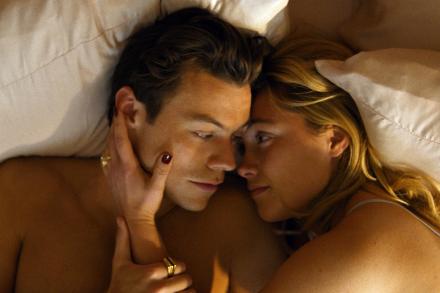
Don’t Worry Darling, the highly anticipated psychological thriller directed by Olivia Wilde, has arrived in cinemas after months of online gossip and speculation about its production. The controversies include: an alleged affair between the director and main actor, Harry Styles, who also happens to be one of the most famous pop stars on Earth; the firing – no, sorry, ‘replacing’ – of the originally cast main character (Shia LaBeouf was switched for Styles); a reported fall-out between lead actress Florence Pugh and Wilde, which led to Pugh not doing any publicity for the film; and a bizarre TikTok theory that Kiki Layne and Ari’el Stachel were hired to meet the Oscars new diversity requirements only to have most of their scenes end up on the cutting room floor.

I think I’ll sue over my appearance in Sky’s Boris drama

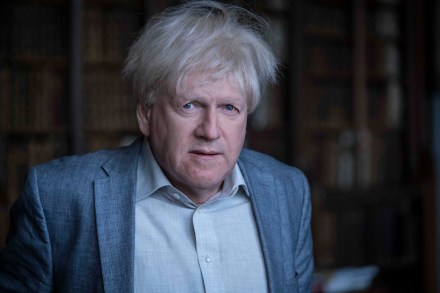
There on my television screen, in a somewhat surreal sequence, was Boris Johnson contemplating the women in his life. And suddenly before me appeared the famous Wyatt features: first eyes, then a nose and then a mouth, right into camera. Medium-range shot and then a close-up. Ah, we had faces then. And then I looked harder, and my blood turned to Freon. It was just a large photograph of me stuck on a 10ft projector screen. Couldn’t those cheapskates at Sky have got a goddamn actress instead of a Polaroid?  As it turns out, This England, the Kenneth Branagh series about my old friend Boris, is more Psycho than psychodrama. Someone in the make-up department seems to have thought they were remaking What Ever Happened to Baby Jane?

Sky’s Boris Johnson drama has a fatal flaw

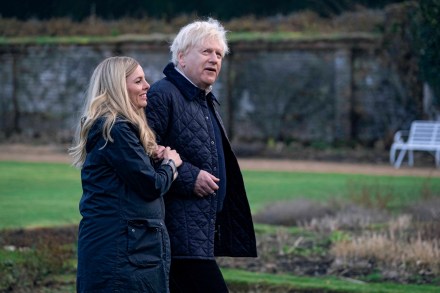
You almost have to feel sorry for Sky. After spending 18 months building up to their big Boris Johnson drama, they end up releasing it at exactly the same time that British politics enters its own cliffhanger mode with drama that could rival any season finale. This England – which tells the story of the start of Johnson’s premiership and the first wave of the Covid crisis – begins tonight on Sky Atlantic, starring Kenneth Branagh as Johnson and Ophelia Lovibond as Carrie. But should Sky have known better than to air it now? Generally the best real-life dramas follow a simple rule of thumb: time is on your side. Rather than rush out your first draft of history, much better to wait until the dust has settled – even if you do have Branagh on board.

In defence of Amazon’s The Rings of Power

Why is Amazon’s new Lord of the Rings show taking so much flak? The way I see it, there are two (mostly separate) factors at play: Tolkien fandom and race. First, Tolkien fandom. Despite the best efforts of the Tolkien Society to 'queer' Tolkien studies, the Inkling’s biggest admirers tend to be Christians on the cultural and political right. Most of this crowd (aside from those who think hating universally beloved things is a good substitute for a personality) loved Peter Jackson’s Lord of the Rings trilogy. His adaptation of The Hobbit, which took plenty of liberties in order to stretch about 300 pages into three feature films, was less well received.

The enduring brilliance of Mad Men

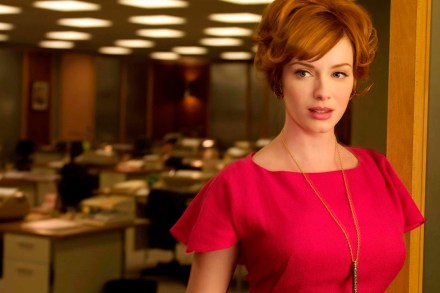
If you were one of the many millions who watched Top Gun: Maverick this year, it may have been a pleasant surprise to see Jon Hamm in the (admittedly thankless) role of Vice Admiral Simpson, who has to look stern and angry at the various transgressions committed by Tom Cruise’s protagonist. Hamm has been cornering the market in these sorts of roles thanks to his appearance of square-jawed rectitude. He is a natural fit for FBI agents, police detectives, and, indeed, vice admirals. But it was a different kind of vice altogether that he followed in his best-known and most beloved role, that of the dynamically charismatic – yet entirely fraudulent – Don Draper, advertising executive extraordinaire in Matthew Weiner’s cult series Mad Men, which was first broadcast 15 years ago.

The problem with Netflix’s Indian Matchmaking

On a recent trip from London to New Delhi, I found out that an acquaintance I see once or twice a year had pulled out of her wedding just 24 hours before the ceremony. An almighty row? Infidelity? Good old-fashioned cold feet? No – her family had simply decided they weren’t happy with the groom and decided to pull the plug. Welcome to the world of arranged marriages. As a woman who was born and grew up in India, arranged marriages – those planned and agreed by the families of the couple, rather than due to the romantic inclinations of the couple themselves – have never made sense to me. But they remain the norm in many South Asian communities. In a 2018 survey of more than 160,000 Indian households, 93 per cent of married couples said theirs was an arranged marriage.

The utter misery of BBC’s Marriage

‘Who are these people and why should we care about them?' This is the most important question any screenwriter must ask before committing pen to paper. Sadly it's a question I failed to come anywhere near answering during the interminable 'realism' of the BBC’s much discussed (and much praised) Marriage. Sean Bean and Nicola Walker play Ian and Emma, an uptight midlife couple caught in the tedium of marital graft after 27 years together. The four-part 'drama' has been widely commended for showing the profound inanity of ordinary people's domestic lives. While I consider myself to be pretty ordinary, I failed to recognise either of these dullards as anything other than famous actors trying to appear real and failing miserably.

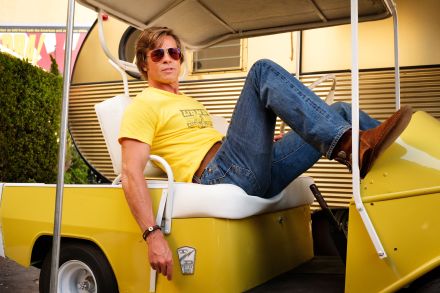
The highs and lows of Brad Pitt

This December Brad Pitt will hit the grand old age of 59. Hard to believe, considering that he has retained much of his youthful appeal, despite a well-documented penchant for cigarettes, weed and booze, habits apparently now finally kicked to the kerb. As he approaches his seventh decade, Pitt has discussed his desire to transition from acting to a production-focused role, which has already long been a feature of his career. Pitt’s impressive production credits include many pictures where he didn’t appear onscreen, including Running with Scissors (2006), The Departed (2006), Kick-Ass (2010), Selma (2014), Moonlight (2016) and The King (2019).