Spectator Life

Spectator Life

An intelligent mix of culture, style, travel, food and property, as well as where to go and what to see.

Jeremy Clarkson changed my life

As a good left-wing lad raised by Guardian-reading parents who didn’t drive, I knew Jeremy Clarkson was tasteless and unpleasant. In my first year as a junior doctor, my surgical ward had one of his articles pinned to the office wall. It was off-putting to see his shabby name and a piece from a tabloid, but one day I read it all the same. As I recall, he’d had some minor scrape and written a column mocking the paramedics who showed up to help. He didn’t want two tinkerers who weren’t medically trained, he sneered. No, he wanted Michael Schumacher to drive him to hospital and a supermodel, sitting scantily clad in the back of the ambulance, giving him the will to live until he arrived.

Britain needs Peter Mannion MP

The current Labour government grows ever more farcical. Despite its promise to ‘tread lightly’ on people’s lives, we’ve seen war declared on farmers, private schools, pubs, humour at work and even allotment owners. This week came the news that drivers over the age of 70 must take compulsory driving tests, with a mandatory ban if they fail – presumably so that, when younger relatives start ushering them towards the ‘assisted dying’ clinic, they won’t be able to make a quick getaway. Starmer, on winning the election, promised the ‘sunlight of hope’, yet things have rarely felt gloomier. Rachel Reeves may have wept for the nation in parliament last month, but its miseries are so often of her devising. You can’t help wondering what The Thick of It would make of it all.

The harrowing true story behind Barry Lyndon

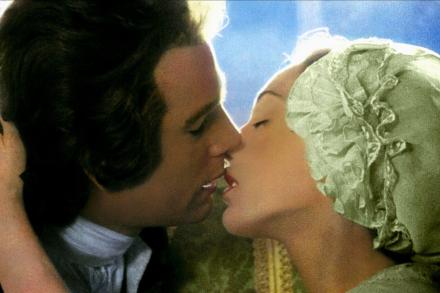
Stanley Kubrick’s swooningly gorgeous film, Barry Lyndon, has just been re-released in cinemas to mark its 50th anniversary. Much ink has been spilled about its hypnotic beauty, its lavish attention to historical detail, its dreamy, luscious, candlelit photography. Yet William Thackeray’s bitingly satirical novel of the same name is often neglected – as is the true, harrowing story that inspired it. The book Barry Lyndon (first published in 1844) bore its genesis from the story of a real adventurer, Andrew Robinson Bowes, whose cruelty to his wife, the Countess of Strathmore, was notorious.

What I learned from running my own Squid Game

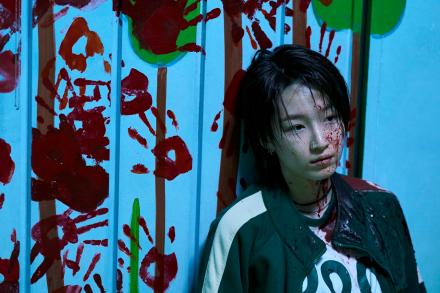
You know how this story goes. The cameras are rolling. The audience is cruel. You’re trapped in the game and the game is death and the game is going out live from the heart of the state of nature where empathy is weakness and you kill each other off until there’s only one left. What will you do to survive? Who will you become if you do? This is the plot of Squid Game, Netflix’s Korean mega-hit that just drew to its gory conclusion. It is also the plot of The Hunger Games, Battle Royale, The Running Man, Chain-Gang All-Stars and The Long Walk. We have spent several decades watching desperate people slaughter each other for survival to entertain the rich and stupid.

James Bond should be more like Paddington Bear

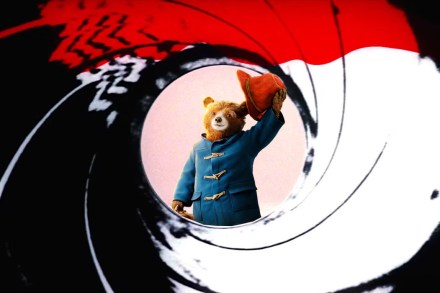
Denis Villeneuve, the Oscar-nominated director of such blockbuster behemoths as Dune and Blade Runner 2049, has been hired to reboot the James Bond franchise. Villeneuve is a hugely capable director, somewhat in the Christopher Nolan school of blending epic set-pieces with an intellectual and emotional core. As the first auteur to be hired to direct a Bond film – a gig he has made clear he’d like for the last decade – he promises to bring a unique sensibility to it that will, hopefully, ensure that critics and audiences alike go doolally when it’s released sometime around 2027. I will not be one of them. Much as I admire Villeneuve, I don’t think I’ve laughed once during any of his films, which tend to take themselves very seriously indeed.

The chat show is dead

I’ve been having this recurring nightmare recently that involves James Corden. The year is 2045. Society has collapsed and London is under quarantine. There is no transport in the city, so survivors get around on foot – though, for some inexplicable reason, TfL workers are still on strike. I live in a bin and survive on a diet of eggshells and cold Rustlers burgers. In my nightmare, I am abducted by a gang of Mad Max-inspired bandits who take me to the Asda Superstore in Clapham Junction and torture me for information. My constitution is strong. I refuse to tell them where I’ve hidden my scarce supply of mango-flavoured vapes. One of the bandits produces a laptop and says, grinning, ‘This will get him talking.’ They pin my eyes open and place the screen before me.

Why television can’t depict the posh

In her 1954 essay ‘The English Aristocracy’, the author Nancy Mitford popularised the descriptions ‘U’, i.e. upper-class or aristocratic, and ‘non-U’, to denote household terms. Although she did not coin the phrase (that credit belongs to the otherwise forgotten linguist Alan S.C. Ross), she brought it to wider public attention. When her friends John Betjeman and Evelyn Waugh added their own contributions, the result was the 1956 book Noblesse Oblige: An Enquiry Into the Identifiable Characteristics of the English Aristocracy. Language termed ‘U’ included ‘loo’ rather than ‘toilet’, ‘vegetables’ rather than ‘greens’, and saying ‘what?’ rather than the apparently more polite ‘pardon?

The Good Life simply wasn’t very good

A new documentary is to be screened later this year celebrating 50 years of everybody’s favourite 1970s sitcom The Good Life. I will not be joining in with the festivities. During the two-hour show, 85-year-old Penelope Keith, who played the irascible Margo Leadbetter, will revisit some of the original locations, including Kewferry Road in Northwood, which stood in for fictional Acacia Avenue in Surbiton – I can feel your excitement growing. The producers have also promised to recreate some of the creaky old sets – OK, calm down at the back. While I’m all for a bit of nostalgia, do we really need to keep reminding ourselves how innocent TV sitcoms were before alternative comedy took a rubber sledgehammer to anything produced before 1979?

Child stars and the curse of Harry Potter

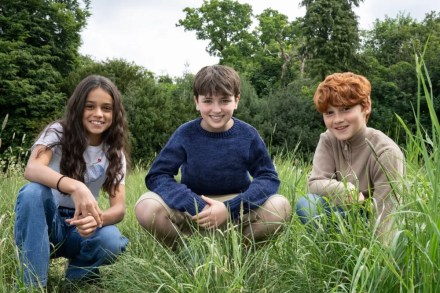
A spell has been cast. Three children – Dominic McLaughlin, Alastair Stout and Arabella Stanton – have magically gone from obscurity to global fame, after HBO announced that they will be playing Harry, Ron and Hermione in the new Harry Potter series. HBO released a photograph of the trio, kneeling in the grass looking earnest, expectant, enthusiastic – and very, very, young. My first thought? Good luck to them, they’re going to need it. The fact that HBO felt the need to immediately disable the comments underneath its Instagram post shows the scale of pre-emptive scrutiny the project is under. The series itself is a huge risk, and with many wondering how they plan to re-introduce the wizarding world to a new audience when the old one is still very much present.

Britain has lost the plot over Peppa Pig

We’ve been through a lot as a nation over the past few years. Watching politicians debate scotch eggs, finding out (without wanting to) how Prince Harry lost his virginity, Just Stop Oil’s tomato soup tantrums… so sometimes an event arises that makes you ask yourself: has this all taken a larger toll than we realised on our collective psyche? Are we, in fact, having some kind of national nervous breakdown?  The answer would appear to be a big, fat, pig-shaped yes, given the ‘breaking news’ announcement on ITV’s Good Morning Britain this week that Peppa Pig matriarch Mummy Pig had given birth to her third piglet, Evie. https://twitter.

The overlooked brilliance of BBC’s The Hour

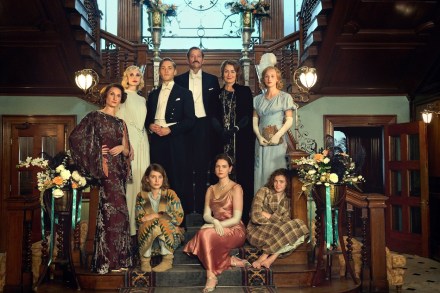
With reluctance – but enticed by its surprisingly starry cast and the fact that it had landed, ironically enough, on Netflix – I recently tuned in to The Hour, the BBC’s 2011 political drama series. It's about a BBC TV news programme being launched in 1956, against the backdrop of the Suez Crisis. And, goodness me, isn’t it good? Better than good, in fact – it’s a high-carat television diamond, and not some lab-grown job either, but the real, romantic, sparkling deal hewn out of the earth and hawked via Antwerp before ending up in the Imperial State Crown.

The perennial appeal of Made in Chelsea

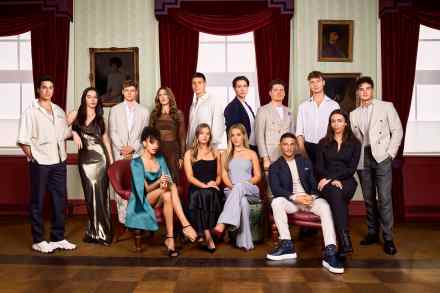
The modern world of dating is ripe for disappointment, and recent dating app convert Sophie is certainly not immune. ‘I went on a date with an actor – not doing too bad – we go to Zuma. I ordered everything; Henry VIII in there, got it all. Then the bill came and he says, how should we do this? Ugh! Ejector seat. Meep! Bye bye. No, I couldn’t. I paid the whole bill and left. Auf wiedersehen.’ Luckily, pal Olivia has a solution, and advises her to ditch the apps and instead sign up to a millionaires’ dating agency run by her friend. Good advice for all of us, perhaps, although I’m not sure I would make the criteria for the dating agency. But this is Made in Chelsea, where finding a millionaire to date is a completely reasonable expectation.

The Lord of the Rings gave me my moral compass

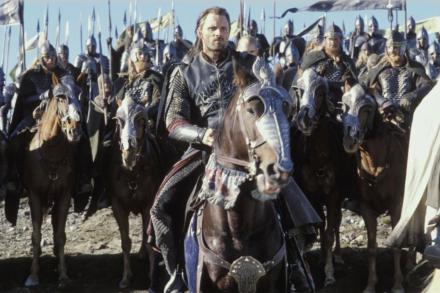
In a recent diary for The Spectator, the editor noted that many of the world’s leading tech companies have names inspired by The Lord of the Rings: Peter Thiel’s Palantir and Mithril; Palmer Luckey’s Anduril. ‘J.R.R. Tolkien has a curious hold on the minds of Silicon Valley’s Trump supporters,’ he wrote. Well, they’re not the only ones. If I had founded a company I probably would have called it Anduril too. While less odd teenagers spent their money on CDs or football boots, I used to have a life-sized replica of the Elvish sword hanging above my bed. I, like the tech bros, was a LOTR obsessive. A super fan. I still am. Tolkien was a genius and I have read his books many times over.

What Warfare forgets about Iraq

In Alex Garland’s new film Warfare, one detail stakes the film’s claim to be the most honest depiction of combat yet. Not the severed foot left lying on an Iraqi street after a bomb blast, nor a wounded US soldier’s screams as a medic bandages up what is left of his leg. Instead, it is that throughout the film’s 20-minute-long gun battle, only one insurgent is shown being felled by a bullet. In real-life combat, enemy fighters do not obligingly linger centre stage – they lurk behind cover, as hard to get a bead on as possible. This was particularly true of Iraq, where most of the fighting was against a hit-and-run foe that was forever vanishing around the corner. Yet in Warfare, it is not just the baddies who do not follow the standard Hollywood script.

The drama of the Vatican

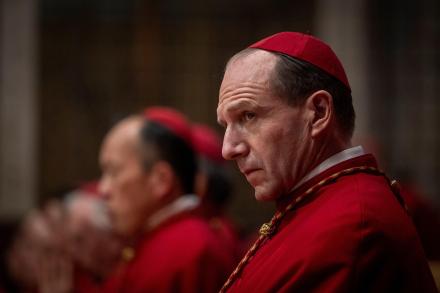
Next week, after Francis’s funeral, the College of Cardinals will assemble in Rome to choose the man who will lead their Church through these increasingly troubled times. That gathering has become more familiar to a wider, non-Catholic public thanks to the recent films Conclave and The Two Popes – though these are far from the first time that novels and the silver screen have made a drama out of a conclave. This assembly is unlikely to echo the fiction of Robert Harris’s thriller and its screen version starring Ralph Fiennes.

Forget Adolescence: this is the Netflix drama teenage boys should watch

Boris Johnson didn't like Adolescence. In his Daily Mail column last week he acknowledged the fine acting of the most talked-about television programme of the year, but still concluded that it was ‘tosh’. The problem, he felt, was that it wasn't based on a real-life crime, which somehow lessens its worth as a lesson for our times in the eyes of the former Prime Minister. I'm not sure his logic fully holds up to scrutiny (nor, for that matter, does Keir Starmer's plan to show Adolescence in schools). But if it is real-life drama that Boris wants then Netflix, with impeccable timing, this week released another one of those sports documentaries at which they have become rather adept.

Is today’s TV British enough?

There is a decent chance that most Spectator readers have seen at least one of the following: the much-ballyhooed Adolescence, the rather less controversial Black Doves, and the once-magnificent, latterly tawdry The Crown. From the travails of royalty to the horrors of a child killer, via the acrobatic derring-do of unusually witty spies, these shows include some of the greatest British actors working today. They are all quintessentially English in their settings. All three have been hugely successful and should, by rights, be programmes that the British television industry should be extremely proud of. Except, of course, they’re not British. Well, not wholly, anyway.

What’s wrong with a Spinal Tap reboot?

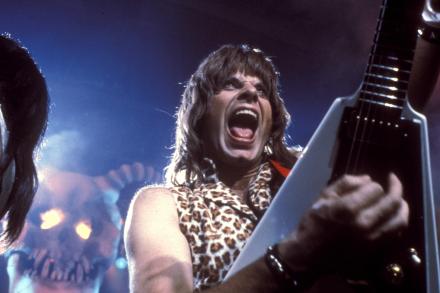
The wigs are being dusted off, the spandex jumpsuits laundered and the amps turned up, not to 11 but to infinity. Rock legends Spinal Tap, one of the world’s loudest bands, are back with a sequel to their seminal 1984 mockumentary, to be released on 12 September. But can Spinal Tap 2: The End Continues possibly live up to the nearly flawless original, or are we about to witness an act of cultural sacrilege? https://youtu.be/P-Y51nBET8k Happily, nearly all the original cast will be in the sequel, and we are promised some big-name cameos from Paul McCartney, Elton John and Garth Brooks.

The true villain of Netflix’s Adolescence

Even if you haven’t seen Adolescence, currently the most-watched show on Netflix, you’ll doubtless be aware – or think you’re aware – of its central themes: knife crime, social media, the manosphere and its pernicious influence on teenage boys. In other words, ‘the Andrew Tate shite’, as the show’s (female) detective sergeant sighs at one point.  Critics have gushed that this is ‘TV perfection’ (Times, Guardian) and a landmark series ‘so powerful it could save lives’ (Guardian again). Each of the four one-hour episodes is apparently shot in one take, which is the sort of thing that thrills male critics but for ordinary viewers can, at times, feel self-indulgent and contrived.

John Hemingway and the lost world of Angels One Five

You will doubtless have read the news and possibly even an obituary of Group Captain John ‘Paddy’ Hemingway, the last of ‘the Few’, who died this week at the great age of 105. That he lived beyond the age of 21 is little short of miraculous, of course – given that he was shot down no fewer than four times in just a fortnight during the Battle of Britain, which claimed the lives of 544 pilots out of nearly 3,000 who fought for Fighter Command. Without the victory their service and sacrifice brought, it’s highly likely that the outcome of the second world war would have been reversed.

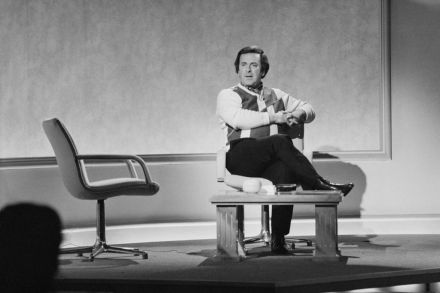
We need a modern Wogan

Nowadays whenever an elderly celebrity dies – consider the death last month of Gene Hackman as a case in point – one of the first things that happens is that a chunky clip of them appearing on a talk show such as Wogan or Parkinson gets shared on social media. Before you know it, you’ve spent three or four minutes listening to them regale television-watchers of the 1970s, 1980s or 1990s with a reflective anecdote or a personal story that reveals something important or even profound about their lives and animating passions or influences.

Make Bond great again

One of the great recurring James Bond tropes is to make it look as though 007 has actually been killed before the film’s title credits. You Only Live Twice, From Russia with Love and Skyfall all begin with Bond in a position where his demise seems inevitable. Of course, he always turns up alive. (Quite what the rest of the film would consist of if he didn’t is anyone’s guess: perhaps Moneypenny dealing with probate or M arranging one of those ghastly direct cremations.) Now, however, we may have reached a danger from which even Bond cannot wriggle out. Amazon, the company responsible for one of the biggest flops in TV adaptation history, the Middle-earth prequel series The Rings of Power, has paid more than $1 billion to take ‘creative control’ of the Bond franchise.

How Star Trek invented DEI

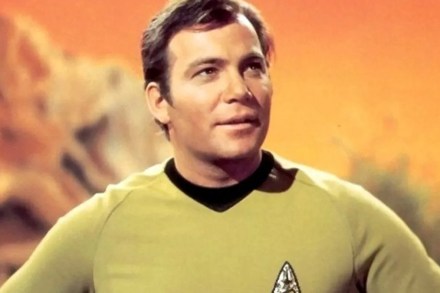
Values. Whenever some poor soul gets cancelled, sacked, scalped etc., there’s almost always a bland, impersonal statement from the institution carrying out the scalping. In third-person corporatese, from the moral high ground, such pronouncements will conclude with the sentence: ‘The comments of Person X do not align with the values of Institution Y.’ Where do these mysterious values originate? From which particular pile of decomposing matter were the spores of these holy secular values spontaneously generated? Frankly, for a lot of this, I blame Star Trek. It seemed so innocent back in the day, this story of the crew of a massive space warship in the 23rd century.

Bridget Jones is no feminist

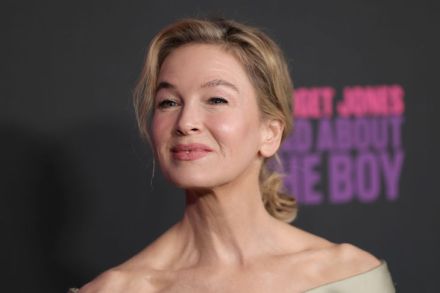
Bridget Jones isn't what she used to be. The latest film, Mad About the Boy, features Bridget as a grieving widow with kids. It's a sad departure from the Bridget of the 1990s, with her festive jumper, short skirts and saucy moments with Daniel Cleaver. I was 14 and Bridget Jones hit every note I wanted Mad About the Boy, which came out on Thursday, has already been raved about, slathered over and lauded. It's certain to make a fortune at the box office. But I've always found the films’ success rather puzzling. Bridget will always be text first and foremost – not film – to original true believers who, like me, devoured Helen Fielding’s first instalment on publication in 1996.

Why are music biopics so bad?

The Led Zeppelin singer Robert Plant was driving through America 20 years ago when he heard a radio station announce that if any listener donated $10,000, they’d never play ‘Stairway to Heaven’ again. Somewhat tired of the song himself, Plant rang up and pledged the cash. ‘It’s not that I don’t like it,’ he later said. ‘It’s just that I’ve heard it before.’ Rather the same attitude seems to have been taken in the band’s new biopic, Becoming Led Zeppelin, which was released in British cinemas last week. The trailer calls it the band’s ‘first ever authorised documentary’, but fans hoping that this means seeing rough cuts of ‘Stairway’ should beware: all that glitters is not gold.

Steve Coogan should stick to comedy

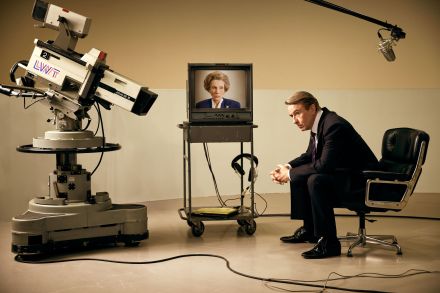
How amusing to hear Steve Coogan and Emily Maitlis pontificate about the dreaded ‘establishment’ on Maitlis’s News Agents podcast recently. During a discussion about Coogan’s role as Brian Walden in Brian and Maggie – Channel 4’s two-part drama about Walden's final, sensational interview with Margaret Thatcher in 1989 – the comedian admits that although he identifies with Thatcher’s lower-middle-class background, he had concerns that the script might make her seem too sympathetic. Heaven forbid. Coogan considers the drama to be as much about class as a lament for long-form interviews, suggesting that intelligent outsiders such as Walden, Thatcher and indeed Coogan himself will always struggle to break through the cut-glass ceiling.

How The Traitors betrayed itself

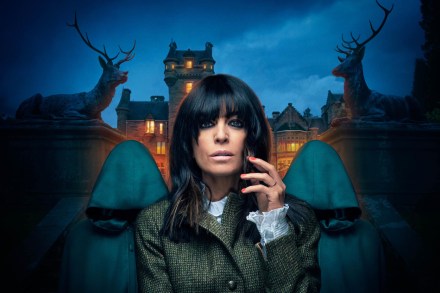
January can only mean one thing: The Traitors is back. For those of you who haven’t been initiated into this cloaks-and-daggers drama, the premise is simple: the traitors attempt to remove players by ‘murdering’ them, while the faithfuls try to work out who the traitors are. Each night the group votes someone off after a round-table discussion. It’s real-life Cluedo, with extra high-camp theatrics – hooded robes, crossed-out portraits, handwritten messages, crocodile tears and croissants in the breakfast room – all under the watchful fringe of Claudia Winkleman. The show lives and dies on the likeability of its cast and their relationships The first two series were an unexpected success.

What happened to Corrie?

In theory, I don’t care for actors – all that pontificating about climate change while taking private jets – but in practice, I find them great fun. One of my dearest friends, a small-screen siren, loves regaling me with tales of her shockers, like an American mini-series with a huge budget but an appalling script. ‘we were being housed in fabulous hotels, dined every night on fine food and wine so we shut up and took the coin. If you agree to do a job, even if you realise halfway through that it’s a pile, do it with good grace – learn from it and move on. But sometimes you have to consult your fellow actors and say “How the hell am I going to say this?” – it can create a great Dunkirk atmosphere.

The death of anticipation

Were there arguments? Undoubtedly. By the time Christmas Eve arrived, it was a dead cert that Great Aunt Mary would prefer BBC Two’s festive celebration from Westminster Cathedral (complete with the puberty-defying nearly-15-year-old Anglesey treble Aled Jones) to Kenny Everett’s reworking of A Christmas Carol on BBC One (louche, anarchic and probably regrettable, with its jokes about a pudding with cystitis and pantomime-style wordplay of the ‘Good golly, Miss Marley?’ variety). And it was 1985, so only 30 per cent of British homes owned a video recorder, making the ‘what to watch’ argument notably fraught in the season of peace and goodwill toward men. The problem with anticipation is the element of waiting. How long is it since patience was a virtue?