Spectator Life

Spectator Life

An intelligent mix of culture, style, travel, food and property, as well as where to go and what to see.

How The Box of Delights became a Christmas cult classic

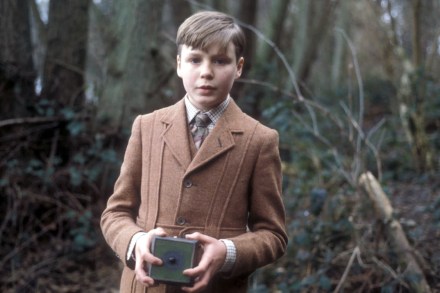
At this time of year, switching on the radio to hear the twinkling harp at the start of ‘The First Nowell’ from Hely-Hutchinson’s Carol Symphony has a profound Proustian effect on an entire generation. It takes us back to our childhood living rooms in 1984, sitting cross-legged in front of a boxy TV with a 14-inch screen, bewitched by the most exciting, terrifying and Christmassy programme we had ever seen. Part of the nostalgia comes from knowing that this wonderful series would probably never be made now As a bookish child who lived largely in my head, I thought the BBC had made The Box of Delights especially for me. So, it seems, did an awful lot of other people.
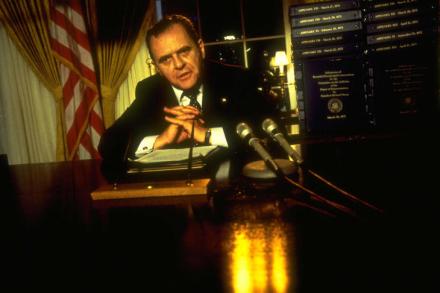
What’s the best film about US politics?

After Donald Trump’s election-win, many junkies of US politics will be needing another fix. But if you’ve already overdosed on Megyn Kelly post-mortems on YouTube or had your fill of Estee Palti’s Kamala imitations, where do you go to head off the pangs till inauguration day next year? Anyone without time for the entire West Wing series could do a lot worse than watch the films below. The first is Nixon (1995), Oliver’s epic three-and-a-half hour movie starring Anthony Hopkins as America’s disgraced 37th president – a surprisingly generous portrayal of a man as reviled by the Left, in his day, as Donald Trump is now.

The unforgivable bias of Hilary Mantel’s Wolf Hall

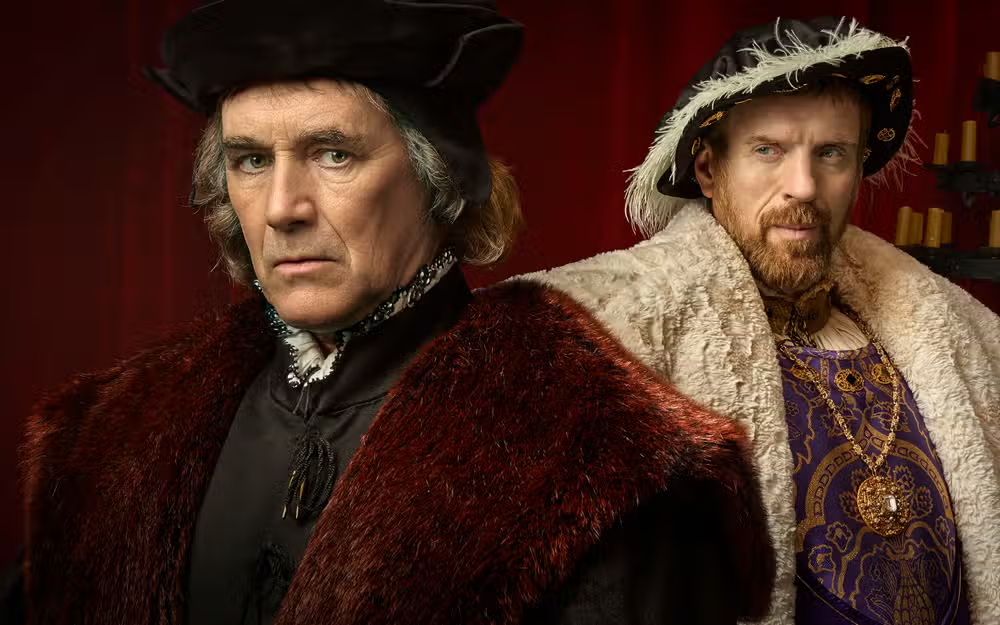
Anyone watching The Mirror and the Light – the BBC adaptation of the final part of Hilary Mantel’s Wolf Hall trilogy – can admire the performances of Damian Lewis as Henry VIII, and Mark Rylance as Mantel’s hero Thomas Cromwell. But no one should confuse them with real history. The late Dame Hilary was a classic case of an artist letting her personal background and education slant her presentation of the historical record. Mantel had an awfully strict Roman Catholic upbringing and allowed her suffering at the hands of school nuns to dictate the way she saw the English 16th-century Reformation. She came to believe that ‘no respectable person’ could be an observant Catholic.

The lost thrill of the thriller

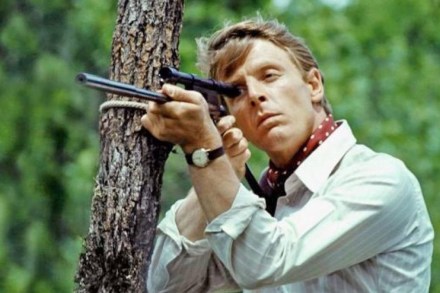
I will not be joining in the praise heaped on the current Sky remake of Frederick Forsyth’s classic thriller The Day of the Jackal. Apart from the fact that the series’ star Eddie Redmayne – who plays the Jackal, an ice-cold hitman – is about as menacing as a field mouse, the new Jackal is very much a woke version of the story, complete with a far-right German Chancellor who is one of the Jackal’s victims. Eddie Redmayne’s Jackal is about as menacing as a field mouse Forsyth himself, a solidly right-wing Tory, seems to share my lukewarm opinion of the new adaptation of his masterpiece. He damned Redmayne with faint praise in a Times interview as a ‘nice young man’, hardly the encomium a ruthless killer would wish to have.

What horror does to us

Tonight, the BBC will be broadcasting what is – to my mind – the scariest film ever made. Indeed, I would go further than that, I would say this movie is the scariest human artwork in any form – and that includes novels, plays, stories, the lot. This film beats them all, and by a distance. What is it? Of course, I’m not going to tell you that straight off, that would break all the rules of scary suspense writing. First, I want to examine the underlying questions: why do we like being artificially scared? And what makes a particular ghost story or Dracula remake genuinely frightening? The questions sound simple; they are not.

25 years on, no one compares to the Two Fat Ladies

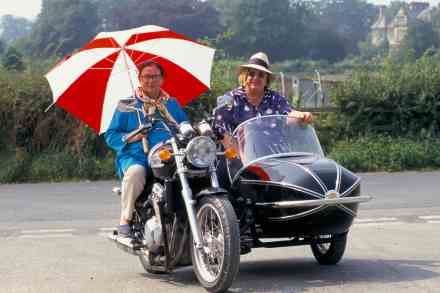
They were loud, vivacious and gloriously un-PC.  Sometimes they seemed to be learning how to cook as they went, barely one step ahead of the viewer. It didn’t matter. If anything, it only made the BBC's Two Fat Ladies more watchable. And 25 years on – the last of the two dozen episodes pairing Jennifer Paterson and Clarissa Dickson Wright aired on 28 September 1999 – I miss terribly their jaunty style of cooking, glass in hand. I don’t think I’m alone. Spectacularly and unexpectedly successful in their lifetimes – 70 million worldwide watched their programme over its four-year run, including many in the US – the internet has allowed them to find fresh admirers since their death.

It’s time to banish binge-watching

It’s Wednesday, which means my evening is booked up for Slow Horses. The usual protracted regime of children’s tea-bath-bed will be compressed into about 10 minutes (packet of crisps, cursory going-over with a wet wipe, withholding of bedtime story on thoroughly spurious grounds) before my husband and I leap onto the sofa like The Simpsons in the opening credits with a bottle of Malbec and a Charlie Bigham’s curry to watch the new episode on Apple TV+. (Gen Z readers: at the risk of lowering the birth rate even further, this is what fun looks like in your forties after three kids.

The death of the war photographer

Hollywood has been good to war photographers this year. First came the dystopian blockbuster Civil War, with Kirsten Dunst as a veteran photojournalist touring America at war with itself. Now comes Lee, starring Kate Winslet as second world war legend Lee Miller, who captured the liberation of Paris and the horrors of Dachau. Both demonstrate the screen appeal of war correspondents, whose hell-raising, bullet-dodging image is tailor-made for the movies. Yet in an era with nearly as many frontlines as in Miller’s time – Ukraine, Gaza, and Sudan to name a few – ask yourself this question: can you name a single war photographer who’s doing the job today? My guess is probably not. And if you’re wondering why, try this test.

Disney’s betrayal of The Jungle Book

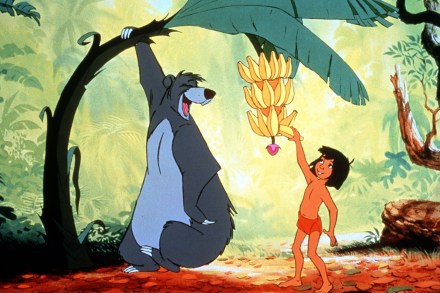
When Sven-Göran Eriksson’s coffin was being paraded through the streets of his home town, ahead of his funeral, it was followed by a marching jazz band playing ‘The Bare Necessities’. The song, from Disney’s The Jungle Book, was intended to honour the former England manager’s request that his send-off should be celebratory rather than mournful. But, despite a personal fondness for Sven – which I wrote about here in The Spectator – this choice left a sour note for me. This was because of a perhaps obscure but nevertheless deeply held dislike which I have developed for the fictional character associated with the song: Baloo, the bear. I cannot stand him. He is a classic feckless father figure who, for me, has been wrongly revered by film audiences for decades.

What has Netflix got against Ireland?

Early in the first episode of Holding, an adaptation of Graham Norton’s novel of the same name, a young, ambitious, foul-tempered detective is called to a village in west Cork where human remains have been found. Before handing the investigation over and returning to the city, she spits out her contempt: ‘I’m not spending weeks down here in the arse end of nowhere.’ Similarly, in the first episode of Bodkin, a Netflix series released last year, a young, ambitious foul-tempered journalist is sent to investigate decades-old disappearances in the same region and forced to team up with an American podcaster and his researcher. ‘I’m stuck consulting on a true-crime podcast in the arse end of nowhere,’ she declares.

Remaking Harry Potter is risky

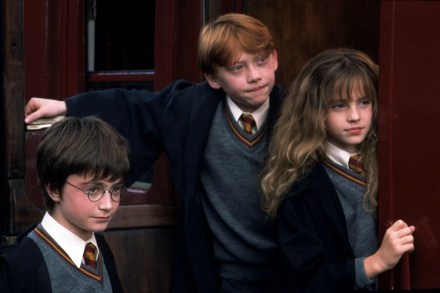
Few franchises have the cult-like devotion of Harry Potter. One only has to watch the video of hordes of adults counting down the arrival of the Hogwarts Express at King’s Cross, and their fury when it didn’t arrive, to understand the religious fervour people feel for the wizarding world. Yet one announcement did come last which, one that will send shivers down the spine of every magic-loving millennial super-fan. HBO has launched a casting call for its new Harry Potter series. Even the teaser trailer makes it clear the creative chokehold the series is in I am sure this is exciting news for some: mainly pushy parents who are already prepping their little darlings on how to pronounce ‘wingardium leviosa’, ready for the ultimate vicarious thespian high.

Hollywood’s youth obsession is draining the life from films

Can anyone name the actors in the new Alien: Romulus movie? No, me neither. Which seems odd for such a massive franchise, but then I struggle to name a single film star under the age of about 35, and I consider myself a movie buff. As is often the case with the release of a new sequel, I returned to the original for reappraisal. Yes, Ridley Scott’s masterwork is still frightening and expertly paced, but what makes the film exceptional is the diversity of the acting talent. And by diverse, I don’t mean the sort of DEI casting-by-numbers that turns every movie into a shiny Benetton commercial. No, I mean that in the 1979 original, we witness the full gamut of acting talent available at the time.

The slow death of Star Wars

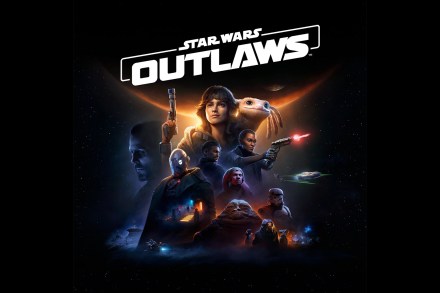
The video game Star Wars Outlaws is to be released this week. The game is set between The Empire Strikes Back and Return of the Jedi – so in the universe of the original, still-greatest film trilogy – and has been several years in development. According to its ‘narrative director’ Navid Khavari, ‘We didn’t just look at the original films, we looked at George Lucas’s own inspirations: Akira Kurosawa, world war two movies like The Dambusters and spaghetti westerns. You see the care that was taken in that original trilogy to make it tonally consistent. We need to make this feel like it has high stakes, lighthearted humour, emotional tension, growth between characters [and] the hero’s journey.

Alain Delon seduced us all

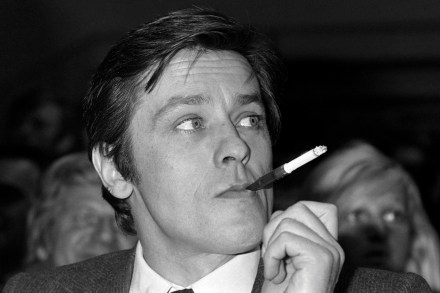
In a 1962 interview, Alain Delon pushes aside a carafe of red wine and explains that when offered his first cinema role, he didn’t really want it: je n’avais pas envie de faire spécialement ça. Delon, who died over the weekend at the age of 88, may not have been immediately seduced by cinema, but cinema was instantly seduced by him. In a lifetime filled with roles playing rogues and gangsters – Plein Soleil (1960), Il Gattopardo (1963) and Le Samouraï (1967) – the role he is best known for is himself, a shapeshifter who flirted with the actor’s mask; sometimes hiding behind it, sometimes letting it slip off altogether.

Don’t let Netflix ruin Lost

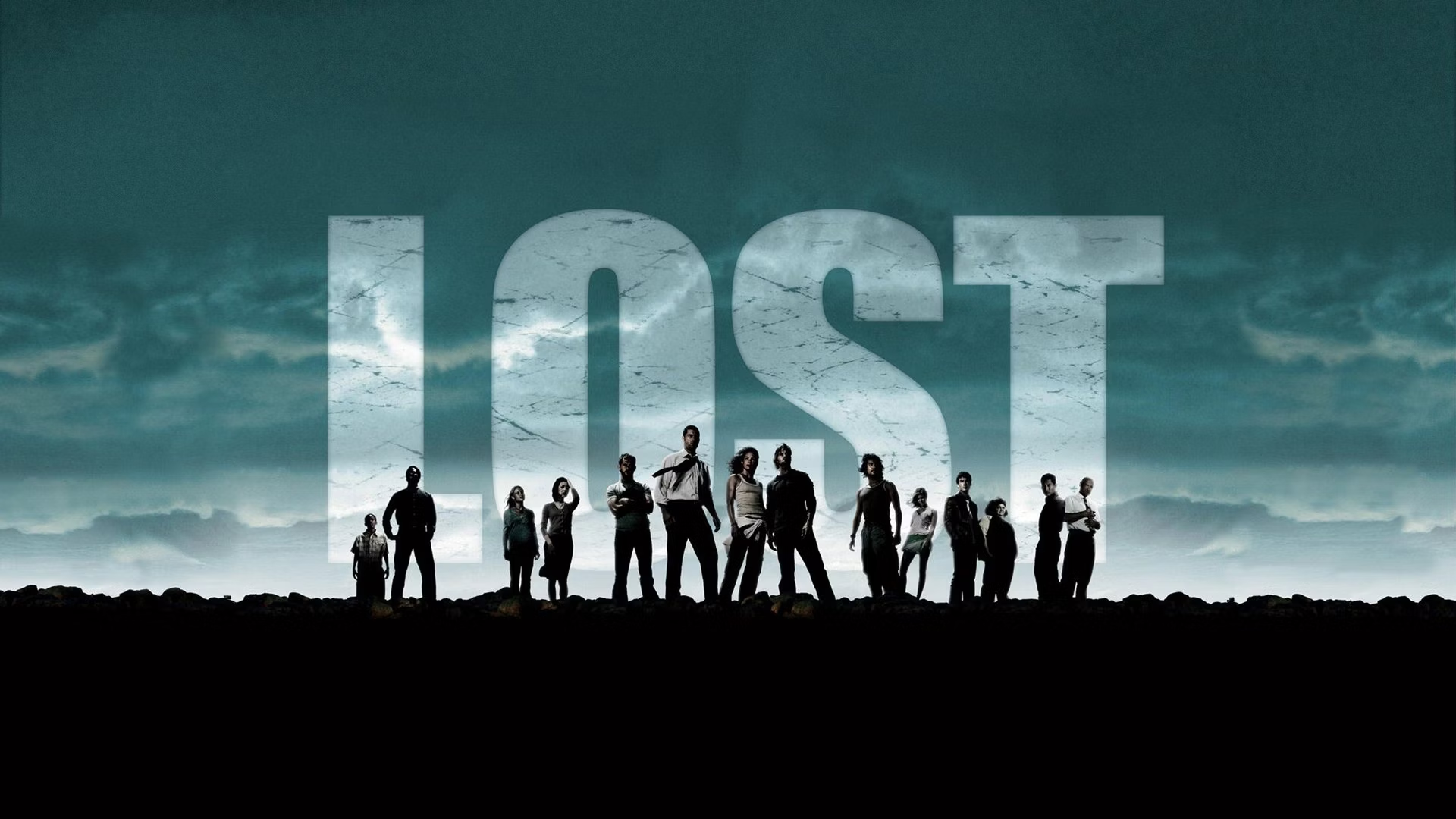
It’s July 2024, and Netflix has decided we have to go back. In honour of the 20th anniversary of the pilot, all six series of Lost have been uploaded to Netflix in the US, and now younger audiences get to experience one of the biggest pop culture obsessions of the noughties for the first time. This character-driven, mythologically-rich, Emmy-winning existential island adventure was once so popular (it averaged between 11 and 18 million viewers a series) that the White House pledged not to disrupt the final season’s premiere with President Barack Obama’s State of the Union address. I even loved the notoriously divisive finale, which didn’t necessarily resolve many of the metaphysical mysteries I am, and always have been, a Lost super-fan.

I went on First Dates. I wish I hadn’t

I blame Brexit. In the aftermath of the 2016 referendum, when the whole nation was still in the throes of a collective nervous breakdown, I succumbed to the prevailing mood of madness and went on a TV dating programme. No, it wasn’t Naked Attraction, the Channel 4 show in which participants strip down to reveal all to their prospective partners, but a rather more restrained show on the same channel called First Dates. I hadn’t actually even seen the programme when I noticed an ad in The Spectator appealing for single middle-aged people. I chose a Dover sole, which was an error as I was filmed plucking fishbones from my teeth My 18-year relationship had recently ended, I had moved to a new town, and like Britain freeing itself from the EU, I felt ready for a fresh beginning.

What happened to the erotic film?

Sexy time at the cinema is becoming a thing of the past. That’s according to research on the prevalence of vices in top live-action films from film maven Stephen Follows. His study shows that drug taking and violence are as popular on screen as ever in the 21st century. Profanity has dipped only slightly, but sex has dropped off a cliff since the year 2000. We used to love what they used to call a steamy blockbuster. I came of age in an era where the ‘erotic thriller’ – 9½ Weeks, Fatal Attraction, Basic Instinct – were the box office draws, in which big stars lost their drawers. Comedies like A Fish Called Wanda, Green Card or When Harry Met Sally relied on frisson and fizz for a large part of their appeal.

Baby Reindeer has become meta entertainment

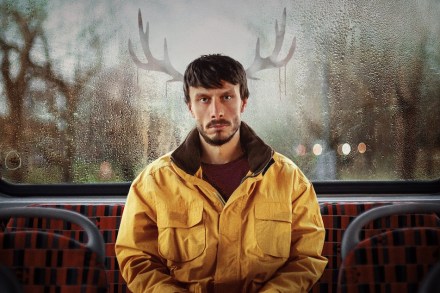
Fiona Harvey appears to be having the time of her life. She’s the ‘real Martha’ in the Netflix hit, Baby Reindeer, where she’s depicted as a convicted stalker with a rage problem. Denying almost everything, Harvey is suing Netflix for libel on a global scale, hoping to secure a tidy £133 million. Since the show aired, her story has become almost as sensational as the drama itself – it’s all over social media and is now playing out with particular ghoulishness and high-drama on YouTube.

Parents, trust me, your kids are better off without television

Last year, we got rid of our television. Pretty much, anyway: it lives in the attic of our increasingly cramped two-bedroom maisonette. The TV only comes down for mummy and daddy’s Friday night date nights and for occasional family film time. Any time gained by putting the television on was almost invariably lost (and then some) by arguing about switching it off With three kids under five, we did not come to this momentous bit of Ludditery lightly. However, our three kids had never really had that much screen time anyway: YouTube, tablets, and phones are verboten, and we have never opened the entertainment sluice gate by just ‘sticking the telly on’ and subjecting them to what we unapologetically call ‘twaddle’. Our television wasn’t even connected to the aerial.

Bridgerton’s big fantasy

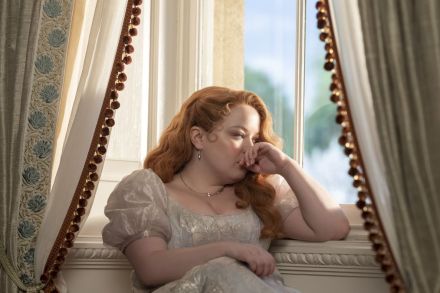
Bridgerton is an American fantasy of ye olde England – right down to the absurd if enjoyably playful not-quite colour blind casting and its insinuation that Regency London was peopled with an equal number of Bame and white aristocrats. Even the casting of Queen Charlotte, played by half-Guyanese actress Golda Rosheuvel, is an allusion to the dubious speculation that the real Queen Charlotte had African heritage and was in fact a woman of colour.  So the unspoken final frontier of oppression is also the most debilitating: not being hot Bridgerton’s beloved first season saw an explosively sexy performance from its male lead, an antisocial Duke played by the gorgeous British-Zimbabwean actor Regé-Jean Page.

The Third Man fan’s guide to Vienna

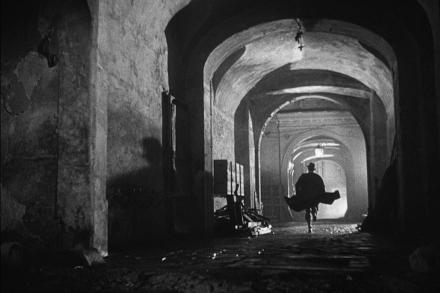
The greatest movie ever made celebrates its 75th anniversary this year and I’ll be watching it – for the umpteenth time – with appropriately fine fizz at hand. Sorry, what? Oh, come on, I’m talking about The Third Man. There’s no finer film. I thought everyone knew that. You know, written by Graham Greene, directed by Carol Reed and set in a battered, broken, postwar Vienna. It stars Joseph Cotten as Holly Martins and Orson Welles as Harry Lime and there’s sterling support from Alida Valli, Trevor Howard, Bernard Lee and Wilfrid Hyde-White, whose comic cameo almost steals the show.

The plastic feminism of Barbie

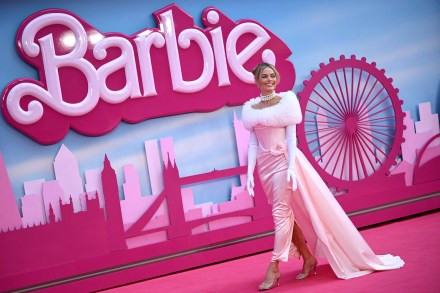
Colombian pop singer Shakira caused quite the stir earlier this month when she revealed that her sons ‘absolutely hated’ the Barbie movie, which had a major cultural moment last year. Hot pink came back in fashion, people were hosting Barbie-themed parties and everyone was obsessing over lead Margot Robbie’s vintage Barbie-inspired clothing on the movie’s press tour. It was Barbie-mania, and the film earned $1.4 billion worldwide. Shakira’s family, though, weren’t fans of the global phenomenon. She said her nine- and 11-year-old sons didn’t enjoy the movie because they found it to be ‘emasculating’. And, she added, ‘I agree, to a certain extent’.

Married At First Sight feels strangely traditional

There should be a salacious German word for the blissful relief one feels at not being in another’s uncomfortable situation. Not pleasure at their misfortune, as in schadenfreude, just toe-stretching- and-dancing joy that you are safely under a blanket on the sofa while others are undergoing intense public scrutiny.  First impressions suggested earnest, caring individuals fed up of the transience of modern-day hook ups This is the feeling I have when watching Married At First Sight, the hit American TV programme that is now franchised to 24 other countries across the world.

Why women love gay films

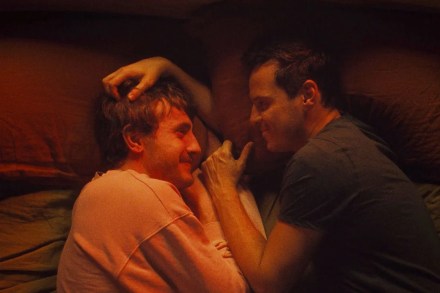
Last month, the BBC offered an apology of sorts after a red-carpet reporter at the Baftas asked Andrew Scott, star of the film All of Us Strangers, about fellow Irish actor Barry Keoghan’s appendage. This had been the subject of conversation thanks to Keoghan’s naked dancing in the film, Saltburn, in which Keoghan’s floppy bishop steals the final scene. To settle this nagging concern the BBC turned to a gay man. ‘There was a lot of talk about prosthetics. How well do you know him?’ the reporter asked an annoyed Scott who shook his head and walked away.

Get ready for the cowboy renaissance

Marvel is at death’s door. What’s next? Some say we can track an incoming recession by the length of women’s skirts, others by the popularity of dance music. Film, as the composite of a million images, comes out as a more sophisticated forecaster – and not just of the economy, but of lifestyles and mentalities. Styles rise and fall with the times. They’ve been doing so since the early days of commercial cinema. A cowboy craze has already spread to TV Take the original shift from film noir to Western. Noir, which peaked in popularity in the latter half of the 1940s, dealt with the leftover anxieties of world war two. Sometimes this was obvious: in Orson Welles’s The Stranger, a Nazi war criminal descends on a peaceful Connecticut town.

In praise of long films

Late last year, Martin Scorsese’s epic Killers of the Flower Moon switched from cinema to living room on the Apple TV streaming service. An increasingly popular tactic, the move from big to small screen draws in a whole new audience, many of whom deliberately waited to see it for the price of a monthly subscription rather than spend a night at the pictures paying for overpriced popcorn, listening to other people’s conversations and not being able to check their Instagram account every five minutes. You would think watching anything for more than two hours requires some sort of marathon effort akin to sitting through The Ring Cycle Yet even as they relaxed on their sofas, they took to social media to complain: ‘Why are these films so long?

Logan Roy is disgusting

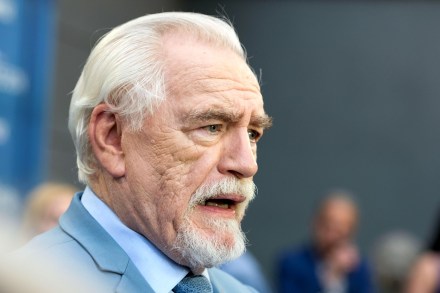
The other day I met a young woman wearing a crop top emblazoned with the words Waystar/Royco – the media conglomerate at the heart of Succession, HBO’s cult television drama about the nasty Roy family and their insane attempts at one-upmanship for control of their father’s company. It won Emmy and Golden Globe awards three years running for best drama, plus numerous extra gongs for the cast, making it – in my book – the most overrated piece of entertainment of all time.  Shouldn’t men like Logan Roy, and behaviour like Cox’s, be relegated to a distant era? What I disliked most about Succession, which I finally forced myself to watch this year, was the show’s star patriarch Logan Roy, played by gruff ex-RSC man Brian Cox.

Hollywood, please stop the biopics

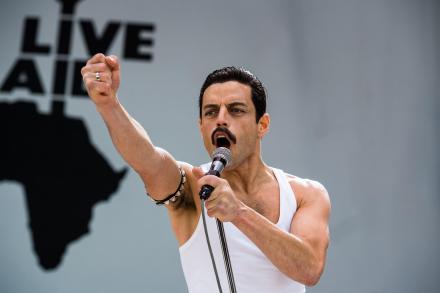
Having just watched the overwhelmingly underwhelming Bob Marley: One Love, I have decided that Hollywood’s obsession with biopics must be stopped. Biopics have become so ubiquitous, so pervasive, so unoriginal, that Kingsley Ben-Adir, who plays Marley in the film, has already starred in two other biopics: The Comey Rule as Barack Obama and One Night in Miami as Malcolm X.  A biopic can feel like little more than a Wikipedia page Real-life stories have become so popular that this year we will be treated to not one, but two dramatisations of Prince Andrew’s disastrous BBC Newsnight interview.

The boring moralism of the new Mean Girls musical

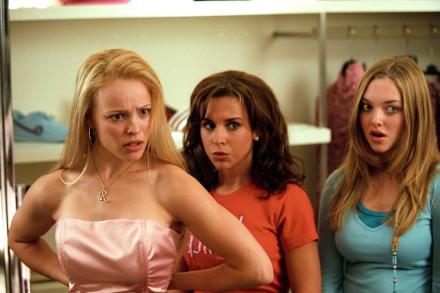
The original Mean Girls premiered 20 years ago this spring, but it might as well have come out yesterday. The Middle East is, again, still, at war with the West. Britney Spears looks out from every tabloid. After years of cancel culture, being controversial is great again. And, just as in 2004, Mean Girls is everywhere. Walmart’s Christmas ad starred Lindsay Lohan, Amanda Seyfried, another original Mean Girl –and (for some reason) Missy Elliott. Lohan has also returned as a romantic comedy star, via Netflix holiday flicks and an announced Disney+ Freaky Friday sequel.