Spectator Life

Spectator Life

An intelligent mix of culture, style, travel, food and property, as well as where to go and what to see.

The steady rise of ‘Slow TV’

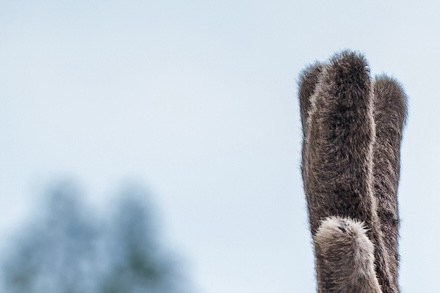
Like many families, we used to have a TV in our kitchen. But the default response when there was nothing immediately to be done became to reach for the remote. This suggested we were all developing a woeful lack of gumption so, when we moved house several years ago, I became a television dictator: it’s verboten Monday to Friday, and our 15-year-old monitor, with its cracked screen and unreliable controls, has long been relegated to the sitting room.  Every so often, however, I find my own resolve weakening. This happens every April when SVT, the Swedish national broadcaster, streams The Great Moose Migration, all day, every day, for three weeks.

Politics has robbed Eurovision of its silliness

Here we go again. Every year, with the inevitability of death, taxes and political regicide, the BBC’s Eurovision coverage reminds viewers that most pop music produced in European countries is of a terrible standard, and that our country’s banal offering is never going to inspire any patriotic fervour. This year, British hopes are pinned on an electropop act called Look Mum No Computer, with a truly terrible sub-Depeche Mode song called ‘Eins Zwei Drei’ that contains the lyrics ‘Counting in English doesn’t cut the mustard / So sick of munching roly-poly with custard.’ Don’t call me Cassandra, but I suspect that Look Mum No Computer (real name: Sam Battle) will be receiving rather fewer than drei punkte from many of the international judges.

Rivals is an ode to Thatcherite excess

Today, Rivals returns for a second series on Disney+. The first series was that rarest of phenomena: an adaptation that didn’t hate its source material. Sure, the producers decided to cram the plot with more subtle-as-a-sledgehammer politics than appears in the actual book, but you could tell they revered Jilly Cooper and the world of Rutshire and wanted to do it justice. Cooper executively produced the first series but must have been away on some days (I can’t see her let a well-heeled huntswoman pronounce the Beaufort hunt ‘Boh-fore’ rather than ‘Boh-fuht’, particularly when a major scene in the book hinges on the pronunciation of ‘Belvoir’).

How Putin got the Hollywood treatment

Sometimes life disappoints you in interesting ways. I hated Giuliano da Empoli's 2022 book The Wizard of the Kremlin, a fictional political thriller about the dawn of Putinism, with a shuddering passion. I had, therefore, been looking forward to despising the film version when it arrived in cinemas last month, too.  Yet it turns out that TWotK, directed and co-written by French filmmaker Olivier Assayas, is an impressive film: visually stunning, well cast, a straight story well told. Paul Dano (the greasy-faced young preacher from There Will Be Blood) plays Vadim Baranov, the fictional ‘Wizard’ of the title, a whizkid theatre and TV executive tasked with creating and curating a successor to the ailing Boris Yeltsin.

The Magic Faraway Tree is aimed at anxious parents not children

My ten-year-old daughter Rose is a thoroughly modern child in many respects but one endearingly old-fashioned characteristic that she has is a deep love of Enid Blyton. She thrilled to the Malory Towers books, as well as the BBC’s uncharacteristically old-fashioned adaptation, and was equally enamoured of the The Secret Seven, although curiously, she was left entirely cold by the wilder antics of the The Famous Five.   However, a particular favourite were the four Faraway Tree books that Blyton wrote between 1939 and 1951, at the peak of her popularity and fame. They are hardly great literature, but as usual with Blyton, are rich in imaginative vigour, as she follows the fortunes of Jo, Bessie and Fanny, a trio of girls who discover the Faraway Tree.

Harry Potter is for infantilised millennials

Nostalgia is often seen as a positive emotion, but the word actually derives from the Greek nostos, meaning ‘homecoming’, and algos, meaning ‘pain’. Nostalgia is really a type of homesickness, an ache for something lost. As audiences watch the new trailer for the HBO Harry Potter television series, the algos may hit pretty hard: those tantalising two minutes are the reminder we need that you can’t catch lightning in a bottle twice.  The first thing you notice is simply how bad everything looks.

Dawson’s Creek was cheap therapy for millennials

If you were a teenager anywhere in the vicinity of the late 1990s, the opening bars of Paula Cole’s ‘I Don’t Want to Wait’ will only ever mean one thing: Dawson’s Creek. Airing on The WB from 1998 to 2003, and broadcast in the UK on Channel 4’s teen-oriented T4 block, the adolescent angst fest starred James Van Der Beek, who died last month aged 48 from colorectal cancer. In a crowded field of literate pop culture, the smart, sexy soap opera stood out for its appeal to young adults who found in its storylines of mates, dates, and heartaches an echo of their own emotional turmoils.

Crufts holds the key to the British psyche

France is holding local elections and the candidates are falling over themselves to appeal to a peculiar demographic: dog lovers. A candidate in the south-west city of Albi is promising shared human-dog drinking fountains, with the upper level for the owner and the bottom level for the pet. Her opponent has bitten back with a plan for a pet cemetery. Other hopefuls are proposing dog-friendly parks, food banks for needy mutts and dog-friendlier policies on public transport.   Dog ownership is up in France, particularly among the country’s ageing electorate, so canines have become an indirect electoral force. I can’t help thinking that British politicians may be missing a trick.

Ice and identity in Lublin, Poland’s forgotten city

A Real Pain was one of my favourite films of recent years, a tragicomic exploration of family, history, place and identity featuring two Americans in Poland - specifically in Warsaw and Lublin.  My wife was also quite smitten - with Lublin as much as the film - and on the back of this began planning a weekend in the eastern Polish city. I was a little wary of such an overtly fan-like step - this felt one notch down from trying to emulate an influencer, of all the awful modern things. But she’s very good at arranging interesting weekends overseas on a miniscule budget so on this question I relented.

Eurovision has become a culture wars contest

Until around a decade back, most of us either watched the Eurovision Song Contest because it was extremely camp, or for what passed for the ‘politics’ – Greece and Turkey not voting for each other over Cyprus, and that exquisitely rebuking nul points the UK invariably got from Germany and France, for being an uppity little island nation which was still celebrating winning Second World War.   The campness is still there, but it now sits uncomfortably with real politics – that of the culture wars. 'Trans' and Israel are the flashpoints, with the supporters of the first and the opponents of the latter overlapping in a vicious Venn diagram. This was summed up in 2024’s Irish entrant, one Bambie Thug, who offered ‘I’m queer!

Gen Z won’t actually read Wuthering Heights

When Wuthering Heights (first published in 1847) is splashed across the front page of the Daily Mail as a free offer to readers and sells more than ten thousand copies in a month, you know that this says something significant about our current cultural tastes.  Just as Mr Darcy’s soaking shirt was a pivotal moment for millennial women in the 1990s thanks to the television adaptation of Jane Austen’s Pride and Prejudice, so another screen version of a 19th century novel written by a woman has captured the imagination of young adults, Gen Z.   It is, however, doubtful just how many of those who buy Emily Brontë’s Wuthering Heights as a book will manage to read over 300 pages.

The streaming model is broken

‘Do you want to stream something?’ my girlfriend asked me. It was 5 p.m. on a Saturday and I’d had a horrendous week. I’d caught one of those mutant viruses that you learn about in nursery rhymes or at the London Dungeon. The cough was the worst part. It was the sort of cough that evacuates a Tube carriage. It was the sort of cough you hear in a western before the protagonist says: ‘Old Billy Boy got consumption. There ain’t a darn thing we can do ’bout it. Doc says he got weeks. Poor bastard. He ain’t never gon’ make it to Montana.’ In short, I was feeling out of sorts. And as such, I was ready for some mind-numbing television. ‘We can watch something,’ I said. ‘What do you fancy?

John le Carré was boring and unpleasant

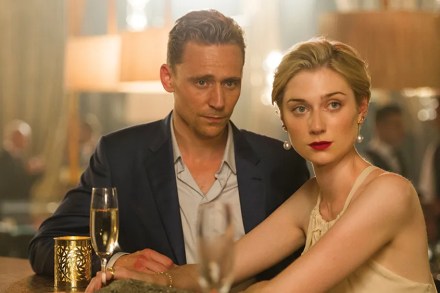
I have been having a John le Carré holiday. Five years after the great master of the spy thriller went to his final safe house in the sky, I spent chunks of the festive season watching two of his series on TV, and reading a slim volume called The Secret Life of John le Carré by his biographer Adam Sisman. BBC1 and Amazon Prime’s big New Year drama offering is The Night Manager, a sequel series to one of le Carré’s later stories, and simultaneously BBC4 has been re-running le Carré’s 1970s masterpiece, the seven-part mole hunt Tinker, Tailor, Soldier, Spy, starring the late, great Alec Guinness as spymaster George Smiley. Sadly, on two successive nights I found myself falling asleep in front of the dramas.

The overlooked brilliance of Wonder Boys

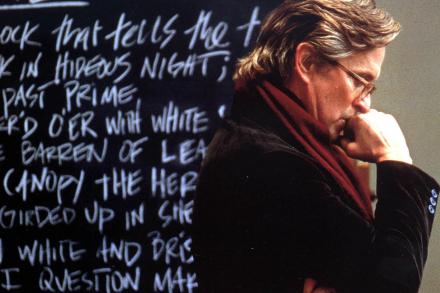
Deep in the backwaters of BBC iPlayer there lurks an American film with an all-star cast that time forgot. In its day I think it was all but forgotten, too – garnering some critical acclaim but bombing at the box office, presumably because it was too clever or just didn’t appeal enough to teenagers (I can’t see why). Fortunately, 25 years on, Wonder Boys, the campus-novel film starring Michael Douglas as a creative writing professor with writer’s block and an unravelling marriage, truly stands the test of time. You could even go so far as to say that it’s a modern classic.

A Room with a View is the greatest period drama ever made

It may come as surprise to discover that A Room with a View, the celebrated Merchant-Ivory adaption of the E.M. Forster novel, is 40 this month. Yes, as hard as it is to believe, the film starring Helena Bonham Carter and Maggie Smith had its premiere in December 1985 and went on general release in April 1986. Step back, if you will, from the baffling realisation that somehow A Room with a View is therefore exactly equidistant between the present time and the death of Adolf Hitler in 1945, and instead focus on a rather more cheerful point altogether. Because A Room with a View, the low-budget tale of mismatched love in Florence, is almost certainly the greatest period drama ever made. I know, it’s a bold claim.

The death of the bloke film

If you saw the Edgar Wright–Stephen King adaptation The Running Man in the cinema last weekend, with Glen Powell as the eponymous fugitive in a dystopian future, then you were one of the relatively few. The film has flopped at the box office, with audiences resistant to Powell’s charms and Wright’s visual pizzazz, and in a tricky year for King adaptations. It’s not been helped by some idiotic remarks the author made at the time of Charlie Kirk’s assassination; there will probably be fewer big-budget films based on his work in the future. Yet The Running Man’s failure also suggests that there is a wider issue at hand, and that is the death of the ‘bloke film’.

Nobody Wants This could learn a few things from Seinfeld

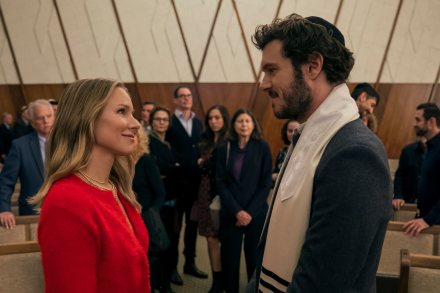
Nobody Wants This, the Netflix romcom that brought us the ‘hot rabbi’, recently returned for its second season. For the uninitiated, the first series introduced us to sex and relationships podcaster Joanne, played by Kristen Bell, who meets Noah, played by Adam Brody (of The O.C. millennial crush fame), a reform rabbi who has just broken up with his long-term girlfriend. The premise felt fresh and original: a romcom that dared talk about religion and even made it the key part of the plot. It’s undoubtedly a hit, with season two racking up more than eight million views in its first four days of streaming, taking it to the number one spot on Netflix’s chart.

The sanctimony of Steve Coogan

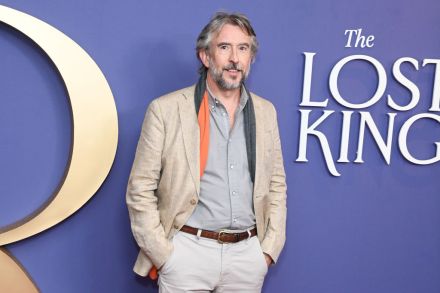
About 20 years ago, the actor and comedian Steve Coogan did a tour called, with typical self-deprecation, Steve Coogan as Alan Partridge and Other Less Successful Characters. I saw the show and it was, as you’d expect from Coogan, amusing and cleverly performed. Yet it ended strangely; Coogan sang a self-lacerating song called ‘Everyone’s a Bit of a Cunt Sometimes’. It was oddly bitter and angry, but clearly Coogan stood by its sentiments, because he attempted to reprise the number in a dream sequence from his restaurant-review comedy The Trip several years later. The song, given full production values, was, perhaps wisely, deleted from the programme’s final cut. (Although you can still find it on YouTube.

Films aren’t art

My late son took film seriously, a taste I was delighted to see him develop, and regret not being able to see him grow out of. When he was little we watched the Pixar films, and they gave us great joy. The first 20 minutes of Up and the last 20 of Toy Story 3 have been called the only perfect bits of cinema, a formulation with a high quotient of truth. After our son’s death, my wife commented that she had never before seen me cry. I had always wondered if she’d spotted my tears at the end of Coco, or those I shed during Guardians of the Galaxy 3, during a Sicilian family holiday, but I don’t cry easily. We watched Coco, which is about remembering the dead, shortly after my mother’s funeral. In Sicily, I wonder if it was a reaction to being uncomplicatedly happy.

Who would dare mock Paddington?

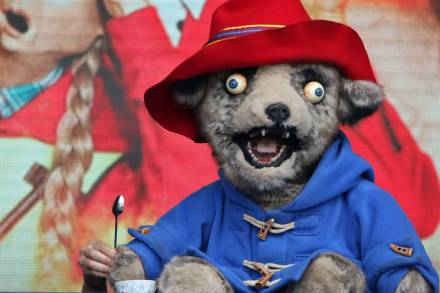
The State of California v. OJ Simpson, Oscar Wilde v. the Marquess of Queensberry, Galileo before the Inquisition… now our age will be able to add its own entry to the annals of famed legal proceedings. Because Paddington is suing Spitting Image. It is the barmiest news story of late against fierce competition. The Telegraph has revealed that Canal Plus, the holders of the rights to Michael Bond’s furry Peruvian, are launching an action against Avalon, the makers of Spitting Image. You may be surprised to hear that Spitting Image is still a thing. After an ill-advised revival on ITV in 2020, via the now-defunct streamer BritBox, it has recently returned yet again, this time on YouTube.

A fitting encore for Spinal Tap

The long-awaited sequel to the documentary (or ‘rockumentary’) Spinal Tap, which told the story of a failing British rock band’s disastrous American tour, opened this month to decidedly mixed reviews. Robbie Collin in the Daily Telegraph advised us to dial down our expectations to -11 (ho ho) for The End Continues, which sees the band reform for a final, contractually obliged concert in Las Vegas. Collin mused that for many aficionados the first half at least would put them in mind of a description of one of Tap’s early albums, Shark Sandwich, which ran to just two words: ‘shit sandwich’. Mark Kermode seemed pained at the comparison with the original and deemed the new film a footnote of interest to die-hard fans only.

Shouldn’t we celebrate Rising Damp?

They have been blowing out candles for Fawlty Towers, and it is meet and right so to do. Fifty years old this month, John Cleese’s portrait of a Torquay hotelier at war with the world remains a masterpiece of British comedy. But there’s another Seventies romp we should not ignore, which was just as funny, and featured a central performance every bit as convincing. Leonard Rossiter may be better known as Reggie Perrin in David Nobbs’s series about a dreamer who longs to escape suburbia, but his greatest role was Rigsby, the seedy landlord, in Rising Damp. Eric Chappell adapted the show, which ran for four years from 1974, from his stage play, The Banana Box.

A Bagpuss film is a terrible idea

News that the classic children’s TV show Bagpuss is to be given the full film treatment doesn’t bode well for fans of the original series, which ran from February to May 1974. Set in an old-fashioned bric-a-brac shop, each of the 13 episodes featured the eponymous ‘saggy cloth cat’ and his eccentric friends poring over an object delivered to the shop by a little girl named Emily. In a world where brash, epilepsy-inducing cartoons have become the norm, you’d think a whimsical tale about a stuffed cat rifling through detritus might seem old hat to hyped-up, instantly gratified youngsters. But you’d be wrong.

Meghan Markle’s TV show is a balm for desperate housewives

The Duchess of Sussex has achieved something quite remarkable. After the brickbats hurled at the first season of her Netflix show With Love, Meghan – the furious pro-monarchy outrage, the eye-rolling from critics, the memes that lampooned her syrupy anecdotes – many TV personalities would have flinched. They would have called consultants, tweaked the format, apologised by going in a ‘new direction’. Meghan Markle (or should I say Sussex) has done the opposite. Season two arrived last month: unchanged, unrepentant and every bit as twee as the first.  Like her homemade ‘jam’, that’s not to say it’s gone down well. ‘Painfully contrived’, ‘irrelevant meets intolerable’ and ‘tone-deaf’ were just some of the newspaper reviews.

The Office is the TV show that will never die

A thought hit me when bingeing the first series of The Paper on Sky’s Now streaming service this week: how on earth did it take this long for someone to make a sequel to The Office? Don’t get me wrong, this wasn’t a glowing verdict on the comic merit of The Paper – an Office-style mockumentary set in a struggling regional newspaper in Toledo, Ohio. Rather it was a reflection on the usually mercenary economics of big television. During the pandemic, the American version of The Office racked up an astonishing 57 billion streaming minutes, despite its final episode having aired in 2013. The show premiered in 2005, inspired by the British sitcom created by Ricky Gervais and Stephen Merchant that ran from 2001 to 2003 (and which is itself still a big hit on iPlayer).

Peter Sellers and the comic tragedy of The Producers

It’s October 1994 and I’m rooting around in a garage in a non-descript LA neighbourhood, a few blocks from 20th Century Fox. The garage is piled high with clothes, cameras, audio tapes, reels of film and, in pride of place, a Nazi storm trooper helmet. This was the last resting place for a mountain of paraphernalia belonging to comedy legend Peter Sellers, who was born 100 years ago today. The house was owned by Sellers’s widow, Lynne Frederick, who had been found dead there just six months earlier. Now her mother lived there alone and was the keeper of the trove. After several G&Ts together, she agreed to allow me access. I was in LA filming a series of interviews for The Peter Sellers Story, a documentary for the BBC’s Arena.

Why the young worship folk horror

Built in the 1840s, St Giles’s Church in Camberwell bills itself as south-east London’s ‘most stunning Neo-Gothic performance venue’. A niche category, admittedly, but when it comes to hosting events, it’s certainly a broad church. Downstairs, the crypt serves as one of south London’s best jazz clubs. Upstairs, in between services, weddings and funerals, the pews often double as cinema seats, with a film screen erected in the chancel. Jesus Christ Superstar, perhaps? Conclave maybe, with a trigger warning about papal scheming? Far from it. The latest offering was the 1973 horror classic The Wicker Man, all about the remote Scottish island that rejects God’s message.

Cinema needs more naval dramas

On a trip to the local library, many years ago now, my dad was asked by a kindly but rather severe librarian if I was really allowed to borrow one of the Ramage books, as they were from the section for grown-ups and I was only about 11. The old man nodded assent and so I went home with, if memory serves, Ramage and the Renegades. For the uninitiated, the series, by Dudley Pope, follows the adventures of Royal Navy officer Lord Nicholas Ramage in the Revolutionary and Napoleonic Wars. They don’t have the painstaking attention to detail and literary brilliance of Patrick O’Brian’s Aubrey-Maturin series, and they are usually more light-hearted and breezy than the Hornblower and Bolitho novels, whose heroes tend towards self-doubt and melancholy.

The curious allure of ‘cosy crime’

Just a glance at the cast list tells you everything you need to know. Netflix’s adaptation of Richard Osman’s cosy crime sensation The Thursday Murder Club stars Dame Helen Mirren, former James Bond Pierce Brosnan (as well as a former Bond villain Sir Jonathan Pryce), the Oscar-winning Sir Ben Kingsley and the gold-plated national treasure Celia Imrie, alongside a supporting line-up which includes David Tennant and Richard E. Grant. Released today in selected cinemas before landing on the streaming service on Thursday, the film has an awful lot of talent for what appears at first glance to be a mash-up of One Foot in the Grave and Hetty Wainthropp Investigates.