Spectator Life

Spectator Life

An intelligent mix of culture, style, travel, food and property, as well as where to go and what to see.

Why you should never trust a travel writer

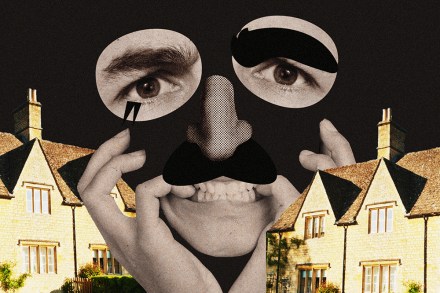
After one of Jeffrey Archer’s minor tangles with the absolute truth, his friend the late Barry Humphries remarked: ‘We all invent ourselves to some degree. It’s just that Jeffrey has taken it a little further than most.’ The remark came to mind last week as the media storm over the veracity (or otherwise) of the Winns’ account in The Salt Path reached its peak. As Dame Edna might have said, all travel writing is invented to some degree. It’s just that Raynor and Moth may have taken it a little further than most. ‘In Patagonia?’ Bruce Chatwin’s lodger is said to have remarked of the eponymous book. ‘I doubt Bruce even went downstairs.’ That’s unfair. Chatwin undoubtedly visited Patagonia.

I’ve come to love the nudist beach

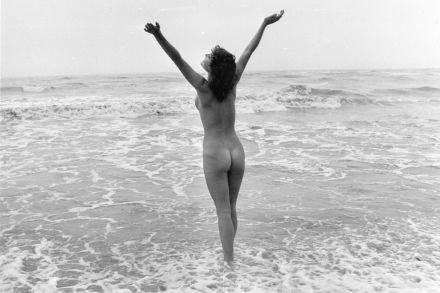
Homer is much praised, but I find him unreliable. The Mediterranean cove in which we were swimming, for example, was not in the least wine-dark. We were turning around and swimming back, the sights on display at the nudist end of the beach having startled the spluttering elegance of my head-above-water breast-stroke. ‘I wouldn't mind if it was only young women,’ I said to my wife, as we swam back. Rather than accepting my dispassionate nod toward prevailing cultural aesthetics, she replied she didn’t mind in the slightest, and couldn’t see the harm. An unspoken charge of puritanism hung in the air. ‘It was just a bit too much like an outpatient clinic,’ I said, and good-humoured sympathy swung back in my favour.

The worst culprits for noise pollution on trains? The staff

Modern irritations seem to come in threes. No sooner do you trip over a Lime bike ‘parked’ on its side in the middle of the pavement than you discover that the self-checkout in the Co-op has a handwritten note stating ‘out of order’ taped to it and the man in front of you in the queue for the sole remaining human-staffed counter is attempting to buy (and scratch) 14 lottery tickets.  That’s what happened on my venture out of the house this morning, anyway. The experience sent me scurrying home again to muse on whether I have had a more dispiriting, in the picayune sense, start to any morning this year so far. It turns out that I have.

The slow delights of an OAP coach tour

Early on Monday mornings, in service stations across the country, armies of the elderly are mustering. These are the OAPs about to embark on motor coach tours to the Norfolk Broads, Cornish fishing villages, the Yorkshire Moors and Welsh ghost towns, organised by men in blazers consulting clipboards, like Kenneth Williams in Carry On Abroad. There will be cream teas, along with river cruises, coastal excursions, scenic drives and jaunts on steam railways.

I fear for New York

As a kid growing up in the Bronx and afterwards in the suburbs to the north, I loved New York. To me it was like the Emerald City in The Wizard of Oz – vast, glittering and full of promise. It was where my family settled after escaping the nightmare of communist dictatorship, in the aftermath of the crushed 1956 Hungarian revolution. It was where we found freedom, democracy – what they used to call the American Dream. In later life, after I had left America and come to London, I made occasional return visits to New York and noted the changes wrought by time – mostly for the worse. But my affection for it never wavered because it held so many fond memories.

Did you know the world’s oldest Quran is in Birmingham?

Tashkent, Uzbekistan I am in Tashkent, the capital of Uzbekistan. I am standing in a historic complex of madrasas and mosques, courtyards and dusty roses, and I am staring at the ‘oldest Quran in the world’. It is a strange and enormous thing: written in bold Kufic script on deerskin parchment; it was supposedly compiled by Uthman ibn Affan, the third Caliph of Islam, who was murdered while reading it. And so it is, as I linger here and reverently regard the Book, while scrolling my phone for more fascinating info, that I discover the world’s oldest Quran is actually in Birmingham. Yes, that’s right, Birmingham, England. It’s probably in some obscure library, lodged between a dissertation on post-colonial emojis and a flyer for Falafel Night.

Venice is a city of love and menace

Jeff Bezos has brought much tat into the world, along with the undoubted convenience of Amazon’s services. But in at least one respect, he is a man of good taste. In choosing Venice to plight his troth with his lovely bride Lauren Sanchez at the weekend, Bezos picked the best possible location: La Serenissima is indeed a veritable miracle. It is a logic-defying wonder, and despite my frequent visits, I still don’t understand the physics of its construction. How can a city of hundreds of heavy palaces and churches, resting on petrified wooden piles driven into mud, continue to exist centuries after the Venetian lagoon was first settled by terrified refugees?

Is the Lake District still as Wainwright described it?

The Lake District isn’t really meant to be about eating. It’s about walking and climbing and gawping. The guide one carries is not that by Michelin but Alfred Wainwright, whose seven-volume Pictorial Guide to the Lakeland Fells turns 70 this year. Food is mainly to be consumed from a Thermos rather than a bowl, and eaten atop a precariously balanced upturned log rather than a restaurant table. The culinary highlight should be Kendal mint cake, gratefully retrieved from the pocket of your cagoule. And so I was as surprised as anyone to find real gastronomic delights on a recent trip. Not from Little Chef, though that was where Wainwright religiously went for his favourite meal: fish and chips, a gooseberry pancake and cup of tea.

How a Luxembourg village divided Europe

I am in the most EU-ish bedroom in the EU. That is to say, I am lying in a refurbished room in the handsome 14th-century Chateau de Schengen, in the little village of Schengen, Luxembourg. From my casements, opened wide onto the sunny Saarland afternoon, I can see the exact stretch of the river Moselle where, on a boat floating between Germany, France and Luxembourg, the Schengen Agreement was signed in 1985. This was the agreement that sealed Free Movement as Europe’s defining ideal – one whose consequences are still unfolding. I’ve been in Luxembourg for a week, on assignment, and this week has given me an insight into why the nations of the EU undertook their bold, remarkable experiment of no more borders. The first and obvious motivator was war.

Jeremy Clarkson should love the congestion charge

I confess that I suffer from CBS: Clarkson Bipolar Syndrome. I really like Jeremy: I bought my Land Rover Discovery 3 after he drove one up a mountain in Scotland, and I would happily have a pint with him at his new pub. He knows a lot about cars – but not so much about the economics of motoring. He, of all people, should love the congestion charge. I worked on transport policy in the late 1990s, and the fact that this charge was detested by liberals and conservatives alike suggests that we got the policy about right. Let me explain why you should love congestion charges too – at least in principle. (Sadiq Khan’s 20 per cent increase of the London charge to £18 is a different question.) But first, let Jeremy set the scene with what he’s said about it on Top Gear.

Flying has lost its charm

As someone who flies a lot for work, many of my moments of high blood pressure or ‘Is this really what I want in life?’ introspection take place in airports or on aeroplanes. I cannot – to put it gently – relate to the moronic practitioners of the ‘airport theory’, which involves turning up deliberately late for flights to get an adrenaline rush, and/or to make a sorry living off social media views. No, I’m there in good time, so it shouldn’t be a particularly stressful experience. And yet I’ve come to rather despise flying. It wasn’t always this way. Admittedly my relationship with flying got off to a slightly tricky start.

The lost art of getting lost

One of the quietly profound pleasures of travel is renting cars in ‘unusual’ locations. I’ve done it in Azerbaijan, Colombia, Syria and Peru (of which more later). I’ve done it in Yerevan airport, Armenia, where the car-rental guy was so amazed that someone wanted to hire a car to ‘drive around Armenia’ that he apparently thought I was insane. Later, having endured the roads of Armenia, I saw his point – though the road trip itself was a blast. Recently I rented a motor in Almaty, Kazakhstan, where they were slightly less surprised than the Armenian had been, but nonetheless gave me lots of warnings and instructions, chief of which was: ‘Don’t rely on Google Maps, it doesn’t work out here.

My sitcom-worthy walking holiday

I’ve just returned from a walking holiday in Northumberland with Caroline and my mother-in-law. I say ‘walking’ but that makes it sound more physically demanding than it was. Billed as ‘gentle guided walking’, it was more like an ambling holiday, and the distances weren’t very great. On the second day, I was anxious to make it to the pub to watch the League One play-off final, so raced ahead and completed the walk – the entire walk – in less than an hour. It was a packaged tour organised by HF Holidays, a co-operative set up as the Holiday Fellowship in 1913 by Thomas Arthur Leonard, a non-conformist social reformer. He wanted to save factory workers from the fleshpots of Blackpool by encouraging them to take walking holidays instead.

The shadow of communism still looms over the Balkans

Our Serbian guide Zoran is a jovial fellow and as we rumble through the streets of Belgrade in our minibus he regales us with a joke about the difference between the various nationalities of the former Yugoslavia, all now with countries of their own. ‘We Serbs are rude,’ he says, ‘but the Croatians are self-centred, the Bosnians are thick, the Montenegrins are lazy and the Macedonians are just Serbs with a speech defect. As for the Slovenians, they are so polite they must be gay!’ Joking about each other is a definite improvement on fighting each other, as per so much of their history. The countries on my Balkan tour – Serbia, Romania and Bulgaria – have been struggling for more than three decades with their post-communist problems. But they do like a laugh.

Wigan’s pies are grotesque and glorious

Fancy a slappy? It’s not what you think – unless you’re from Wigan, in which case you’ll know exactly what I’m offering. A slappy, otherwise known as a ‘Wigan Kebab’, is a whole pie served inside a sliced barm cake (not cake, but a soft, sweetish bread roll). Wiganers are known as ‘pie eaters’. I don’t mind a slice of mince and onion or chicken and leek every now and again, preferably in winter – but I certainly couldn’t imagine indulging on a regular basis. But if I am to eat pie, it should be in Wigan. Don’t get me wrong, there is absolutely no way I would travel to Wigan especially, because – and I mean no offence to its inhabitants – there isn’t an awful lot else going for it. I can say this because I’m from Darlington.

Butlin’s is cashing in on nostalgia

Butlin’s is no longer a holiday ‘camp’. The company has evolved from its postwar heyday and now describes its properties as ‘resorts’ which are crammed with restaurants, bars and venues for live gigs. It’s like a cruise but on dry land. I went to Bognor Regis for a nostalgic ‘Ultimate 80s’ weekend where the performers included half-forgotten acts such as Aswad and T’Pau, and the remnants of the boyband Bros. The site lies 200 yards from Bognor’s shallow, pebble-strewn beach. The town itself is doing all right, if not exactly thriving. The charity shops are cheap, the estate agencies are full of recently vacated bungalows and the funeral parlours offer a special service for customers in a hurry.

The wild optimism of a young society

There’s a strange, near-psychedelic effect that hits you when you travel from an ageing country to a young one. It’s not in the buildings – although the buildings may be new and hastily tiled – and it’s not necessarily in the politics, culture or economic vibe. No, the shock is more human, and intimate. It is in the faces. And the noise. And the nappies. I’ve just returned from a few weeks in Central Asia: Uzbekistan, Kazakhstan, Kyrgyzstan. And while these nations differ in history, ethnicity and landscapes, two things bind them all. First, they all have an inexplicable penchant for a stodgy rice dish called plov (in Samarkand I bought a T-shirt bearing the slogan ‘All You Need is Plov’). The second is that they are all young. Wildly, exuberantly young.

Help! I’m trapped in a hi-tech hotel

Raffles Doha is one of the world’s weirdest, most improbable buildings. That’s it in the picture – a five-star hotel incorporated in one prong of the incomplete circle that is the 40-storey Katara Towers in Lusail City (the Fairmont Doha is in the other prong), on land reclaimed from both desert and sea. It’s an architect’s/despot’s fantasy turned reality. The bonkers design is meant to echo Qatar’s national emblem of crossed scimitars, and I’d love to see the back of the envelope upon which it was first sketched. It’s far, far beyond my miserable hack’s pay grade, but invited as a guest I’m ashamed to say that I couldn’t resist.

How is Germany so weird yet so dull?

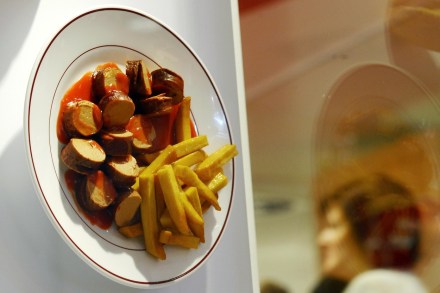
When I lived in Berlin a decade ago, I was struck by the contrast between the dullness of young Germans and the incredible weirdness of everything else. Only in German could the word for ‘gums’ (Zahnfleisch) mean ‘toothflesh’. And only in fleisch-mad Germany (the word for ‘meat’ is the same as ‘flesh’, which is somehow incredibly disgusting) would people snack on raw pork, a dish known as mett. Mett, also known, rather curiously, as Hackepeter, is sometimes offered at buffets in the shape of a hedgehog (what else?) with raw onion spines. It simply doesn’t get stranger.

The quiet frustrations of Puerto Rico

If you like piña coladas – and I do – Puerto Rico will suit you just fine. The cocktail was born on the island in 1954, though debate lingers over exactly where it was first dreamt up. A bartender at the Caribe Hilton is credited with blending coconut cream, pineapple and rum into its original form, but some claim it was at Barrachina that the drink evolved into the slushier, icier version we know today. But does it really matter? What’s important is that in Puerto Rico, you’re never far from a piña colada. Spring break was in full flow when I arrived on this tropical US territory. The college kids were easy to spot. The girls paraded around in string bikinis, which barely held everything in. Some of the boys, meanwhile, bore fresh hickeys, badges of honour.

Hell is having house guests

Since we moved into our house in the Cyclades a few years ago, I’ve come to accept that if you own a home on the beach in Greece with plenty of spare rooms, people will come to stay. But what is it about house guests abroad? Do they need fresh towels at home every time they wash their hands? Do they have to have three cooked meals a day? Do they have chauffeurs in normal life, or do they become allergic to driving only when they are on holiday? ‘We didn’t bother renting a car because we don’t want to go anywhere.’ If you want to make a host’s shoulders slump, saying this will do the trick. If I sound mean-spirited it might be because I’m not a natural hostess to start with.

‘It is sad that we are sometimes seen as just killers’: an interview with Japan’s last ninja

Getting an interview with Jinichi Kawakami, the man known in Japan as ‘the Last Ninja’, was no easy task – but nor should it have been. Ninjas, Japan’s legendary covert operatives and assassins, were renowned for their elusiveness, so it would have been disappointing if tracking one down had proved a cinch. It took a good deal of research and persistence before I was granted an interview by landline telephone – which also seems appropriate since ninjas were reputedly able to make themselves invisible. Kawakami is head of the Banke Shinobinoden school of ninjutsu (ninja culture), director of the Iga-ryu Ninja Museum and Ninja Council, and a professor of Ninja Studies at Mie University.

Why Americans are so fat

Are you hungry, peckish, esurient? Join me at Josie’s diner in Lexington, Kentucky, in the heart of Bluegrass country, where the horses are lean and very many people are, let me be frank, not. Josie’s is heaving at 8 a.m. as the well-upholstered clientele arrive for the morning feed. A mercifully slim student at the University of Kentucky is my waitress. ‘Hi, y’all! I’m Madeline Rose and I’ll be your server today,’ she announces, in the earnest tone of wait staff in a country where the credit card terminal offers the option of a 25 per cent tip. The menu she hands me is already expansive, but there’s more.

The frugal luxury of a pod hotel

Right beside the airport I often use to fly home from Italy, there is a pod hotel where I am becoming a regular client. These, as most will know, are dirt-cheap places where sleep is stripped down to its absolute core. For about £35 a night here, you get a tiny berth of a room – a ‘capsule’ about 4ft wide and 6.5ft long – with a narrow bed, a socket to recharge your devices and, if you want to work, a fold-down mini-table for your laptop. It is a bit like you imagine a rather poky Swedish prison cell, decorated with Nordic minimalism: white bed, white walls, fluorescent light, no windows. ‘We make every traveller’s dream come true,’ the leaflet says.

Why the middle classes are giving up on skiing

Let’s cherchez un violon petit! Skiing is now too pricey for the middle classes. According to a recent flash poll by the Telegraph’s ski section, 70 per cent of readers now think skiing holidays are unaffordable. For the bourgeoisie, skiing – along with many of the other trappings they used to take for granted, such as being able to afford the fees for a private day school or a daily takeaway coffee – ce n’est pas possible. Quel dommage! (Let’s parlez anglais now; I think you get the point.) It’s not just the accelerated cost of living in the UK – or Liz Truss personally putting our mortgages up by a grand a month. Long gone are the days of getting almost €2 or $2 to the pound. In France last week, it was around €1.

The joy of Channel Island hopping

Seldom has a collective term been less appropriate: ‘the Channel Islands’ – as though these were in any sense (other than the geographical) a place. Entertained in my English mind had been a scatter of similar, pretty but perhaps over-manicured little islands stuck in the mid-Channel between Great Britain and France but sunnier, and where tax-avoiders are the indigenous population. Wrong, wrong, wrong. For family reasons I’ve just spent some time on Jersey, Guernsey and Alderney, sadly missing Sark and Herm. My island-hopping trip, though short, showed me how wide of the mark these assumptions are. Guernsey is by no means manicured and is in places pleasingly unkempt, while Alderney is quite dishevelled. Mid-Channel?

The black cab is dying out. Good.

A recent study by the Centre for London thinktank claims that the city’s black cabs could disappear forever, unless something is done to reverse the decline. Thanks to Uber, the ubiquitous satnav which devalues the cabbies’ hard-earned Knowledge of London’s streets, and the Mayor’s anti-motorist measures, there are ever fewer black cabs rumbling around the capital. The number dropped from more than 23,000 in 2014 to just under 14,500 last year – down by a third. Only a hundred licences were handed out last year. At this rate, we are told, they will vanish altogether by 2045. Well, tough. I’ve been a Londoner for half a century and have had enough bad experiences with our black cabs to feel that their disappearance wouldn’t bother me a jot.

The end of the pick ’n’ mix passport

The second passport used to be a backdoor: a legal hack for the well-advised, well-connected or well-heeled. You could acquire nationality in a country you’d hardly visited, without necessarily even speaking the language, and still find yourself welcomed with open arms – or at least waved through the fast-track lane at immigration. But that game is ending. More and more governments are closing the door on tenuous ancestral claims and pay-to-play citizenship. Whether through lineage or liquid assets, the old tricks to get a second passport no longer work. Nationality is being redefined – not as a loophole, but as a bond. The appeal of a second passport has always been practical. For Britons, Brexit turned the post-Brexit navy passport into a travel straitjacket.

The Judgment of Berkshire

Almost 50 years ago, in a hotel bar in central Paris, French wine faced a reckoning. Steven Spurrier, a British wine merchant, decided California deserved a spell in the sun: at the time French wine was the dominant force in Europe, with bottles from the New World – Australia, New Zealand, the US and the like – considered their poor cousin. Spurrier came up with the idea to pit the very best French Bordeaux against Californian cabernet sauvignons and chardonnays against white Burgundies, and have a panel of experts – all French – rank them in a blind tasting that came to be known as the Judgment of Paris. California won both categories. Odette Khan, a well-known critic, reportedly demanded her scorecard back so news of her grave error wouldn’t reach the papers.