Spectator Life

Spectator Life

An intelligent mix of culture, style, travel, food and property, as well as where to go and what to see.

I’m bored by this blossom worship

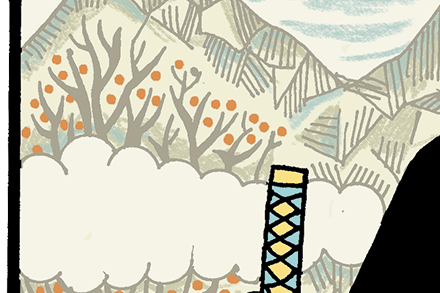
It’s cherry blossom season in Japan and about half the population (according to a Kansai University study) will gather at the viewing spots to pose for photos (Japanese Instagram may collapse) and enjoy picnics in the shade of the sakura trees. Japan will also welcome close to four million visitors to witness the floral marvel. The season is brief, peaking in about a week and disappearing by the end of April, during which time the progress of the blooms across the country is followed with breathless enthusiasm by reporters on the news bulletins. We are assumed to be, expected to be, giddy with excitement about all this, and to swoon with childlike wonder at the profusion of vivid yet delicate flowers. But I’m afraid I’m not quite up to it any more.

I’ll never holiday again. I couldn’t be happier

Waking up to hear the ‘unprecedented’ news about Heathrow Airport, I felt a nanosecond of luxurious relaxation (albeit I’m not exactly over the moon about being in a hospital bed without the use of my legs). Of course I’d rather be scampering about an airport superstore being sprayed with scent by sexy shop-girls rather than stuck here waiting to be hoisted into the air over a commode like some smelly piñata. But there’s never any harm in looking on the bright side and I’m very glad not to have been flown all the way back to Delhi when I was on the verge of landing in TW6, as was one young woman on the Today programme last week.

Why would anyone move to Dubai?

Dubai is the new black: it’s everywhere and apparently for everyone. The steady trickle of first-person tell-alls about starting over in the Emirate has, since the Labour government moved in, built to a tsunami. ‘How I became a Labour school-fee exile in Dubai,’ written by Isabel Oakeshott, partner of Reform’s Richard Tice, was one that scored particularly highly among readers. ‘We moved from Aberdeen to Dubai – it is hugely expensive to have a family here,’ reads another headline. ‘Low tax might sound affordable, but life in the glitziest emirate is anything but cheap.’ James Vince, the cricketer, is another recent high-profile Brit to relocate there.

What my Irish passport means to me

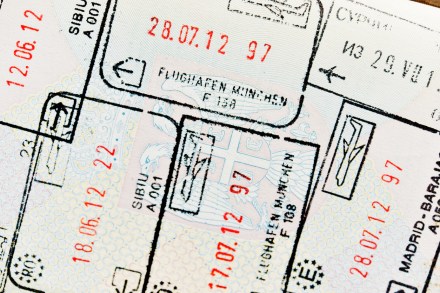
I’m now officially Irish – the proud recipient of a shiny red passport. It arrived, with the luck of the Irish, in time for St Patrick’s Day. But as I gaze fondly at the words ‘European Union’ and ‘Ireland’ embossed in gold on the front, I do feel the awkward guilt of the hypocrite. I may have voted Remain just to avoid any upheaval but I’ve never been much of a fan of the EU. And while I’m in the confessional box, I should perhaps mention that I’m not even properly Irish – my mum was English. I’ve seldom visited the green fields of Erin and have never finished a whole pint of Guinness. So I’m afraid Paddies don’t come more plastic than me.

Beyond Boswells: Oxford’s new safe space

One can see a city so differently over time. Visiting Oxford recently I noticed fine whisky shops and fashion stores which have always been there but which I barely registered as a student 15 years ago. There are new arrivals: some good, such as the handsome Jericho Cheese Company; others less so, such as the proliferating bubble tea shops catering to the now numerous Chinese, both students and tourists. Covered Market is still there, where we used to indulge at the original Ben’s Cookies. Though I do not remember back then the Thames Valley Police signs now warning of ‘bag dippers’ operating in the area. Oxford is both swisher and scruffier than I remember it. Swish embodied in the new Ivy, in a palatial neo-Gothic pile on the High Street that used to be a NatWest.

Walking in the footsteps of the Kray twins

A Sunday morning in Bethnal Green and Adam, who has been leading Kray-themed walking tours of the neighbourhood for almost two decades, corrals a congregation of eight polite, reserved, attentive customers who, with sensible rucksacks, floor-length M&S skirts, reusable water bottles and neutral-coloured, thin-laced trainers, look as far removed from pool hall brawls and basement flat stabbings as it’s possible to get without joining the Church Army or taking up cribbage. When he started giving tours of the Kray twins’ haunts, Adam tells us, it was impossible to go more than five minutes without some tipsy ageing derelict lurching out of the Blind Beggar pub to inform the group that he ‘knew the Krays personally’.

The Gen-Z fliers obsessed with maximising their air miles

Oscar, 26, joins me on Google Meet from Buenos Aires, having arrived earlier that day from New York – by way of a few hours in Mexico City and Panama. Just five days ago, he was in London. ‘New York was just going to be a weekend trip for a conference, but then I thought while I’m in America, I might as well head south and here I am.’ It’s a far cry from Wales, where his family lives. Yet this itinerary is barely a ripple in Oscar’s relentless travel schedule. His nonstop approach to flying places him firmly within a new tribe of Gen-Z frequent fliers – mostly men – who treat globe-trotting like a real-life computer game. Their obsession? Maximum air miles for minimal money. The destination itself is secondary; the point is simply to keep moving.

The naked truth about French health care

Faithful readers will know of my journey through the French health care system. I have not shared these histories because anyone should be particularly interested in my aches and pains, or to complain. If I wanted to moan about a health system on the verge of a nervous breakdown I would return to Britain. No, I drone on because it’s worth repeating the astonishing discovery that it is actually possible to have a health system that isn’t crap. And I have made some other discoveries along the way. In previous episodes, I have covered the remarkable behaviour of French GPs, who actually answer the phone – and will see you the same day if necessary or tomorrow if less immediately urgent.

There’s something sinister about the Mustique mafia

It’s half-term and instead of the Baftas and Anmer Hall in Norfolk, the Prince and Princess of Wales have decamped en famille to Mustique. Old pictures of Kate and Wills walking along the Caribbean seafront hand in hand and a young Prince George in a green polo shirt are accompanied by newspaper commentary detailing how Kate deserves a rest in what is thought to be her favourite place. So far, so very lovely.   Mustique itself, though, has always struck me as a rather sinister place.

My own personal peasant

It was when the peasant didn’t move for the second hour that I became suspicious. I was in an ultra-expensive hotel in southern Thailand. It was built to resemble a sequence of exquisite villas from some ancient Thai dynasty, arranged around tropical gardens and meadows. I was staying in my very own, beautiful, teak-and-mahogany mini-palace, which came with a grand piano and butler – all the usual things I’d come to expect as a luxury travel correspondent. Yawn. The only thing really unique about this five-star hotel (they tend to blur, eventually) was the fact my own villa, the best of the best, the jewel in the crown, came with its own paddy field. And in that paddy field was a singular peasant in a charming conical hat, next to an ox.

Lost in Mexico: in the stumbling footsteps of Malcolm Lowry

I had been kicking my heels in a dusty two-star hotel on a dual carriageway in Leon, central Mexico, for days. One afternoon, I spotted a battered old English language hardback in a junk shop window: Under the Volcano by Malcolm Lowry.  I had read the book before, half a lifetime ago, in maybe 1985, when I knew nothing about Mexico, failed relationships or alcoholism. Almost 40 years later, with a more than working knowledge of all three, I felt better placed to appreciate Lowry's 1947 masterpiece. With nothing else to do or read, I bought it. I haggled the shopkeeper down to 100 pesos – about £4. Barely 24 intense hours later – the same time span that the novel unfolds in – I had finished it. Or had it finished me?

Who really lost when the Berlin Wall fell?

The fall of the Berlin Wall was meant to have been the crowning moment for the West, and for the principles of empowering liberation and freedom. Obviously so – I used to think. Now I’m more along the lines of, well, yes and no. The fall also seems in some ways to divide the former good times from the current bad times, both for Germany and for the rest of us. Such thoughts came to mind after I headed to Berlin to witness the New Year’s Eve fireworks display, during which the city is turned into the most attractive war zone you’ll encounter. I stayed with my brother, a creative type who, like many others artistically inclined, settled in Prenzlauer Berg, an area formerly in East Berlin. With the Wall down, people were drawn to the low prices and atmosphere of artistic liberty.

The key to finding the best pubs in Britain

Entering the New Inn in Llanddewi Brefi in Ceredigion is like stepping back in time. The only pub in the village (since the Foelallt Arms closed down four years ago), The New Inn seems to hail from the 1970s. Its till is a pull-out wooden drawer full of coins and notes. There’s a coal fire in the grate. The bar is littered with eccentric and old-fashioned clutter: a jar of pickled eggs, boxes of Swan Vestas as if smoking in pubs was still the norm, plaques to award the winners of a conker competition long past, sheep farming memorabilia.   The clientele are dressed as if they’ve just got back from marching down Whitehall with Jeremy Clarkson. And, it transpires, these drinkers are waiting to be fed.

The bitter cocktail of British decline

You can’t get a Pegu in Rangoon any more. That may not sound like a disaster for the ages – nothing, say, compared to the ongoing chancellorship of Rachel Reeves, MP for Blankstare-upon-Derr – but it is quite telling, once you know the background. To explain, the Pegu is a cocktail. Here’s the recipe, if you fancy making one: Take 2 oz of gin. Add ¾ oz of orange curaçao or triple sec. Squeeze ½ oz of fresh lime juice. Include 2 dashes of Angostura bitters. Add 1 dash of orange bitters. Fill a cocktail shaker with ice and combine all the ingredients. Shake vigorously for 15 to 20 seconds until well chilled. Strain into a chilled coupe or martini glass. Sounds nice, right?

Italy is most beautiful in winter

Monopoli, Puglia Monopoli is an elegant little seaside town in Puglia, the heel of the Italian boot, and in summer it’s unbearable. Tourists flock from everywhere. Squares you could normally zip through in a few seconds take ten minutes to cross, and the queues for Bella Blu, the ice cream parlour in Piazza Garibaldi, remind you of the Ryanair check-in desk. That struggling little pizzeria you patronised loyally throughout the autumn and winter now asks you to come back in an hour’s time and still can’t find you a table when you do. Monopoli, which seemed to be begging for it on every previous visit, suddenly has options. It’s offhand with you, looks at its watch and plays hard to get.

I love Edinburgh. I’m not sure it loves me

This year I shall have lived in Edinburgh for a quarter of a century. I fell in love with the city on the 23 bus travelling from the New Town to the Old Town. There was so much architecture. Gothic and Georgian, medieval, baronial. So many turrets and finials, tollbooths and towers. I was drunk on the stuff. Add pomp – a Royal Mile, a castle, a palace. Then the libraries, art galleries, museums. And that’s before you get to bookshops and Edinburgh’s proud moniker, the first Unesco City of Literature. What other city has a railway station (Waverley) named after a novel or a high street (Princes Street) with shops on one side and gardens on the other? The 23 bus was taking me to the psychiatric hospital just beyond Morningside Edinburgh doesn’t love me.

How to eat like a president

John F. Kennedy opted to serve New England lobster, Ronald Reagan a California-inspired garden salad – and James Buchanan 400 gallons of oysters. Held at Statuary Hall in the US Capitol, the inaugural luncheon for a new president is as much part of inauguration day as the swearing-in ceremony and the inaugural address.  Nixon enjoyed pineapple slices topped with cottage cheese and washed down with a glass of milk First time around, in 2017, Donald Trump’s inaugural meal featured dishes including Maine lobster and Gulf shrimp. But for those not on the guest list to find out what he serves tomorrow (McDonald’s ice cream, perhaps?), there are plenty of other opportunities to eat like a president in Washington DC.

The death of affordable skiing

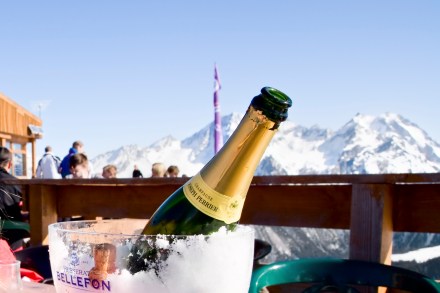
Ski season is upon us, and with it that familiar dump of status anxiety. Sliding down mountains has always been a rich man’s folly, but only a few years ago, normal people could just about afford to go if they saved hard enough. Not anymore. In parts of France, the cost of a six-day lift pass is just shy of £400. In Switzerland, a pizza can set you back forty quid. That’s just for starters. Factor in the cost of ski hire, ski wear, flights, accommodation, après-ski and mountaintop lunches, and your eyes won’t stop watering. Bring the family, and you’ll need more than a second mortgage. Flights and accommodation alone can double in price during school holidays, and those energetic sprogs will need fuel – lots and lots of expensive fuel.

In defence of BA’s new loyalty scheme

One of my favourite cartoons shows a couple sitting in luxury at the front of a plane, the wife peeking through the curtains to the cabin behind. ‘I’m so glad we’re in business class, darling,’ she says to her husband. ‘There seems to be some sort of hijacking happening in economy.’ People who have learned to play a game by one set of rules are bitterly affronted when the rules change Because we must consort with strangers for several hours, planes and airports amplify the normal human sensitivity to status. And so the media furore created by British Airways in revising the status thresholds for its loyalty programme is valuable fodder for students of psychology.

What tourists to London should actually see

Tourists seeking to understand life in London often come up short. It’s not their fault. It is often said that London is a metropolis made up of city villages, each with its own unique personality and characteristics. Most tourists never make it past the invisible walls of central London. Why would they? No one flies to London with thoughts of visiting Tooting or Deptford, though they should – Tooting has, without a doubt, the best curry restaurants in the city. We Londoners scarcely know our own city. We are all blind men touching various parts of the elephant’s body. Many tourists return home without any idea of what it means to live in London.

The town that inspired One Hundred Years of Solitude

The homes of famous writers are disappointing. Often, you see the famous desk, and that’s about it. There are exceptions: for example, Pushkin’s home in St Petersburg is interesting because they have the blooded waistcoat he wore during his fateful duel. Hemingway’s house in Cuba is intriguing because it is so macho – pistol, rifles, leather everywhere – you conclude he must have been secretly gay. Sadly, I can report that the home of Gabriel García Márquez in remote little Aracataca, in Colombia, is predictably disappointing. They don’t even have the desk. They’ve got the bed where he soiled his nappy – allegedly his first childhood memory – and half a kitchen. A visit takes ten minutes, as does a tour of his tedious hometown. https://youtu.be/4oQeQR1DEjw?

Red lights and shinto rites in Osaka

It gets somewhat forgotten, Osaka. On the bamboo-and-tatami trail of Japanese sites, this ancient port, fort and conurbation at the very heart of Japan commonly misses out on foreign visitors: as everyone rushes from Tokyo to Kyoto, from sacred Mount Fuji to ancient Nara to haunted Hiroshima. For most overseas tourists, Osaka is just a fleeting stop on the Shinkansen high-speed trains – a glimpse of another sprawling Japanese city with bland, utilitarian housing. The edgiest place in Osaka is about as dangerous as the Cotswolds The Japanese themselves know otherwise. They flock to the city because they revere its pivotal history – Osaka was Japan’s archaic imperial capital, back in the 4th to 7th centuries – and they celebrate its epochal sites.

The tragedy of Anne Boleyn’s childhood home

Hever Castle was the childhood home of Anne Boleyn and played a not insignificant part in the Henry VIII story. The smitten despot, already planning his divorce from sonless Catherine of Aragon, would ride over from his hunting lodge at nearby Penshurst Place to woo Anne there. Then, when things didn’t work out as he’d hoped, Henry seized Hever from her family and gave it to wife number four, Anne of Cleves, as part of the settlement when he was divorcing rather than beheading her, as he had poor Anne Boleyn. The first thing that I heard when I arrived in a teeming car park was the voice of Mariah Carey singing: ‘All I Want for Christmas Is You’ It remains one of Britain’s best-preserved Tudor houses.

London is getting worse

A famously elitist members’ club, a 900-year-old meat market, and a traditional old barbershop may not feel like they have much in common. In fact, they didn’t – not until the last week or two, when they all simultaneously closed in their disparate parts of London. The first closure, that of the Groucho Club, has been widely covered in these pages, generally with an overtone of chortling. After all, it is hard to feel sorry for a place that is notoriously exclusive, boasts a world-class art collection, and charges members £1,500 a year for the privilege of eating near a Damien Hirst – or indeed eating near Damien Hirst.

48 hours in Dublin

I need little excuse to go to Dublin, one of my all-time favourite cities. The only trouble is that recovery between visits takes so long. I’m neither as young nor as thirsty as I once was. And I’m still haunted by a bizarre trip I made many years ago when I hadn’t even intended to visit the Fair City. I’d been at a family party in Co. Down, drinking Guinness with Bushmills chasers for what seemed like days. Next thing I knew, I was waking up starkers three days later It was an accident waiting to happen, of course, and, thanks to too much poitín, the wheels came off spectacularly in the Dufferin Arms, Killyleagh.

Blackpool is cheap, tacky and wonderful

Arriving in Blackpool by train is just as I’d always dreamed. At the Pleasure Beach station, I disembarked right by the roller coasters, which rear up like Welsh hills beside you and, with the seagulls, welcome you with shrieking riders and clattering wheels. There are vast coasters in wood and metal weaving in and out of each other. Curvaceous and sprawling, they’re Gina Lollobrigida in steel. I’ve wanted to visit Blackpool for years. Spending my early childhood near Clacton-on-Sea, I got used to the delights of a tacky seaside town, and Blackpool is surely the mother of them all – even if it’s a mother with too much blusher and mascara on, who looks as though she’d scratch your eyes out if provoked.

Can you ever be fluent in a foreign language?

A couple of weeks ago, at one of my local bars in Antequera, a waiter asked me something as he served our glasses of wine. I didn’t catch it, so I asked him to repeat what he’d said. After the third time, I still hadn’t understood and clearly wasn’t going to. This guy has a thick Andalusian accent and sprays out about a thousand syllables per minute, but we usually communicate without problems. Two Spanish girlfriends also taught me a lot, and that’s definitely the most fun way to learn a language There’s also a local character, we call him ‘Gummy’, who roams the streets asking for cigarettes or change. I never understand a word he says either, except for ‘eurito’ (a little euro) or ‘cigarillo’ (cigarette). In my defence, he has no teeth.

Hotels are good for the soul

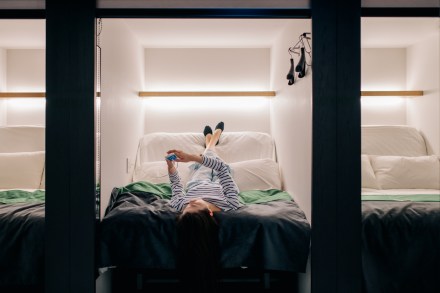
I love hotels. Growing up, my family never stayed in them (we were poor but we were honest, M’Lud). Instead we went to Butlin's, sharing a tiny ‘chalet’, or we stayed at bed and breakfasts; private lodgings where you got exactly those two things but had to be out and about during the daylight hours – come hell, high water or hailstones. For those too young to have experienced them, a B&B is basically the exact opposite of an Airbnb, where you’re allowed to stay in every single moment of every day you’ve hired it for, if that’s what turns you on. I’ve only stayed in one Airbnb, which was a houseboat in Amsterdam; I love boats and I love Amsterdam (or I did, before it went mad), but I never wanted to repeat the experience, because – hotels.

Why Britain needs Shinto

Ise, Japan They say of Japan that if you come here for a week, you want to write a novel about Japan. After a year, maybe a few essays. After a decade, a page. It is one of those countries which seems to get simultaneously more fascinating and opaque. Possessing an ancient monarchy is like having a Gothic cathedral in your back garden So it is for me, on this, my first trip to Japan in 30 years (I lived in Kyoto in the mid-1990s). This time around I have been doing prep by reading the early history of Shinto, the ‘state religion’ of Japan, an animist creed which sees the divine in everything – trees, rocks, lakes, rugby balls (really) – all in the form of kami – which can be spirits of place, mood or idea.