Spectator Life

Spectator Life

An intelligent mix of culture, style, travel, food and property, as well as where to go and what to see.

The shadow of communism still looms over the Balkans

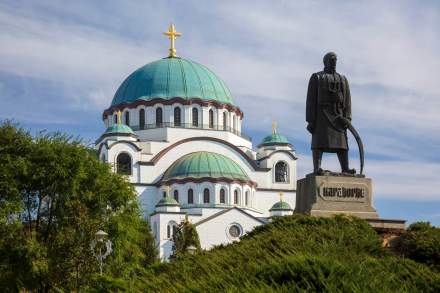
Our Serbian guide Zoran is a jovial fellow and as we rumble through the streets of Belgrade in our minibus he regales us with a joke about the difference between the various nationalities of the former Yugoslavia, all now with countries of their own. ‘We Serbs are rude,’ he says, ‘but the Croatians are self-centred, the Bosnians are thick, the Montenegrins are lazy and the Macedonians are just Serbs with a speech defect. As for the Slovenians, they are so polite they must be gay!’ Joking about each other is a definite improvement on fighting each other, as per so much of their history. The countries on my Balkan tour – Serbia, Romania and Bulgaria – have been struggling for more than three decades with their post-communist problems. But they do like a laugh.
Wigan’s pies are grotesque and glorious

Fancy a slappy? It’s not what you think – unless you’re from Wigan, in which case you’ll know exactly what I’m offering. A slappy, otherwise known as a ‘Wigan Kebab’, is a whole pie served inside a sliced barm cake (not cake, but a soft, sweetish bread roll). Wiganers are known as ‘pie eaters’. I don’t mind a slice of mince and onion or chicken and leek every now and again, preferably in winter – but I certainly couldn’t imagine indulging on a regular basis. But if I am to eat pie, it should be in Wigan. Don’t get me wrong, there is absolutely no way I would travel to Wigan especially, because – and I mean no offence to its inhabitants – there isn’t an awful lot else going for it. I can say this because I’m from Darlington.

Butlin’s is cashing in on nostalgia

Butlin’s is no longer a holiday ‘camp’. The company has evolved from its postwar heyday and now describes its properties as ‘resorts’ which are crammed with restaurants, bars and venues for live gigs. It’s like a cruise but on dry land. I went to Bognor Regis for a nostalgic ‘Ultimate 80s’ weekend where the performers included half-forgotten acts such as Aswad and T’Pau, and the remnants of the boyband Bros. The site lies 200 yards from Bognor’s shallow, pebble-strewn beach. The town itself is doing all right, if not exactly thriving. The charity shops are cheap, the estate agencies are full of recently vacated bungalows and the funeral parlours offer a special service for customers in a hurry.

The wild optimism of a young society

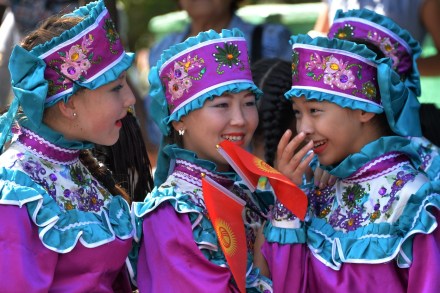
There’s a strange, near-psychedelic effect that hits you when you travel from an ageing country to a young one. It’s not in the buildings – although the buildings may be new and hastily tiled – and it’s not necessarily in the politics, culture or economic vibe. No, the shock is more human, and intimate. It is in the faces. And the noise. And the nappies. I’ve just returned from a few weeks in Central Asia: Uzbekistan, Kazakhstan, Kyrgyzstan. And while these nations differ in history, ethnicity and landscapes, two things bind them all. First, they all have an inexplicable penchant for a stodgy rice dish called plov (in Samarkand I bought a T-shirt bearing the slogan ‘All You Need is Plov’). The second is that they are all young. Wildly, exuberantly young.

Help! I’m trapped in a hi-tech hotel

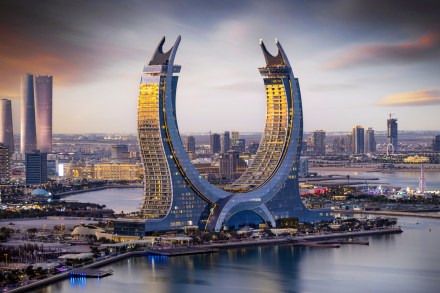
Raffles Doha is one of the world’s weirdest, most improbable buildings. That’s it in the picture – a five-star hotel incorporated in one prong of the incomplete circle that is the 40-storey Katara Towers in Lusail City (the Fairmont Doha is in the other prong), on land reclaimed from both desert and sea. It’s an architect’s/despot’s fantasy turned reality. The bonkers design is meant to echo Qatar’s national emblem of crossed scimitars, and I’d love to see the back of the envelope upon which it was first sketched. It’s far, far beyond my miserable hack’s pay grade, but invited as a guest I’m ashamed to say that I couldn’t resist.

How is Germany so weird yet so dull?

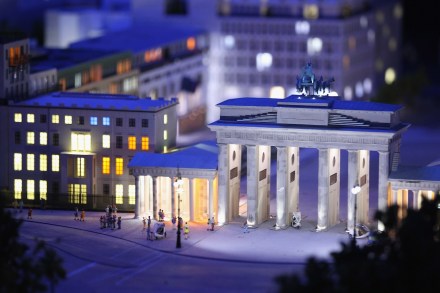
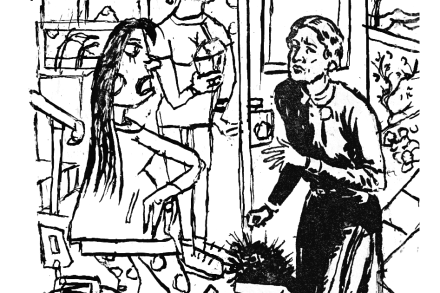
When I lived in Berlin a decade ago, I was struck by the contrast between the dullness of young Germans and the incredible weirdness of everything else. Only in German could the word for ‘gums’ (Zahnfleisch) mean ‘toothflesh’. And only in fleisch-mad Germany (the word for ‘meat’ is the same as ‘flesh’, which is somehow incredibly disgusting) would people snack on raw pork, a dish known as mett. Mett, also known, rather curiously, as Hackepeter, is sometimes offered at buffets in the shape of a hedgehog (what else?) with raw onion spines. It simply doesn’t get stranger.

The quiet frustrations of Puerto Rico

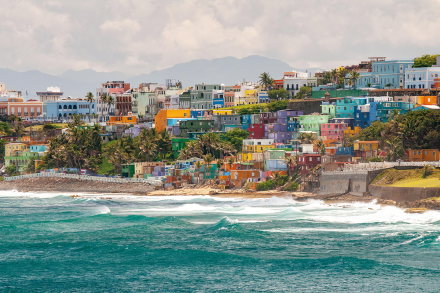
If you like piña coladas – and I do – Puerto Rico will suit you just fine. The cocktail was born on the island in 1954, though debate lingers over exactly where it was first dreamt up. A bartender at the Caribe Hilton is credited with blending coconut cream, pineapple and rum into its original form, but some claim it was at Barrachina that the drink evolved into the slushier, icier version we know today. But does it really matter? What’s important is that in Puerto Rico, you’re never far from a piña colada. Spring break was in full flow when I arrived on this tropical US territory. The college kids were easy to spot. The girls paraded around in string bikinis, which barely held everything in. Some of the boys, meanwhile, bore fresh hickeys, badges of honour.

Hell is having house guests

Since we moved into our house in the Cyclades a few years ago, I’ve come to accept that if you own a home on the beach in Greece with plenty of spare rooms, people will come to stay. But what is it about house guests abroad? Do they need fresh towels at home every time they wash their hands? Do they have to have three cooked meals a day? Do they have chauffeurs in normal life, or do they become allergic to driving only when they are on holiday? ‘We didn’t bother renting a car because we don’t want to go anywhere.’ If you want to make a host’s shoulders slump, saying this will do the trick. If I sound mean-spirited it might be because I’m not a natural hostess to start with.

‘It is sad that we are sometimes seen as just killers’: an interview with Japan’s last ninja

Getting an interview with Jinichi Kawakami, the man known in Japan as ‘the Last Ninja’, was no easy task – but nor should it have been. Ninjas, Japan’s legendary covert operatives and assassins, were renowned for their elusiveness, so it would have been disappointing if tracking one down had proved a cinch. It took a good deal of research and persistence before I was granted an interview by landline telephone – which also seems appropriate since ninjas were reputedly able to make themselves invisible. Kawakami is head of the Banke Shinobinoden school of ninjutsu (ninja culture), director of the Iga-ryu Ninja Museum and Ninja Council, and a professor of Ninja Studies at Mie University.

Why Americans are so fat

Are you hungry, peckish, esurient? Join me at Josie’s diner in Lexington, Kentucky, in the heart of Bluegrass country, where the horses are lean and very many people are, let me be frank, not. Josie’s is heaving at 8 a.m. as the well-upholstered clientele arrive for the morning feed. A mercifully slim student at the University of Kentucky is my waitress. ‘Hi, y’all! I’m Madeline Rose and I’ll be your server today,’ she announces, in the earnest tone of wait staff in a country where the credit card terminal offers the option of a 25 per cent tip. The menu she hands me is already expansive, but there’s more.

The frugal luxury of a pod hotel

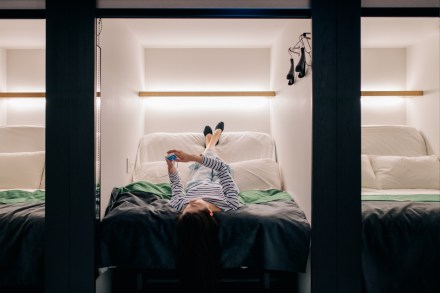
Right beside the airport I often use to fly home from Italy, there is a pod hotel where I am becoming a regular client. These, as most will know, are dirt-cheap places where sleep is stripped down to its absolute core. For about £35 a night here, you get a tiny berth of a room – a ‘capsule’ about 4ft wide and 6.5ft long – with a narrow bed, a socket to recharge your devices and, if you want to work, a fold-down mini-table for your laptop. It is a bit like you imagine a rather poky Swedish prison cell, decorated with Nordic minimalism: white bed, white walls, fluorescent light, no windows. ‘We make every traveller’s dream come true,’ the leaflet says.

Why the middle classes are giving up on skiing

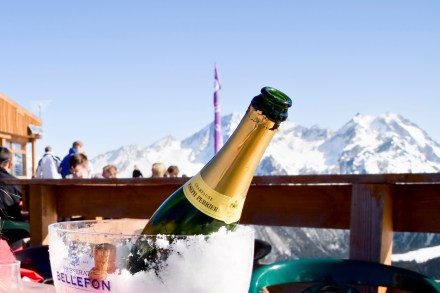
Let’s cherchez un violon petit! Skiing is now too pricey for the middle classes. According to a recent flash poll by the Telegraph’s ski section, 70 per cent of readers now think skiing holidays are unaffordable. For the bourgeoisie, skiing – along with many of the other trappings they used to take for granted, such as being able to afford the fees for a private day school or a daily takeaway coffee – ce n’est pas possible. Quel dommage! (Let’s parlez anglais now; I think you get the point.) It’s not just the accelerated cost of living in the UK – or Liz Truss personally putting our mortgages up by a grand a month. Long gone are the days of getting almost €2 or $2 to the pound. In France last week, it was around €1.

The joy of Channel Island hopping

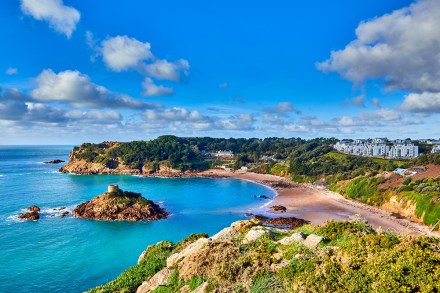
Seldom has a collective term been less appropriate: ‘the Channel Islands’ – as though these were in any sense (other than the geographical) a place. Entertained in my English mind had been a scatter of similar, pretty but perhaps over-manicured little islands stuck in the mid-Channel between Great Britain and France but sunnier, and where tax-avoiders are the indigenous population. Wrong, wrong, wrong. For family reasons I’ve just spent some time on Jersey, Guernsey and Alderney, sadly missing Sark and Herm. My island-hopping trip, though short, showed me how wide of the mark these assumptions are. Guernsey is by no means manicured and is in places pleasingly unkempt, while Alderney is quite dishevelled. Mid-Channel?

The black cab is dying out. Good.

A recent study by the Centre for London thinktank claims that the city’s black cabs could disappear forever, unless something is done to reverse the decline. Thanks to Uber, the ubiquitous satnav which devalues the cabbies’ hard-earned Knowledge of London’s streets, and the Mayor’s anti-motorist measures, there are ever fewer black cabs rumbling around the capital. The number dropped from more than 23,000 in 2014 to just under 14,500 last year – down by a third. Only a hundred licences were handed out last year. At this rate, we are told, they will vanish altogether by 2045. Well, tough. I’ve been a Londoner for half a century and have had enough bad experiences with our black cabs to feel that their disappearance wouldn’t bother me a jot.

The end of the pick ’n’ mix passport

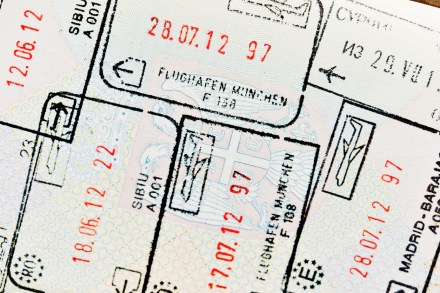
The second passport used to be a backdoor: a legal hack for the well-advised, well-connected or well-heeled. You could acquire nationality in a country you’d hardly visited, without necessarily even speaking the language, and still find yourself welcomed with open arms – or at least waved through the fast-track lane at immigration. But that game is ending. More and more governments are closing the door on tenuous ancestral claims and pay-to-play citizenship. Whether through lineage or liquid assets, the old tricks to get a second passport no longer work. Nationality is being redefined – not as a loophole, but as a bond. The appeal of a second passport has always been practical. For Britons, Brexit turned the post-Brexit navy passport into a travel straitjacket.

The Judgment of Berkshire

Almost 50 years ago, in a hotel bar in central Paris, French wine faced a reckoning. Steven Spurrier, a British wine merchant, decided California deserved a spell in the sun: at the time French wine was the dominant force in Europe, with bottles from the New World – Australia, New Zealand, the US and the like – considered their poor cousin. Spurrier came up with the idea to pit the very best French Bordeaux against Californian cabernet sauvignons and chardonnays against white Burgundies, and have a panel of experts – all French – rank them in a blind tasting that came to be known as the Judgment of Paris. California won both categories. Odette Khan, a well-known critic, reportedly demanded her scorecard back so news of her grave error wouldn’t reach the papers.

I’m bored by this blossom worship

It’s cherry blossom season in Japan and about half the population (according to a Kansai University study) will gather at the viewing spots to pose for photos (Japanese Instagram may collapse) and enjoy picnics in the shade of the sakura trees. Japan will also welcome close to four million visitors to witness the floral marvel. The season is brief, peaking in about a week and disappearing by the end of April, during which time the progress of the blooms across the country is followed with breathless enthusiasm by reporters on the news bulletins. We are assumed to be, expected to be, giddy with excitement about all this, and to swoon with childlike wonder at the profusion of vivid yet delicate flowers. But I’m afraid I’m not quite up to it any more.

I’ll never holiday again. I couldn’t be happier

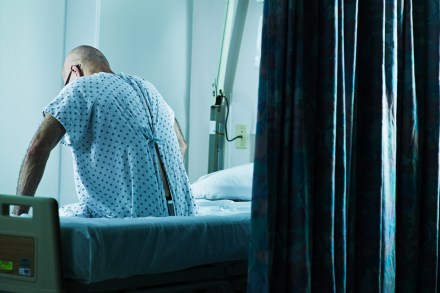
Waking up to hear the ‘unprecedented’ news about Heathrow Airport, I felt a nanosecond of luxurious relaxation (albeit I’m not exactly over the moon about being in a hospital bed without the use of my legs). Of course I’d rather be scampering about an airport superstore being sprayed with scent by sexy shop-girls rather than stuck here waiting to be hoisted into the air over a commode like some smelly piñata. But there’s never any harm in looking on the bright side and I’m very glad not to have been flown all the way back to Delhi when I was on the verge of landing in TW6, as was one young woman on the Today programme last week.

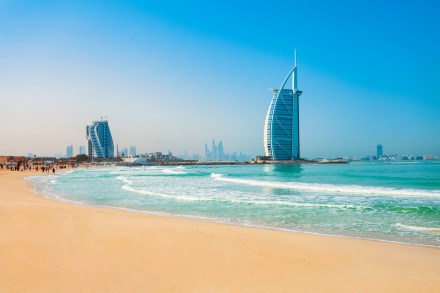
Why would anyone move to Dubai?

Dubai is the new black: it’s everywhere and apparently for everyone. The steady trickle of first-person tell-alls about starting over in the Emirate has, since the Labour government moved in, built to a tsunami. ‘How I became a Labour school-fee exile in Dubai,’ written by Isabel Oakeshott, partner of Reform’s Richard Tice, was one that scored particularly highly among readers. ‘We moved from Aberdeen to Dubai – it is hugely expensive to have a family here,’ reads another headline. ‘Low tax might sound affordable, but life in the glitziest emirate is anything but cheap.’ James Vince, the cricketer, is another recent high-profile Brit to relocate there.

What my Irish passport means to me

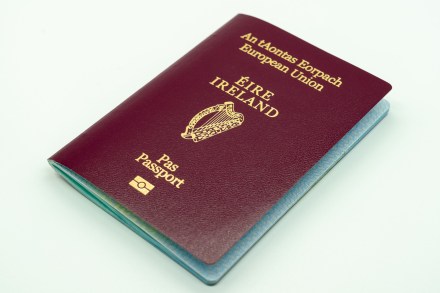
I’m now officially Irish – the proud recipient of a shiny red passport. It arrived, with the luck of the Irish, in time for St Patrick’s Day. But as I gaze fondly at the words ‘European Union’ and ‘Ireland’ embossed in gold on the front, I do feel the awkward guilt of the hypocrite. I may have voted Remain just to avoid any upheaval but I’ve never been much of a fan of the EU. And while I’m in the confessional box, I should perhaps mention that I’m not even properly Irish – my mum was English. I’ve seldom visited the green fields of Erin and have never finished a whole pint of Guinness. So I’m afraid Paddies don’t come more plastic than me.

Beyond Boswells: Oxford’s new safe space

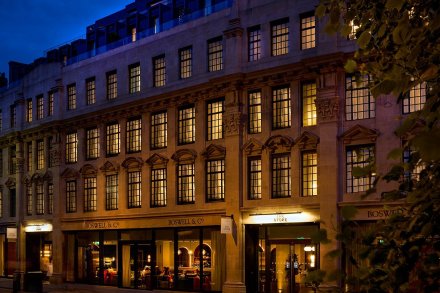
One can see a city so differently over time. Visiting Oxford recently I noticed fine whisky shops and fashion stores which have always been there but which I barely registered as a student 15 years ago. There are new arrivals: some good, such as the handsome Jericho Cheese Company; others less so, such as the proliferating bubble tea shops catering to the now numerous Chinese, both students and tourists. Covered Market is still there, where we used to indulge at the original Ben’s Cookies. Though I do not remember back then the Thames Valley Police signs now warning of ‘bag dippers’ operating in the area. Oxford is both swisher and scruffier than I remember it. Swish embodied in the new Ivy, in a palatial neo-Gothic pile on the High Street that used to be a NatWest.

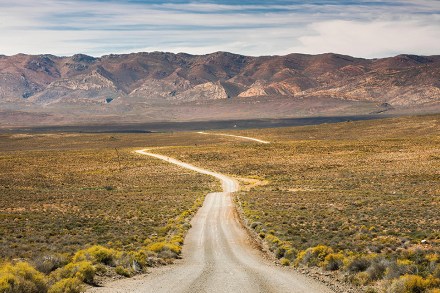
The Karoo has seen so much, but changed so little

It’s an incongruous name for a wilderness, ‘the Karoo.’ The nursery-like sound belies the harshness of a vast, arid hinterland separating South Africa’s littoral from its grassland interior. For South Africans, the name is synonymous with bone-dry air, scented heathers, great rock formations, vast skies and even vaster sunsets. The scrubland here is so inhospitable that for centuries it insulated the southern tip of Africa from the rest of the continent. A single people — the Khoi bushmen — were adapted to its desiccated conditions: Karoo is their word for ‘waterless land’ that has come down to us as its modern name. In the nineteenth century, the pressures of the outside world began to weigh on this hardy time capsule.

karoo
Swiss

Breakfasts, massages and reinvigorating Swiss thermal waters

Last January, one of the first things my son-in-law wanted to know was if I’d found a ‘boy toy’ after spending a week at Lavey-les-Bains, following our Christmas holiday in Burgundy, where half of us now live. The other half lives in Australia. The renowned Swiss thermal waters lie under the Dents du Midi that rise above Lac Léman in the Swiss canton of Valais like four, glistening white, enamel incisors. Applicants for Swiss nationality must name Les Dents if applying for a Swiss passport in le Valais or le Vaud where we lived for sixteen years, from 1968 to l984. My answer was ‘no.

train

Taking the fast train back to imperialism

I’m on a high-speed train. Forty years ago, such a statement would have been notable and specific: essentially, it meant you were in Japan or France. Nowadays, being on a high-speed train is barely a geographical indicator at all. Most of Europe has them, from Spain to Italy to Poland. Morocco has high-speed trains. Uzbekistan has high-speed trains. Even Egypt, Vietnam, Turkey, Thailand and the USA either have high-speed railways, or will have them in the next year or two. Just about the only country not powering ahead with high-speed rail is the birthplace of the railway — the United Kingdom — a fact that can either make you sob, or despair, or perform a kind of double sob etched with despair. What makes my experience unusual is that my high-speed journey is happening in Laos.

Walking in the footsteps of the Kray twins

A Sunday morning in Bethnal Green and Adam, who has been leading Kray-themed walking tours of the neighbourhood for almost two decades, corrals a congregation of eight polite, reserved, attentive customers who, with sensible rucksacks, floor-length M&S skirts, reusable water bottles and neutral-coloured, thin-laced trainers, look as far removed from pool hall brawls and basement flat stabbings as it’s possible to get without joining the Church Army or taking up cribbage. When he started giving tours of the Kray twins’ haunts, Adam tells us, it was impossible to go more than five minutes without some tipsy ageing derelict lurching out of the Blind Beggar pub to inform the group that he ‘knew the Krays personally’.

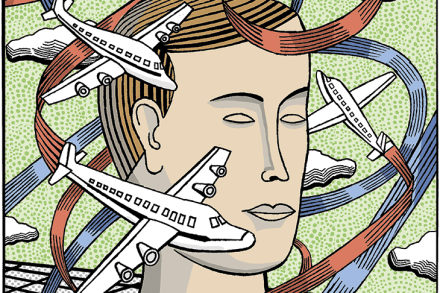
The Gen-Z fliers obsessed with maximising their air miles

Oscar, 26, joins me on Google Meet from Buenos Aires, having arrived earlier that day from New York – by way of a few hours in Mexico City and Panama. Just five days ago, he was in London. ‘New York was just going to be a weekend trip for a conference, but then I thought while I’m in America, I might as well head south and here I am.’ It’s a far cry from Wales, where his family lives. Yet this itinerary is barely a ripple in Oscar’s relentless travel schedule. His nonstop approach to flying places him firmly within a new tribe of Gen-Z frequent fliers – mostly men – who treat globe-trotting like a real-life computer game. Their obsession? Maximum air miles for minimal money. The destination itself is secondary; the point is simply to keep moving.

The naked truth about French health care

Faithful readers will know of my journey through the French health care system. I have not shared these histories because anyone should be particularly interested in my aches and pains, or to complain. If I wanted to moan about a health system on the verge of a nervous breakdown I would return to Britain. No, I drone on because it’s worth repeating the astonishing discovery that it is actually possible to have a health system that isn’t crap. And I have made some other discoveries along the way. In previous episodes, I have covered the remarkable behaviour of French GPs, who actually answer the phone – and will see you the same day if necessary or tomorrow if less immediately urgent.

There’s something sinister about the Mustique mafia

It’s half-term and instead of the Baftas and Anmer Hall in Norfolk, the Prince and Princess of Wales have decamped en famille to Mustique. Old pictures of Kate and Wills walking along the Caribbean seafront hand in hand and a young Prince George in a green polo shirt are accompanied by newspaper commentary detailing how Kate deserves a rest in what is thought to be her favourite place. So far, so very lovely.   Mustique itself, though, has always struck me as a rather sinister place.

My own personal peasant

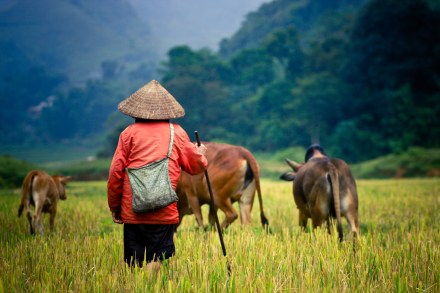
It was when the peasant didn’t move for the second hour that I became suspicious. I was in an ultra-expensive hotel in southern Thailand. It was built to resemble a sequence of exquisite villas from some ancient Thai dynasty, arranged around tropical gardens and meadows. I was staying in my very own, beautiful, teak-and-mahogany mini-palace, which came with a grand piano and butler – all the usual things I’d come to expect as a luxury travel correspondent. Yawn. The only thing really unique about this five-star hotel (they tend to blur, eventually) was the fact my own villa, the best of the best, the jewel in the crown, came with its own paddy field. And in that paddy field was a singular peasant in a charming conical hat, next to an ox.