Spectator Life

Spectator Life

An intelligent mix of culture, style, travel, food and property, as well as where to go and what to see.

British pubs are booming… just not in Britain

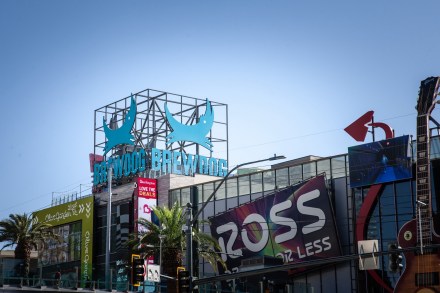
British pubs are having a moment. Not in Britain: you can blame Keir Starmer’s rise in business rates for that. Instead, they are branching out overseas. Take Wetherspoons, the granddaddy of British boozers, set to open next month in Alicante airport, or BrewDog, which has opened its doors in Dubai and many other international outposts besides.  Perhaps British pub chains will prove to be our next big export market. No doubt there will be the obvious jokes about arch-Brexiteer Tim Martin opening pubs in Europe. But would you really bet against him? Whatever you think of Wetherspoons, I can assure you that you’ll never find an empty one. Just imagine the kind of trade they could do in Barcelona or Rome. Which brings me to Dubai. Did you know there was a BrewDog in Dubai?

Should trains have child-free carriages?

Amid the distractions of Donald Trump and Davos, France’s state-owned railway operator decided last week was the opportune time to slip out some news. Welcome to ‘Optimum’, the new and exclusive area of the train where kids are not welcome. Business people and misopedists travelling to and from Paris on the weekday high-speed TGV services will no longer have to tolerate the under-12s. The operator, SNCF, justified its ban on children by stating it would enhance the travelling experience of those who cherish ‘exclusive comfort in a fully dedicated first-class carriage, with seating arrangements designed to preserve your privacy, for a calm journey, ideal for working or relaxing’.

It’s all been downhill since Concorde

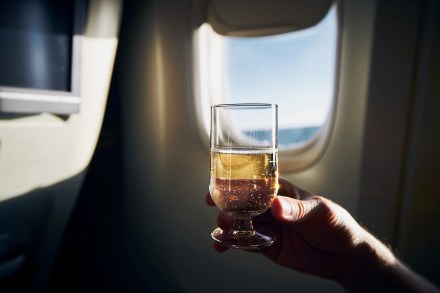
Half a century ago today, the Duke of Kent, Anthony Hopkins and 97 other diners had a meal of caviar and lobster canapés followed by grilled steak, all washed down with Dom Perignon. There was nothing too unusual about this slightly ostentatious menu, one that was a typical example of 1970s British fine dining. But it was a lunch that cost more than £1 billion to serve up. It was the first meal on board the very first scheduled flight on Concorde – the plane that, for close to three decades, made it possible to have breakfast in Belgravia, a meeting in Manhattan and still be home for supper in Soho.  That’s not a schedule that appeals to me (there’s nowhere decent to eat of a morning in Belgravia).

Britain’s fatal good manners

One of the guilty pleasures of the patriotic British travel writer is encountering yet another country, city or island that we invaded, occupied, colonised or just menaced into submission with a couple of gunboats. For example, did you know we casually took out Uruguay back in the day? It’s true – we demolished the walls of Montevideo in 1807, during the Battle of the River Plate, as I discovered on my first visit there last year. I’ve had the same experience all over. The Maldives. Kefalonia. The Colombian coast (we were so punchy and piratical half the Colombian nobility decamped 200 km inland). Also, Menorca, the Faroes, Haiti, Iceland, Bolivia (our economic colonisation is the reason women in La Paz wear bowler hats).

The many faces of Houston

If Greta Thunberg ever docked in Houston, it wouldn’t be for long. Freeways stretch to 26 lanes, flaring oil refineries light the night sky and sports stadiums are sealed against the humidity with year-round refrigeration. At an Astros baseball match, a poster bluntly reminds attendees ‘TODAY’S GAME IS MADE POSSIBLE THANKS TO NATURAL GAS & OIL’. Between quarters at a Texans NFL match, a handful of fans score Chevron gift cards – ‘You’re going home with extra gas money!’ The crowd roars. Welcome to oil country. When fossil fuels enter Britain’s national conversation these days, it’s behind abstractions of net zero.

The great rail ticket swindle

Normally rail ticket prices are raised in line with the Retail Prices Index (RPI) plus 3 per cent. This January, unusually, they didn’t increase. But that is not how it will feel if you fancy a short break in Edinburgh. In that case, you may well find yourself paying double what you used to pay. Say, on the spur of the moment, you fancy a short trip to the Scottish capital from London this weekend, but you are not quite sure which train you can leave on and when you want to come back. In the past, you could have bought a Supersaver Return, which allowed you to take any off-peak train there and back.

Britain’s lack of trains on Boxing Day is shameful

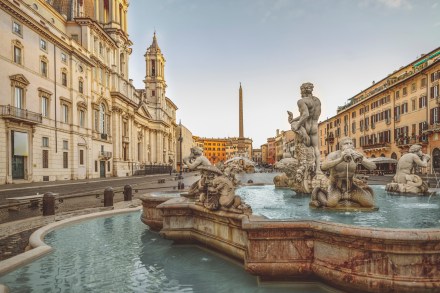
Among all the perfidies of public transport in Britain (a nation that can build a £40 billion railway based on the premise that the outskirts of Acton counts as a ‘central London’ terminus), perhaps the most ludicrous of all is this. On 26 December, a day when millions of us need to move about, no trains run. HS2 makes me angry. But I’ve spent every festive period of my adult life feeling positively dyspeptic about the meek acceptance with which we tolerate the almost complete lack of trains departing or arriving at any UK railway stations on Boxing Day. We are an absolute, solitary outlier in this regard. Even in Italy, where Christmas stretches lazily from Christmas Eve until Epiphany, there’s a skeleton timetable on 26 December.

Why Christmas comes early for thousands in Spain

Every time I hear about someone winning ten million pounds/euros/dollars in a lottery, I think (and I’m sure I’m not alone in this): ‘Yeah, but… wouldn’t it have been better if ten people had won one million?’ Well, that’s more or less what happens in Spain. Tomorrow nearly 2,000 people will share the first prize in the Christmas lottery, each winning €400,000 (£350,000). The same number stand to share the second (€125,000 each) and third (€50,000 each) prizes. So in total almost 6,000 Spanish households will suddenly be looking forward to a much better life. No wonder there are such explosions of joy the length and breadth of Spain every year on 22 December.

Hell is a motorway service station

If OPM had released an antithetical response to their 2000 magnum opus ‘Heaven Is a Halfpipe’, I’m certain it would have been called ‘Hell Is a British Service Station’. Had this song been made, I think it would have gone a little something like this: ‘If I die before I wake / I’ll spend eternity in a Welcome Break / ’Cause right now on earth, I can’t do jack / I’m at a service station and my tyre’s flat / Now hell would be a Roadchef / With a Costa bacon bap / And hell would be the toilets / After a curry at Watford Gap.’ Admittedly, the lyrics could do with some workshopping, but you get the point.

King’s Lynn is a town fit for a former prince

There’s a trading estate, which might possibly need an envoy. There’s a Pizza Express, whose user ratings online are the equal to the Woking branch. And there’s also a branch of Boots which has a solid range of deodorants. Should Andrew Mountbatten-Windsor ever acknowledge any perspiration issues, desire a pepperoni or feel like taking on a part-time job, he’s moving to a most suitable neighbourhood. At only around seven miles from Sandringham, King’s Lynn will be Andrew’s nearest town when he takes up residence in his new home.

Welcome to the Wetherspoons of hotels

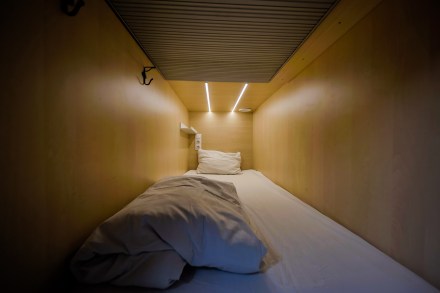
With the average cost of a hotel room in London costing around £250 a night – and not showing any signs of getting lower, either – most might think that a stay in the capital is a rarefied activity. However, the news that the Zedwell group of budget-conscious hotels have opened a mega-budget establishment in Piccadilly, the Zedwell Capsule Hotel, promises to be a game-changer. Hooray for anyone who wants an evening out in London and can’t face either the last train back or spending a week’s salary on a hotel. The idea behind the Zedwell Capsule Hotel is that it maximises space while promising not to skimp on the basics.

What happened to Westminster Bridge?

Westminster is filled not just with politicians, journalists and unemployed protestors, but with tourists. The data would suggest they are mainly Americans, French and Italians who come to see the monuments of central London, visit friends and family, and see how we’re faring after Brexit. They’re probably pretty worried when they see Westminster Bridge.   The amount of foot traffic on the bridge can be overwhelming; sometimes it’s impossible to cross it uninterrupted. People block your path and get in the way of each other, distracted by their phones. They wander blindly into the bike lanes, trying to carry out impromptu Instagram photoshoots, while aiming for the best angle of the famous clock tower.

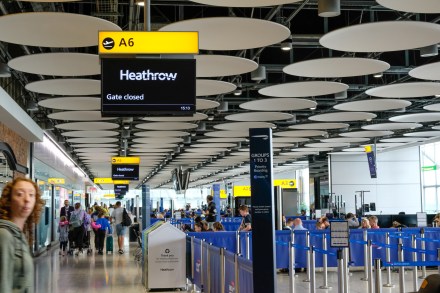
The joy of small airports

There’s a saying – the kind seen on ‘inspirational’ posters on the walls of HR departments – that claims: ‘It’s about the journey, not the destination.’ Clearly it was dreamed up by someone who has never flown from Stansted and found themselves jostling through crowds of stag and hen parties, newly arrived Polish workers (there’s even been an Essex-based Polish taxi service to pick them up) and the hordes descending on Burger King as soon as they come through arrivals like John Mills and co. supping their first lagers after trekking through the desert in Ice Cold In Alex. It’s not just Stansted, of course. Gatwick – or ‘Chavwick’, as I’ve heard it called – is just as bad.

Hotels are still hopeless at accommodating disabled guests

I was sitting in a hotel restaurant in Cheshire a while back: one of those rambling country manors, full of mock Jacobean wood panelling and fake Tiffany lamps, beloved of football-and-property enriched couples with gravy hued fake tans, sports cars parked outside and more signet rings than GCSEs. I was hungry and alone, aside from, as always, travelling with my own disability in the form of severe visual impairment, aka ocular albinism and nystagmus – or the Rolls-Royce Silver Shadow of very bad eyesight, as I prefer to call it. I’d asked in advance for an accessible room which, predictably, was ‘not yet ready’ for me to check into when I arrived.

The small-town world of a Bohemian giant

Nearly everywhere you go in Nymburk, a small Bohemian town an hour or so from Prague, there are reminders of its most famous son, the novelist Bohumil Hrabal. The Czech writer, who died nearly 30 years ago, grew up here, amid the coopers and maltsters at the local Postřižinské brewery, where his stepfather was manager. Beer accompanied Hrabal throughout his life – much of his adulthood was spent sinking mug after mug at the Prague tavern U Zlatého tygra (‘At the Golden Tiger’). Terror stalked him too. He lived through Hitler’s occupation, grilled and harried by the Nazis who came very close to killing him.

The scourge of the cultural inheritance tax

Remember when history cost a few shillings? We wandered through romantic ruins, wondered who painted that dusty landscape above the fireplace, brushed lichen off carved stone and got shoes muddy spotting weeds in herbaceous borders. Visiting was about letting the quiet authority of age do its work; the place spoke for itself. After a financially bruising encounter with a sequence of heritage attractions in the past month, I’ve realised this experience is no longer available in Britain. Accessing our history today means a digital entrance gate, a logo, a QR code and a moral message – plus a fee that makes your eyes water. At St Paul’s Cathedral, the entry price for an adult is £26. A couple fork out £52 even before the gift shop. It cost £9 in 2007.

The headphones that play the future

I have arrived in Naples, Italy, after an arduous flight from a chaotic London Gatwick Airport. I’m settled in a glamorous top-floor apartment in the Quartieri Spagnoli – the romantic old ‘Spanish Quarter’ – where Vespas fizz over cobbles and laundry hangs across alleys like flags of endless surrender. Most importantly, I’m clutching my Apple AirPods 3 in their shiny new capsule. Because I’ve come here to do a grand, futuristic experiment using their much-heralded ‘live translate’ function. Does it really work as smoothly as Apple says? Can I actually slot them in my ears and have them translate the Italian speaker in front of me, in real time? Is it really like the sci-fi Babel Fish from The Hitchhiker’s Guide to the Galaxy?

Graham Robb: The Discovery of Britain

40 min listen

Sam Leith's guest this week is Graham Robb. In his new book The Discovery of Britain: An Accidental History, Graham takes us on a time-travelling bicycle tour of the island's history. They discuss how Graham weaves together personal memories with geography and history, his 'major cartographic scoop' which unlocks Iron Age Britain and contemporary debates about national identity. Graham also has a discovery of interest for those who hold out hope that King Arthur really existed. Produced by Patrick Gibbons and James Lewis.

Why the authorities hate Lewes bonfire night

One of the first articles I wrote for The Spectator back in 2011 described the explosive celebration of Bonfire Night in Lewes, the ancient county town of East Sussex where I then lived. Today, such is the relentless march of purse-lipped Wokedom, it is necessary – in writing about this eccentric folk festival – to defend its very existence as well. The simple survival of ‘Bonfire’ (as it is known to Lewesians) every 5 November is in fact something of a miracle in our painfully politically correct age.

Germany still feels divided

As the S-Bahn tram slid along Bernauer Straße, through its windows I could see tourists posing for photos beside the remains of the Berlin Wall. Everyone fixates on the border that cut through West and East Berlin. We forget that Berlin itself was deep in the GDR and that hundreds of kilometres to the west another border ran down the entire seam of West and East Germany. Observation Post Alpha, the West’s most important military observation post on that border, still stands today as a memorial to the folly of geopolitical games. It was erected to overlook the so-called Fulda Gap, an area of land deemed strategically vital by the Allies. This was where hordes of Russian tanks would charge through in the event of a full-scale attack on the West.

Airlines are finally making an effort

Economy fliers everywhere, rejoice! After a long stint of what can only be described as tight-fisted meanness, British Airways and other short-haul carriers including Virgin Atlantic have started to compete on service again. The trolley-dolly is officially back. Now, once you are (semi) comfortably seated in economy and cruising at altitude, you will be offered tea or coffee and maybe even a biscuit. Airlines have long competed in a race to the bottom on price but are undergoing something of a volte face. This new customer service strategy is driven by competition from the state-subsidised airlines in Asia and the Gulf. This can only be good news for those of us who fly economy but believe that we belong in another part of the plane. I include myself in this number.

Give Baltimore a chance

You saw Homicide: Life on the Street, right? You know, that gritty TV police drama set in Baltimore. What? Ah, no, you’re thinking of The Wire, that other gritty TV police drama set in Baltimore, the one with Idris Elba and Dominic West. Homicide predates The Wire and was filmed largely around Fells Point and along Baltimore’s historic waterfront. The former City Recreation Pier, which stood in for the police department, is now a swanky hotel, the Sagamore Pendry Baltimore, in whose comfortable embrace I have just wallowed. Baltimore doesn’t have a great reputation. Whenever I tell American friends I’ve been there they affect horror and ask what on earth I was thinking. Couldn’t I have gone to Boston, New Orleans, New York, Washington D.C.

The secret of Hungary’s genius

Hungary, the country of my birth, takes a lot of flak these days – and with good reason. How nauseating that the nation which suffered Soviet oppression for nearly half a century – and whose 1956 Revolution was so savagely crushed by the Soviet army – now cosies up to a Russian president who reveres Stalin and bemoans the dissolution of the USSR. The maverick Hungarian prime minister, Viktor Orbán, once his country’s outspoken champion of freedom, is emphatically not on the side of Ukraine in its existential fight against Vladimir Putin’s invasion.

A love letter to Ronda

‘I have searched everywhere for the “city of dreams” and found it here, in Ronda,’ Rilke wrote. Hemingway was more practical: ‘[Ronda] is where you should go if you ever go to Spain on a honeymoon or if you ever bolt with anyone. The entire town and as far as you can see in any direction is romantic background…’ Sixty miles inland from Málaga, encircled by mountains, Ronda stands on a plateau cut by a steep, narrow gorge some two hundred yards deep. Eroded over a period of five million years by the river that runs through it, this ravine divides the town in two and ends in a sheer cliff drop to the plain below. Cacti and fig trees grow out of its sides; birds wheel and swoop down the chasm to their nests on the rock face.

All hail the driverless taxi

No one is quite sure who invented the phrase ‘the shock of the new’. It may have been the American writer Harold Rosenberg back in the 1960s. Alternatively, it may have been the late, great Australian intellectual Robert Hughes, who used it as a title for a TV series. Whatever the answer, the phrase aptly captures a very human moment: when you encounter something so strangely and profoundly innovative you experience a visceral, emotional jolt. Those two thinkers applied the phrase to modern art, to the first jarring encounter with impressionism, Cubism, abstract expressionism. But it can also be applied, perhaps more appositely, to the first encounter with remarkable technology. Technology, in the famous vision of Arthur C.

The madness and myth of the Faroe Islands

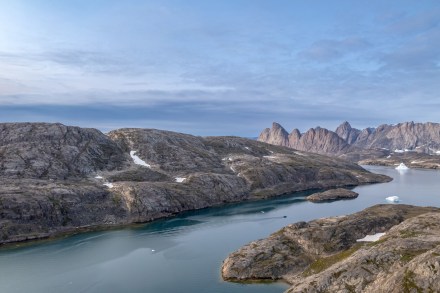
I am five minutes out of the Faroe Islands’ windy, stomach-churning airport when the world twists into legend. It looks like Lord of the Rings but more menacing. Ten minutes later it’s a nightmare of single-track tunnels – go slooooow – carved into the earth by crazed dwarfs with too much time on their hands. Five minutes after that it’s Tolkien again, but redrafted by a boozed-up Norse god: dramatic buttes crumble into the Atlantic, mad farmers are ploughing near-vertical slopes, and waterfalls leap joyously from enormous cliffs to dissolve into lacy surf 300 yards below. The land here feels tormented, as if the sky and the sea endured a bitter divorce and the cliffs are their broken children: jagged, furious and full of vengeance.

I left my heart – and my dignity – in Belfast

Call me crazy, but I’ve always loved Belfast. Even when it was grim, scary and unlovable, I loved Belfast. It doubtless helped that when I came to know it, I was courting a local girl. I loved it because she loved it and, well, I loved it even after she chucked me. The people, the bars, the craic – gosh, the very air – invariably get under my skin. I’ve always felt at home in the city’s embrace. And now that Belfast is no longer grim, scary and unlovable – and long since my Colleen came to love another and long since I came to love another too – I love Belfast even more. The craic is just as hilarious as that in Cork, Dublin or Galway. And today it’s even more so thanks to a swank and a pride (and a peace) that was absent before.

In the forests of Germany’s soul

There’s good reason oak leaves have long been incorporated into German military decorations like the Iron Cross. The oak tree is the tree of Germany – its leaves standing for strength, courage and tradition – something I witnessed while hiking from Berlin to Erfurt through the former communist lands of the Deutsche Demokratische Republik. Traversing what used to be East Germany on foot, I realised the extent of its forest cover (and how poor the UK’s is in comparison). There are forests everywhere – about a third of present-day Germany is covered by woodland that is also protected thanks to the political influence of the Greens – and these enclaves are entwined in the German psyche.

Dylan Thomas, man of beer and brine

Almost anywhere you go in Cardigan Bay – that bite out of West Wales which runs a hundred miles along the Irish Sea – the spirit of Dylan Thomas seems to go with you. The Swansea-born poet may only have lived in Cardiganshire intermittently, fleeing the bohemian bedlam of Fitzrovia during the second world war, but the time he spent there produced some of his greatest poems – among them ‘The Conversation of Prayer’, ‘A Refusal to Mourn the Death, by Fire, of a Child in London’, and the beginnings of ‘Fern Hill’ – his ringing, singing recollection of a lost and longed-for childhood.