Spectator Life

Spectator Life

An intelligent mix of culture, style, travel, food and property, as well as where to go and what to see.

The problem with Paris

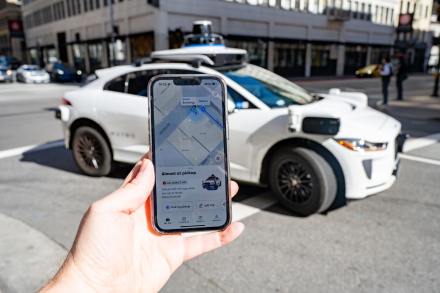
It smells, very badly. And even after decades of complaints, it seems Parisians still consider themselves too chic to pick up after their dogs. Taxis are a nightmare. The traffic makes central London seem like a village in Ireland. Uber drivers park as far away as possible from the designated pick-up point, fail to answer messages or calls, then charge a fortune in waiting time. The expense is phenomenal. For three coffees, one mint tea and a croissant that had the texture of a carpet slipper, I was charged more than £30. And don’t get me started on the coffee: if Paris is the home of café culture, shouldn’t it also be that of good coffee? Wrong! It usually tastes like recycled dishwater, or as if it’s been dredged from the bottom of the Seine.

I finally ate Sardinia’s maggot cheese

I’m driving a dirt road in the wilds of central Sardinia. And I mean what I say by ‘wilds’. This rugged region in the sunburned Supramonte mountains was called ‘Barbagia’ by Cicero – i.e. ‘land of the barbarians’ – as even the Romans never quite managed to subdue it. Centuries later it became famous for bandits, kidnaps, local mafias – and casu marzu, the infamous ‘Sardinian maggot cheese’. I turn to my resourceful local guide, driver and interpreter, Viola, as she negotiates the olive groves and goat tracks. ‘Do you really think we will find casu marzu?’ My voice is slightly falsetto with tension. Viola turns: ‘I hope so, there is a pretty good chance. And maybe we will find something even more unusual…’ But first, let’s rewind 30 years.

Cigarettes and currywurst in Big Berlin

I’m standing at a bar in a car park on the rooftop of a shopping centre. I ask the bartender if the beer on draught is big or small. ‘That depends on your definition,’ he says. ‘What is big? What is small?’ The oonce-oonce of German trance music makes it hard to hear, and I’m distracted by the solitary figure on the dance floor wearing all black and contorting her body into the shape of a pretzel. ‘Is the beer groß or klein?’ I shout. The bartender – who is well over 50 and has the fashion sense of a Green Day groupie from 2005 – just smirks and says, ‘That’s for you to decide.’ I order the beer anyway. It is small (klein). I don’t tip. This is Berlin. Berlin is big.

Happy 200th birthday to our railway

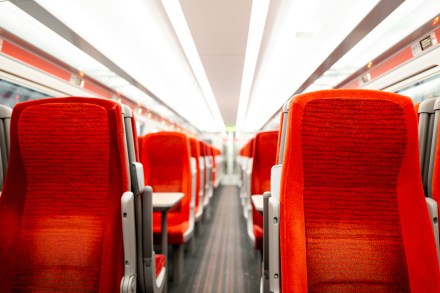
You might have missed this because it hasn’t exactly been saturated with media coverage, but this week is the 200th birthday of Britain’s railway. In fact, it’s the 200th birthday of all railways, since we invented them. It was on 27 September 1825 that service began on the Stockton and Darlington Railway. Travelling a distance of just eight-and-a-half miles at about 15mph, the world’s first public commercial rail service arrived to a crowd of 10,000 and – as would become a characteristic feature of future British rail travel – was delayed by half an hour due to engineering problems. Yes, the worldwide rail revolution began in the north-east of England – the Silicon Valley of rail. I know, not since H.G.

The tyranny of tipping

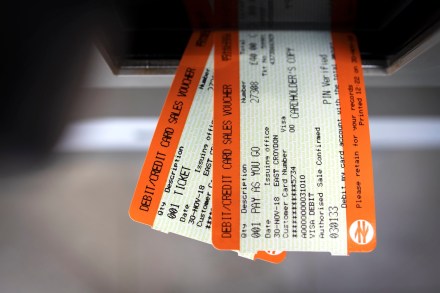
At the Eurostar terminal at London St Pancras, on my way back to Paris, I stopped at the Station Pantry. It’s a counter at the back of the terminal, and it does a roaring trade because it’s the only coffee place between immigration, security and the trains. There’s little else to do while you wait to be called to board, particularly when there aren’t enough seats for everyone. I ordered an espresso for £3.60. The cashier swung the screen around for me to pay. Ten, 15, 20 per cent? A tip for a cup I was about to carry away myself. I said it was wrong to be asked for a tip on takeaway coffee. She said that if I didn’t like it, I could press the red button and decline. But that’s not the point. This practice of prompting us to leave tips hasn’t come from customers.

How to survive Florence with your family

There are many destinations which spring to mind when considering the options for a weekend away with a young family. There are beaches by the dozen, theme parks and glamping opportunities galore. But there is only one Florence. And I cannot say this strongly enough: when it comes to the kids, the Center Parcs of the Renaissance will not let you down. It begins with Tuscany itself, a place so beautiful that you can get Stendhal syndrome on the bus on the way from the airport. And even if your children are glued to their screens, eventually motion sickness will force them to look up and they may glimpse its dreamy vistas, too.

Why does an American billionaire want an Oxford pub?

If you’re a fan of American billionaires buying up much-loved British institutions, then you, too, might be rejoicing at news that Larry Ellison has set his sights on purchasing much of Oxford. The squillionaire owner of the software technology company Oracle (net worth: $270 billion, or thereabouts) has started relatively small, however. In addition to spending a huge amount of money on the Ellison Institute of Technology in the city’s Science Park, he has also paid a supposed $10 million for one of its best-known and most-loved alehouses, the Eagle and Child, aka ‘the Bird and Baby’.

Lime bikes are dangerous. That’s why I love them

London on Monday night was mad and hilarious. At the Hyde Park Corner crossing, the number of people on Lime bikes must have been approaching 100. Invariably described as menaces, murderers and leg-breakers, these Lime bikes and their riders waited for the traffic light to turn green. When it did, battalions of these 35-kilo machines toppled and wobbled around each other, as the same number came in the other direction, green and white overwhelming the eyes. Yet no knees were crunched, no one fell off and those brave enough managed to render the tube strikes a minor inconvenience. If you believe in the state as protector, nanny and moraliser, and the world as a perfectible place where hazard can be eliminated, they should be banned It was good to see.

At last, a garden without the gimmicks

‘Never join a queue.’ It’s not a bad motto. It keeps me away from tourist-choked hotspots. It means I don’t visit venues that offer free admission for children, advertise fast-track entry or are just one stop on ‘a multi-attraction sight-seeing experience’. My advice? If they want you to book a time slot, don’t go. As Bertrand Russell points out in The Conquest of Happiness: ‘Noise and the constant presence of strangers cause fatigue.’ It’s certainly difficult to appreciate great art or admire magnificent architecture in such circumstances. And when I’m studying the text explaining the significance of the Rosetta Stone, I don’t want someone leaning over my shoulder trying to read it at the same time. Especially when they’re chewing strawberry-flavoured gum.

Why is French hospital food so bad?

This summer has been the hottest on record where I live in Burgundy. It could have been disastrous for the grapes as temperatures reached nearly 40°C. Luckily, most of the vineyards in the Côte d’Or were able to move les vendanges to mid-August instead of early September, when they were expecting to harvest. Apparently, it will be a good year nevertheless. I moved to the little village of Meursault eight years ago in October, to help with grandchildren. My daughter Annabelle works for Domaine Roulot and her husband is winemaker for Domaine de Montille. They were busy harvesting the grapes that autumn. Not any more – most vignerons here, and probably elsewhere in France, think cooler summers will never return.

No England flags, please – we’re Cornish

There’s been a lot of talk recently about flags, especially English ones. The start of the Women's Rugby World Cup – a good excuse to bring out the bunting – has coincided with a renewed interest in proclaiming national identity. Some might see it as an outpouring of patriotic pride, while others view it as a far-right provocation. But whether it's ‘Operation Raise the Colours’ or roundabouts painted red and white (although some bright spark in Birmingham managed to paint a Danish flag by mistake), if the sight of a cross of St George sends you into a panic, I have a suggestion: head to Cornwall. If my recent experience is anything to go by, you’ll be lucky to see a single English flag.

The Mediterranean summer holiday is broken

For more than 60 years it has been an annual fixture for thousands of us, a birthright enjoyed and embraced by the children of modern, pleasure-seeking, throw-away Britain. Precisely when it happened, I couldn’t say, but at some point in the 1950s or 1960s, the trains radiating from the metropolis to the coastal resorts of Clacton-on-Sea, Southend-on-Sea, Bournemouth, Frinton, Brighton and beyond stopped heaving with Londoners. In their place a whole series of new, hitherto unfamiliar resorts zoomed into the national consciousness, heralded by the tang of aviation fuel and the promise of neverending heat and chilled cerveza.

The sorry state of France’s churches

There’s something unsettling about a statue with its head lobbed off. Sure, it’s just a piece of stone. But it represents something. There are headless statues in churches all over France, statues of bishops, martyrs, saints. It’s not surprising those statues came out of the French revolution badly; the church and its clerics weren’t popular. But the revolution was nearly 250 years ago. How come the heads haven’t been put back on? It seems lax of the church authorities, to say the least. After all, the church in France is often referred to as fille aînée de l’Église, the ‘eldest daughter of the Church’. Its roots go back to the Apostolic Age when Jesus’s earliest disciples landed in Gaul.

What’s better than boozing on planes?

It is still the case on transatlantic flights that a drinks trolley comes to even the farthest reaches of Economy. If you’re lucky, the gay man or imposing Essex girl wheeling it will, with a wink and a smile, palmed you over an extra mini bottle of gin or a wine for the meal. They can tell who will be a good, and who a bad, plane drinker.  I like to think of myself as the former. I am not someone who drinks to get drunk. Yet that initial buzz from a lemony Bombay Sapphire and Fever Tree glugged through ice is hard to beat. It’s an empowering, controlled, merrymaking high. In the wrong person, this buzz causes unwanted chattiness, but in my case it makes me sit back in my cramped seat and think pulsing, magisterial thoughts about the wonders of modern life.

The stress-busting powers of the Arizona desert

‘Sit up straight, heels down, lean forward, lean back, tighten the reins, loosen the reins.’ Joe's instructions replay in my head as I scan the canyon floor for rattlesnakes. I gently push my heels into the sides of my horse, Rio, and he sets off across the rocky terrain. Joe is my guide and a real-life cowboy. Guiding tourists like me through Arizona’s Sonoran Desert is his side hustle. I've signed up for a two-hour sunset trail ride, but Joe tells me he often takes groups into the desert for days. They sleep under the stars, catch fish for supper and eat fruit from barrel cacti. Joe can tell I'm anxious. I'm pretty sure Rio can too. I've been unusually stressed for a while, and no amount of London wellness treatments seem to help. I needed something more radical.

Owning an Airbnb is hell

I know it can be difficult to have sympathy for anybody who owns a holiday let, but for me and my wife August is often a war between us and the holiday guests from hell. It’s an open season of refund-seeking, blackmailing guests and wild children whose parents think we operate a kids’ club in our gardens. And it’s only getting worse. We got a flavour the week that schools broke up late last month, when a group of eight adults calmly sat on the terrace in the sun, swilling cans of beer and prosecco as their pack of six children began picking up heavy pebble gravel and throwing the stones at the windows of my elderly parents’ barn.

The Isle of Wight is an England that time forgot

‘August for the people and their favourite islands,’ wrote W.H. Auden. My own favourite island in Britain is the Isle of Wight, even though my introduction to it was less than ideal. I was seven years old and had been sent to the island for the ritual initiation for British middle-class males of my generation: immersion in a boarding school with around 50 other pre-pubertal boys. I was, in fact, the youngest boy in the school and this was the first time I had left home. I have already written in these pages about my five years at a boarding school on the island; bizarre and bewildering rather than the hell of paedophilia and punishment described by others writing about their prep school days. But I want to convey here the curious charm of the island itself.

The politics of nudity

A recent, rather beautiful piece published here told of how the writer, Druin Burch, initially somewhat alarmed by the variety of naked bodies he unexpectedly encounters while swimming in the Med (‘I wouldn’t mind if it was only young women,’ he says to his wife) comes to appreciate the loveable imperfection of the human form. I can’t say I’m with him on this. I totally understand fit women wanting to take their tops off in public as an expression of sheer high spirits; as a teenager, I used occasionally to do it. But humanity generally? Put it away, puh-leeze! As a resident of the fair city of Brighton and Hove, I’ve got skin in the game, metaphorically.

The decline and fall of TfL

Don’t get me wrong: London’s transport system is still one of the best in the world. I’d sooner have a backstreet dentist with jittery hands pry my right molar out with a rusty wrench than wait for a bus in Naples or attempt to understand the New York subway map. But that doesn’t mean Transport for London is without fault. The mere thought of the Central line during rush hour is enough to turn the sanest of commuters into a babbling, dribbling, catatonic mess.  TfL customers are dissatisfied: staff are nowhere to be seen; criminals use the Tube network like a labyrinthian tunnel system, evading prosecution at every turn; and strikes and service disruptions have driven a wedge between commuters and transport workers. But it’s not just the Tube.

All the fun of the feria: why August is the time to visit Málaga

If I were a doctor specialising in alternative treatments, and someone came to me feeling depressed, I wouldn’t send them off with a herb-based elixir or a bunch of St John’s Wort. I wouldn’t cleanse their chakras or refer them to an acupuncturist. I’d send them off to Málaga’s annual fair, which this year runs from 16 to 23 August. Summer in Andalusia is feria season – the best cure that I know of for a bout of the blues. Usually lasting three or four days, or an entire week in the regional capitals, ferias are occasions of pure alegria (joy) and inclusivity.

Why truck stop cafés trump motorway service stations

There’s something about motorway service stations that seems to encourage the very worst in human behaviour. They’re places where no doubt usually responsible members of society have long decided that it’s permissible to drop semi-industrial amounts of litter on to the verges, urinate all over the toilet floor and belch with impunity while queuing up for a Whopper at Burger King. For me, it was the full-to-the-brim child’s nappy that someone had left on a chair in the revolting ‘sit down café’ at a services near Preston that made me decide that I would never set foot in a Welcome Break, Moto or Roadchef ever again. I’m lucky; I have a bladder that can tolerate journeys of four or five hours by car. My fiancée, however, is not equipped with such sturdiness.

What we could learn from Swiss bins

Every time I’m in Switzerland, where I grew up, I find myself madly squeezing as much rubbish as I can into a garbage bag. It’s a delicate and messy task. In Switzerland, every bag of non-recyclable waste comes with a price tag – and it’s expensive. You won’t be surprised that the Swiss have perfected the art of recycling, aiming to minimise the amount that ends up in those pricey bags. The system is both simple and ruthless. Across Switzerland – except for the canton of Geneva – every household is required to use government-sanctioned bin bags for anything that can’t be recycled. They’re not your ordinary supermarket variety – these bags are sold at a premium to cover the cost of waste disposal. The less you throw away, the less you pay.

How Cowes found the secret of a successful seaside resort

These days, most English seaside towns are sites of national mourning. You pay your respects by walking up some deathtrap pier, dropping two pence in an arcade coin pusher and whispering, your flower now on the grave: ‘Ashes to ashes, dust to dust.’ But Cowes, on the Isle of Wight, has managed to stave off this sorry end. Its secret is Cowes Week. Cowes Week, which starts today, is an annual sailing regatta. It has earned its place as a respected event in Britain’s sporting calendar – always in August, between Glorious Goodwood and the Glorious Twelfth – but its beginnings were unambitious.

The other side of Yemen

In the western imagination, Yemen exists as a byword for terrorism and death. Its appearances in international headlines are flattened into a trilogy of suffering: Houthis, hunger, hopelessness. The civil war has dragged on for over a decade, leaving much of the nation in ruins. Life is punishing for the millions who navigate daily existence amid chronic instability. The Houthis – entrenched in the capital, Sana’a – continue to tighten their grip on power in the northwest. Their attacks on Red Sea shipping have drawn international reprisals and fuelled regional tensions. The Foreign, Commonwealth and Development Office still advises British nationals against travelling to the country. Yemen is not therefore your conventional holiday destination.

My Kafkaesque clash with TfL

When is a journey not a journey? The answer to this pseudo-Zen riddle, at least according to Sadiq Khan’s Transport for London, is: when the journey is one that the passenger intends to make but is unable to complete. Have I lost you? Allow me to explain. Recently I experienced yet again one of the regular service failures that haunt the London Underground generally, and its dire Circle line in particular. This saw me forced to abort my train journey at Notting Hill Gate to make the final leg of my intended trip to High Street Kensington on foot. Admittedly this can be a quite pleasant stroll, passing, as it does, the spectacular wisteria on Bedford Gardens, and the lovely Churchill Arms.

The remote Spanish wine region that rivals Rioja

A.E. Housman once wrote that the English villages of Clunton and Clunbury, Clungunford and Clun ‘are the quietest places under the sun’. He’s almost right. I grew up in Clunton and the only place I’ve felt a deeper sense of quiet is Escaladei, a village high up in the mountainous Priorat region of Spain, which is home to the Cellers de Scala Dei vineyard. Getting there from Barcelona isn’t for the faint of heart, as the roads weave erratically along the hillsides. Driving there, I gripped the steering wheel tightly and drowned out my fears with music from a local reggaeton station. Once safely at the vineyard, Roger, our guide, impressed on us the importance of two things in Priorat: Garnacha and monks.

Hotel Oloffson is ruined – and so is Haiti

Earlier this month, in Haiti’s tatterdemalion capital of Port-au-Prince, armed gangs burned down the Hotel Oloffson. As news of the attack spread, both Haitians and foreigners mourned the loss of one of the most beautiful gingerbread mansions in the Caribbean. Thinly disguised as the Hotel Trianon in Graham Greene’s 1966 novel The Comedians, the Oloffson had served as a meeting place for writers, journalists, actors and artists of every stripe and nationality. Past guests include Nöel Coward, John Gielgud, Marlon Brando, Tennessee Williams, Jacqueline Onassis and Mick Jagger (who wrote ‘Emotional Rescue’ there). Laughably, a room had been named after me as the author of a book on Haiti.

Could a secretive Swiss clinic cure my bad habits?

Having just turned 65, I enjoyed a week of firsts. My first ever facial and my first ever yoga class progressed to my first ever impedancemetry session, my first ever photobiomodulation session, my first ever hyberbaric chamber session, my first ever cryotherapy session, my first ever sensory deprivation session, my first ever neurofeedback session and my first ever revitalising wave session. I was at the Nescens Clinic Centre for Aesthetic and Regenerative Medicine near Geneva, marking my milestone birthday by attempting to defy age. It was Mrs Ray’s idea. Concerned that I was beginning to look and act like the old soak that I am, she wanted them to break my bad habits and help me shed ten years.

English? Middle class? Welcome to the Costa del Boden

It was when I saw two other women wearing the same red-and-white-striped Boden swimming costume as me that I realised what I had become. Twenty years ago, I wouldn’t have been seen dead on a beach in Salcombe in a Boden swimming costume. I would have been topless on a riverbank in Provence, smoking a Gitane and reading Duras. These days, I don’t have time to care, and I summon G.K. Chesterton as my guide: ‘Don’t ever take a fence down until you know the reason why it was put up.’ I have children, a husband and dogs, and we have come – without really meaning to but by some centrifugal bourgeois force – to the Costa del Boden for our summer holiday. In short, we appear to be in favour of the fence. Where?