Spectator Life

Spectator Life

An intelligent mix of culture, style, travel, food and property, as well as where to go and what to see.

This Olympics belongs to the female athletes

You knew it was going to be a superb Olympics from the moment Celine Dion belted out an Edith Piaf classic from the Eiffel Tower. And nothing since has disappointed – not least commentator Mark Chapman having to say things like ‘She was late with her eskimo roll’ during the incomprehensible kayak cross. But amid such a banquet of sporting greatness, what to single out? This has been a fantastic Games for women. And remember that the founder of the Olympics, Pierre de Coubertin, was opposed to the participation of female athletes, largely to preserve their dignity. Different times admittedly, but even so the 1500m became an event for women only in 1972, and the marathon only in 1984. Look what they’re achieving now. Amid such a banquet of sporting greatness, what tosingle out?

How I learned to embrace my autism

I’m autistic, I teach autistic children and I care for autistic adults, but I never kid myself that we are better than other people. When I asked a fellow autistic man if he could name any famous autistic people, he replied: ‘Hitler and Einstein.’ I love his answer because it punctures the romanticism around autism. There are evil autistic people, as well as geniuses. Was Hitler autistic? We’ll never know for sure, but he showed several symptoms. People who met him found that once he started talking, he would not stop. He was also nocturnal, had an addictive personality and developed lifelong obsessions (in his case, racial purity). Around half of all the people referred to the anti-radicalisation programme Prevent are autistic males.

Chefs are nice people, really

I used to think that chefs were egotistical maniacs. Some of them are. But the vast majority of chefs are hardworking individuals coping with enough stress to send a beta-blocker into cardiac arrest. I spent more years than I care to admit moonlighting as a bartender and waiter. I worked with dozens of chefs. Some were brilliant, some had trouble frying an egg. Others spent more time with cocaine than flour. One tried to drunkenly glass me in the face with a bottle of Moretti, another became a very good friend.  I learnt a lot from chefs: how to shuck an oyster, how to tastefully plate a dish, how to chain-smoke a pack of Marlboro Reds without throwing up. I also learned that a chef is the pacemaker of any good establishment.

Seagulls are a nightmare

I’ve lived in Brighton and Hove since 1981. I’ve been surrounded by seagulls for most of my life, but somehow I’ve never really got used to them. There’s something unsettlingly prehistoric about those gnarled beaks and oversized, reptilian feet. While the feet can occasionally lend them a pleasingly comic aspect, the sheer size of the seagull makes its feelings impossible to take lightly. Their cries, so evocative from a safe distance, sound incredibly ugly at close quarters; I once lived near a nest, and it was like being trapped in an early Yoko Ono album. Granted, the place wouldn’t be the same without them – Brighton’s seagulls are its oldest and most recognisable natives.

Are the Great Novels worth it?

To finish or not to finish? The dilemma of whether to give up on books we aren’t enjoying or plough on to the end lasts a lifetime, but as we grow older it gets easier. We not only have less time, but also the increased confidence to decide that if a great novel isn’t engaging us, it’s possibly the book’s fault. What does it really matter if Thomas Mann’s The Magic Mountain defeats us, or Finnegan’s Wake sends us to sleep? We’ve survived much worse than that.  But in youth, such things torment you, and the more highly regarded the novel, the greater your shame in abandoning it.

Why is Britain so ugly?

Family holidays always carry a risk of dismaying revelations. Suddenly you are thrust together, 24/7, over many days, in a way only matched by Christmas (which is equally perilous). And so it was that, after ten days of driving around Provence and Occitanie, from Arles to the Camargue to the mighty Gorges of the Tarn, my older daughter this week suddenly said: ‘Why is Britain so hideous?’   The outburst was clearly prompted by the comparative beauty of France. My daughter is 18 and her only prior experience of France was grey wintry Paris in a boring school trip, so she was probably expecting more of the same dreariness.

What happened to ‘lesbians’?

The elegant, serpentine word ‘lesbian’ had a place in the sun only briefly. In the first real novel about lesbianism, 1928’s The Well Of Loneliness, the protagonists are gloomily and somewhat puzzlingly called ‘inverts’, conjuring up an image of some sad Sapphic wondering why she was condemned to spend her life upside-down. Amazingly, Christopher Hawtree, writing in the Telegraph in 2008, noted that the word ‘lesbian’ did not appear in the Oxford English Dictionary until 1976: During the four decades it took to create the 12-volume Oxford English Dictionary, completed in 1928, Lesbian appeared only in reference to the island.

The glory of the Encyclopedia Americana

It’s a painful process many of us must go through: culling a big book collection, amassed over a lifetime, before moving home. You know it makes sense, as you’ve struggled to house all your books – thousands of them – and they include quite a few you frankly wouldn’t miss. This chore awaits me at some point in the near future, but I do know that my 20-volume Encyclopedia Americana and its sister publication, the 20-volume children’s encyclopaedia called The Book of Knowledge, will be coming with me. Everything about its concept and design was aimed at fostering curiosity They were published by The Grolier Society of New York in 1957.

The two summers I was nearly killed

Summer is the season most associated with the enjoyment of life. It’s when people forget their cares, down tools, and head for the beach to enjoy sunny days and sexy nights. That’s how it was for me anyway until I came close to life’s polar opposite – barely surviving two close brushes with death. So for me summers are now indelibly associated with a sudden end that I twice narrowly escaped. Tearing off my soaking shirt, I stood bare-chested in the rain, feeling the same sense of mingled relief and ecstasy as if I were Caesar The first close encounter with Mr Death came in the Dordogne. My wife, daughter, and I had hired a horse-drawn caravan to explore the highways and byways of that enchanting province.

Vive le Supermarché!

It’s 7.54 a.m. and we are waiting for the doors of the Intermarché St Remy de Provence to open. A vast sense of excitement is building within our group that spans the ages of nine months to 68 years. My mother wants espadrilles, my husband wants wine, my brother-in-law wants cheese, the children want toys, et moi? Just the experience, the delicious joy of the French supermarché. And possibly some soap.

I’m accidentally dating my wife

My wife and I have only ever dated by accident. After our third date a decade ago (well, what I thought was our third date) that she texted me asking, ‘So was that just dinner and theatre, or was it “dinner and theatre?”’ To this day, she insists that she had no idea what was going on (despite my sudden interest in her after two years of just being acquaintances, the Skype calls, the hand-painted postcards… actually, I’d better not start). A few years later, early on in our marriage, when we were still childless, young professional Londoners, we thought we’d wildly treat ourselves to dinner out on a Thursday.

Four tips for Glorious Goodwood

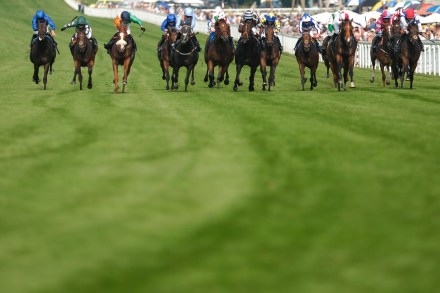
Glorious Goodwood has hopefully saved the best until last with two fabulous days of racing still to come. The detractors will point out that too many races on this undulating, turning track have hard-luck stories and the draw is often all-important as well. However, when the sun shines, this meeting is hard to beat in terms of highlighting flat racing at its best. I am already heavily invested in the Coral Golden Mile (today 3 p.m.) in which it’s a huge advantage to be drawn in single figures. Johan bucked the trend on soft ground last year when he won from stall 18 but the previous seven winners were from berths 1, 3, 3, 3, 2, 5 and 2. Those who love statistics will be in no rush to back a horse with a double-figure draw.

Avant garde is boring

Of all the places to witness the circus parade of modern French history, you can do a lot worse than the tiny town of Espalion, in the beautiful department of L’Aveyron, in the south of France. Because there are few destinations more unchanged than L’Aveyron, and this extremely French place is where I saw the opening of the French Olympic Games, in an al fresco brasserie. And this is where I sensed a weird unease. No one booed, no one catcalled, no one mocked. They sat there, sipping cold bière, and at times they vehemently cheered and laughed. Yet they also appeared a touch confused, and, I suspect, this is because they thought – like the rest of the world – ‘this is quite often a load of bollocks’.

The National Trust’s abuse of language

‘Remember to bring your childrens bikes with you so you can all enjoy the estate,’ the National Trust’s website says, inviting visitors to its parkland site at Crom beside the shores of Upper Lough Erne in Northern Ireland. If, like me, you think omitting the apostrophe in ‘children’s’ is a bad look for an organisation that claims to raise ‘the standard of presentation and interpretation’ at the places it looks after, then steel yourself; it gets much worse. The National Trust can’t even be bothered to make sure its pronouncements are written in correct English You see, the National Trust may ‘look after nature, beauty and history for everyone to enjoy’ but it doesn’t seem to care much about the English language.

I am a birthday dictator

I am never allowed to forget that at my fourth birthday party I made clear my expectation to my mother and the gathered guests that I expected to win all the games. The logic was clear and to my mind (still) fair: it was my birthday and so I should win. When this wasn’t passed into law, there was some anger on my part. Why should Kelly and Kate take home the pass-the-parcel first prize, and gain recognition for being fastest at eating donuts hanging from a string? Apparently in my pretty white swirly dress with its pink satin sash, wielding a wooden spoon for a game of blind man’s buff I was destined to lose, I was quite the little despot – though ineffectual.

The cult of Bedales

Another of my ageing Bedales school cohort has died and so there’s an ad hoc reunion in his honour at the pub in Steep, the bucolic village near Petersfield, scene of our youth, where we used to sneak out to smoke and drink when the teachers weren’t looking. Which they often weren’t. Bedales implanted itself here in deepest Hampshire in 1900, a pioneering co-educational boarding school, quickly patronised by British and European progressivist-bourgeois-bohemian-leftist artists, writers and intellectuals. It has been chi-chi ever since. Since the place was co-educational, plenty of sex education went on behind the bike sheds From its rustic origins, the school has grown and grown and now dominates the no longer quite so sleepy village.

Beware the bat police

My friend Andrew is angry. He has just had the bat people round to look at his building project in Swanage. There was no evidence of bats that they could find, but that didn’t mean there weren’t any. A full survey would be required. In total the non-existent bats in our village hall cost the parish more than £2,500 I advised him to pay up and not dwell on the madness, but his ire reminded me of my own recent experience with the bat fuzz. From 2018 until this June, I chaired the committee responsible for refurbishing a village hall deep in rural Somerset. As law-abiding and nature-loving people, we followed our surveyor’s stern instruction and did all the bat-friendly things we needed to do before starting the work.

When in doubt, have a drink

Most Tory MPs enjoy leadership elections. There may be an element of what the trick-cyclists call ‘displacement activity’. Equally, it is tempting to employ the cliché about rearranging the furniture on the Titanic. The Brane-Cantenac 2000 was everything that a claret lover could wish for Until 1990, the process was brief. It took only four days to elect John Major, whose team used an underground ‘bunker’ in Alan Duncan’s house as their HQ. By 1997, when the party had been grievously wounded and the election procedure extended, there were lots of gatherings which required more spacious premises – including Jonathan Aitken’s garden.

The Cotswolds is awful

The Cotswolds used to be a wonderfully bucolic fantasy of English villages; red telephone boxes, gilded honey-stone hamlets with verdant greens where the vicar would umpire cricket matches, and pubs where poachers and gamekeepers would mix. Then it became fashionable and now it’s been Farrow & Balled to within an inch of its life. The Cotswolds is not the country. It is an extension of Notting Hill You could blame the King for purchasing Highgrove House in Tetbury in the 1980s. Suddenly, wannabe poshos began buying Cotswold cottages in the hope some royalty would rub off on them (real poshos would never consider doing something so outré, and prefer Norfolk anyway). Now it’s experiencing the ‘Bamford effect’ thanks to the Daylesford farm shop.

Life in the slow lane

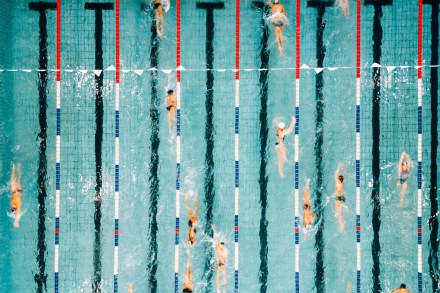
Mondays and Thursdays are my days. Eight a.m. Before breakfast. The pool opens at seven for those zealous souls who like to swim before going to work. They’re gone by eight when the pool is divided into five lanes with arrows telling you which way up and which down. I like lanes. You know where you are with lanes. Let those mad fools in the fast lane work up a storm with their splashy-flashy butterfly, the sexy crawl, the somersault flip back to the beginning and off again. I’m in the slow lane. It could be a metaphor for my life. I like lanes. You know where you are with lanes I grew up by the sea and learnt to swim when I was six.

Why Tories are like chickens

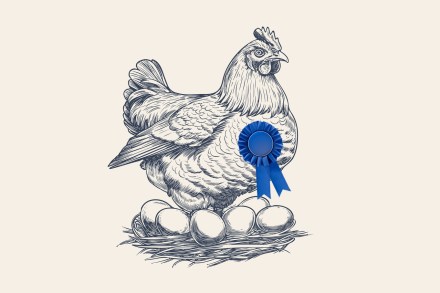
You might remember that short period during the pandemic when eggs were unavailable. I was very annoyed that the one period when I had time to cook breakfast in the mornings there was no breakfast to cook. However, I was finally able to persuade my wife that we needed to keep chickens. Purely for logistical purposes, you understand: we had to guarantee our supply chain. During the pandemic, otherwise sensible people bought into that kind of logic. My wife had never been keen on the idea previously. Like most Jewish women, she thinks of the natural world as that greenish blur between the taxi and the front door; and, while I’d managed to persuade her to move to a cottage in the country with roses round the door, keeping livestock was a Step Too Far.

It’s not nice hearing your own voice

‘Do I really sound like that?’ is how people invariably respond when they hear a recording of their own voice. Or they used to, anyway. Your own voice was something you heard a lot but never actually heard from the outside. But in the age of voice memos, podcasts and TikToks, we are much more likely to have to hear our voices. It was eerie to hear my voice reading words I would have sworn I hadn’t said from just a minute before I recently read the audiobook of my new book, Gay Shame – all eight and a half hours of it – so I was confronted with vocal reality on a grand scale. I still sound fresh and flush in my own mind, so the obvious – that I sound old now, because I am old now – came as a surprise.

Ottolenghi has colonised British food

As far as chefs and food writers go, Yotam Ottolenghi has been pretty influential on my life – a life that revolves quite heavily around food. Choosing it, thinking about it, pathologising it, eating it and sometimes even cooking it. I was one of those who was delighted when supermarkets started stocking pomegranate molasses, rose harissa and Middle Eastern spices like sumac and za’atar, all courtesy of the seismic influence of the Jerusalem-born Ottolenghi and his Palestinian partner in crime, Sami Tamimi. The Ottolenghi deli is a cliché of noughties London food trends I had, like everyone else in 2010s centrist middle-class Britain, got my hands on his recipe books Jerusalem (2012) and Plenty (2011).

What’s the point of martial arts?

I was standing in a filthy sports hall at the back of the local leisure centre. A bony man with a shaved head handed me a green belt. ‘Well done, Master Zak,’ he said. Ten-year-old me bowed and walked towards the wall of parents. They had been stood there for three hours, watching other people’s children take turns punching the air, shouting a few mispronounced words of Korean. Someone played ‘Eye of the Tiger’ through a tinny speaker. One of the bug-eyed ‘instructors-in-training’ gave me a toothy grin and a thumbs up. I’m almost certain he worked there for free. Sitting in the back of the car on the way home, dobok still on, I realised that after four years of combat sports and a variety of colourful belts, I had learnt nothing about defending myself.

How I got boring

I was in S&M relationships from my teenage years to somewhere in my naughty forties. Why did I go in for such strange antics? Damned if I know. Is it because I wanted to be different? Because I didn’t want a calm, cosy, devoted relationship, like my parents had? Because when I thought of romantic and sexual love, I thought of volatility, and that seemed hard to reconcile with vanilla sex? Or did I just conform to the type that also marks out many male masochists – I was ‘powerful’ in my realm, excellent at my job, and was curious to find out what being powerless felt like? (This last one, in the face of what I know now about how many girls and women experience powerlessness throughout the world, makes me feel shame in a way that very few things do.

Will AI ever be funny?

Have you heard the one about the robot who walks into a bar? No? Well, maybe that’s because artificial intelligence hasn't quite nailed stand-up comedy yet. While AI can beat us at chess, drive cars, and even compose music, making us laugh seems to be its final frontier. I asked ChatGPT to write us a few jokes to show you examples: Me: Write me a funny joke.ChatGPT: Why don't scientists trust atoms anymore?... Because they make up everything! Me: Write me a funny joke but with dark humour.ChatGPT: Why don't graveyards ever get crowded?... Because people are dying to get in! Me: Write me a funny joke but it’s absurd humour.ChatGPT: Why did the scarecrow become a successful neurosurgeon?... Because he was outstanding in his field but needed a change of scenery!

Age is just a number for 25-1 Ascot tip

Take a bow, SUMMERGHAND. Trainer David O’Meara’s gallant old warrior will be participating in his 100th race tomorrow when he contests the Moet & Chandon International Stakes over seven furlongs (Ascot, 3 p.m.). The achievements of this gelding are remarkable since he made his racecourse debut at Doncaster in May 2017. He has won 17 of his 99 starts and amassed more than £624,000 in prize money. Those victories, all of them over six furlongs, include the Unibet Stewards’ Cup at Glorious Goodwood in 2020 and the Virgin Bet Ayr Gold Cup in 2022. At the height of his powers, Summerghand was running off an official mark of 113 whereas tomorrow, aged ten, he will be running off just 91.

My encounter with ‘the godfather of British blues’

Few bluesmen have matched the success of John Mayall, ‘the godfather of British blues’, who died on Monday aged 90 at his home in California. In a career spanning more than six decades, he made 50-odd albums with an ever-changing incarnation of his band, the Bluesbreakers. His proselytisation of black American artists like Muddy Waters, John Lee Hooker and Otis Rush, gave these legends a new audience this side of the Atlantic. BB King is said to have remarked that, were it not for Mayall, ‘a lot of us black musicians in America would still be catchin’ the hell that we caught long before.’ Mayall’s Bluesbreakers, founded in the early Sixties, was a carousel for some of the world’s most notable blues and rock musicians, many of whom went on to greatness.

It’s better to be quick than clever

What’s the biggest division in life? Between clever people and stupid people? Between the good-looking and the ugly? No. The fundamental difference is between the ones who do things quickly and the ones who do them slowly.  You know that friend who emails you back the moment you email them for a favour? Or the builder who comes round the morning you ring him? These are the modern saints – the hyper-efficient deities who put to shame that other friend who only ever rings when they want something out of you; or the plumber you have to ring three times and only ever rings back to say he isn’t coming after all.