Spectator Life

Spectator Life

An intelligent mix of culture, style, travel, food and property, as well as where to go and what to see.

The unpalatable truth about British food

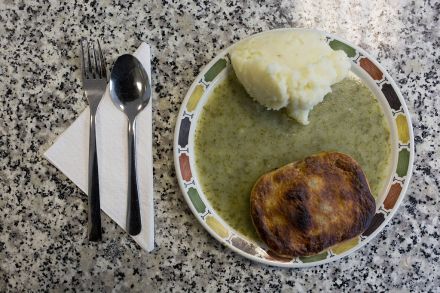
Last year a friend who lives in Lyon came to visit me in London. It was only her second trip to the UK and she was determined to venture deep into our indigenous food culture. ‘So, where can I get good fish and chips?’ she asked me. Now, if I was a citizen of Vienna and she was asking me where to find really good sachertorte, I suspect I wouldn’t struggle to reel off myriad cafes. If I lived in Athens and was questioned about where to get decent souvlaki, I would probably have a list as long as Hercules’s personal meat skewer. But fish and chips? In London? I could, in all good conscience, recommend only two places in which, during my quarter of a century in the capital, I’ve had a half decent chippie tea.

Piece de resistance: how jigsaws became a fashion accessory

The jigsaw is having a moment. Ditto other puzzles, games and brain teasers. Couples engage in post-coital sudoku (apparently). Wordle was played 4.8 billion times in 2023 (the lockdown invention of a young Welsh lad, Josh Wardle). Board game cafes have sprung up in cities. This recent resurgence in the popularity of puzzles is partly a hangover from the Covid pandemic. Sales of jigsaws and board games soared 240 per cent during the first week of lockdown, with more puzzles being bought for adults than children. There are also wider reasons: the so-called ‘homebody economy’ and Scandi-inspired hygge lifestyle craze (think being wrapped up in blankets with a log-burning stove while your mates are on a night out).

The life-affirming misery of the Cure

Watching the Cure’s live-streamed performance of their first album in 16 years, it was hard not to notice the toll time has taken on Robert Smith. At 65, his black spiky hair has long turned into a bedhead of fag-ash grey – a reminder to those of us who have grown up with him that none of us are as young as we used to be. As the slow waltz of the first track of Songs of a Lost World kicked in, and Smith wailed ‘Where did it go?’, it was starting to look like a very gloomy evening indeed – even by the standards of a band hardly known for its cheeriness. I’ll admit that as I started to watch the Troxy gig live from my sofa, even I, as a long-time Cure fan, worried how dark it was going to get.

Life is not a piece of cake

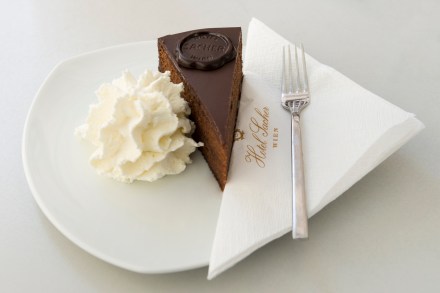
On a recent trip with my daughter to Trieste, the north Italian seaside city on the border with  Slovenia, I thought it would be nice to take her to Café Sacher for some sachertorte, which has been in culinary fashion since its creation in 1832. Trieste, once a thriving Austro-Hungarian port, is as reminiscent of Vienna as it is of Italy, and to eat this famous Austrian cake in the establishment of the same name would, I thought, be an experience my chocolate-loving daughter would remember. Sachertorte is nothing fancy compared to other Viennese cakes – merely a dark sponge with some apricot jam filling and coated in a layer of smooth chocolate, but that plainness is part of its charm.

Three bets for Cheltenham Festival

The ground staff at Kempton lost their battle against the elements this morning which was a great shame as there would have been a fine card on offer tomorrow if the freezing temperatures had subsided. So, with Kempton abandoned and with the Cheltenham Festival just two months away, I am going to turn my attention today to three ante-post bets, all the suggestions at tasty prices. James Owen is a dual-purpose trainer going places and horses such as Burdett Road have already put him on the map. Owen has a nice bunch of young hurdlers this season including East India Dock, one of the favourites for the Triumph Hurdle on the last day of the Festival. However, odds of just 13-2 on East India Dock for such a competitive contest make zero appeal so far from the race.

What’s wrong with Spotify?

Spotify is bad, apparently. The charges levied against the app are that it stifles artists by paying them a pittance and listeners with its all-pervasive algorithm. ‘How Spotify ruined music,’ was the title of one recent Washington Post article, while the New Yorker asked ‘Is there any escape from Spotify syndrome?’ going on to conclude that ‘what we have now is a perverse, frictionless vision for art, where a song stays on repeat not because it’s our new favourite but because it’s just pleasant enough to ignore’. Is it worth spending £20 to £30 on a record? Can you really be bothered with all the faff? Really?   Interest in iPods is said to be on the rise, with music influencers insisting that they’re a better option because they’re algorithm free.

In defence of BA’s new loyalty scheme

One of my favourite cartoons shows a couple sitting in luxury at the front of a plane, the wife peeking through the curtains to the cabin behind. ‘I’m so glad we’re in business class, darling,’ she says to her husband. ‘There seems to be some sort of hijacking happening in economy.’ People who have learned to play a game by one set of rules are bitterly affronted when the rules change Because we must consort with strangers for several hours, planes and airports amplify the normal human sensitivity to status. And so the media furore created by British Airways in revising the status thresholds for its loyalty programme is valuable fodder for students of psychology.

Kemi should prepare for a political pounding

It is extraordinary to remember. When I was a small boy in Scotland, Christmas Day was not a holiday. My father almost closed his office, but someone was on duty. The main festivity was Hogmanay: not a holiday in England. Now the whole country closes down for a fortnight. A friend who is a serious industrialist says that far from afflicting productivity, this is a good thing. After two weeks, apart from those who have gone in search of sun or skiing, most people are fed up with family life. Even the brats cannot wait to get back to school. So his employees return to work with renewed vigour. We started with oysters, followed by sashimi, then turbot, and for pud a chocolate mousse Despite that, I have never known a year more overshadowed with apprehension and gloom.

January deserves lemon pudding

January kitchens are my favourite. This isn’t anything against Christmas – I love the spice, the frenzy, the ritual of festive cooking, but I also love the aftermath. There’s something calming about the kitchen once it’s all over – nothing is made through obligation, or with a deadline. I embrace the cosiness of autumn and the sparkle of Christmas, but I find the bright, cool light of January reviving and renewing. At this time of year my kitchen is a place to take stock and make stock. To steady and sustain. Proper puddings, hot and sweet and served with cream, are a non-negotiable part of late winter It’s also full of puddings, among other things. Proper puddings, hot and sweet and served with cream, are a non-negotiable part of late winter for me.

The strange revenge of Trudeau’s ex-wife

Eleanor Roosevelt said that the role of the First Lady was not a job but rather a circumstance. For Sophie Grégoire Trudeau, it is even more oblique. She is neither the former First Lady – since Canada does not endow the prime ministerial spouse with ‘première dame’ status – nor is she wife to Justin Trudeau, since their separation in 2023. In the wake of his resignation this week, she inhabits a curious predicament. As Canada’s Liberal first couple, they incarnated the kind of hip grandiosity of the Obamas without, of course, being black How better to occupy that quandary than to amplify her self-styled role as a wellness guru, mental-health expert and relationship healer?

Private schools were ruined long ago

There is a story in private education circles of an apoplectic father who raged to the bursar that he was unable to find a prep school for his son ‘without central-heating’. It is probably apocryphal, but it reminds us of the mad heights to which some private schools have stretched: rowing lakes, glitzy IT centres, West End-style theatres and Olympic-sized swimming pools, no doubt necessary for storing the ever-growing associated fees.  My small Dorset school, where it was not uncommon in winter for the inkwells to freeze over, produced two Dames of the British Empire It wasn’t always this way.

What tourists to London should actually see

Tourists seeking to understand life in London often come up short. It’s not their fault. It is often said that London is a metropolis made up of city villages, each with its own unique personality and characteristics. Most tourists never make it past the invisible walls of central London. Why would they? No one flies to London with thoughts of visiting Tooting or Deptford, though they should – Tooting has, without a doubt, the best curry restaurants in the city. We Londoners scarcely know our own city. We are all blind men touching various parts of the elephant’s body. Many tourists return home without any idea of what it means to live in London.

In defence of Gail’s

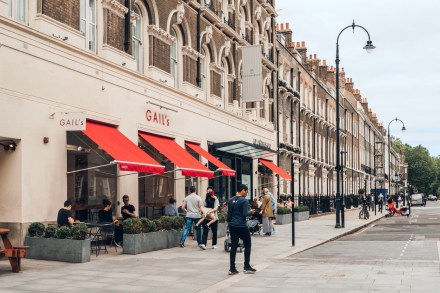
A few months ago in Primrose Hill, I overheard a woman from the Camden New Journal, the local paper, asking in a café about rumours of a Gail’s opening in the famously anti-chain neighbourhood. Just a few weeks previously, there had been uproar in Walthamstow about a new branch – an unpleasant alliance of the anti-gentrification brigade, anti-business and anti-Brexit types who protested at investor Luke Johnson’s politics, and anti-Israel fanatics who objected to the fact that the bakery chain was founded by two Israelis. The latter element was what caught my attention, given the extent of anti-Zionist nastiness since 7 October. If Primrose Hill were to join in the anti-Gail’s protest, the sense of sinister anti-Israel sentiment would grow stronger.

Fanboys are ruining the arts

I’ve been to a talk by two very clever and talented men: the American novelist and critic Jonathan Lethem and the English documentary filmmaker Adam Curtis. They were talking about Lethem’s book about his art collection, Cellophane Bricks: A Life in Visual Culture. Never have I left a talk with such a warm glow of schadenfreude. Here were two gifted men who had nothing interesting to say about their chosen subject. It was an evening full of ArtSpeak and hot air, a facsimile of intelligent ‘cultural discourse’, as they say in the art world. The interesting Lethem and the brilliant Curtis had done the unthinkable: they’d become boring. Oh, what a joy it was to witness!

The end of the Church of England

I spent New Year’s Eve in the company of a former Anglican vicar who lost his faith and had the honesty to resign from the Church as a result. He said what I have long suspected; that almost none of those in the hierarchy of the Church today believe in the central tenets of their faith: the divinity of Christ, the Virgin Birth, the Resurrection of the dead, the miracles of Jesus, the Trinity, Heaven and Hell, life after death, or even a benevolent God. To be told that the guardians of that faith are today little more than hollowed-out hypocrites going through the ritualistic motions is a tad dispiriting In the end, I, an agnostic who tries to keep an open mind about Christianity, found myself arguing with the former clergyman’s new faith in atheism.

Three bets at Sandown tomorrow

The Unibet Veterans' Handicap Chase at Sandown tomorrow (3 p.m.) is a fascinating contest with a first prize of more than £50,000. Any of the nine runners could win if performing to their best but, with the field aged between 11 and 13, most of them are now well past their prime. Sam Brown and Eldorado Allen are the class acts in the field, even now officially rated at 153 and 149 respectively. Chambard is forecast to be the outsider of the field at odds of 20-1, but don’t forget it was only 14 months ago that he easily won the Boylesports Becher Handicap Chase on heavy ground at Aintree.

The science of a happier 2025

As 2025 gets under way, I’m going to guess that one of your hopes for the coming year is ‘to be happy’. I’m also going to take a punt that you’re likely to spend a considerable amount of time, effort and money doing things you hope will make you feel that way. But considering that happiness is the number one goal of most people living in the western world, here lies the unspoken paradox at the heart of this tireless quest. Most of us can reel off a list of things that we believe will make us feel good – a great holiday, a delicious dinner, a promotion at work, fabulous sex. Yet many still don’t have a clue about how the feeling of pleasure is made in our brains in the first place. And knowing would be an incredibly useful way to work out how get more of it in 2025.

Not worth its salt: Wingmans reviewed

I see this column as an essay on cultural polarisation: artisanal butter can only take you so far into wisdom. I cower in Covent Garden, mourning Tory romanticism, and stare, cold-eyed in St James’s, at oligarchic mezze. Sometimes I eat by mistake. I couldn’t get into the fashionable noodle place in Soho, whose Instagram-made queue stretched to Cambridge Circus on Saturday night. It reminded me of the crowds at royal weddings: both camp for dreams. So, I went to Wingmans instead.  Wingmans – it lost the apostrophe, it’s a decadent age – calls itself ‘London’s best wings’. They are chicken wings, not angel wings, and this is Pottersville, not Bedford Falls. (Some people think Pottersville is more fun and that may be, but not here. This is not a wonderful life.

Could Thomas Tuchel be the one?

You would have to be living a very sheltered life not to have noticed that the Premier League this season is one of the best and the brightest for years. Mainly because it is not permanently dominated by the Big Six – though admittedly one of Liverpool, Arsenal or Chelsea is almost certain to win the title. But exciting, unpredictable, well-managed sides like Nottingham Forest, Bournemouth, Fulham and Brighton mean that more or less any side can beat any other. Sam Konstas is pencil thin and doesn’t look old enough to get served in the Bush and Tucker tavern in his native Sydney Though bafflingly Manchester City can hardly be relied on to beat anyone right now.

The worst hangover in the world

I awoke in the early afternoon of 31 December 1995 face down on the carpeted floor of a mansion house flat in Notting Hill with the worst hangover I have ever had.  It is customary when writing about hangovers to quote the best description of the condition – by Kingsley Amis: ‘A dusty thudding in his head made the scene before him beat like a pulse. His mouth had been used as a latrine by some small creature of the night, and then as its mausoleum. During the night, too, he'd somehow been on a cross-country run and then been expertly beaten up by secret police. He felt bad.’ And there’s also, of course, P.G.

Scottish reeling is the last preserve of the posh

The new year is almost upon us, and it’s time to dust off the taffeta dress and tartan sash and sally forth to the annual reel. No doubt you will have received a lovely stiffy in the post some months ago. Reeling, known to neophytes and the non-U as Scottish country dancing, is, I believe, one of the last indicators of poshness in this country. Unlike skiing, riding or shooting – which you can, of course, learn if you have enough money – reeling is decidedly not about the dosh. There is absolutely nothing flash about reeling.

The art of the bar cart

Whether we’ve got Mad Men or lockdown-inspired home boozing to thank, one thing is clear: the drinks trolley, or bar cart, is back. Interior design websites and social media are awash with them. And that means suddenly the bottle is becoming as important as the drink. Design agency Stranger and Stranger (motto: ‘Don’t fit in. Stand out’) has legions of clients, celebrities first in line, all vying to make their bottle the most beautiful. Brad Pitt (‘A dreamer, a visionary’, according to his drink’s packaging) had them encase his Gardener gin in pastel hues evocative of the French Riviera. (Not to be outdone, Brooklyn Beckham came knocking, deciding he needed a fitting phial for his elixir. Only his creation wasn’t booze but hot sauce.

How real is your ADHD?

Why does everyone suddenly seem to have ADHD? It’s a question that many of us working in mental health have been asking each other recently. Just a decade or so ago I rarely saw anyone in clinic with ‘attention deficit hyperactivity disorder’; now I see at least one case a day. It’s bewildering. Have all these people simply been undiagnosed for years? Is ADHD a medical fad? No one yet knows. The increased awareness of mental health problems has been a boon for private doctors. It’s a gold mine ADHD used to be mainly diagnosed in children, but more and more people are now getting a diagnosis in adulthood.

Forget Dry January: give up social media instead

Any moment now it will begin – and then it won’t stop for a month. Because as we enter the new year, the twin horsemen of the joyless apocalypse – the anti-booze and anti-meat lobby – pounce upon the January blues like a starved dog on the Christmas leftovers. And they are merciless. Give up drinking for the month, they’ll shout – that’ll really help you through the darkest days of the year. Or, better still, become a vegan for 30 days – oh, the horror of ‘Veganuary’ – and forgo meat, fish and dairy products at precisely the same time as almost nothing is growing out of the wintry, fallow soil in our hemisphere. Yes, that makes sense. About as much sense as asking Prince Andrew for a lecture on integrity.

Four bets over the festive weekend

I have already put up two horses ante-post for today’s Coral Welsh Grand National at Chepstow (2.50 p.m.) and with mixed results. Monbeg Genius, tipped each way at 20-1 last month, has been steadily backed ever since and, until this morning, was vying for favouritism. Manofthepeople, tipped each way a week ago at 50-1, has not been declared for the race and so that bet is lost. If Monbeg Genius jumps well and runs to the best form that he has displayed over the past two seasons, he will win. His close third to Corach Rambler in the March 2023 running of the Ultima Chase has proved to be elite handicap form and Jonjo and A.J. O’Neill’s eight-year-old gelding is only 4 lbs higher in the official ratings than he was for that race at the Cheltenham Festival.

The case for ‘long Christmas’

There comes a time right after the new year when the retail sector decides it’s done with fairy lights and sparkles. Out goes the party food, the bao buns with Santa hats, the mixed platters of prosciutto and cheese, the gift sets of flavoured olive oil and the festive cheeseboards. On the discount rails there are scarlet jumpers with diamante and slinky party frocks, looking less and less inviting by the day. Back comes the sleek minimalism of the retail sector in its most pared down aspect as it flogs low-carb, low-calorie ready meals and fitness gear in time for the great 'new year, new you' personal transformation.

Life lessons, from Orwell to Didion

Anyone without time to read an author’s long works (most of us these days) might want to consider simply going to the top of the tree and reading their table-talk instead. Conversations with Writers, a series of books from the University of Mississippi Press, has hundreds of titles featuring collected interviews with different authors, from Sam Shepard to Graham Swift, Joan Didion to Nabokov, Edna O’Brien to Ken Kesey, nearly all of whom supply insights about writing or life itself on every page. ‘Worse things can happen than to write a novel and not have it published’ In many cases these books, with their reverence for literature and fascination with the creative process, depict a vanished world and remind you of something lost.

What Spectator writers read in 2024

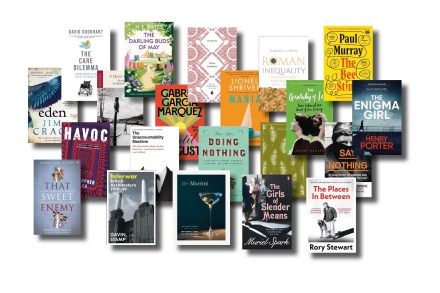
Rod Liddle The angels in Jim Crace's Eden are tetchy and petty authoritarians, apart from one who can't fly properly. This dissertation on freedom and mortality is rather wonderful – published two years ago but I caught up with it only this year. The best non-fiction book of the year is David Goodhart's The Care Dilemma: Caring Enough in the Age of Sex Equality, which has the temerity to suggest that divorce rates and broken families might just have something to do with our epidemic of mental illness. How dare he? Lionel Shriver I’d recommend the novel Havoc by Christopher Bollen, set in an Egyptian hotel to which westerners have fled to avoid the tyrannies of Covid regulations.

Save our Stilton!

On 2 October 1814, a grand feast was held at the Hofburg imperial palace during the Congress of Vienna. Famed French chef Marie-Antoine Carême was charged with cooking and didn’t disappoint. But when it came to the cheese course, a lively argument broke out among the assembled statesmen, each advocating for the superiority of their national cheese: the Italian for Stracchino, the Swiss for Gruyère, the Dutchman for Limburger, and so on and so forth. The UK foreign secretary, Lord Castlereagh, championed Stilton. French foreign minister Talleyrand snapped an order (‘Send the despatches to the chancellerie’) and a large piece of Brie de Meaux was duly brought out: ‘The Brie rendered its cream to the knife. It was a feast and no one further argued the point.