Spectator Life

Spectator Life

An intelligent mix of culture, style, travel, food and property, as well as where to go and what to see.

The death of celebrity gossip

When I was in hospital for almost half a year, learning how to face life as a ‘Halfling’ – a person in a wheelchair, patronised and petted – the thing I looked forward to most was a normal, some would say banal, event. I longed to be in my local Pizza Express, in Hove, reading Heat magazine to my husband as he ‘savoured’ his American Hot. To put it mildly, I am a far faster eater than Mr Raven, and rather than chatter to him and expect an answer, thus hindering his progress still further, I read to him. To add to the fun, I framed the problems of the Beckhams or the Sussexes as those of people we actually know, doing the appropriate voices, which rendered it delightfully bitchy.

Is the Lake District still as Wainwright described it?

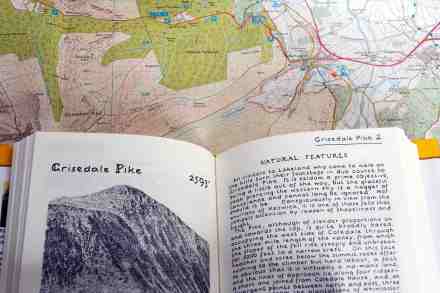
The Lake District isn’t really meant to be about eating. It’s about walking and climbing and gawping. The guide one carries is not that by Michelin but Alfred Wainwright, whose seven-volume Pictorial Guide to the Lakeland Fells turns 70 this year. Food is mainly to be consumed from a Thermos rather than a bowl, and eaten atop a precariously balanced upturned log rather than a restaurant table. The culinary highlight should be Kendal mint cake, gratefully retrieved from the pocket of your cagoule. And so I was as surprised as anyone to find real gastronomic delights on a recent trip. Not from Little Chef, though that was where Wainwright religiously went for his favourite meal: fish and chips, a gooseberry pancake and cup of tea.

The blossoming career of Cedric Morris

In the winner-takes-all world of modern art, there’s every chance you might not have heard of Cedric Morris. Why should you? No matter how much you sweeten the tea, the Welshman, born in 1889, was no Pablo Picasso, Mark Rothko or Salvador Dali. Nor from our 21st-century outlook can it be said that the name itself inspires much confidence: ‘Cedric’ sounds about as on-trend as a character from a short story by Saki, and when paired with Morris, the combination offers up all the avant-garde promise of a baked camembert starter at an Aberdeen Angus steakhouse.

Lunches, kidnappings and coups: my Frederick Forsyth connection

Back in 2007, I went to war-ravaged Guinea-Bissau in west Africa to report on its rise as the continent's first narco-state. Latino cartels were using it as a staging post for shipping cocaine to Europe, bribing its rulers to turn a blind eye. So much product was being landed that local fishermen would catch stray bales of coke in their nets – a modern twist on Compton Mackenzie’s novel Whisky Galore. Guinea-Bissau’s new drug lords would go on to inspire a novel of their own. Back home on the Telegraph foreign desk in London a few months later, I got a call from no less a figure than Frederick Forsyth. His next novel, he told me, was going to be about the cocaine trade, set in coup-ridden west Africa: Narcos meets The Dogs of War.

Four bets for Royal Ascot next week

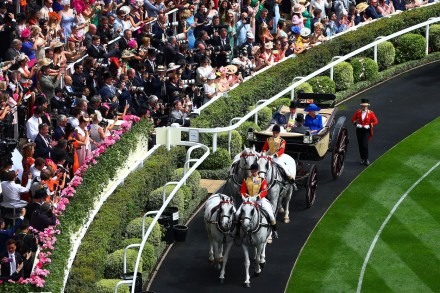
Royal Ascot gets me more excited than the weekend racing fare so I am going to put up four horses who could well go off shorter when they line up for their respective targets next week. First up in RASHABAR in the Group 1 St James's Palace Stakes on Tuesday (4.20 p.m.). Brian Meehan’s three-year-old colt caused an upset at this meeting a year ago when landing the Coventry Stakes at odds of no less than 80-1. Admittedly, next week he has to take on arguably the best horse in training in the form of Field of Gold but this race might just cut up to less than eight runners by the off, in which case the current three places would be attractive.

Save the miniskirt!

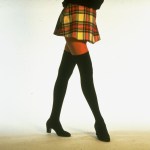
What is it about men and miniskirts? A few months ago, I read with horror – but sadly not surprise – about a school that was considering banning girls from wearing skirts. Apparently, residents in Whitstable, Kent, were so alarmed at the ‘inappropriate skirt lengths’ spotted around town they had complained to the local school. Headteacher Alex Holmes (you guessed it – a man) immediately dashed off a letter informing parents that all pupils could be forced to wear trousers as part of a new ‘gender neutral uniform’ in response. The miniskirt is a symbol of women’s liberation – not sexual servitude I’m sorry, what? Are we talking about a pretty seaside town in Kent or downtown Tehran?

The deadly curse of influencers

What’s the most hazardous occupation? Deep sea fisherman? Uranium miner? Tail-end Charlie in a Lancaster bomber (not a career currently available)? I challenge anyone to find a speedier way to meet one’s end than becoming an influencer. The sad death of 28-year-old University of Salford student Maria Eftimova, who tumbled off Tryfan, a 1,000ft mountain in Snowdonia during a hike organised on Facebook, is one of those all-too-regular headlines: an influencer who meets their end in their twenties, leaving tens of thousands of followers distraught. Policymakers fret over children falling under bad influences online – we have had an entire Online Safety Act to try to address the problem.

The lure of St James’s 

Procrastination may be the thief of time, but in the right circumstances, it can be fun. The other day, I was enjoying myself in St James’s, my favourite London arrondissement. There are delightful contrasts, from the grandeur of the royal palaces and the St James’s Street clubs to the charming, intimate side streets and alleys with their pubs and restaurants. The late Jacob Rothschild would often cross from his palatial office in Spencer House to Crown Passage, in order to lunch at Il Vicolo (regularly praised here). His Lordship never bothered to reserve a table. Instead, he would send someone across with his form of booking: a bottle of Château Lafite. Crown Passage is also home to the Red Lion, one of the oldest hostelries in London.

I love sausages!

‘Sausages,’ my son says to me, leaning forward from the back of the car, with the authority and confidence only a three-year-old can truly muster. ‘Sausages?’ I reply distractedly, while navigating a particularly awkward roundabout. We’ve been talking about my job, but I assume his train of thought has taken a lunchier direction. ‘Yes, sausages. You write about sausages. And… things like sausages.’ He sits back, satisfied in his career analysis, probably contemplating whether lunch can indeed also feature sausages.

When did we become so boring?

Recently, I found myself trying to explain to a much younger colleague who Oliver Reed was. We’d got on to the subject of the hell-raising actor because I was bemoaning the fact – perhaps rashly – that today’s world is completely anodyne. Fear of offending others means it’s better to keep your thoughts to yourself; after all, who needs the police investigating them for a non-crime hate incident? Brave is the person who brings their whole self to work, as many of us are encouraged to do. The government’s Employment Rights Bill, which some are calling the ‘banter ban’, may mean we’re even more reluctant to speak our minds. This prohibition against saying anything even vaguely controversial extends to all walks of life – including television.

Rules for my dinner party guests

I love having friends over for dinner, and like to think I’m rather good at hosting. And while I always strive for a relaxed atmosphere and dislike formality, there are a few hard rules that my guests should adhere to if they want a repeat invitation. Let’s start at the beginning. When checking on any foods you don’t eat, I am asking if you are vegetarian or coeliac, or if you have an actual allergy; what I don’t want is a list of your preferences. One person I invited replied telling me all about how, although she quite likes fresh tomatoes, she can’t eat them cooked, adding that she’d rather the food wasn’t flavoured with cumin or oregano. I felt like telling her to stay home and order from Deliveroo.

The pretentiousness of the pop critics

Pop music criticism, said Frank Zappa, was the work of people who can’t write, about people who can’t talk, for people who can’t read. Half a century later and he’s still right. Although pop is essentially a juvenile art form – its clearest strength and most obvious weakness – that doesn’t stop reviewers pumping up performers as though Johann Sebastian Bach had decided to form an all-star band with Beethoven and Brahms. The Three Bs! Sign ’em up! The current pop reviewers for the Times and the Telegraph, Will Hodgkinson and Neil McCormick, clearly think they bear witness to giants. Like Pinky and Perky, these mature teenagers can trill ‘we belong together’, batting balls over the net in a contest of perfumed superlatives.

Farewell to Frederick Forsyth, the master of the thriller

If Frederick Forsyth had not existed, you would have had to invent him. Yet no novelist could have come up with as convivial, swashbuckling and lively a character as the thriller writer, who has died at the age of 86. Many of his millions of admirers thought him almost immortal, and over the course of a half-century career – which began in earnest with the publication of The Day of the Jackal in 1971 and seldom slackened thereafter – Forsyth produced a series of bestsellers that sold tens of millions of copies in dozens of languages. After briefly serving as an RAF pilot, he went to work at Reuters and then as a BBC correspondent, where one of his assignments was to cover the attempted assassination of Charles de Gaulle in August 1962.

Children’s TV was better in the 1970s

One advantage to being born in the 1970s was the sheer abundance of good kids’ TV on offer. This was the golden age between clunky black and white offerings like Muffin the Mule, and the creeping vapidity of later shows like Teletubbies or The Care Bears. It gave us Camberwick Green, The Magic Roundabout, Captain Pugwash, Mister Benn (and the Mister Men), The Clangers, Playaway, Hector’s House, Fingerbobs, Tiswas, The Muppet Show, Ivor the Engine, and Basil Brush – not forgetting the holy trinity of Mary, Mungo and Midge. Did we hit the jackpot, or what? As my daughter, aged 11, prepares to leave her own childhood, I’ve been rewatching a few of them.

How a Luxembourg village divided Europe

I am in the most EU-ish bedroom in the EU. That is to say, I am lying in a refurbished room in the handsome 14th-century Chateau de Schengen, in the little village of Schengen, Luxembourg. From my casements, opened wide onto the sunny Saarland afternoon, I can see the exact stretch of the river Moselle where, on a boat floating between Germany, France and Luxembourg, the Schengen Agreement was signed in 1985. This was the agreement that sealed Free Movement as Europe’s defining ideal – one whose consequences are still unfolding. I’ve been in Luxembourg for a week, on assignment, and this week has given me an insight into why the nations of the EU undertook their bold, remarkable experiment of no more borders. The first and obvious motivator was war.

There is no dignity in dyeing

Growing up, like a lot of English girls, I was what was known as a ‘dirty blonde’. (An evocative phrase, the Dirty Blondes are now variously a theatre troupe, a pop group and a restaurant.) In the summer, I would put lemon juice on my hair and watch in wonder as it bleached in the sun; I mainly did it to irritate my mother, who found overly blonde hair ‘tarty’. When I grew my impressive rack and shot up to 5ft 8in at 13, what I thought of as ‘The Bothering’ started – grown men attempting quite openly to pick me up, especially when I was wearing my school uniform. Blonde hair was the last thing I needed. Like many a dreamy teenager of the time – I’m not sure it still happens – I was drawn to the mythical beings of Hollywood.

Are you in #ChronicPain?

The pinned post at the top of the r/ChronicPain subreddit is ‘how to get doctors to take you seriously’. The subreddit has 131,000 subscribers, and is a tricky community for outsiders to understand. People talk in acronyms (chronic lower back pain – CLBP, myalgic encephalomyelitis – ME, acceptance and commitment therapy – ACT) and have their own vocabulary (‘spoonies’ and ‘zebras’). There are flippant memes about muscle relaxants next to horrific stories of medical negligence. People report their condition being so bad that they’ve dropped out of school or are even unable to care for their children. We can imagine the feelings of grief – and, of course, the sheer physical suffering – that come with chronic pain conditions. Or at least, we can try to.

I’m a Strava addict

If a man runs through a forest but doesn’t post it on Strava, it didn’t happen. I won’t believe it, anyway: the athletic tracker app is my new addiction. The name is borrowed from the Swedish word meaning ‘to strive’. Users document their sporting activities – walking, kayaking, surfing, skiing – and share their adventures with their followers. Founded in 2009 by two Harvard graduates who met on the rowing team, the app has 150 million users. That’s small fry compared to Facebook’s three billion or TikTok’s 1.3 billion. But Strava is on the up, acquiring Runna, another fitness app, in mid-April. Strava syncs to your smartwatch, if you have one. As well as mapping your distance and tracking your time, it lets you add photos and captions to your posts.

Respect thine elders

Before the arrival of strawberries, and not long after the coming of the swifts, the elder salutes the coming of summer after its own fashion: emerging from roadsides and hedgerows, gardens and wasteland, and scenting them with its blooms. Almost a century ago, Maud Grieve, in her 1931 Modern Herbal, said ‘that our English summer is not here until the elder is fully in flower, and that it ends when the berries are ripe’. At this time, when thorn blossom – which made our hedgerows look set for a wedding – has faded, the elder, like cow parsley, offers its own floral exuberance.

Walking, not working out, is the best exercise

These days almost everyone you meet is a member of a gym, and instead of attending church every week – as they did in days gone by – they make regular visits to these temples of the body beautiful: the new religion of our times. Yet despite these obligatory bouts of body worship, the general health of the nation – physical and mental – does not appear to be improving. The evidence tells us that obscene levels of obesity are at an all-time high, and everyone has heard stories of those struck down in the prime of life by strokes, coronaries or – most common of all – cancer, the plague of our age.

Bets for the Derby and Oaks

The unsettled weather forecast coupled with the number of leading horses who are untried at the distance of tomorrow’s Betfred Derby (3.30 p.m.) have increased the chances of a surprise result. The form of Ruling Court is rock solid but his victory in the Betfred 2000 Guineas at Newmarket came on good ground and over a trip of just a mile. Tomorrow’s contest over Epsom’s twists and turns will be over a mile and a half and it will be on much softer going than at racing’s headquarters more than a month ago. Ruling Court’s style of running and his breeding give every indication that he will stay 10 furlongs but 12 furlongs on ground with some cut could be another matter so odds of no bigger than 9-2 do not appeal.

The bitter end of bitter

‘Another pint of bitter, love, when you’re ready.’ To those of a certain age the request slips off the tongue like the opening line of a sonnet. A pint of bitter is as English as the first cuckoo of spring or the last rose of summer. It brings to mind a pub, the people in it, and that social phenomenon which binds us to those we trust – the round. And, of course, one pint may lead to another. Television adverts used to be full of jolly pint-swillers. Whitbread ‘Big Head’ Trophy Bitter was ‘the pint that thinks it’s a qua-art’. Tetley of Leeds, a big player in those days, introduced viewers to their ‘Bittermen’, with the declaration: ‘You can’t beat ’em.

The awkward genius of Cole Palmer

My nephew Cole is either highly intelligent with a wicked but not easily discernible sense of humour – or he’s ridiculously thick. He’s not really my nephew, but I can’t help wishing he was. I always refer to him as a member of the family because he’s arguably the most interesting sportsman in the world right now – and one of the most naturally gifted footballers this country has ever produced. Cole Palmer is 23 and comes from Wythenshawe, Manchester. He’s mixed race in that his paternal grandfather, Sterry Cole, came from the Caribbean island of St Kitts and Nevis and emigrated to Britain in 1960 as part of the Windrush generation. His father, Jermaine, is a dental engineer, and his mother, Marie, is a dyslexia assessor. He has two older sisters.

The racing victory I’ve enjoyed the most

Allegedly the most effective rain dance in the world is that performed by Native American Hopi Indians. The biennial 16-day rite conducted by the Snake and Antelope fraternities involves participants jiving around a column of rock in feathered dress carrying snakes in their hands and mouths. As our dry spring moves into what could be an even drier summer, the local shops in Newmarket, Lambourn and Middleham might be wise to stock up on feathers and plastic reptiles. Fortunately, before Sandown’s key evening meeting last Thursday there had been just enough precipitation to take the sting out of the ground and embolden trainer Ed Walker to run his talented Almaqam, an entry in the Prix de l’Arc de Triomphe, in the feature event, the Group 3 Brigadier Gerard Stakes.

Jeremy Clarkson should love the congestion charge

I confess that I suffer from CBS: Clarkson Bipolar Syndrome. I really like Jeremy: I bought my Land Rover Discovery 3 after he drove one up a mountain in Scotland, and I would happily have a pint with him at his new pub. He knows a lot about cars – but not so much about the economics of motoring. He, of all people, should love the congestion charge. I worked on transport policy in the late 1990s, and the fact that this charge was detested by liberals and conservatives alike suggests that we got the policy about right. Let me explain why you should love congestion charges too – at least in principle. (Sadiq Khan’s 20 per cent increase of the London charge to £18 is a different question.) But first, let Jeremy set the scene with what he’s said about it on Top Gear.

Glastonbury has become a very posh problem

I’m afraid that when I read that the posh glamping provider for wealthy Glastonbury fans was going into liquidation, I smirked. The company offered yurts that only look luxurious if you compare them with tents – with a beds, a sofa, a loo and a shower, as well as meals. Pretty basic, biatch. The only exclusive thing about it is that guests can access the hospitality area behind the Pyramid tent, like ageing groupies. The company organising the liquidation sent emails to clients who had already paid for this year’s Glastonbury to say that no tickets had been bought so, oops, sorry. Wealthy customers complained vociferously to the media. One woman said that her father had paid £40,000 this year for three yurts and six hospitality tickets.

The confusion of fusion food

There’s a joint in east London that describes itself as a ‘family-run osteria’ and posts about the ‘Italian tradition of generous hospitality and simple, beautiful food’. The menu is a combination of several Italian dishes with Japanese ingredients, and I can’t think of anything more inappropriate. One of the dishes described as dolce (meaning ‘sweet’) is a cheese panna cotta with herring caviar. This restaurant has soy sauce nudging the balsamic. Is there no end to the revolting madness that is fusion food? I can understand why young chefs – those tattooed to within an inch of their lives – think they are a cross between Anthony Bourdain and Marco Pierre White and love the idea of mixing miso and chocolate pudding. It has all gone too far.

Midwit machines are destroying thinking

First, a confession. Sometimes I go on a super-geeky site for dedicated weather watchers. It’s probably because I am quite manic depressive – and British – and definitely because I adore warmth and despise dank. That means I can be tipped into doom by anti-cyclonic gloom or lifted into ecstasy by a decent heatwave. Whatever the precise cause, this mild obsession has made me a long-term member of that weather forum, where we natter about polar vortices and the ‘Beast from the East’ like meteorological trainspotters. Over the years I’ve got to know the other forum members pretty well, despite never having met them; we banter and bicker and sometimes discuss biscuits. It’s like a kind of low-key pub with extra charts from Meteosat.

The moral case for alcohol

Another day, another warning about the perils of alcohol from a body that should know better. The World Health Organisation, which just a few years ago was prescribing solitary confinement as the cure for our ills, has recently announced the preferred level we should be drinking every day: zero, zip, nada – not a drop. Last week a Professor Nutt – nominative determinism in action if ever I saw it – was a little more generous. He suggested we would be safe with ‘one glass a year’. He was joined last weekend by a dreary columnist in the Financial Times, who said he took up drinking at 30 but wishes he hadn’t; it would be better for his health. What madness is this?