Spectator Life

Spectator Life

An intelligent mix of culture, style, travel, food and property, as well as where to go and what to see.

Butlin’s is cashing in on nostalgia

Butlin’s is no longer a holiday ‘camp’. The company has evolved from its postwar heyday and now describes its properties as ‘resorts’ which are crammed with restaurants, bars and venues for live gigs. It’s like a cruise but on dry land. I went to Bognor Regis for a nostalgic ‘Ultimate 80s’ weekend where the performers included half-forgotten acts such as Aswad and T’Pau, and the remnants of the boyband Bros. The site lies 200 yards from Bognor’s shallow, pebble-strewn beach. The town itself is doing all right, if not exactly thriving. The charity shops are cheap, the estate agencies are full of recently vacated bungalows and the funeral parlours offer a special service for customers in a hurry.
The brutality of being a bridesmaid

There stands the bride. Perfect hair, perfect nails, perfect fake tan. She may not have slept the previous night or eaten for six months but, still, she’s beaming. And there behind her stand the bridesmaids. All 95 of them. ‘My sister-in-law asked how much weight I could drop because the dresses only went up to a size 12’ When Kathryn McGowan got married in County Down this month, she couldn’t decide which of her pals should have the honour of holding her train and checking she didn’t have lipstick on her teeth. ‘It was quite stressful,’ she said of the dilemma, ‘and then one day the idea came to me.’ Instead of having the average number of bridesmaids (in the UK, this is three to five), she’d have 95 of them, aged between six and 40.

How football found God

Without wanting to sound like a refugee from the 1950s, it was a shame that last week’s Cup Final was not the climax to the domestic season but sandwiched between a cluster of Premier League games – and kicked off at 4.30 p.m., which must have been unhelpful for those hoping to get a train back to Manchester. Palace wholly deserved to win: they defended brilliantly, broke like lightning and cunningly sabotaged any momentum a ponderous Manchester City might have been trying to develop by hurling themselves to the ground at the slightest opportunity. Never mind: the Palace fans were fantastic and kept Wembley afloat on a rich sea of sound throughout.  As for kick-off timings, don’t expect them to get any better.

The intrigue of the jockeys merry-go-round 

Nearly always a thriller, Newbury’s Lockinge Stakes, instituted in 1958 and a Group 1 race since 1995, is an ever-welcome signpost to the Flat season. The Guineas Classics have started the three-year-old stories; the Lockinge shows us which older horses will be battling for supremacy over a mile. For four-year-olds and upwards, it has been won by great horses like Brigadier Gerard, and I will never forget Frankel scorching away from his field to win by five lengths in 2012. This year’s running promised a special quality, perhaps the best for decades, with a jockeys merry-go-round adding to the intrigue. Notable Speech had won last year’s 2000 Guineas and Sussex Stakes, Rosallion the Irish equivalent along with the St James’s Palace Stakes at Ascot.

The wild optimism of a young society

There’s a strange, near-psychedelic effect that hits you when you travel from an ageing country to a young one. It’s not in the buildings – although the buildings may be new and hastily tiled – and it’s not necessarily in the politics, culture or economic vibe. No, the shock is more human, and intimate. It is in the faces. And the noise. And the nappies. I’ve just returned from a few weeks in Central Asia: Uzbekistan, Kazakhstan, Kyrgyzstan. And while these nations differ in history, ethnicity and landscapes, two things bind them all. First, they all have an inexplicable penchant for a stodgy rice dish called plov (in Samarkand I bought a T-shirt bearing the slogan ‘All You Need is Plov’). The second is that they are all young. Wildly, exuberantly young.

Do cyclists know how hated they are?

Cyclists. I’ve become a tolerant cove in my old age but if there’s one word certain to raise my dander, it’s cyclists. In Brighton they think they own the place, enabled by successive stupid councils, who have spent tens of thousands of pounds on cycle lanes and those eyesore e-bikes all over town. With a murderous version of droit de seigneur – at odds with their right-on, self-righteous self-image – cyclists appear to believe that walkers are a lower order who they are free to run over as they please. Cyclists in Brighton seem particularly fond of riding on pavements, where the most damage can be done. It’s like they see pedestrians as targets in some sort of video game – ten points for a man, 20 for a woman, 50 for a child.

Stationery is quietly making a comeback

All of a sudden, our local stationery shop – the Write Stuff – has grown a shelf labelled ‘Letter Writing & Correspondence: Original Crown Mill’. And there, in ranks, are pads of beautiful writing paper – vellum and laid, cream or white, A4 or A5 – plus boxed writing sets, decorated top and bottom with flowers and/or butterflies. All with colourful envelopes to match. ‘Goodness!’ I said to Antonia, who owns the shop. ‘Who is writing letters these days?’ ‘The young,’ she said. I was astonished and charmed. Immediately, I bought a pad of Original Crown Mill Laid (Finest quality since 1870) and decided to write to the granddaughter currently studying philosophy at York University, whom I rarely see or hear from.

I’ve become a solar panel hustler

What better accessory for my fleet of electric cars (well, two) than my own solar power station, converting the rays of the sun into blistering acceleration? I am propelled by a love of tech gadgets and the prospect of a quick killing. Do not confuse me with Net Zero zealots – I’m in this eco game for myself. So far today, my roof has thrown off 62.8 kWh – enough to drive my 2019 Hyundai Kona Electric for 350 km. (The other car is a Tesla, which I am scared to take out after a dozen of its brethren were recently incinerated in Toulouse.) Solar panels are the best investment game in town, and that’s why they’re going gangbusters in France – despite the bureaucratic mountain you have to climb. First, I had to submit drawings and specifications on paper and electronically.

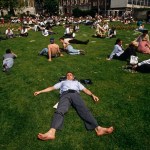
Britain is now a slackers’ paradise

My friend recently told me about a young Chinese woman who was staying with them and kept tittering to herself. Asked what she was finding so funny, the answers were telling. In one case, it was because she had seen so many people lounging in parks that she had assumed the working day had been cancelled from on high – and was amused to find out it was a normal weekday. Then there was the way that all the shops and cafés were shut by 9 p.m. Again, the private merriment. ‘Nobody works here!’ she exclaimed gleefully. In a sense, she’s right. Of course some people work – those in manual and service-sector jobs, for instance.

The curious case of Bella May Culley

I was belatedly baptised last week in the Church of England, and though Christians are enjoined to show compassion to sinners and forgive them their trespasses, my eyes do not fill with tears at the plight of 18-year-old Bella May Culley from Middlesbrough. Bella currently finds herself in Prison No. 5 in the Georgian capital, Tbilisi after she was accused of smuggling drugs into the country. The prison is described in British media reports as decaying and dangerous, but which, from the pictures, looks tough, austere and simply furnished – no worse than one might expect of correctional facilities in the Caucasian republic.

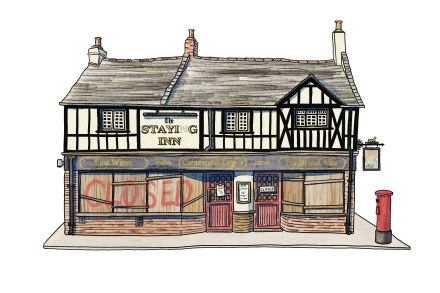
How to save Britain’s pubs

In Bradford a few weeks ago, I popped into a pub called Jacobs Well. It’s a squat old building, all but submerged behind the stultifyingly ugly road that grinds around the edges of the town centre. The Well was fairly quiet on a Monday night, but everyone there was congregated around the bar and it was immediately apparent that this was a place where long friendships are nurtured and strangers are welcomed. There were interesting cask ales, free hotpot and doorsteps of bread on a side table for anyone who fancied a meal, wonderful photos of old Bradford on the walls and a blackboard chock-full of handwritten notices advertising upcoming band nights and quizzes. The Jacobs Well probably doesn’t make huge profits.

The unfashionable truth? Early motherhood is wonderful

At the end of last year I developed a pathological aversion to going to my local supermarket, owing to a garish sign in the window counting down the number of ‘sleeps’ until Christmas. The twee Americanism was grating enough, but I had another reason to feel queasy: I was heavily pregnant with my first baby and my due date was Christmas Day. Of course, my husband and I were longing to meet our much-wanted son. But as the day drew inexorably closer and I dived ever deeper into the ubiquitous ‘exposés’ on early motherhood, I began to feel afraid. Is it any wonder? To read pretty much any book, magazine or internet forum about becoming a mum in 2025 is to be told that it is an ordeal to be dreaded.

The semicolon had its moment; that moment is over

Rend your cheeks and rub ashes into your hair; for that most elegant, elusive of punctuation marks – the semicolon – is, if not yet quite dead, at least fairly close to being on first name terms with St Peter. Research from Babbel, a ‘learning platform’, shows that usage of the semicolon in texts has plunged by 47 per cent over the past two decades. I would be more surprised if the Pope turned out to be Catholic. These days, students struggle with commas and apostrophes. How can the poor milquetoasts be expected to grasp the finer usages of semicolons? This is all a terrible shame. Good punctuation is a balm for the soul. As punctuation (or ‘pointing’, as it used to be called) orders sentences, so this relates to the order of mind, body and the universe itself.

Help! I’m trapped in a hi-tech hotel

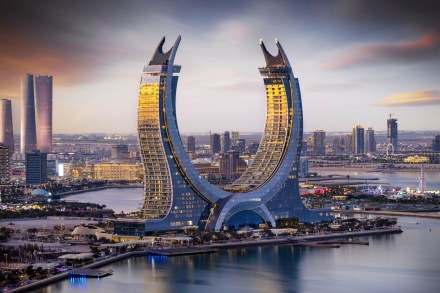
Raffles Doha is one of the world’s weirdest, most improbable buildings. That’s it in the picture – a five-star hotel incorporated in one prong of the incomplete circle that is the 40-storey Katara Towers in Lusail City (the Fairmont Doha is in the other prong), on land reclaimed from both desert and sea. It’s an architect’s/despot’s fantasy turned reality. The bonkers design is meant to echo Qatar’s national emblem of crossed scimitars, and I’d love to see the back of the envelope upon which it was first sketched. It’s far, far beyond my miserable hack’s pay grade, but invited as a guest I’m ashamed to say that I couldn’t resist.

The overlooked brilliance of BBC’s The Hour

With reluctance – but enticed by its surprisingly starry cast and the fact that it had landed, ironically enough, on Netflix – I recently tuned in to The Hour, the BBC’s 2011 political drama series. It's about a BBC TV news programme being launched in 1956, against the backdrop of the Suez Crisis. And, goodness me, isn’t it good? Better than good, in fact – it’s a high-carat television diamond, and not some lab-grown job either, but the real, romantic, sparkling deal hewn out of the earth and hawked via Antwerp before ending up in the Imperial State Crown.

Bets for Newbury and York

The form of the Virgin Bet-sponsored Scottish Sprint Cup at Musselburgh last month is rock solid. The winner, American Affair, and the runner-up, Jm Jungle, filled the same two places in a hotter race at York yesterday off their revised marks. Fifth at Musselburgh after being backed into 2-1 favourite was COVER UP trained by the father and son team of Simon and Ed Crisford. The five-year-old gelding was beaten less than three lengths but I am pretty sure he is better than that. The horse can be tricky at the start but tomorrow he will be in the safe hands of William Buick, who has won on him three times before, when he runs in the Hong Kong Jockey Club Handicap at Newbury (3.45 p.m.). The race, over six furlongs, has attracted 12 runners for a first prize of more than £38,000.

How is Germany so weird yet so dull?

When I lived in Berlin a decade ago, I was struck by the contrast between the dullness of young Germans and the incredible weirdness of everything else. Only in German could the word for ‘gums’ (Zahnfleisch) mean ‘toothflesh’. And only in fleisch-mad Germany (the word for ‘meat’ is the same as ‘flesh’, which is somehow incredibly disgusting) would people snack on raw pork, a dish known as mett. Mett, also known, rather curiously, as Hackepeter, is sometimes offered at buffets in the shape of a hedgehog (what else?) with raw onion spines. It simply doesn’t get stranger.

The tyranny of the talkative

When I was a child, all I wanted to do was talk. In fact, it got so bad that my primary school teachers were forced to give me a ‘wriggle cushion’ – an inflatable seat designed to pacify hyper children. I’m sure there’s a diagnosis in that somewhere. And as the years went by, I became known for my loquacity. Teachers at parents’ evenings would look at my mother with compassionate eyes and say things like, ‘My, my, our Zak is quite the communicator, isn’t he?’ Translation: your son is a gabby little monster. It was only when I reached maturity that I realised over-talking is a serious affliction and not a commendable virtue. It’s a sure-fire way of ostracising yourself from others.

The art of the political lunch

We had been discussing Ukraine, Gaza, Iran, the possibility of a nuclear exchange across the Punjab and other trifling matters. It was decided to change the subject. A youngster was planning to write a piece on lunching and suggested I might know something about that. I did not disagree. In the old days, lunching was a vital part of the political process. It was a good way of getting to know politicians, so that contacts would ripen into friendships. That said, it was not an efficient method of discussing complex matters. Lunch was forgossip and general political impressions. If detailed rumination was necessary, the place for that was in the minister’s office, equipped with a notebook. The 1980s were particularly fruitful.

Devilled kidneys: a heavenly breakfast 

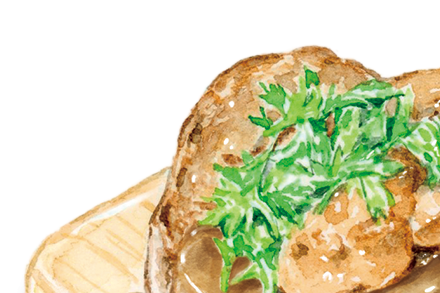
Iam standing in my kitchen preparing kidneys for devilling. Snipping their white cores away piece by piece until they come free and I’m left with just the wibbly, burgundy kidney, ready for their spiced flour, I pause. There is no denying that even fresh raw kidneys can smell a little… challenging. And for one moment I consider skipping the whole thing and just having an unchallenging slice of toast instead. I’m so glad I didn’t. Because once cooked, kidneys are not challenging at all: they’re luscious and tender, with an earthy, gamey flavour which is almost compulsive. That robustness is actually their strength: kidneys can take bold flavours – feisty seasonings and rich sauces – which is why they are so suited to devilling.

Women don’t want to dress like Kate Middleton any more

Look, if you will, at Kate Middleton on the Isle of Mull for her wedding anniversary. There she was in skinny jeans, tucked-in blue shirt and tweed blazer, shod in what looked like sensible walking boots. It’s a look I like to call Royal Prep School Mummy, and she’s been at it for years: on school runs, at charity netball matches, and Anmer Hall photoshoots. It works, as it always has done, by combining registers. The tweed blazer nods to all sorts of Balmoral-ish, elitist accents – but we forget all about that because of the blue shirt and skinny jeans, items we might well own ourselves. Hilary Mantel may have famously called Kate a ‘shop window mannequin’, but I want to know which one. Joules, Boden or Cath Kidston? https://twitter.

Why is the BBC obsessed with rap?

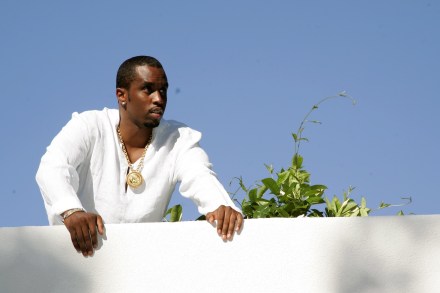
Two of the top ten stories on the BBC news feed yesterday concerned the travails of leading rap and hip hop stars in different kinds of trouble in the United States. In one case, the 55-year-old rap singer Sean ‘Diddy’ Combs – one of the biggest names in the business – is on trial in New York facing charges of assault and sex trafficking, which he denies. The trial is only the latest in a long line of legal actions Combs has faced over the years, in which he’s been accused of offences of sexual violence. In the second case, a 32-year-old hip hop star called Tory Lanez was rushed to hospital in California from a prison near Los Angeles after being stabbed 14 times by a fellow inmate.

Trent Alexander-Arnold and the wrath of Anfield

Trent Alexander-Arnold is a gifted footballer. Twice he has helped Liverpool become champions of England. He was also an important member of the team that became champions of Europe, and he has played 33 times at right back for England. Alexander-Arnold is still only 26. His race is nowhere near run. He has, one may safely say, power to add. And how did Liverpool supporters receive him when he came on as a second-half substitute against Arsenal over the weekend? Touched by the sun, thousands hooted their disapproval. The ‘Anfield faithful’, to borrow one of those sentimental phrases that come so easily to lazy scribes, let the player know that he could, in fact, walk alone. Charmers all.

Why are women expected to love chocolate?

‘What? You don’t like chocolate?’ The British Airways attendant almost shouted at me in incomprehension as she was passing out little packets of chocolate digestives. I had had the temerity to ask (in economy, of course) whether there might be any other biscuits on offer. To which she had responded with a concerned enquiry about allergies. No, I said, I am not allergic. I just don’t like chocolate. I can’t say I was surprised by the attendant’s reaction. Any suggestion that you might not share the current appetite – nay, fetish – for chocolate and you are treated as though you’re inexplicably withdrawing yourself from the cultural mainstream. This applies particularly to women. In the event that a man declines chocolate, this tends to pass without comment. So be it.

What my walking boots taught me about death

It’s unlikely you’ll find a sorrier-looking pair of hiking boots than mine. As a result of my Camino addiction, the backs of my boots are literally crumbling, while the fronts have split open like a French baguette. They look like prime candidates for the hiking boot version of assisted dying – to put them out of their misery. But on my last pilgrimage, and in recognition of my complacency, I began treating my boots like royalty. I applied leather grease at the end of each day, packing them with newspaper to draw out the moisture. In short, I put those boots before all else. They are lasting far longer than I thought possible. These boots got me thinking about my recent experiences of palliative care: three cases in as many months at the start of the year.

How the internet turned ugly

Consulting a website on my phone recently, I was struck by how painful it has become to use the internet. All I wanted was to read some local news and check the spread of a power cut in my area. Instead, as I scrolled, I was assailed by interruptions from integrated adverts which – in the best case – wanted eagerly to tell me about the charm and usefulness of a new BMW. In the worst case, I was urged to consult some lawyers immediately because I had been mis-sold an insurance or financial product in the past and was due an enormous payout, if only I would contact the least credible-looking advocates in the country.

The sorry state of our public conveniences

Britain’s public loos are a national embarrassment. If you are in any doubt, head to Liverpool Street Station and spend a penny. It’s unquestionably the most odious and unpleasant public lavatory anywhere in the supposedly civilised world. It has to be experienced to be believed, but suffice it to say that the level of cleanliness on display would make a Medicine Sans Frontier doctor fresh from West Africa recoil in fear and reach for their PPE. The floor is usually awash in various places with unknown fluids. The long shared trough installed for handwashing is so disgusting that you wouldn’t clean your dog in it. The supposedly automatic taps barely dispense water. The soap dispensers are equally hit and miss.

Is AI evil?

Is Claude your confidant? Is ChatGPT your yes-man? Your wingman? Artificial intelligence seems more like a friend than the apex predator we feared. Maybe it’s not gearing up to enslave us or turn us into paperclips after all. But I find there is something just as malign about AI posing as our friend. Slowly, subtly, politely, it is changing how we think of ourselves, other people and our relationships. The friendliness of AI is a user-retention tactic. OpenAI, for example, relies on its models to be informative, yes, but also on them being more agreeable than humans. Sam Altman recently announced that OpenAI was rolling back its latest model of ChatGPT because it had become ‘sycophantic’.