Spectator Life

Spectator Life

An intelligent mix of culture, style, travel, food and property, as well as where to go and what to see.

The top theatre shows to see in London

After the usual slow summer, the West End will return to action this autumn - as several more theatres reopen their doors. Here’s our pick of shows to book ahead for: The Shark is BrokenAmbassadors Theatre, 9 October - 15 JanuaryIan Shaw (Image: Nick Driftwood) A smash hit at the Edinburgh Festival back in 2019, The Shark is Broken goes behind the scenes during the filming of Stephen Spielberg’s Jaws, revealing how the timeless blockbuster nearly never got made in the first place. Based on first-hand accounts from those who were there at the time, the play is also written by Ian Shaw - whose late father, Robert, starred in the film as shark-hunter Quint. Given the reviews from its Edinburgh run, there’s a serious buzz around this one already.

Fit for a Queen: why Windsor should be on your property radar

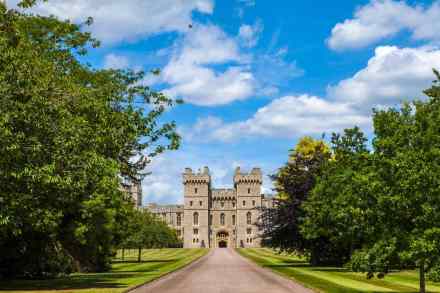
It’s rumoured that Prince William is considering a move from Kensington Palace to be closer to his grandmother in Windsor. Since her return from Balmoral, she has based herself full time at Windsor Castle and it’s certainly a great town but should you consider moving there too? Years ago I worked with American investors looking to buy commercial real estate in the UK. One thing they could never quite appreciate is how old everything was. They’d often ask why anyone would build Windsor Castle under a flight path. I’ll merely leave that there with a raised eyebrow and let you know that an original castle was first built on the site in the 11th Century. During the reign of Henry VIII it was used as a royal court and centre for diplomatic entertainment.

The enduring appeal of the Bond villain

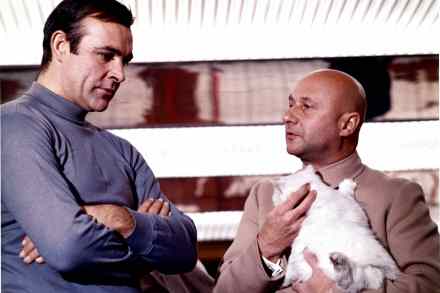
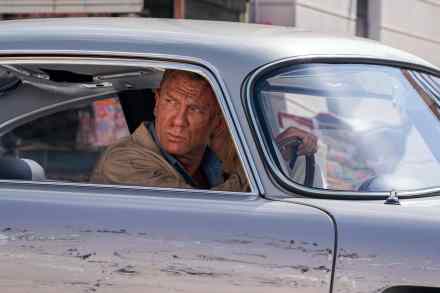
Daniel Craig’s fifth and final outing as Bond may not have as many pulses racing due to No Time to Die’s frequently cancelled release dates (the first trailer was back in December 2019), but fans are still keen to see the return of the iconic British spy. https://www.youtube.com/watch?v=FREBR6FH1rg Indeed, recent events have conspired to make 007 more relevant than in previous years, with shiny-pated Amazon boss Jeff Bezos emulating both villains Blofeld (who took over the entertainment assets of billionaire Willard Whyte in Diamonds are Forever) and Hugo Drax (Moonraker) with his recent acquisition of 007 studio MGM and brief space flight.

Why there’s never been a better time to see Venice

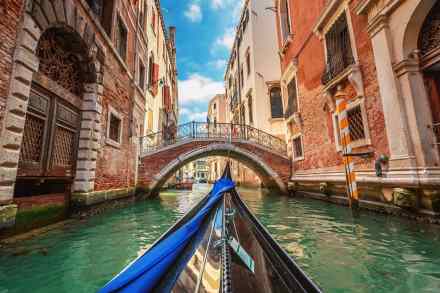
You’re never going to see Venice quite like this again. Usually swarming with tourists – not to mention the enormous cruise ships that dock in its waters ­– the city has been given a serious breather by the coronavirus pandemic. Those lengthy queues to get into its most famous hotspots have disappeared; the picturesque back streets lie empty and a dramatic fall in water traffic has seen the sediment in its 150 canals settle, allowing their vibrant colour to return. La Serenissima – much to many of the locals’ relief – has become serene once more.

How to have a Russian weekend in London

Benedict Cumberbatch’s turn as Greville Wynne - the British engineer who helped MI6 smuggle secret intel out of Soviet Russia - in The Courier has shone a light on London's Cold War past. While the USSR and KGB might be gone, our capital still has a few souvenirs from the era - not to mention plenty of modern Russian culture and cuisine to boot. If you’re feeling inspired by The Courier, here's the guide to throwing the ultimate Russian-themed weekend in London: Where to eat and drinkMari Vana, Kensington While the old Soviet bloc wasn't exactly famed for its cuisine, London's eastern Europe and Slavic food has come on leaps and bounds since the days of Perestroika (as you might hope).

The surprising history of Garibaldi biscuits

I’m not sure that many people would choose the unassuming garibaldi as their favourite biscuit. Garibaldis aren’t flashy: there’s no luxury chocolate, no pretty, brightly-coloured icing, no fancy-pants shapes. They aren’t squidgy, trendy cookies, or wholesome buttery shortbread. In fact, they’re often called squashed-fly biscuits because the currants baked into the dough resemble, well, squashed flies. And yet, they persist. Garibaldi biscuits have stuck around for 150 years, outseeing fads and fickle consumers, keeping their place on supermarket shelves for longer than almost any other biscuit. The biscuits have an unlikely namesake: Giuseppe Garibaldi, an Italian General, who fought for Italian unification.

The French Riviera: where to pull off a September getaway

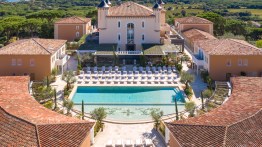
The French Riviera is one of the world’s most legendary travel destinations. Just a mention of the Côte d’Azur can conjure up glamorous images of yachts bobbing in the Vieux Port of Saint-Tropez, sun-splashed beaches studded with striped parasols and endless bottles of pale pink Provençal rosé. Now that France is on the Amber List, start dreaming of your next trip to one of these high-end hideaways. Hotel Metropole Monte-Carlo Hotel Metropole Monte-Carlo is located in the Carré d’Or (Golden Triangle) of the Principality of Monaco, which in itself is a gilded mini-metropolis of excess.

Embrace a change to higher education

The pandemic has sparked an entrepreneurial revolution as the business sector has adapted to consumers’ rapidly changing needs, with nearly half a million businesses launched in the UK between March and December last year. This national surge of entrepreneurs — enabled by ongoing technological development, together with a national shortage in practical skills — begs one to question whether the traditional university route will best prepare our young people for their future careers. There will undoubtedly always be an important place for traditional university degrees but a blinkered focus on this as the only viable option for further education will, I believe, disadvantage career and earning potential in the future. Recent statistics are already showing this.

Building an Ark of Remote and in-classroom learning

Although there is little scientific proof of the story of Noah’s Ark or the accompanying flood, we are told that building the Ark was no small task and Noah was working to a deadline. When UK schools were told to close classrooms and switch to remote learning back in March last year, many were caught by surprise by being forced to change teaching practices and administrative processes overnight. However many schools thrived under the extraordinary circumstances, continuing to offer the highest standard of teaching to their pupils. Staff and pupils at those schools who excelled during the pandemic were often already familiar with cloud platforms or had been employing remote learning platforms for hybrid learning or blended learning long before the lockdowns.

Books railing against private schools are actually the best marketing for them

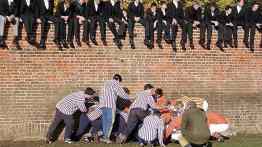
When Michael Gove was selling his school reforms a decade ago he was asked to define success. ‘I hope that thanks to the reforms we’ve introduced the next Guardian editor but three will be a comprehensive school boy or girl.’ It was his little joke: that the loudest critics of private schools, the people who rail against the injustice of the whole system, tend to be people who went to these schools. There is a long tradition of books by public schoolboys decrying public schools. The latest is Sad Little Men: Private Schools and the Ruin of England whose author, Richard Beard, went first to Pinewood, a prep school on the Wiltshire/Oxfordshire border, and then the £41,700-a-year Radley College.

Zoom schooling sounded like fun – until reality kicked in

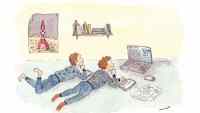
I never realised how much I enjoyed the sweaty, overcrowded journey into school until it was replaced with a half-asleep crawl from my bed to my desk, 30 seconds before my first lesson was supposed to start. It’s a routine which most of us students have had to get used to since March last year and it was a massive change. When we were first sent home from school, it wasn’t with a fanfare, but with a bleak mass email and assurances from our teachers that we’d be back after Easter. Our group chats on social media erupted in celebration. It took less than half a day for the excitement to die down as we each realised what the prospect of being locked inside indefinitely actually meant.

Our Sputnik moment: it’s time to revolutionise old teaching methods

Teaching methods today are no longer appropriate. The reasons are twofold. First, schools do not teach children how to think, they teach them how to parrot back the right answers. Second, exams define children’s futures. They tell them who they are, what jobs they can get and what their prospects in life will be. With such a narrow path to success, and deprived of cultivated reasoning skills, it’s little wonder that so many pupils are anxious and depressed. How did we end up here? The chemist and Nobel laureate (and inventor of the PCR test for Covid) Kary Mullis believed that schools today are a consequence of the space race. ‘In 1957 the Russians launched the space race by putting Sputnik into orbit around the Earth,’ he wrote.

Top notes: why does music make you cleverer?

Music is far older than language. The FOXP2 gene associated with speech has been recovered from Neanderthal fossils, yet rhythm and melody have been around for millions of years before that, as attested by the fossils of chirping crickets and singing birds. Sapiens evolved on the ape line, and our songs evolved from the vocalisations of non-human primates. One of the traits, however, which sets us apart from our chimp cousins (with whom we share 98 per cent of our genetic material) is that we continue to learn, develop and mature far beyond infancy. Humans may well be born with a musical instinct, yet music training changes the structure of our brains. A baby, as well as an adult with no musical training, processes music through the right side of the brain, which deals with emotion.

I banned mobiles. Should other heads?

In September 2018, I made the decision to ban mobile phones during the academic day at the school where I am head teacher in Scotland. I’m pretty sure we were the first British school to make this leap of faith. It made headlines across the country. How would everyone react? I knew that I needed to explain the thinking behind the decision to convince doubters and encourage support. It wouldn’t be a popular decision, so it was with a churning stomach that I rose to address the assembled pupils, having just pressed ‘send’ on a parent-body email. Fast-forward to August 2021 and the banning of mobile phones is now part of the national narrative. The Department for Education is spearheading a proposal that every school might be forced to adopt.

Love letters: why has the alphabet fallen out of fashion?

Last term I invigilated a reading examination at a fee-paying prep school where I work as a supply teacher. About five minutes in, a little girl called Maisie raised her hand. She looked downcast. ‘Yes Maisie?’ She pointed, unspeaking, at the first question. ‘Shall I read it to you?’ She nodded. I read it. ‘Does that make sense?’ She shook her head. ‘Well,’ I began, stalling, as I tried to work out which bit was confusing for her, ‘why don’t you have another look at the text? The answers will be there in the story.’ She mumbled something. ‘What’s that?’ She mumbled again, and this time I heard her: ‘I can’t read.’ Maisie is nine. She has been at this school since she was five.

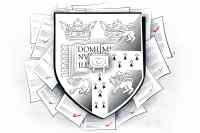
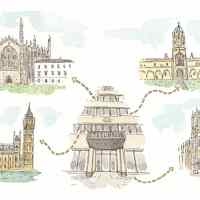
The Oxbridge Files. Which schools get the most pupils in?

Oxford and Cambridge have released figures showing how many offers they gave to pupils from schools in the 2020 UCAS application cycle. We have combined the figures in this table. It shows how well state grammars and sixth-form colleges compete with independent schools. Over the years, both universities have roughly doubled the proportion of pupils from state schools: 67 per cent, up from 52 per cent in 2000. Of the 80 schools, 35 are independent, 22 grammar, 15 sixth-form colleges, seven comprehensives or academies, and one is a further education college. (Schools are ranked by offers received, then by offer-to-application ratio. If schools received fewer than three offers from one university, this number has been discounted due to UCAS’s disclosure control.

How Harris Westminster conquered Oxbridge

Westminster School is being kept on its toes by its partner sixth-form college round the corner, Harris Westminster. There’s no imminent threat yet, in the ‘How many did you get into Oxbridge?’ stakes: last year, Westminster (private, £10,497 per term for day sixth-formers) got 71 of its pupils into Oxbridge, and Harris Westminster (state, £0 per term) got 36 in from a cohort about twice the size. But watch those Oxbridge statistics draw closer to each other in the next few years, as Harris Westminster’s highly motivated and excellently taught students continue to soar, and Oxbridge colleges become ever more nervous of offering places to the (as they see it) over-entitled and over-advantaged privately educated middle classes.

The secrets to brilliant teaching

‘Why not be a teacher?’ asks Thomas More in Robert Bolt’s great play A Man for All Seasons. ‘You’d be a fine teacher, perhaps a great one.’ ‘If I was, who would know it?’ says Richard Rich, the young man who betrays him. ‘You, your pupils, your friends — God,’ says More. ‘Not a bad public, that.’ I’ve been thinking about those lines a lot since the finest teacher I ever knew, Audrey Judge, died. Audrey was 93. The last time I saw her was before Covid. She died of cancer during lockdown. She taught art at Haberdashers’ Aske’s in New Cross — formerly a state grammar school, now a state academy. She could have been a great artist. Instead she became a great teacher.

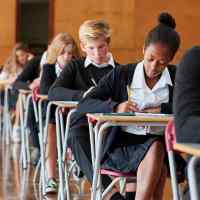
Have we let exams become too important in shaping schools?

I was working in my study at Brighton College one summer term afternoon when my PA banged on the door: someone at The Spectator wanted to speak to me urgently. An animated editor burst on the line, audibly back from a very good lunch, barking: ‘What’s all this you’re saying about exams and tests squeezing scholarship and rounded learning out of schools?’ ‘Sitting exams in rows in sports halls has little bearing on what school pupils will ever do later in life,’ I spluttered, my fumbled response sufficient for him to commission an article ‘by tomorrow’.

School portraits: a snapshot of four notable schools | September 2021

Brampton manor academy This co-educational state school in Newham, east London, is setting the standard for the academies programme. With hundreds of high-achieving pupils, its selective sixth-form, which opened in 2012, has attracted attention for its stand-out Oxbridge achievements. This summer, 55 pupils secured Oxbridge places, beating Eton for the first time. The sixth-form receives around 3,000 applications for about 300 places per year, while some two out of three pupils are eligible for free school meals. One pupil puts its high achievement rates down to discipline, highlighting the rules around punctuality (there’s detention if you’re late) and a strict uniform code.

The golden age of the grammar schools

Some lucky parents have already solved their school and university problems. They have managed to insert their young into state grammar schools. If all goes according to plan, they will need to pay no gigantic fees, their sons and daughters will be educated to what at least looks like a high standard, in orderly classrooms — and an increasingly anti-middle-class Oxbridge will not be prejudiced against them when they apply. I envy them, having myself spent the GDP of a small Latin American country on private education over the past three decades, with variable results. But I also increasingly wish it were not so.

The joy of hedgerow foraging

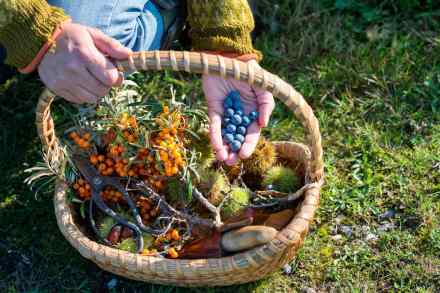
Hedgerows are one of those things that most of us simply take for granted. Drive, walk, cycle or ride through the English countryside and you’re likely to see fields bounded by hedges, which change with the seasons. Blossoming in the spring, full of colour and berries in the autumn, and sprouting wildly thorugh the summer months. They are certainly having their moment in the sun. In the 1980s, farmers were encouraged under the EU’s Common Agricultural Policy to grub them up (dig them up, in laymen’s speak) in a bid to create larger fields, and grow more food. 23 per cent of the nation’s hedgerows were lost in that decade.

The best autumn festivals to book ahead for

There is no denying that we’ve been starved of our usual festival fix this summer. Although many have managed to go ahead, we’ve missed out on some usual favourites, such as Glastonbury, Boomtown, WOMAD, Cropredy and more. It seems fitting, therefore, to look ahead to this autumn, when many festivals that have previously looked unlikely have been rescheduled to, or when other festivals will manage to go ahead without many of the restrictive social distancing rules that we’ve become so used to. There will be slight changes to many festivals this year – many event organisers have limited ticket numbers and ensured that small tents are spaced further apart, for example, but otherwise we’re in for as close to normal an experience as possible.

Something borrowed: the rise of the pool renter

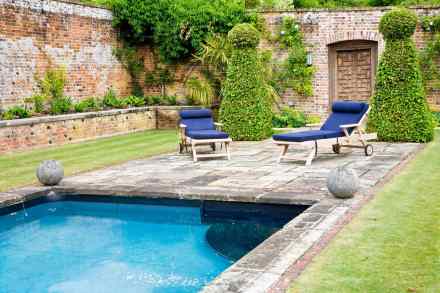
Here’s a question for you: if you were lucky enough to own a swimming pool or a tennis court – or indeed both – would you want to rent it out per hour to the hoi polloi, the great unwashed, the General Public? Although I am not in the happy position of being able to answer this question personally, I would have thought the answer would be a hard no. No to other people’s verucas, no to other people’s splashing and cavorting in earshot, and absolutely no to other people’s children bombing into your pool all day long. I concede that tennis might be a different matter. A quick set or two, the odd grunt and then time’s up.

Halsey and the cultural appropriation of Catholicism

I can’t say I have a terribly favourable view of the modern music industry. But when I heard that pop artist Halsey’s latest album If I Can’t Have Love, I want Power had an album cover inspired by Jean Fouquet’s Virgin And Child Surrounded By Angels, taken from the right wing of the Melun Diptych, I wondered if I’d find a sequin on the threadbare fabric of popular taste. Alas, I shouldn’t have got my hopes up. The American singer’s album was released last week and the cover depicts her and a baby in a pose resembling Fouquet’s Virgin and Child, bare boob and all.

Jamón Croquetas: an oozing Spanish entrée

Being deeply unchic and uncosmopolitan, for a long time I assumed that croquetas were the same as the croquettes of my childhood: potato-based, probably a bit bland, and almost certainly coming from a bag that lives in the freezer. We’d often have them served with roast ham and cider sauce and green beans, as part of a main meal. To be fair to me and my culinary shortsightedness, the two bear strong similarities: both are breadcrumbed and fried or baked, soft within, and similarly shaped and sized. But, to my mind, croquetas are several levels above the French/English potato variant. Of course, Spanish croquetas don’t contain potato at all. The filling is made from a thick, thick bechamel sauce: a flour and butter roux cooked with milk to form a sauce.

When will James Bond drive an SUV?

I once read that after watching a James Bond film men speed in their Honda Civics: they might do 35 mph in a built-up area. If this is so, it is due to the Aston Martin Bond has driven since 1964 (the DB5 in Goldfinger, a man with 'a cold finger'). The DB5 has appeared in six Bond films so far; and some kind of Aston Martin has appeared in twelve Bond films. Is it, I wonder, contemplating Bond’s internal wasteland of sex addiction, murder and laundry, the only real home he ever had? Is it his wife? When the DB5 was revealed in Skyfall, waiting calmly in a garage, it seemed it was. The face of Bond – he is named after an ornithologist - may change.