Spectator Life

Spectator Life

An intelligent mix of culture, style, travel, food and property, as well as where to go and what to see.

An only child is a lonely child

Lonely children often grow up to be lonely, not to mention anxious and depressed. In one study, after factoring in profession, parenting style and relationship, sleep patterns, and dietary habits, only children were more likely to display symptoms associated with anxiety and depression than those with siblings. One, it seems, really is the loneliest number. Friendships come and go, and chances are our parents will leave this earth long before we do but, through it all, siblings are there by our sides The western world is already consumed by a loneliness epidemic. Our falling birth rate and the rise in single-child households likely makes this worse.

Confessions of a fortysomething brace face

When I was a teenager, my grandmother would pick me up from school every week and drive me to the orthodontist, the aptly-named Mrs Crabbe, so she could stick more pieces of metal in my mouth, tighten something up, or twist some new jazzily-coloured elastic bands onto the brackets glued onto my teeth in a vain attempt to distract onlookers from the horror that was my metal-adorned smile.  Don’t expect me to be able to talk properly, and be prepared to be spat at A buck-toothed child, with overly large teeth for my mouth, I had years of orthodontic work, from the age of about 12 until I was 16 or 17, at which point the braces came off and suddenly I was able to smile with my mouth open – a total revelation.

Americans are wrong about British teeth

There is no clearer demonstration of the difference between America and Britain than their attitudes towards teeth. In America, you fix them. Doesn’t matter if they’re nearly straight. You subject yourself to years of semi-torture to achieve the American dream – a white picket fence of perfectly uniform teeth. Most perfect teeth are artificial – some so artificial that they’ve entirely replaced the real ones When I was about 11, I was taken to the orthodontist to straighten out my slightly overlapping front teeth. I dreaded those appointments. Our orthodontist was a tall, overly friendly man with large hairy fingers which he would shove into my tiny mouth without gloves. Surely that broke protocol even back then.

I ❤️ the NHS

There is much to bemoan about the NHS, from the cruel entitlement of its junior doctors to its zest for hiring diversity and inclusion staff when many people can’t even see a GP. I have been a harsh and consistent critic for years. I don’t like the cultish, Big Brother vibes, the gawping black hole for funds that seem mismanaged, and I don’t like the socialism.  I had a caesarian section less than a fortnight ago. I’d have one again just for fun I still don’t like those things, but I have now seen the charm of the rackety NHS. Having a baby, I discovered the it’s generosity. I had a caesarian section less than a fortnight ago at UCLH in central London. I’d have one again just for fun.

Give me back my codeine

It’s a long time since I took a powerful drug that wasn’t dispensed by a pharmacist. Last winter, during what has become the annual post-Christmas Covid collapse, I searched in vain for the codeine cough linctus I’d been prescribed when the virus first struck four years ago.  Why must we suffer because a few scrotes misuse it? ‘Keep it on the bedside table,’ said my GP at the time, ‘and when you wake up coughing in the night, take a swig and you’ll be able to go back to sleep.’ She was right: it provided blissful relief and precious, life-enhancing sleep. But when I asked my current GP (we’ve since moved out of London), she gazed into the middle distance and made gnomic pronouncements of the ilk, ‘We don’t really do that any more’.

Avoid microplastics? Don’t bother

They’re everywhere, it seems: in the oceans, the fish, the soil, our drinking water, our vegetables, our grains and cereals, our meat – even in us. Microplastics and smaller nanoplastics are tiny particles of plastic flubbage measuring half a centimetre or less that result from the degradation of plastic refuse, and according to recent news coverage the world is simply crawling with the stuff. Anxiety might turn out to be the biggest health problem caused by microplastics It’s getting everyone in a tizzy. On the one hand you can’t possibly avoid it, since it’s already more or less everywhere. But you must do something, the reports insist, or risk a plethora of terrifying health consequences: cancer, hormonal imbalance, diabetes, reproductive problems, and more.

Can’t sleep? Try a boring audiobook

I’m sleeping with the actor Richard E. Grant at the minute and can highly recommend the experience. He’s reading Agatha Christie’s The Murder at the Vicarage to me and has the perfect voice for it, faintly lascivious but not disturbingly so. As for the content, it’s just what’s wanted – engaging but not too stimulating. Like so many of us, I’m nodding off to the sound of an audiobook. Crime novels work well, as long as they are not overly gruesome or suspenseful I was already enamoured of Richard E. Grant who’d, on other late nights, read me Iris Murdoch’s The Sea, The Sea. The plot unfolds at a gentle pace and nothing unduly dramatic or loud happens – there are no car chases or football chants.

The dangers of skinny dipping

Several years ago, I went for a swim after I’d been for a job interview. I’d just finished my lengths, had my shower, and as I wrestled my knickers back on, a voice from behind me said ‘It’s Ettie, isn’t it?’ Quite how she recognised my bare bottom I don’t know, but the woman who’d interviewed me earlier in the day was certainly keen to continue our conversation, up close, personal and starkers. And for those of you who’ve never tried, I can assure you that trying to juggle one’s bosom into a bra in a flustered hurry when one is still slightly damp to protect what shreds of self-respect remain is inelegant at best.

Enough with the King’s prostate

How very nice that the King is now out of hospital, back home and, will, we are told, soon be back in business with his red boxes. Is it too much to hope that we can be spared further updates on his condition?  ‘All Hail the King’s Prostate Honesty’. Oh yuck. Can we stop? We have, I think, heard enough about his enlarged prostate. Charles has been praised for being so open about his diagnosis in the hope that it will encourage other men to investigate this important organ. NHS England declared that the ‘enlarged prostate’ page on its website was read every five seconds on the day of the King’s diagnosis, which is terrifically gratifying. The Telegraph was terrifically upbeat about Charles ensuring that men ‘do not die of embarrassment’.

What the French get right about healthcare

Senior management was recently walking down the street and took a funny turn. With her habitual stoicism she ignored the swelling in her foot for two weeks until I finally persuaded her to go to the urgences (emergency room) at the local Polyclinique Pasteur, a mini-hospital in Pézenas, the town four miles from our village.  Nobody here seems to be waiting 84 hours in an emergency room, as one NHS patient recently did in Scotland There wasn’t much they could do about the annoying bone in her foot, that was shown to be broken after a wait-free visit to the on-site radiology suite. But the diagnosis was rapid. The advice on what to do and not to do is proving effective. As encounters with the medical milieu go, I’d give it five stars.

A beginner’s guide to getting a massage

 The agony could strike at any moment. Daggering pains in my lower back demanded correction. Not just painkillers, I needed a permanent cure. ‘Thai massage’ suggested the internet, so I hobbled across a tangle of east London streets and found a doorway beneath a pink neon sign. A receptionist of south Asian appearance, bundled in a white winter coat, nodded at me unsmilingly. ‘Massage?’ I asked. ‘Forty,’ she said tersely. I counted eight fivers out into her small pink hand. ‘A receipt?’ ‘No receipt,’ she said. ‘Room Two.’ She gestured behind her at a line of numbered doors. Room Two was a narrow, sweet-smelling nook with silvery wallpaper, piped Burmese music and a tiny shower cubicle.

Sobriety isn’t worth it

Absolutely nobody feels better at the end of Dry January. Mornings are still a struggle, you’re as tired as ever, and if anything the neurotic voice in your head is even louder. Yes, you may have gone to the gym every Sunday, but how has your life improved? It hasn’t. My own Dry January was forced on me by antibiotics. Though the NHS guidelines said the pills are alcohol compatible, my doctor (who has a record of my alcohol intake) took the liberty of writing ‘NO alcohol’ followed by five exclamation marks. This has allowed me to experience sobriety firsthand.

Why can’t I simply book a swim?

It shames me to admit this, but I haven’t been near a public swimming pool for many a year. Hotel pools, yes; the sea – occasionally, in parts of the world with predictable warmth. But I have resisted the new wave of ‘wild’ swimming and was never a regular – to be honest even an irregular – at the Hampstead Ladies’ Pond. Nor have I frequented health clubs or spas, though I did go to enquire about one that had opened nearby; then came the pandemic.    As a one-time regular pool user, I am taking another look. This is because I have just completed my four-session NHS allocation of hydrotherapy (for a broken ankle).

Social media is worse than smoking for teenagers

Would you knowingly give your daughter a birthday present that was going to increase her chances of self-harming, developing anxiety and even depression? I assume the answer would be no, yet this is what so many parents do to their children when they give them a smartphone with access to social media. You could not design anything more pernicious for socially insecure teenagers As a mother of two daughters who are now teenagers, I know the pressure to do so feels enormous. Children see us adults glued to our phones, their peers have them, and their friends socialise on them. The temptation to give in can be, like the temptation to check WhatsApp, overwhelming. Helpfully, some new research has come out which should help parents make the right decision.

Did my wife, 56, really need an emergency pregnancy test?

A team of nurses was trying to ascertain whether my wife was pregnant. It didn’t seem very likely. She’ll be 57 in a couple of months, went through the menopause over a decade ago and has been on HRT for several years. And she hasn’t had IVF. Insofar as one can be certain about such matters, I believe I have been her only sexual partner for two decades – and I’ve had a vasectomy. Furthermore, were she to be pregnant and go on to give birth she would leap straight into the global top 100 oldest mothers of all time list. So, no, it didn’t seem likely.   A team of three assembled to put screens around her so that she could urinate on her trolley.

TikTok is giving our children Tourette’s

Shortly after the first Covid lockdown ended, doctors began to notice something so strange that at first they struggled to explain it. There appeared to be a sudden rise in the number of children being referred with Tourette’s syndrome. Tourette’s is a rare neurodevelopmental disorder characterised by repetitive, involuntary movements or sounds called ‘tics’. While mild tics are relatively common in children, specialists suddenly started seeing large numbers of children displaying complex and debilitating symptoms. Dr Alasdair Parker, president of the British Paediatric Neurology Association, said in 2021: ‘The most severe tics disorders I have seen over the past 20 years have all presented in the last five months to my practice.

Should you stop taking melatonin?

Do you take it? If not, the chances are you’ll know someone who does. In an age of insomnia, melatonin has become a must-have sleep aid; as ubiquitous as yoga or herbal tea. In America, it is available over the counter and, according to The National Sleep Foundation charity, 27 per cent of adults take it. The use of melatonin has more than quintupled between 1999 and 2018. In the UK, where it is prescription only, melatonin use rose by nearly 900 per cent between 2008 and 2019, and many more of us – exact numbers are unknown – buy it unlicenced online. ‘People say it’s safe because it’s natural. Well, Vitamin A is natural.

Testosterone transformed my life. Why won’t GPs prescribe it?

Last summer, I became a participant in a covert drugs deal. I have never considered doing anything illegal, but I was desperate. This is how it happened. I was on a weekend away with friends, some of whom were women in their forties and fifties. I discovered that one friend, who lives an ex-pat life in a Middle Eastern country with fantastic private healthcare, had recently been given testosterone gel as part of her HRT medication. She had noticed a sharp and very welcome improvement. She reported feeling more alert, less forgetful, more able to get up off the sofa and be active and less likely to anxiously sweat the small stuff. I was fascinated. I had been on HRT (oestrogen and progesterone) for about six months, but I still felt terrible. Pre--menopause, I was full of energy.

Why summer diets don’t work

Tis the season to eat salads and wear skimpy clothes. At least, that’s what we’re led to believe, egged on by adverts featuring bikini-clad models, barely-there fashion in shops, television series such as Love Island that equate sunshine with slender figures and the perennial expectation that we should by now be ‘beach body ready’. We’re undoubtedly more sociable in summer. A study last year found that we’re twice as likely to make excuses to avoid a social event in the winter Yet quite aside from the idiocy of only being ‘allowed’ to enjoy the warm weather when we’re deemed aesthetically agreeable enough by unidentified authorities, summer isn’t ever when we are at our slimmest, is it?

What my father’s Alzheimer’s taught me

When I tell friends, ‘You never hear people talking about the upside of Alzheimer’s’, they look at me like I’ve said something about Hitler being nice to animals. In general, a mention of dementia will ruin any conversation. People freeze up at the thought. It’s true that having a relative with dementia is hard and the bad far outweighs the good, but that is no reason to ignore the positives completely. In fact, the tiny benefits can help you deal with all the downsides.  I’ve had a lot of time to look for the positives. Growing up, my grandparents had Alzheimer’s so I was aware of the condition, but I hadn’t thought that it could happen to my parents.

Confessions of a tanorexic

In an interesting piece for Air Mail, Linda Wells writes of ‘The secret lives of tanorexics’, asking: ‘What drives these bronze obsessives – and why won’t they ever learn?’ She questions her sun-baked friends about why they are so intent on doing a thing which they are warned will ruin their complexions and make it more likely that they get cancer – and doesn’t get a satisfactory answer from any of them. Reading it, I realised that I too am a tanorexic. It kind of creeps up on you over the years, like any other bad habit: one minute you’re having a harmless half-hour in a sun-trap pub garden in Hove and the next your hair’s falling out in Crete, as happened to me when I failed to wear a sun hat in July some years back.

Why I’m with Boris Johnson on Ozempic

Seeing Boris Johnson’s byline in the Daily Mail, I felt a flare of the affection which made me break free from my blue-collar tribalism and vote Tory for the first time in 2019. I remember thinking that the experience was rather like losing one’s virginity; worrying about it for months, then secretly planning it, then taking the plunge and thinking the morning after – ‘Gosh, that was nothing to be scared of – I might even do it again!’ I’ve been quite the reprobate myself during my long, louche life, and I’ve certainly lied and adulterated, so of course I can’t condemn anything that I’ve done too, as that would make me a filthy hypocrite. What I can’t forgive in a politician is sanctimoniousness – and he had none.

Help! I’ve become a marathon bore

Over dinner with a friend last week, halfway through a bottle of Merlot, I noticed her eyes starting to glaze over as I spoke. Normally, I’d be offended – but it’s something I’ve experienced a lot lately, and I’ve only got myself to blame.  I was in the middle of telling her a story about my latest running route, which is a slightly different version of a run I’ve been doing for years – down the country lanes near my house, but rather than cutting through the footpath in front of the fields, now I take a sharp left and go round the farm, doubling back behind the houses and adding at least six miles… sorry, were you starting to nod off?  It’s official: I have become a marathon bore.

How to make the most of the third trimester of pregnancy

The final trimester of pregnancy is a strange time. You’ll be told to rest, as if you can somehow bank sleep. The reality is likely to be a dash to buy everything you need, as well as don’t need (a hi-tech ‘nappy bag’ for instance). Once the baby arrives, even trying to get out of the house becomes a mission. With that in mind, here are some helpful ways to focus mind and body during the final few weeks, if you’d rather not spend too much time obsessing over the correct shade for the nursery.  Complete your baby courses The National Childbirth Trust runs the most well-known antenatal courses, but many others are available too. Bump and Baby Club is supposedly a little more relaxed in its attitude towards childbirth.

Our flawed body politics

‘New year, new you’, or so they say. And as sure as eggs is eggs (particularly for the high protein advocates), new year’s resolutions for many will have revolved around the quest for a new body. I use the word ‘body’ specifically because our prevailing culture keeps finding new and alarming ways to reduce us all, but women in the most dehumanising terms, into mere bodies; bodies that can be chopped, changed, rearranged increasingly even to accommodate the outward trappings of the opposite sex. This manifests itself most completely of course in porn, as it always has, where the cold-eyed camera sees everything of the body and nothing of the person inhabiting it.

The dark side of laughing gas

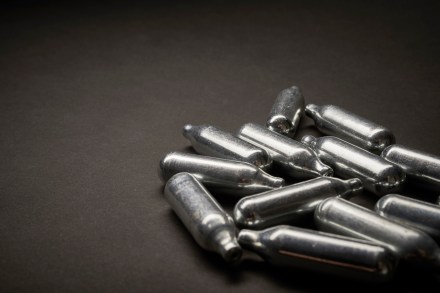
In his memoir Spare, Prince Harry has revealed he ‘enhanced his calm’ during the birth of his son Archie in 2019 by taking ‘several slow, penetrating hits’ of the canister of laughing gas in his wife Meghan’s hospital room. He described how when a nurse returned and tried to give Meghan a dose for pain relief, there was none left: ‘I could see the thought slowly dawning. Gracious, the husband’s had it all. “Sorry,” I said meekly.’ He is far from alone in enjoying the high that comes from laughing gas. Also known as nitrous oxide, it has become the second most popular drug (behind cannabis) among 16- to 24-year-olds, according to data from the Office for National Statistics. An astonishing 3.

The environmental cost of vaping

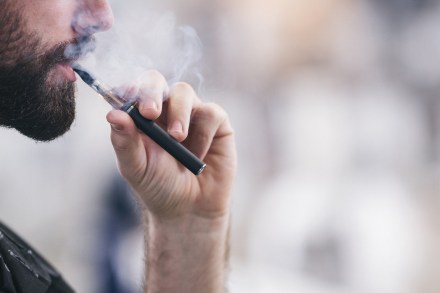
A few months ago I wrote a piece for The Spectator about the surge in popularity of Elf Bars and the potential health risks of these colourful e-cigarettes. But disposable vapes are now posing a different kind of problem – for the planet.  These single-use devices, which last for around 600 puffs, head straight to landfill after users suck out their smoke. The vapes which don’t make it to the dump can be found lining the gutters of our cities, having been cast aside. In Britain an estimated 4.3 million people use vapes today, up from around 800,000 a decade ago, according to YouGov data.

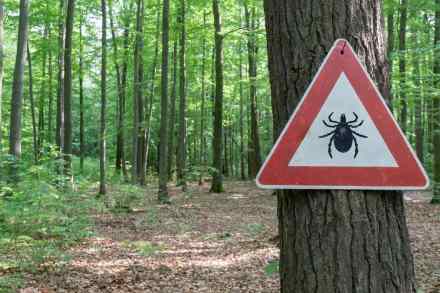
The mystery of chronic Lyme disease

I struggled to pull myself out of bed in the morning. I slept for hours at lunch breaks and was having a hard time focusing. I was working six days a week as an editor at one of the world’s largest newspapers. I needed to concentrate. It was my first year there on a fixed-term contract. I didn’t have the security of knowing I would be hired afterwards; I had limited scope to make mistakes. Articles that required extensive fact-checking, style correction and careful proofreading felt like an insurmountable obstacle. What was wrong with me? I booked a doctor’s appointment to check my vitamin levels. I’m anaemic, so thought that could have been the cause.

The art of learning to breathe properly

I thought I knew how to breathe properly. My years of studying dance at various institutions have all involved tuition on breathing and its relationship with movement and posture. So I was sceptical when I joined my step-sister Octavia’s online breathwork classes – what more was there to learn? My first class was in lockdown, at a time when many of us felt in a continual state of anxiety. We were guided through various techniques that manipulated the rate and depth of our breathing. It was dynamic and intense, much harder than I imagined. But nothing much happened at first. I started to think that maybe this wasn’t for me.