Spectator Life

Spectator Life

An intelligent mix of culture, style, travel, food and property, as well as where to go and what to see.

The dangerous rise of Elf Bars

Have you seen the colourful sticks with blue lights hanging out the mouths’ of most teens and many adults? Elf Bars are the colourful and sweet disposable vapes causing a wave of dependence across all age groups.    While the government is looking to rid the nation of tobacco smokers, electronically delivered nicotine is becoming a new frontier.   People who have not smoked before are getting addicted to Elf Bars. And ex-smokers are turning back to cigarettes to wean themselves off the potent pens.  Costing between £4 and £12 depending where you buy them — they are cheap. Watermelon, Grape, Cola and Cotton Candy are a few of the 28 flavours on offer, and each user knows the flavours they love and the flavours they hate.

Spectator Out Loud: Robert Hardman, Meirion Thomas and Sarah Ditum

23 min listen

On this week's episode, Robert Hardman reads his cover article on the quiet radicalism of Queen Elizabeth II (00:50); J. Meirion Thomas reads his article on the 'total triage' system that is leaving patients unable to see their GPs; and Sarah Ditum reads her review of Sandra Newman's new novel, The Men.Presented by Angus Colwell.Produced by Angus Colwell and Cindy Yu.

Why vinegar could be the key to losing weight

We all know about the perils of sugar. 90 per cent of us suffer from glucose (blood sugar) spikes every day. You may have even contended with the symptoms without recognising the cause: fatigue, cravings, mood swings, poor energy, bad sleep, acne and, crucially, weight gain. But what if you could mitigate the effects of glucose without forgoing sugar and carbohydrates completely? Starchy and sugary foods turn to glucose as we digest them. The resulting glucose then enters our blood stream. If too much glucose arrives too quickly in the bloodstream it causes a glucose spike. These spikes bring with them consequences: inflammation, premature ageing and fat storage. Many diets suggest cutting out sugar and carbohydrates completely.

The truth about the anxiety epidemic

Knots in the stomach? An overwhelming sense of despair? Nervous, restless and tense? That'll be the anxiety talking and for good reason. What with the financial crash, austerity, Brexit partisanship, climate change catastrophising, social media derangement, pandemic pandemonium and now the possibility of a third world war, I'd be concerned if we weren’t all feeling a tad anxious. Indeed NHS leaders are now urging ministers to tackle what they are calling a 'second pandemic' of depression, anxiety, psychosis and eating disorders, brought about by recent events. Indeed, one study published in the British Journal of Psychiatry found that diagnoses of anxiety had tripled in young adults since 2008. It's right that we take mental illness seriously.

Lessons from the pandemic: collaboration in healthcare

27 min listen

Over the past months, under the weight of a global pandemic, scientists and medical professionals have had to rethink the way they do things. We found not one - but numerous - vaccines within the space of a year; new treatments have been discovered, some repurposed from existing drugs; and manufacturers and politicians alike have had to think creatively to plug the gaps of the pandemic. There must be lessons we can learn from this experience - things that big pharma and scientists can do better in the future, having this time round done so in emergency circumstances. That’s the topic of this special episode of The Spectator’s podcast, sponsored by the pharmaceutical company Novartis. I’m delighted to be joined by a panel of expert guests.

The science behind why diets don’t work

For decades we have been told that it’s all our fault; that the reason many of us don’t manage to lose weight is a lack of willpower. But there’s a bigger cause behind our failure to shift the pounds and it’s certainly not due to floundering commitment. It’s down to a part of the brain called the hypothalamus. In fact, there are several well-researched biological pathways that protect our body from weight loss and ensure our weight rebounds each and every time we attempt to slim down. Research shows that in order to lose weight and make it stick, you must eat well and exercise for a month – then have a month off.

Since when did running become so exclusive?

Many of us have reached the conclusion of late that the world has gone mad, so it will come as no surprise to learn that it's now possible to sign-up for a run with an entry fee that's proudly claimed to be 'the second highest in the world'. To those who have long regarded running as a) something that you would pay not to do or b) an activity that's appealing because it's one of the few things left in life that's free, entering the four-day 'Highland Kings Ultra' might seem like an odd way to blow £15,499. But, according to organiser Primal Adventures, 'a significant number' of the 40 slots for the April 2022 event are already filled.

The myth of the middle-aged spread

I plead guilty as charged m’lud. For the last four decades I have been telling patients who have been losing the battle with waistline spread that it’s their body's metabolism causing all the problems. This was conventionally believed to start to steadily slow year on year from the mid-30s onwards, meaning it became trickier to shift those stubborn pounds as time went by. It was also assumed that hormonal changes such as occur in pregnancy or the menopause further impacted on how quickly we burnt off calories, all adding to the struggle to keep weight off. Well, it now seems that, along with the rest of my medical colleagues, I was probably doing those patients a disservice.

The strange obsession with having the right ‘kit’

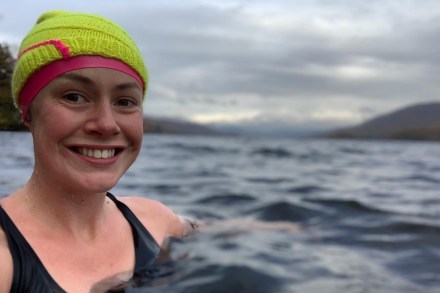
Have you got what it takes to go 'wild swimming'? No, not so much the hardiness or the love of sinking your feet into the boggy bottom of a lake or feeling something brush against your ankle that could be a fish, a plant or something more sinister. Have you got the right kit? Outdoor swimming - or open-water swimming, wild swimming, 'in-my-day-we-just-called-it-swimming', whatever you want to call it - is enjoying a swell in popularity, and alongside what is supposed to be a simple pursuit is a growing obsession with having the latest equipment. It's not just wetsuits - which a lot of purists eschew on the grounds that you don't get the same sensation of being in the wild water when insulated by neoprene - the kit list goes far beyond that.

The dos and don’ts of staying cool

Britain isn't a country geared up to deal with extreme heat. We lack cool spaces to retreat to; our homes and gardens are often better suited to rainy winters than the hot, balmy summers we associate with the med. But with an extreme heat weather warning issued by the Met Office and with large parts of England and Wales being affected in the coming days, it's wise to take precautions. People vulnerable to extreme heat are likely to experience 'adverse health effects', while the rest of the population could suffer heat exhaustion and other heat-related illnesses that are not usually visited on these shores.

What comes after 19 July?

16 min listen

Life might feel normal when nightclubs reopen and masks are tossed aside, but worries about unemployment and inflation will persist. What will happen to the economy after 19 July? James Forsyth speaks to Fraser Nelson and economist David Miles about what to expect.

What’s happening in Batley and Spen?

17 min listen

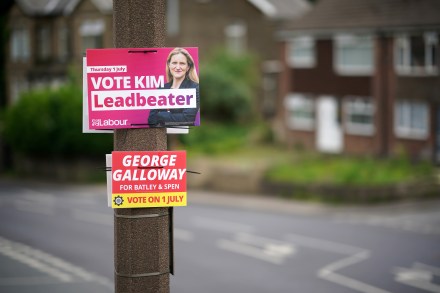
A bizarre flourish of tactics are on display in the run up to the Batley and Spen by-election. And are we already feeling the new Health Secretary's influence? To discuss, Fraser Nelson is joined by James Forsyth and Katy Balls.

Hancock out, Javid in

14 min listen

Matt Hancock has resigned as health secretary this evening following this week's scandal and his appointment has already been appointed, former chancellor Sajid Javid. Katy Balls is joined by Isabel Harman and Fraser Nelson to discuss this breaking news.

Is Hancock’s position under threat?

14 min listen

The Sun broke the news this morning that Health Secretary Matt Hancock has seemingly been up to some extra-marital exploits with his aide Gina Coladangelo, possibly breaking many of the Covid restrictions that he himself put in place. What will be the consequences of his hypocrisy? 'This simply demonstrates that we've been through a period where they decided to politicise things that should have never been in the political realm in the first place and that's why I think Matt Hancock is in more trouble than he would otherwise have been.' - Fraser Nelson Cindy Yu is joined by James Forsyth, Isabel Hardman and another special appearance from Fraser Nelson.

What’s the plan for planning reform?

13 min listen

With the Conservatives still taking stock after their loss in the recent by-election, it seems the governments ambitions for planning reform are now firmly under the microscope. 'When you speak to these MPs... they are absolutely convinced that planning reform is dead' - Katy Balls And on what would have been 'freedom day', there are reports that the powers at be don't think they'll have to extend restrictions again (we've heard that one before). 'If they don't hit July 19th they would have major political and I would suggest economic problems too because I think that would create a real loss of confidence about when the UK would ever re-open fully.' -  James ForsythIsabel Hardman is joined by James Forsyth and Katy Balls.

The new leviathan: the big state is back

48 min listen

It seems we are in a new President/Prime Minister alliance of big government spending, should we be excited or concerned? (00:44) Also on the podcast: Are the UK tabloids going woke? (15:00)? And in the wake of the pandemic are we ready to have a grown up conversation about death?(31:11)With Spectator Political Editor James Forsyth, Spectator Economics Editor Kate Andrews, former Editor of the Sun Kelvin MacKenzie, former Editor of the Observer Roger Alton, writer A.N. Wilson, science journalist Laura Spinney and Palliative Care Physician Kathryn Mannix and author of a With The End In Mind. Presented by William Moore.Produced by Cindy Yu, Natasha Feroze and Sam Russell.

How long will political and public patience last?

11 min listen

It seems Freedom Day is no longer June 21st. The writing was clearly on the wall this morning, but now the Prime Minister has officially told the public, it is likely to be another four weeks of restrictions. 'Conservative MPs are getting really agitated by this moving of the goal posts' - Isabel HardmanBut after so many backtracks how much credibility does Boris have left?  'I think the real problem with him and the public though, will come if this July 19th date is not met' - James Forsyth Katy Balls is joined by James Forsyth and Isabel Hardman to discuss.

The third wave: it’s here – but it shouldn’t delay our reopening

39 min listen

Experts are saying we are now officially in a third wave but how concerned should we be? (00:56) Also on the podcast: What will the mood be like when Boris meets Biden (14:33)? And are UFOs no longer a laughing matter?(23:00) With Scientist Simon Clarke, mathematician Philip Thomas, spokesperson for Republicans Overseas UK Sarah Elliot, Spectator World editor Freddy Gray, astrophysicist Tim O'Brian & author Lawrence Osborne Presented by Lara Prendergast. Produced by Cindy Yu, Max Jeffery and Sam Russell.

Richard Dobbs, Tanya Gold and Rory Sutherland

17 min listen

In this episode, Richard Dobbs reads his piece on why he's considering giving up his second vaccine for people more in need (00:55); Tanya Gold reports from her Kent road trip in a Ferrari (07:50); and Rory Sutherland on the unexpected joys of lockdown and why we may miss it when it's gone.

Is there a link between Asperger’s and genius?

The world's richest man – who, beyond Tesla and Space X, is known for naming his first child X AEA-12 – generated more headlines this week, when he announced on the American television show Saturday Night Live that he has Asperger syndrome. ‘I know I sometimes say or post strange things, but that’s just how my brain works,' he explained. Asperger syndrome, first described in 1944 by the Austrian paediatrician Hans Asperger, is a lifelong condition that is part of the autistic spectrum. As a child, Hans Asperger appears to have exhibited some features of the very condition named after him, such as remoteness and talent in language.

The problem with Hugh Fearnley-Whittingstall’s war on obesity

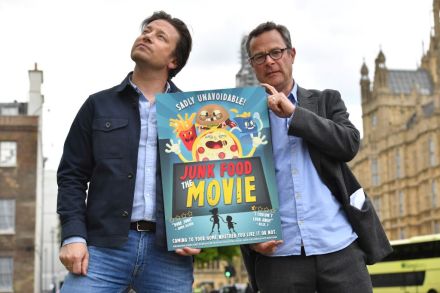
With his little round spectacles and earnest expression, Hugh Fearnley-Whittingstall is the Penfold to Jamie Oliver’s Dangermouse. Both men have been largely forced out of the restaurant business due to public indifference and now spend their time writing endless cook books and lobbying the government for tougher laws on food that is deemed high in salt, sugar and fat. This is a dangerous game for chefs to play since they use a great deal of salt, sugar and fat at work, but Oliver’s been getting away with it for the last twenty years and neither he nor Fearnley-Whittingstall do much cheffing these days in any case.

Is the Oxford AstraZeneca vaccine safe? A doctor’s view

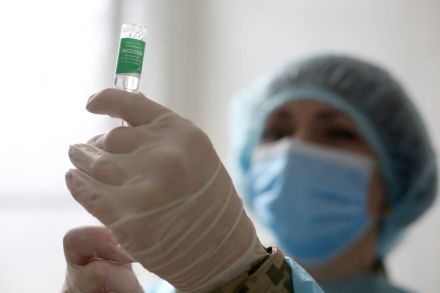
One of the few positives to have come out of the Covid-19 pandemic has been the remarkable speed at which vaccines have been developed and rolled out in months, rather than the many years that was the previous norm. Their effectiveness is being increasingly proved as more people are vaccinated, and they appear to be extremely well tolerated in terms of side effects.  In the UK at least, vaccine hesitancy does not appear to be as great a problem as was initially feared and no new potential side effects have been reported that were not already known about from the vaccine trial data.

What Gwyneth Paltrow gets wrong about long Covid

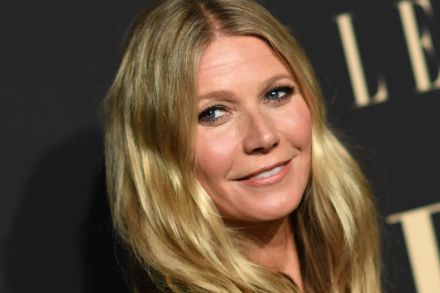
As the Covid vaccination continues to roll out across the country with impressive speed and daily numbers of cases continue to steadily fall, the allure of the gradual release of lockdown restrictions into the sunlit uplands of something resembling a more normal existence grows stronger by the day. Unfortunately for many people – latest estimates suggest up to 200,000 in the UK – the long term effects of having been infected with the virus continue.

How to channel your inner karate kid

'I don’t wear a headband. If you want to, you can!' says karate World Champion Jordan Thomas. 'Don’t disillusion me, Jordan!' I bark, perhaps a little aggressively. I’ve watched three seasons of Cobra Kai in a week and I am all about a karate headband / floppy fringe combo. Kick-ass comedy drama Cobra Kai is a spin-off of ’80s classic The Karate Kid. Resurrecting the original actors, it follows underdog Daniel LaRusso (now 'chopping prices' and 'kicking the competition' as the owner of a successful car dealership) and his high school nemesis, sneering country club bully Johnny Lawrence (now knocking back beer for breakfast).

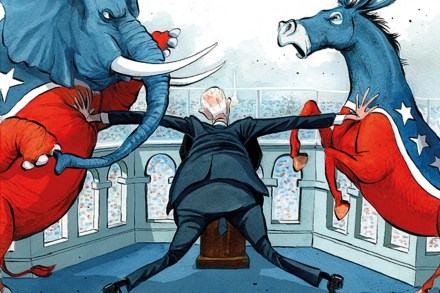
Biden time: can he stop America’s ‘uncivil war’?

35 min listen

Can Joe Biden unite America? (01:05) Why is the UK's vaccine rollout its most important economic policy? (12:10) And how can re-enactments bring history to life? (22:15)With The Spectator's economics correspondent Kate Andrews; US editor Freddy Gray; political editor James Forsyth; Capital Economics chairman Roger Bootle; re-enactor Chris Brown and historical consultant Justin Pollard.Presented by Lara Prendergast.Produced by Max Jeffery, Alexa Rendell, Sam Russell and Matt Taylor.

What have we learnt from this pandemic?

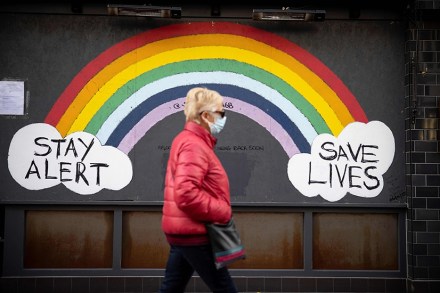
So great have been the government’s failures over Covid that it would be easy to forget to give credit where it is due. The fact that Britain was the first country to begin a public vaccination programme — and this week became the first to have two vaccines in use — did not come about by chance. It happened because the government had the foresight to pre-order large quantities of promising vaccines and because Britain’s medicines regulator, the MHRA, worked fast and effectively to assess the data from the trials of those vaccines. The vaccines from Pfizer and AstraZeneca underline the lifesaving role played by an often-maligned pharmaceutical industry. But Britain’s head start will count for little if the momentum cannot be sustained.

My cure for the common cold

You really don’t want to know about my coughs and sneezes, particularly during the festive season, but bear with me because this it isn’t really about my sniffles. My argument applies to everyone, and it’s cheerful. All of us have a lifetime of experience of seasonal colds and flu, starting with the fact that they don’t always happen in winter. Mine is typical of many. Every year, often about this time, I get a fairly bad cold. Sometimes two in a year. I call it ‘flu’ and women call it ‘man flu’ but let’s not bandy names: it starts with a sudden sore throat and one or two uncomfortable nights. Within a few days this has passed and I feel better — but left with a hacking cough.

Covid-19: where to get tested

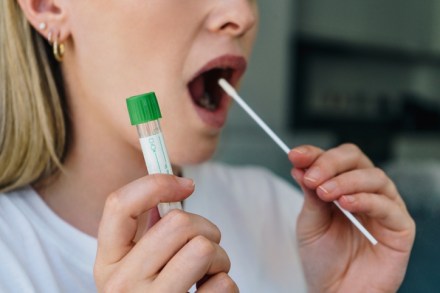
It remains the case that for most people free NHS tests are only available for those taking part in pilot schemes, who have been asked to have one by health professionals, or in people or families showing symptoms of the virus. This means that some people are now looking to private providers to get tested before seeing loved ones and although many such providers are offering tests for a fee now, how do you know which are high quality and which should be avoided? For a start, always look for a home test kit that is CE-marked as this shows it meets the European standards for medical testing and is also approved for sale in the UK – do not use any test without this approval mark.