Spectator Life

Spectator Life

An intelligent mix of culture, style, travel, food and property, as well as where to go and what to see.

Should we worry about Ozempic?

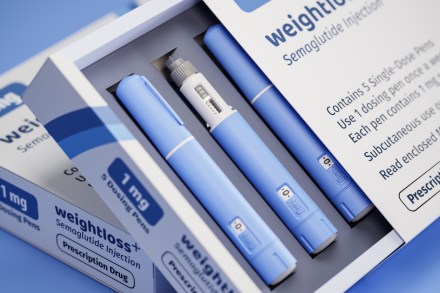
History has taught us to be shy of miracle drugs. But that hasn’t stopped weight-loss drugs being eagerly promoted by fans such as Boris Johnson, and even touted by Keir Starmer as a possible means of getting people back into the workforce. In the US, according to a survey by polling firm KFF earlier this year, one in eight adults has already taken a weight-loss drug. Grand claims have been made. Could RFK Jnr be right in suggesting that weight-loss drugs are causing more harm than they are worth? A trial of 17,600 overweight adults suffering from heart disease – sponsored by the manufacturer of Ozempic, Novo Nordisk – found that those who took it saw reduced deaths from all causes relative to a control group given a placebo.

I’m one of the new wave of stroke victims

The NHS has warned of a staggering 55 per cent rise in strokes among healthy middle-aged people in the last two decades. Sir Stephen Powis, medical director of the NHS, offered no explanation for what he calls an ‘alarming’ increase, beyond the standard advice to take more exercise, eat carefully, and avoid smoking and excessive alcohol consumption. The figures on which Sir Stephen bases his alert are truly startling: 12,533 people in their 50s suffered strokes in Britain last year, up from just 8,033 in 2005, while 19,421 people in their 60s were stricken – compared to just 13,650 in 2005. I have a personal interest in these statistics.

Why girls love fags

I can’t remember exactly when I had my first cigarette, but I remember roughly how I started. I was probably 13. I picked up one of my mum’s packets of ten Silk Cut, which was about half full. I slipped one out, put it in my pocket, saving it for later. My friends and I walked through the streets of Crouch End until we found a corner that was quiet and away from the prying eyes of our parents. At funerals, everyone wants to smoke. People who gave up 20 years before and go jogging five times a week suddenly have a craving We got our matches out, lit it, and passed it round. When the smoke first hit the back of my throat, I retched a bit and coughed but carried on. I got a head rush, felt dizzy, and within a couple of minutes it was gone. No, it wasn’t good for us.

Why blokes love coke

If cocaine were a perfume, it would be Chanel No.5: a timeless classic impervious to the flux of fashion and taste. It straddles all socio-economic divides, provided you can afford it. When I lived in Spain, cocaine was the recreational drug of choice because it was more widely available than other narcotics, and its grade was relatively pure. Cocaine is shipped from South America or Mexico directly to Iberia rather than transiting other points, where it is blended en route to its destination. Consequently, the reveller in Madrid vacuums up less talcum powder and household cleaning product than does his counterpart in London. Here in the Home Counties, there is unquestionably cocaine use – notably among Baby Boomers who can point to St.

My failed attempt to game GP appointments

Nearly 20 years may have passed, but a good number of people will still recall the exchange between a salt-of-the-earth member of the public, Diana Church, and the then-prime minister, Tony Blair. The year was 2005, the occasion a pre-election edition of BBC Question Time, and the issue at hand? Well, plus ça change – the hoops patients had to go through to see an actual GP. Mrs Church had asked the PM whether something could be done about a system that required her to book an appointment no more than 48 hours in advance. That’s right, no more than (not no less than) two days before.

Are you ready for the baby wars?

Such an awful lot of stuff is happening right now, even the keenest observer of social trends could be forgiven for missing a statistical milestone passed earlier this month. So here it is: at the beginning of October, it was revealed that, for the first time since the 1970s baby bust, deaths outnumbered births in the UK – meaning, in effect, that all of our population growth (about 680,000 for this year) came from immigration. The reason why is obvious. The boomers – i.e. people born during the great baby boom of 1945-1965 – are dying out, and they are not being properly replaced, thanks to a low total fertility rate (TFR, which equals ‘births per woman’). In England and Wales, TFR fell to just 1.49, far below the accepted replacement rate of 2.1.

Obesity will soon be history

I’ve just seen a graph which surprised me only slightly less than one might which showed that the majority of people in the UK thought that Keir Starmer could be trusted to tell the truth about what he had for breakfast. It shows that US rates of obesity have started to fall. The reason, according to the Financial Times, which published the graph, is that one in eight Americans is now taking semaglutides, drugs like Ozempic and Wegovy. I’ll state right here that I’ve got flesh in the game – though a good deal less than I did before I encountered the wonderful world of semaglutides. I wrote here in the summer of 2023: I’ve had an interesting relationship with my weight. In my teens, I was so thin that my mother would cry when I went home to visit.

Snus is gross. But it’s still better than vaping

Snus is a smokeless nicotine product that you insert between your gum and your upper lip. Your saliva soaks into the pouch which in turn releases nicotine, entering the bloodstream without a million tiny pesky tar particulates. In the UK, it is illegal to sell tobacco-based snus, though the non-tobacco variant, also known as nicotine pouches, is legal and widely accessible. The industry is worth something like £250 million and is growing rapidly. It’s a discreet way for smokers to opt for a safer hit of nicotine – so, inevitably, Labour is looking to ban it. I think part of the charm of snus is its subtlety. A vape can be garish and obnoxious Labour’s authoritarian approach to nicotine products is a confusing one.

The politics of the hospital ward

Before the op, I was going to write a jaunty piece about how getting yourself ready to go into hospital is like getting ready to go to a wedding. Both require new clothes – that is unless you feel confident that your jimjams – dressing gown, slippers and, for goodness’ sake, knickers – are all presentable. Now, back home after quite a major op for bowel cancer, I’m not feeling quite so jaunty. At a time when the NHS is described as broken and in need of reform, I know I’ve been lucky. I was diagnosed early, had a brilliant consultant surgeon whose communication skills were equal to his surgical skills, and a specialist nurse who was able to talk me through my many anxieties.

Farage’s plan, the ethics of euthanasia & Xi’s football failure

45 min listen

This week: Nigel’s next target. What’s Reform UK’s plan to take on Labour? Reform UK surpassed expectations at the general election to win 5 MPs. This includes James McMurdock, who Katy interviews for the magazine this week, who only decided to stand at the last moment. How much threat could Reform pose and why has Farage done so well? Katy joins the podcast to discuss, alongside Jovan Owusu-Nepaul, who fought Nigel Farage as the Labour candidate for Clacton (1:02). Next: who determines the morality of euthanasia? Matthew Hall recounts the experience of his aunt opting for the procedure in Canada, saying it ‘horrified’ him but ‘was also chillingly seductive’. Does Canada provide the model for the rest of the world? Or should we all be worried of where this could lead?

Fraser Nelson, David Whitehouse, Imogen Yates, Sean McGlynn and Ruari Clark

31 min listen

On this week’s Spectator Out Loud: Fraser Nelson reflects on a historic week for The Spectator (1:15); David Whitehouse examines the toughest problem in mathematics (6:33); Imogen Yates reports on the booming health tech industry (13:54); Sean McGlynn reviews Dan Jones’s book Henry V: the astonishing rise of England’s greatest warrior king (20:24); and Ruari Clark provides his notes on rollies (26:18).  Produced and presented by Patrick Gibbons.

I’m glad my wife had a medical emergency at sea

My wife had already been given morphine and they had just topped her up with ketamine. She was now so high she didn’t seem even to know where she was. And this was probably a good thing, given she was strapped to a stretcher on the rear deck of a ferry in the Bay of Biscay, 100 miles off the French coast, and about to be hoisted some 75 feet into the night sky to a helicopter that was struggling in an increasingly stiff wind. I asked her what the flight had been like. She said she had been so out of it she thought she was appearing in a remake of Apocalypse Now The reason for all this drama was that she had abruptly dislocated her hip as we sailed from Portsmouth to Santander. Before I relate what happened next, though, some background.

We oldies can’t help but think of death

I used to think a lot about Switzerland and how to accrue enough morphine to top myself when the time comes. But yay, at last, an assisted dying law seems likely and I can stop plotting. No one talks about death. But oldies think about it all the time, not deliberately – it just inserts itself into everything. I’d like to write another trilogy, but will I finish it? Doubt if I’ll last through novel 1, never mind 2 and 3. When the garden centre chap tells me to buy tiny saplings and avoid 15-foot trees which will likely die, I know I’ll be dead before the three-footers look anything like a copse. But he quotes the ancient Greek proverb, ‘Society thrives where wise men plant trees in whose shade they will never sit’.

Don’t bother calling the doctor 

‘If you are calling about sinusitis, sore throat, earache in children, infected inset bite from the UK not overseas, impetigo, shingles, or female-only uncomplicated water infections, speak to your local pharmacist.’ That is how my parents’ GP surgery now answers the phone. A recorded message telling you to go away for almost every illness you might have is read out by a very stern male voice, unnecessarily loudly. He first tells you to dial 999 for life-threatening emergencies, or 111 for anything less serious, leaving you to decide which is which. Then he tells you there are no appointments even if you wait for an answer because so many of the doctors themselves are off sick.

Explaining the near-death experience

Every few weeks, an attention seeker – er, truth seeker – raves to a media outlet about what they experienced when they were ‘clinically dead’. In last week’s Daily Mail, it was the turn of Julia Poole, a 61-year-old ‘spiritualist’ from Cornwall, who suffered an overdose at the age of 21. Poole, who describes her job as ‘spiritual and personal empowerment coach, psychic, channeller, energy healer, hypnotherapist, law of attraction teacher and author’, states that she was ‘clinically dead’ for three days and was ‘taken to Higher Realms’ by angels, who told her it was not yet her time to die.

Why I’ve turned to woo-woo medicine

Michael Vaughan has been through hell, twice. The first time was well publicised. On thin grounds, the former England cricket captain was accused of racism and was then subjected to a brutal investigation by cricket’s overlords. Defending himself valiantly, he was exonerated. The second circle of awfulness, though, was just as bad – he became seriously ill. Last week, he talked to the Telegraph about the horrific symptoms that suddenly reared up, and of his search for a cure.

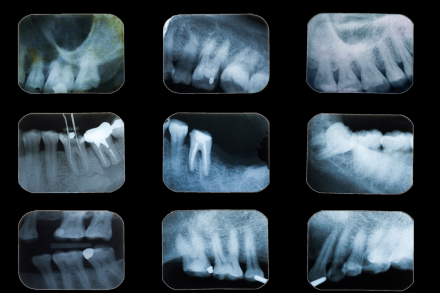
My teeth are falling out. I won’t miss them

Like many Brits, I never had perfect teeth. Even when I was young they weren’t gleaming white and the two front ones had a gap between them. I grew to quite like my gap – ‘diastema’ to give it the correct name – and found out all kinds of interesting facts about it. In The Canterbury Tales, the ‘gap-toothed Wife of Bath’ symbolised the supposedly lustful nature of diastemata types, who include Madonna and Brigitte Bardot. In some African countries, the condition is considered so attractive that there is a roaring trade in cosmetic dentistry to create it.

The concerning sickness of NHS staff

If you have been to the cinema recently and arrived in time for the adverts, you may already know what I am talking about. Somewhere between promotions for mega-burgers in glorious technicolour and exotic holiday destinations, you are plunged into what seems an endless, but is actually only a two-minute, horror flick, entitled ‘Sicker than the patients’.  The fitness of at least half  the nursing and support staff I encountered left a lot to be desired It is two minutes of unrelieved gloom and despair, book-ended by a family rendition of ‘Happy Birthday’ around a sick patient (Daddy), who – lucky guy – appears to have a room to himself, not just a curtained bay where the sounds and smells penetrate from all around.

Are antidepressants making you asexual?

Gen Z is often described as a sexless generation. We are having less sex than previous generations did at the same age. We are less likely to have been on a date. More of us identify as asexual. In fact, according to this Stonewall report, more Gen Z Brits identify as asexual (5 per cent) than gay (2 per cent) or lesbian (3 per cent). All kinds of cultural and social influences could explain this. Early exposure and addiction to online porn might be one. I’ve written about risk-aversion and fear of rejection as another. Increased awareness of asexuality too. But there is also, I think, a medical explanation. More specifically: the widespread use of SSRIs and their sexual side-effects. This is more than just low libido.

The problem with vets

A year or so ago my mum, 90, took her cat to the vet. She left an hour later, relieved of nearly £800. Her aged cat it appeared needed tests, a scan and various medicines. My mum lives in a poor area of London and is on a state pension. She has little spare money, but she loves that cat and when a vet says he needs tests, who was she to say no? Most of the other people using that vet are in similar circumstances. I was outraged so rang the HQ of the firm and got through to the medical director who told me he made no apologies for his company offering a ‘Rolls-Royce service’. I wonder in what world do regular moggies need an annual checkup? And there we have the problem with vets. Across the country, sole-trader vets have been swallowed up by a number of very big firms.

An only child is a lonely child

Lonely children often grow up to be lonely, not to mention anxious and depressed. In one study, after factoring in profession, parenting style and relationship, sleep patterns, and dietary habits, only children were more likely to display symptoms associated with anxiety and depression than those with siblings. One, it seems, really is the loneliest number. Friendships come and go, and chances are our parents will leave this earth long before we do but, through it all, siblings are there by our sides The western world is already consumed by a loneliness epidemic. Our falling birth rate and the rise in single-child households likely makes this worse.

Confessions of a fortysomething brace face

When I was a teenager, my grandmother would pick me up from school every week and drive me to the orthodontist, the aptly-named Mrs Crabbe, so she could stick more pieces of metal in my mouth, tighten something up, or twist some new jazzily-coloured elastic bands onto the brackets glued onto my teeth in a vain attempt to distract onlookers from the horror that was my metal-adorned smile.  Don’t expect me to be able to talk properly, and be prepared to be spat at A buck-toothed child, with overly large teeth for my mouth, I had years of orthodontic work, from the age of about 12 until I was 16 or 17, at which point the braces came off and suddenly I was able to smile with my mouth open – a total revelation.

Americans are wrong about British teeth

There is no clearer demonstration of the difference between America and Britain than their attitudes towards teeth. In America, you fix them. Doesn’t matter if they’re nearly straight. You subject yourself to years of semi-torture to achieve the American dream – a white picket fence of perfectly uniform teeth. Most perfect teeth are artificial – some so artificial that they’ve entirely replaced the real ones When I was about 11, I was taken to the orthodontist to straighten out my slightly overlapping front teeth. I dreaded those appointments. Our orthodontist was a tall, overly friendly man with large hairy fingers which he would shove into my tiny mouth without gloves. Surely that broke protocol even back then.

I ❤️ the NHS

There is much to bemoan about the NHS, from the cruel entitlement of its junior doctors to its zest for hiring diversity and inclusion staff when many people can’t even see a GP. I have been a harsh and consistent critic for years. I don’t like the cultish, Big Brother vibes, the gawping black hole for funds that seem mismanaged, and I don’t like the socialism.  I had a caesarian section less than a fortnight ago. I’d have one again just for fun I still don’t like those things, but I have now seen the charm of the rackety NHS. Having a baby, I discovered the it’s generosity. I had a caesarian section less than a fortnight ago at UCLH in central London. I’d have one again just for fun.

Give me back my codeine

It’s a long time since I took a powerful drug that wasn’t dispensed by a pharmacist. Last winter, during what has become the annual post-Christmas Covid collapse, I searched in vain for the codeine cough linctus I’d been prescribed when the virus first struck four years ago.  Why must we suffer because a few scrotes misuse it? ‘Keep it on the bedside table,’ said my GP at the time, ‘and when you wake up coughing in the night, take a swig and you’ll be able to go back to sleep.’ She was right: it provided blissful relief and precious, life-enhancing sleep. But when I asked my current GP (we’ve since moved out of London), she gazed into the middle distance and made gnomic pronouncements of the ilk, ‘We don’t really do that any more’.

Avoid microplastics? Don’t bother

They’re everywhere, it seems: in the oceans, the fish, the soil, our drinking water, our vegetables, our grains and cereals, our meat – even in us. Microplastics and smaller nanoplastics are tiny particles of plastic flubbage measuring half a centimetre or less that result from the degradation of plastic refuse, and according to recent news coverage the world is simply crawling with the stuff. Anxiety might turn out to be the biggest health problem caused by microplastics It’s getting everyone in a tizzy. On the one hand you can’t possibly avoid it, since it’s already more or less everywhere. But you must do something, the reports insist, or risk a plethora of terrifying health consequences: cancer, hormonal imbalance, diabetes, reproductive problems, and more.

Can’t sleep? Try a boring audiobook

I’m sleeping with the actor Richard E. Grant at the minute and can highly recommend the experience. He’s reading Agatha Christie’s The Murder at the Vicarage to me and has the perfect voice for it, faintly lascivious but not disturbingly so. As for the content, it’s just what’s wanted – engaging but not too stimulating. Like so many of us, I’m nodding off to the sound of an audiobook. Crime novels work well, as long as they are not overly gruesome or suspenseful I was already enamoured of Richard E. Grant who’d, on other late nights, read me Iris Murdoch’s The Sea, The Sea. The plot unfolds at a gentle pace and nothing unduly dramatic or loud happens – there are no car chases or football chants.

The dangers of skinny dipping

Several years ago, I went for a swim after I’d been for a job interview. I’d just finished my lengths, had my shower, and as I wrestled my knickers back on, a voice from behind me said ‘It’s Ettie, isn’t it?’ Quite how she recognised my bare bottom I don’t know, but the woman who’d interviewed me earlier in the day was certainly keen to continue our conversation, up close, personal and starkers. And for those of you who’ve never tried, I can assure you that trying to juggle one’s bosom into a bra in a flustered hurry when one is still slightly damp to protect what shreds of self-respect remain is inelegant at best.

Enough with the King’s prostate

How very nice that the King is now out of hospital, back home and, will, we are told, soon be back in business with his red boxes. Is it too much to hope that we can be spared further updates on his condition?  ‘All Hail the King’s Prostate Honesty’. Oh yuck. Can we stop? We have, I think, heard enough about his enlarged prostate. Charles has been praised for being so open about his diagnosis in the hope that it will encourage other men to investigate this important organ. NHS England declared that the ‘enlarged prostate’ page on its website was read every five seconds on the day of the King’s diagnosis, which is terrifically gratifying. The Telegraph was terrifically upbeat about Charles ensuring that men ‘do not die of embarrassment’.