Spectator Life

Spectator Life

An intelligent mix of culture, style, travel, food and property, as well as where to go and what to see.

Why shouldn’t men date younger women?

Toyboys are back, apparently. Over the past few months there has been a flurry of middle-aged women crowing about the joy of dating younger men. One author in her mid-forties extolled the virtues of having not one but three lovers half her age. In a piece explaining that ‘younger men are having a cultural moment’, a thirty-something writer described a first date apologising for his scruffy appearance because he’d ‘cycled straight from school’. These women claim it’s liberating, empowering, confidence-boosting and a lot of fun, and even brag about younger men being far better in bed than their older counterparts. And presumably all of this works both ways – so why are we less understanding when men choose younger partners?

Women artists have been ignored for far too long

At first glance, Clara Peeters’s ‘Still Life with a Vase of Flowers, Goblets and Shells’ (1612) appears to be just that. Carefully arranged on a wooden tabletop, the collected objects are in conversation, the nubby curves of the shells echoing the ribbed neck of the stone vase, their dusky and rosy hues matching the open and squeezed shut buds. But look closer at the gleaming gilt goblet on the right and you’ll notice that the Flemish artist has smuggled tiny self-portraits into the polished roundels – a clever bid to avoid the misattribution of her painting to a man, perhaps, and a form of self-assertion in the male-dominated art world.

‘Good’s never going to triumph’: the makers of BBC show Industry on bad bankers

Finance in screen fiction is a realm of monsters. From Gordon Gekko in Wall Street and Patrick Bateman in American Psycho to the crazed party animals of The Wolf of Wall Street, the arena of deal-making is portrayed – particularly in America – as winner-take-all without trace of empathy or redemption. Industry – the British-made television drama that follows a group of young bankers competing on a City trading floor whose second series airs on BBC1 later this month – is a more subtle example of the genre. Its characters are not monstrous but they are all flawed, ruthlessly transactional in their dealings with each other, and frankly hard to like. There aren’t any nice guys.

The rise of the ‘Denis dad’

Pity the ad man of 2022. Jokes about men and women and the differences between them are so very tempting, but can easily get a brand into trouble. Until not so long ago, the safest way to poke fun at family dynamics was through the figure of the incompetent dad. A 2012 American ad for Huggies nappies challenged five dads to ‘the toughest test imaginable’: looking after their babies solo. It must have seemed like a good idea at the time, given that the useless dad appears in almost every sitcom of the past half century. But Huggies was forced to pull the campaign after complaints from insulted fathers and, ten years on, my guess is that no other brand would attempt anything similar.

The politics of topless sunbathing

I’m pretty certain that what I’m about to say is essentially unsayable. So here goes: we need to have a frank conversation about boobs. Bare boobs. Because on my recent holiday to Majorca, I have to confess to being a little astonished to see quite so many topless women on the beach. But what a simple joy it was; old, young, lithe, voluminous, ponderous – there they were in all their glory, glistening or wilting in the sun, or simply splashing about in the sparkling water. Boobs. I know, I know… as a straight, white, privately educated man in the raw good health of middle age this is not territory that I’m completely comfortable venturing into. And perhaps I shouldn’t. But I feel this needs to be said.

‘Christmas creep’ has gone too far this time

For sale in the village shop last week: punnets of locally-grown strawberries, multicoloured bucket-and-spade sets, postcards featuring British beach scenes… and no fewer than 14 varieties of Christmas bauble. Down the street at the Post Office, you can buy Christmas cards, tinsel – in green, red or sparkly silver – and wrapping paper festooned with candy canes. The garden centre, meanwhile, is doing a roaring trade in tins of festive shortbread (expiry date: 26 October). Christmas, so the saying goes, comes but once a year. And this year, it seems to have come during a baking hot August. Before you suggest I live in a sort of Yuletide wormhole, it’s happening nationwide.

The scourge of the beach tent land grab

‘Ah,’ says my husband at the top of the cliff path at Overstrand, ‘it’s just like a Shirley Hughes illustration.’ There are sandcastles, wooden groynes, children and dogs running in and out of the waves. Then his eye falls on the first land grab of the day. Three generations of the same family are hard at work constructing their citadel: popping up polyester tents to form a wide arc, shovelling shingle into the flaps to secure them, unfurling windbreaks across either end to mark the outer limits of their encampment. We – like the family in a favourite Hughes picture book from my childhood, Lucy and Tom at the Seaside (1976) – have travelled with just ‘the picnic things and bathing bags and buckets and spades’.

The utter misery of BBC’s Marriage

‘Who are these people and why should we care about them?' This is the most important question any screenwriter must ask before committing pen to paper. Sadly it's a question I failed to come anywhere near answering during the interminable 'realism' of the BBC’s much discussed (and much praised) Marriage. Sean Bean and Nicola Walker play Ian and Emma, an uptight midlife couple caught in the tedium of marital graft after 27 years together. The four-part 'drama' has been widely commended for showing the profound inanity of ordinary people's domestic lives. While I consider myself to be pretty ordinary, I failed to recognise either of these dullards as anything other than famous actors trying to appear real and failing miserably.

I fancy Emma Raducanu’s chances at Flushing Meadows

British tennis fans famously only acknowledge the sport exists for a couple of weeks in the middle of summer in SW19. But they ought to think about changing the habit of a lifetime over the next couple of weeks, as Emma Raducanu prepares to defend her US Open title at Flushing Meadows. It’s been a dizzying year for Bromley’s best. Her journey from star-struck ingenue when she went to New York a year ago to her arrival back there this week as the champion and the face of a thousand magazine covers must have felt like a rocket ride to the Milky Way. But now she has to prove herself all over again. Since winning the US Open a year ago at just 18, she has failed to win another singles title and has won just 12 matches out of 28 on the WTA tour.

In praise of Birmingham, Britain’s maligned second city

During my gap year in 1981, I worked on the 24th floor of Birmingham’s Alpha Tower for the Regional Manpower Intelligence Unit. The city below, with its express ways racing past the Venetian Gothic of Joseph Chamberlain’s house and the Roman Revival of the town hall, were the realisation of the city planner Herbert Manzoni’s dream of creating a Midlands Motown. The Rotunda, the acres of systems-built tower blocks, even the inverted ziggurat of a modernist central library, together amounted to the antithesis of the smoky, tweedy, horse-powered, cut-throat Birmingham the world now knows from Peaky Blinders. That year, though, was the one which went wrong for Birmingham, Richard Vinen argues.

Confessions of a lawn obsessive

For the past few days I’ve been frantically watering my lawn in anticipation of the London hosepipe ban. True, there are other things in the garden that need watering – the roses, the magnolias, the rhododendrons, as well as the tomato plants, the rosemary bushes and the olive tree. But I can probably manage to get round them with my watering can once the ban kicks in and in any case it’s the lawn that’s my pride and joy. Gazing at the stripes after it’s just been mown is one of life’s great pleasures as I settle into late middle age. When Caroline and I first looked round our house in Acton as prospective buyers, the lawn, measuring about 45 feet by 30, was a selling point, but only as a space for our three boys to play in.

Help, I’ve been seduced by Meghan Markle’s podcast

Meghan Markle, if she was minded to, could easily corner the erotic ASMR market – that weird bit of the internet in which women breathily relate fictitious experiences with their mouths too close to the microphone for the gratification of lonely nerds everywhere.It’s impossible to listen to her latest self-glorifying venture into podcasting, Archetypes (get it?), without understanding this is something of which the Duchess herself is keenly aware.At the outset of the first episode, released on Tuesday, she explains with a deliberately pleasing huskiness how the podcast would be concerned with exploring a ‘dirty, dirty word’.

Paradise lost: the decline and fall of Hampstead’s ladies’ pond

‘We’re surrounded by sociopaths,’ I whispered to my friend as I scanned the scene before me. We were sitting on a bench overlooking the meadow at Kenwood Ladies’ Pond on Hampstead Heath, and for the first time in my 20-odd years of visiting, I felt a sense of detachment: like I was an observer rather than a participant. A lot’s changed since the pandemic, but nowhere have I felt it more keenly than when I go for a swim at my beloved pond. This last, precious corner of paradise in our smog-filled city has been desecrated, and I am heartbroken. The ladies’ pond opened in 1925, and nearly 100 years on it’s still the sole women-only outdoor swimming amenity in the country. For most of that time it was a fun, free and flexible delight.

The enduring wisdom of Robert Baden-Powell

I do not yet have any children of my own, but a large extended family means plenty of young nieces and nephews to buy presents for come birthdays and Christmas. Those moments provide an opportunity to indulge in some pedagogic guidance: I’ll be damned if you're getting the latest Fifa game for the PlayStation 5 – you can have a real football to kick around outside. Ditto the inevitable requests for Nintendo virtual reality headsets and Frozen merchandise. Happily, I’ve got at least one Christmas present this year sorted already – and I’m quietly confident my nephew is going to enjoy reading it as much as I just have. Lord Robert Baden-Powell’s life-guide book Rovering to Success is a century old this year.

In praise of Jodie Comer

She’s got all the trappings of superstardom: killer looks, a clutch of awards and £4.5 million in the bank. But mention ‘Jodie Comer’ to your friends and you’re bound to get a few blank stares. The British actress, best known for playing super-stylish assassin Villanelle in the BBC series Killing Eve, has yet to become a household name. And, like many in her growing legion of fans, I want to know why. This month I saw Jodie, 29, in Prima Facie, her debut West End play. It’s a masterpiece of a monologue in which she confronts gruelling issues including sexual assault, misogyny and bias in the criminal justice system – and she was nothing short of astonishing. When the curtain fell, I could barely speak.

The funny truth about life as a diplomat’s wife

In the early 2000s my husband, a diplomat for the EU, was posted to Kazakhstan, a vast empty steppeland next to Siberia. It was winter and the place was covered with thick snow. My family were in England, my husband was mostly in the office; I was 61 and I didn’t know a soul. Our previous posting had been to Damascus and I had occupied myself by writing a book about the old palaces there, but here there were no old buildings as the Kazakhs had been nomads. I had nothing to do. Everyone spoke Russian – I didn’t. As my husband was a senior diplomat we qualified for a cook, but she and I could only communicate using animal noises: chicken was cluck-cluck, beef was moo and lamb was baa. The main foods available seemed to be cabbage, onion and potatoes.

Is Netflix losing the battle of the streaming giants?

From time to time, Netflix’s marketing brains like to get a bit cute with the company’s past. ‘Don’t give up on your dreams – we started with DVDs,’ read one recent viral post. But while the streaming giant happily references its most famous transition, it’s much more coy (and probably wisely) when it comes to its latest one. It isn’t hard to see that 2022 Netflix is a very different beast to the one most of us signed up for. If you joined Netflix during its peak – e.g. somewhere in the long window between House of Cards and Tiger King – you would have likely bought into the idea of it being a one-stop shop for all things streaming. But has it really kept that promise?

Why I still love the Edinburgh Festival

When I was in my twenties, exactly 50 Edinburgh Festivals ago, Frank Dunlop directed the first professional production of Joseph and the Amazing Technicolor Dreamcoat which Andrew Lloyd Webber and I had written for a primary school concert in 1968. In the first four years of the work’s existence, it began to burrow its way into educational musical syllabi at a modest pace. This we appreciated, but in 1970 we stumbled into overnight success with our double album of Jesus Christ Superstar, and we did not thereafter give our earlier piece the attention it perhaps deserved.

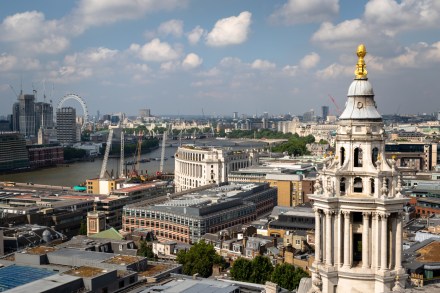
The lost charm of London’s St Giles

London's architectural landscape is changing at such a pace that it's hard to remember what's been lost beneath the acres of tarpaulin. Buildings I must have walked past a thousand times and that I could have sworn were important landmarks have been disappearing at an alarming rate. Despite the devastation there appears to be little in the way of pushback from harried, post-pandemic Londoners. How quickly we forget what our eyes once took for granted; the familiar razed without a second glance. The area known as St Giles, just east of Charing Cross Road and south of New Oxford Street, has suffered more ignominy than most.

The books Spectator readers take on their summer holidays

Recently, Spectator writers shared their all-time favourite summer holiday reads. In response, Spectator readers have been offering their own recommendations for what books to take to the beach… 'You might try Helen Thompson’s Disorder: Hard Times in the 21st Century, a history of oil politics. It starts with the simple fact that in evolving from the steam to petroleum age, the old western powers no longer had direct access to fuel and faced a growing dependency on oil from Russia, initially, and then the Middle East. The US, of course, is an exception as it has domestic resources – but foreign policy errors led to it being the guarantor of petroleum resources to the rest of Nato.

We haven’t heard the last of Johnny Depp vs Amber Heard

The last thing I wanted to do was write about the Johnny Depp and Amber Heard circus. Really. For months I’ve done everything humanly possible to avoid the social media cults, the TikTok clips and my mother – who was so enthralled by the case that she cancelled numerous plans so that she could watch the live trial, and was temporarily banned from Facebook for commenting that she would give Heard a slap if she ever came across her, which is probably unlikely. But after the latest development in the story, which happened after the judge ruled that Heard was in fact defamatory towards Depp, awarding him around £12 million in damages, I couldn’t stay quiet any more. And neither could a number of celebrities.

Why Harry Hill’s little green aliens are popping up all over London

Sitting in a posh office overlooking the Royal Academy, the comedian Harry Hill is deploying one of his lesser known modes: introspection. ‘I suppose I’m one of a growing number of celebrities who do art,’ he says, one hand fiddling with his trademark oversized shirt-cuff. His point – which he returns to several times – is one of definition: as much as he enjoys making art, and as much art as he makes, he can never quite see himself as an artist. In his defence, he isn’t alone. After more than a decade as the face of one of the most-loved comedy shows this century, Hill can probably count himself among the ten most recognisable comics in Britain.

Who needs a hosepipe? The watering cans worth investing in

In the hot, dry summer of 1976, I was working as a gardening student at Arboretum Kalmthout in Belgium. The temperatures in July were frequently 40°C by lunchtime, so we worked in the early mornings and through the evenings. My job was to drive a tractor pulling a trailer, on to which were placed dustbins full of water drawn from a borehole. These were ferried around the grounds so we could water rare, precious and drought-hating rhododendron and tree species. The owners of the garden were white-faced with apprehension all that month but the stratagem worked and we saved the lot. Something of that anxiety comes back to me, for my garden is at risk of losing plants from drought. We have had a measly 0.

The bizarre history of London’s private members’ clubs

At the height of the IRA’s terrorist campaign on mainland Britain in December 1974, a bomb was lobbed through the front window of the In & Out – the Naval and Military Club, then in Piccadilly. Exploding, it knocked everyone off their feet, including the barman Robbins, and trashed the Long Bar. But in the silence that followed came the unwavering request of senior member Commander Vaughan Williams: ‘Another pink gin please, Robbins.’ A subsequent cartoon in the London Evening Standard depicted the scene of devastation (no one was injured or killed) with a mess-jacket-wearing member calmly wondering what the barman had put in his pink gin: ‘But I’ll have another!

How the travel industry convinced us we needed holidays

In September 2019, Thomas Cook filed for compulsory liquidation, leaving 600,000 customers stranded abroad. It was a sorry end to a company that had lasted 178 years and survived both world wars. Founded by a Baptist preacher who began organising railway trips to Midland cities for local temperance societies, the company grew into one of the largest travel agencies in the world, thanks to the transformation of tourism from an activity for the idle rich to an experience open to all. This opening up of travel is the story Lucy Lethbridge tells in Tourists, taking the reader from the last years of the Grand Tour to the first years of the package holiday.

In defence of Fergie

My first reaction to anyone buying even a bog standard two-up-two-down terrace in London is a fake congratulations through gritted teeth. So when it was reported last week that the Duchess of York, ex-wife of disgraced Prince Andrew, had bought a £5 million mews house in Mayfair, I was surprised that I didn’t share the outrage of the general public. Sure, she does very little, spending her days lounging around in Royal Lodge, the Grade II-listed Windsor property she shares with her ex. But there’s a part of Sarah Ferguson that is totally relatable, and as she has tried – and often failed – to navigate the inner workings of the royal establishment, I have watched her with admiration.

Yours for £45,000, the car that drove Margaret Thatcher into history

‘A new girl drops in at the palace,’ announced the London Evening News on the front page of its ‘election special’ of 4 May 1979. The accompanying image showed a beaming Margaret Thatcher (pre-implant teeth in evidence) waving from the rear seat of a ministerial car, on her way to meet the Queen and receive her official invitation to form a new administration. Another ‘new girl’ (or boy?) might be dropping in at the palace soon – but if he or she wants to do it in the same car, it will cost them.

Heat 2 is a classic of the crime genre

Of all the things in the world of entertainment that might get me excited, 'a new Michael Mann project' tops the list. A film writer and director, Mann not only is a talented storyteller, but has mined the criminal underworld for his subject matter, from his debut feature in 1981, Thief. Since then, he’s rarely veered from criminal elements in his subject matter (Last of the Mohicans and Ali being the two notable exceptions). He is the great auteur of the crime genre; in other words, he makes arthouse films for dads. In 1995 Mann released what many consider to be the greatest crime film ever made.

Beyoncé and the pornification of pop

Beyoncé Knowles has always been sexy: naturally and consciously so. But her sexiness – those astonishing bottom-swooshing dance moves; the gleaming, undulating chest; the ever-changing, lustrous locks – sat alongside a moral substance that grew as her career progressed. She weighed in on politics, raising $4 million for Barack Obama and singing at his first inaugural ball. She weighed in on sexual morality, telling women in one of her most iconic songs that their man ought to, if he was to be taken seriously, ‘put a ring on it’. She is a committed Christian, having grown up in a Methodist household and frequently spoken of her faith.