Spectator Life

Spectator Life

An intelligent mix of culture, style, travel, food and property, as well as where to go and what to see.

Madonna and the curious business of biopics

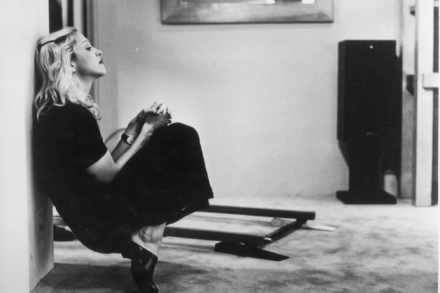
Reading that Madonna has decided to cancel the film about her life that she has been working on for the past two years, I felt a pang of sorrow. The biopic sounded like the biggest vanity project ever attempted – and thus promised to be an excellent ‘mock-watch’, as I’ve named the cinematic equivalent of the ‘hate-read’. In the specific case of biopics (always an easy thing to get wrong when one person imitates another, often with hilarious results), perhaps ‘sham-shaming’ is even better. Madonna was reported to be directing, producing and co-writing the film with the Oscar-winning screenwriter Diablo Cody, who has since moved on to the live-action Powerpuff Girls, obviously keen to get to grips with some real women of substance.
How to stay sober-smug after Dry January

I simply love being sober. Isn’t it fun? Being totally level-headed throughout the day. Why would you want a glass of red when you can substitute some cranberry juice? January is just the perfect time to give up all of your vices because you get to hear, collectively, how great everybody feels. How much more productive and energetic your pals are after swapping out the sauvignon blanc for sparkling water. I’ll probably never have a drink again. I don’t even think about it. Then there’s the exercise. The only thing better than putting down the bottle is doing it amid multiple gym classes. HIIT class on Mondays, the best day of the week. Then I get to meet up with Jenny for Zumba on Wednesdays. Get those hips moving! Ahhh, I just adore it. Don’t you?

Where to find the finest snowdrops 

Who does not love a snowdrop? The pure white of their pendulous petals may be chilly, but who cares when they flower in the chilliest months, often on their own, or accompanied only by hellebores and aconites. I grow a number of snowdrop species and cultivated varieties, as well as unnamed seedlings that seem to appear out of nowhere, since these bulbs are relentlessly promiscuous. They pop up especially in shady borders under deciduous shrubs or among evergreen and herbaceous perennials, and they are the best sight to greet me on my daily garden walks in January and February.  The word ‘galanthophile’ does not quite convey the fanaticism of the true snowdrop lover.

Eva Green and the death of the Hollywood diva

The HR department has killed day-to-day divadom. No longer can you tell your co-worker that her hair needs a good brush; nor can you explain to Richard from accounts that his tan brogues and shiny blue suit sting your retinas. That might upset them. People would be a lot more presentable if you could say these things, but you can’t. Nobody can.  French actress Eva Green, who starred as James Bond’s love interest in Casino Royale, seems to have escaped the great diva slap-down. She was at the High Court this week suing White Lantern Films over a $1 million fee for a film that never got made. It seems Green and the producers had artistic differences over the budget, location and preparations.

In defence of February

Everyone has their own most loved and hated months. While for Chaucer, Browning and others April was a time of joyful rebirth, it was of course for Eliot ‘the cruellest month’. Still, February tends to get a bad rap from everybody. It manages to be both the shortest and longest month of the year. In theory the days are getting longer, and yet the darkness of the previous night and the next morning blur, making for a grim nocturnal existence. It doesn’t matter if you’re a night owl or a morning lark, in February you’re commuting from work in the dark. Still, better than midwinter isn’t it? Hardly. The glamorous, festive part of the season is a mulled wine-blurred distant memory.

Why rejection is the secret of success

The letter was polite but to the point. The PR firm where I’d applied for a job thanked me for my time but told me I hadn’t been successful. The position was going to someone else. Ouch. This wasn’t the first time I’d been rejected, of course – and it certainly wasn’t the last. I’ve been dumped, ditched by friends and overlooked for work more times than I can remember. Who hasn’t? Not even the most successful among us is immune, as Sir Ian Rankin, 62, who has sold more than 20 million books, admitted last month. ‘I have had all kinds of projects turned down,’ he told the Write-Off with Francesca Steele podcast. ‘The rejections are abrupt. They are not at all apologetic, the buggers.

The naked truth about sex on TV

What a year it’s been for sex on TV. As we emerge blinking from the annual glut of televisual entertainment, I can’t get over how far we’ve come. Bridgerton, Babylon Berlin, Lady Chatterley… everybody’s at it, with no period in history so tragic that a few cheap thrills can’t be extracted from it. If you’d have told the teenage me that in my lifetime I’d see a comedian with breasts playing a piano with a penis on television, I’d have very much approved; having seen Jordan Gray do so on Channel 4’s Friday Night Live last year, I wish I hadn’t. Sex on TV has been such a long, strange ride.

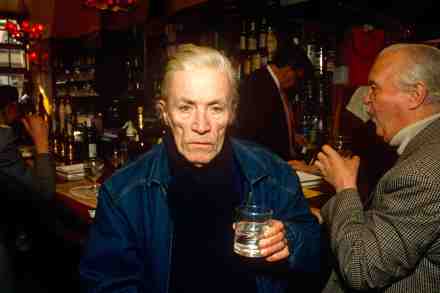
How Jeffrey Bernard led me to London’s rudest landlord

On a recent Sunday evening, the Shaftesbury Theatre in Soho was packed to the gills with a crowd celebrating a dramatic tribute to a landlord: the best kind of landlord, the landlord of a pub. And not just any old pub, but the pub he ruled with an iron fist for 63 years until his retirement in 2006. Ladies and gentlemen, I give you Norman Balon, sole proprietor of the legendary Coach and Horses. ‘London’s rudest landlord’, as he was known; it said so on the matchboxes. On for one night only, Norman Balon – It’s All True was a play written by the person who took over the lease, Alastair Choat.

Why I’m sleeping in the garden shed

Two and a half years ago, I wrote a column about how I’d started sleeping in my garden office. No, not because Caroline had kicked me out of the master bedroom, but because we were having the house rewired and the builders needed us to vacate our room at seven o’clock every morning. The move was supposed to be temporary, but I liked the arrangement so much it became permanent. Unfortunately it’s causing a few tensions in the marriage. Most wives who have had to put with their husband’s snoring for more than 20 years would welcome this set-up, but Caroline is a bit nonplussed. She doesn’t miss the nightly tug-of-war over the duvet, or me trying to sneak in without waking her after a night on the tiles (imagine a hippopotamus in a furniture showroom).

Bare and spectral: Bob Dylan’s Fragments – Time Out Of Mind Sessions reviewed

To understand Bob Dylan’s Fragments – Time Out Of Mind Sessions (1996-1997) – due to be released on Friday – you have to go back half a century to the release of the Beatles’s Let It Be. As millions of fans around the world bought the band’s final album, Paul McCartney was horrified. This was not the disc he had conceived: some of the most cherished songs in his oeuvre had been hijacked by superstar producer Phil Spector, who stamped his trademark ‘Wall of Sound’ during the album’s post-production process, filling it with lavish embellishments. Fast-forward to the mid-1990s and another legendary songwriter was at loggerheads with a different superstar producer, then still a dominant force in the era of mega-selling records.

The rise of the nympho nepo daughters

Only a mother could love a nepo baby – but there are some professions in which the far reach of the dead hand of nepotism strikes me as worse than others. In such frothy fields as modelling and television presenting, the prettiest face will still usually win out: look at Maya Jama, the new compere of Love Island, daughter of a teenager and a jailbird, who resembles a film star from the golden age of MGM – Fortuna’s apology for Brooklyn Beckham. Nepotism becomes far more damaging to the culture when it sidles out of light entertainment and into newspaper columns, novels and stand-up shows; when it moves the undeserving into jobs which need wit, because wit, unlike cheekbones, is something that can’t be inherited.

Legend of the Fall: Mark E. Smith and me

He was one of the most unlikely pop stars this country has ever produced: extraordinarily badly dressed and famously contrarian, with a voice that sounded more like an angry man shouting than anything recognisable as singing. But Mark E. Smith, front man of the Fall, became one of the most recognisable and eventually revered figures on the music scene. And five years on from his death at 60, his stock is higher than ever – his influence heard in the sound of newer bands such as Sleaford Mods and Idles, his name regularly evoked on the likes of BBC Radio 6 Music, and a giant tribute mural an unlikely tourist attraction in his hometown of Prestwich.

Why we need a biography of philosopher Bryan Magee

When I was a philosophy student at King’s College London in my early twenties, I came across a book called Confessions of a Philosopher by Bryan Magee. A history of western philosophy told through the story of the author’s relationship with it, it opens with a three- or four-year old Magee trying to catch himself falling asleep every night. Try as he might, he can never experience himself crossing the threshold from wakefulness into unconsciousness, a conundrum that keeps him in a state of ‘active mystification’. Magee spent the rest of his life like this, wrestling with the mysteries inherent in everyday experience. Far from being a fusty academic discipline with no relevance to the ‘real’ world, philosophy was, for him, an existential matter of immediate importance.

Gina Lollobrigida and the changing face of fame

Gina Lollobrigida, who died this week at the age of 95, was known in the 1950s and thereafter for the kind of beauty which drove Italian men to self-destruction; and for performances in films which seemed to define a scrappy, energetic, self-possessed Italian womanhood.   During her career, ‘La Lollo’ sculpted, took photographs, did a little journalism and maintained a chaotic personal and political life, in which both her husbands and her male executive assistants always seemed to be in their late twenties. But she ought to also be famous for something else: being the subject of one of the most exciting and vital early experiments in television, a great short film by Orson Welles.

Lumberjacks know the secret of happiness

The results are in and nature (i.e. God) wins again. A Bureau of Labour Statistics survey in the US has found that lumberjacks and farmers are the happiest, least stressed and most fulfilled workers, further proving that everything we need to be joyful and satisfied in this life is not man-made. Nor does it have much, if anything, in common with the prevailing culture. A Washington Post analysis of the survey noted that 'The most meaningful and happiness-inducing activities were religious and spiritual, followed by 'the second-happiest activity – sports, exercise and recreation'. I am fond of harping about how a godless society is a miserable one.

In defence of Spotify

‘Pitiful.’ That’s the verdict of Damian Green MP, acting chair of the digital, culture, media and sport committee, on the payouts that streaming companies such as Spotify and Apple Music provide to musicians. An update to the group’s Economics of Music Streaming report, published on Friday, calls on the government to take a ‘proactive strategic role’ to make sure Britain’s music industry – one of the few that truly is world-beating – gets the cash it deserves. With streaming now accounting for 84 per cent of UK recorded music revenues, its businesses model really matters.

Why tax-free shopping matters

One initially overlooked aspect of Liz Truss and Kwasi Kwarteng’s ill-fated mini-Budget was the plan to restore VAT-free shopping for tourists. The scheme, which allowed non-EU visitors to claim back 20 per cent on their purchases, was scrapped in 2020 by then chancellor Rishi Sunak but looked set for a comeback. This was excellent news where I live – Japan – and throughout Asia, where holidays are short and shopping plays a big part in overseas trips. But just as tourists were writing up their lists and planning their itineraries, Jeremy Hunt pulled the rug from under their feet by cancelling the uncancelling before it had even reached Kwarteng’s promised consultation phase. Was he right to do so? Almost certainly not.

Do you have ‘smart meter stress’?

Are you suffering from SMS? Smart meter stress, that is. When we decided recently to accept our energy provider's offer to install a smart meter, I had no clue how anxiety-inducing the digital display on the little black monitor could be. Smart meters tell us (and our suppliers) how much energy we’re using, minute by minute. In theory they make life easier, helping us identify where we can reduce consumption and sending automatic readings so that we’re less likely to underpay or overpay on our bills. There are already 29.5 million smart meters installed across the UK, and by the end of 2025 every home and office in Britain will have been offered one.

Why is social media pushing young women to donate our eggs?

As a millennial who spends a lot of time on social media, I assumed I was desensitised to adverts. I thought I was ad-blind, until I started being bombarded with posts asking me to donate my eggs. It was a post from the London Egg Bank which first caught my eye, offering a ‘freeze and share’ scheme. In this country egg donors are only allowed to be paid £750 in compensation, but there’s nothing to stop them being given treatments in lieu of cash – and egg freezing is expensive. The average cost to collect, then freeze a woman’s eggs is around £3,350. Medication and yearly storage add at least another several hundred pounds. To have the eggs thawed and implanted into the womb costs another £2,500 on average.

When street hawkers were a vital part of London life

If you read only the title of Charlie Taverner’s book Street Food you could be forgiven for assuming it was an exploration of the stalls that line the trendier streets of our cities, offering bibimbap and bao, jerk chicken and jian bing. But the author’s focus predates brightly coloured gazebo hoardings and polystyrene packaging and looks instead at the working lives of the itinerant traders who populated London before 1900, touting everything from oysters to milk, and what their work meant for a changing capital city. By placing these vendors at the centre of the story rather than as faintly comic support acts, Tavener provides something that goes beyond individual characters.

Will shoe-polishing be given the boot for good?

As I digest the news that Kiwi are ceasing the sale of its shoe polish in the UK, due to plummeting demand in the age of trainers, I find myself in mourning chiefly for the tin. What will the ritual of shoe-polishing feel like when it no longer starts with the thumb-against-index-finger rub of the butterfly-twist opener? That was a brilliant invention by Kiwi, and I’m afraid that the shoe polish tin that survives in the British market – Cherry Blossom’s, the same shallow cylindrical shape as Kiwi’s but with a ‘press hard here and the other side pops off’ opening system – doesn’t provide quite the Proustian kick of Sunday evenings in the 20th century: that combination of nausea at the strong smell and at the thought of tomorrow’s history test.

The secrets of London by postcode: NW (North West)

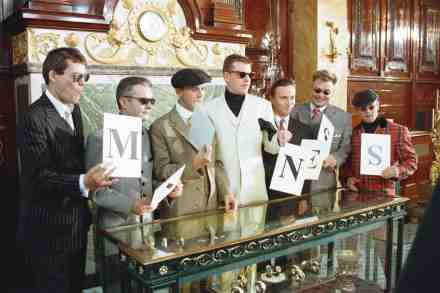
This month our trivia-inspired tour of London’s postcode areas reaches NW, where Tim Burton snored, Madness caused an earthquake and Desmond Tutu asked policemen for directions even though he knew where he was going… The Renaissance hotel at St Pancras station had the first revolving door in Britain. It was installed at the Midland Grand (as the hotel was then called) in 1899, by the device’s inventor Theophilus Van Kannel. (The door itself – or rather a modern replacement – is still in the same spot, at the entrance nearest the road, rather than the main one set further back.) Another innovation was the Ladies’ Smoking Room, the first in Europe where women could light up.

The unstoppable march of the celebrity author

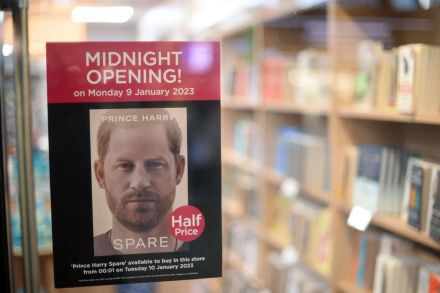
The anticipation surrounding the release of a certain memoir today obscures a bigger question about the changing face of our publishing industry. Why does every Tom, Dick and Prince Harry think they can write a book these days? Figures last week showed the number of independent bookshops in Britain reached a ten-year high in 2022, thanks to a reading frenzy fuelled by pandemic lockdowns, the mushrooming of book groups and, perhaps most of all, the incessant, unstoppable march of the celebrity (not to mention royal) author. It is good news that there are now more than 1,000 independent bookshops in Britain and Ireland, the culmination of six years of growth at a time when other retail sectors have taken a battering.

10 films about brothers at war

Sibling rivalry is nothing new, as the Old Testament’s story of Cain and Abel attests. Back in 1966, director John Huston cast hellraiser Richard Harris as fratricidal bad boy Cain in The Bible: In the Beginning. Years later, Ray Winstone played Cain’s even naughtier descendent Tubal-Cain in Darren Aronofsky’s decidedly odd Noah (2014). 2009 also saw the tale of Cain and Abel recounted more jocularly in Year One (2009), with David Cross and Paul Rudd as the feuding brothers. Of course, the Biblical duo’s argument was settled in a more lethal way than Harry and William’s ‘dog bowl brawl’.

AI is the end of writing

Unless you’ve been living under a snowdrift – with no mobile signal – for the past six months, you’ll have heard of the kerfuffle surrounding the new generations of artificial intelligence. Especially a voluble, dutiful, inexhaustible chatbot called ChatGPT, which has gone from zero users to several million in the two wild weeks since its inception. Speculation about ChatGPT ranges from the curious, to the gloomy, to the seriously angry. Some have said it is the death of Google, because it is so good at providing answers to queries – from instant recipes comprising all the ingredients you have in your fridge right now (this is brilliant) to the definition of quantum physics in French (or Latin, or Armenian, or Punjabi, or – one memorable day for me – Sumerian).

Crying shame: the weaponisation of weeping

‘Tears are not enough,’ ABC once sang defiantly - but these days, they’re more than enough for handsomely rewarded celebrities to assure us that they suffer like the rest of us, so please don’t hate them. Watching the BBC Breakfast presenter Sally Nugent - a 51-year-old woman - boo-hooing recently after watching a clip of some cute guide dogs, I sincerely wished that Lord Reith might rise from his grave and bundle the heaving hack under a cold shower. I’m just so bored by celebrity tears. Or take Frankie Bridge, the ex-Saturdays singer, an attractive young woman with an adoring husband and adorable children, who like her footballer spouse Wayne has a net worth of around £9 million.

Books to look out for in 2023

After a fair-to-middling 2022, it’s not unreasonable to hope that 2023 will see several stars burn brightly in the literary firmament. Whether what promises to be the most talked-about book of the year, Prince Harry’s Spare (out tomorrow with Bantam), is included in this number remains to be seen. On the plus side, the Prince has the estimable J.R. Moehringer as his ghostwriter; on the negative side is the fact that his every public appearance over the past few years has been so combative that we might expect little more than a 416-page exercise in score-settling. More reliable pleasures await. Pamela Anderson’s memoir Love, Pamela (Headline, January) should be a revelatory and fascinating dive beyond the usual bimbo clichés.

The tyranny of voice notes

Ping! My phone vibrates with a message from a new friend. A mild spike of dopamine dissipates on seeing she’s left me a WhatsApp voice note. However, it’s short and, hopefully, it’s a one-off.  I reply with a text message, hoping she’ll register the switch in communications. Ping! Oh no. She’s a voice-noter. She’s a bloody voice-noter. And this one is well over two minutes long and I don’t know her very well, so I’m going to have to listen to the whole thing without speeding it up. It’s an invitation to dinner, but this does nothing to quell my mounting frustration and irrational thoughts of disengaging myself from this nascent friendship.  ‘Yes great thanks,’ I reply by text, without – pointedly – an ‘X’.

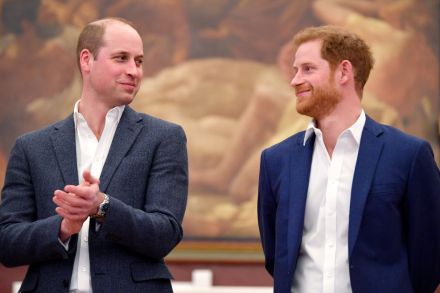
My advice to Harry and William

Reading about the latest about the pathetic-sounding scuffle between Prince Harry and his older brother, I think I could tell the pair a thing or two about fraternal enmity. My older brother, another Harry, and I have not spoken to each other in more than 30 years. He was taller, blond and looked Germanic. I was shorter, brown-haired and looked Greek. He never made it at school, whereas I collected lots and lots of sporting trophies. My father named him an executive in his shipping companies, I was the odd man out. Harry had the largest house in the Hamptons and the poshest apartment in New York, whereas I sort of lived a gypsy life. Harry was not athletic, I excelled in sports and represented Greece in three of them.