
A colleague of mine has a sizable collection of sportscars. He has, he notes, every expression of his favorite, the Lotus Esprit. He lovingly cleans them, occasionally changes up the way they’re displayed. What he might then jokingly add is just how easy this is. The biggest of his cars is just a few inches long. They’re models, of the kind that small children might push over the carpet making “brrm, brrm” noises, once they’ve passed out of what the toymakers call the “bash and crash” phase, when motorway carnage is the name of the game.

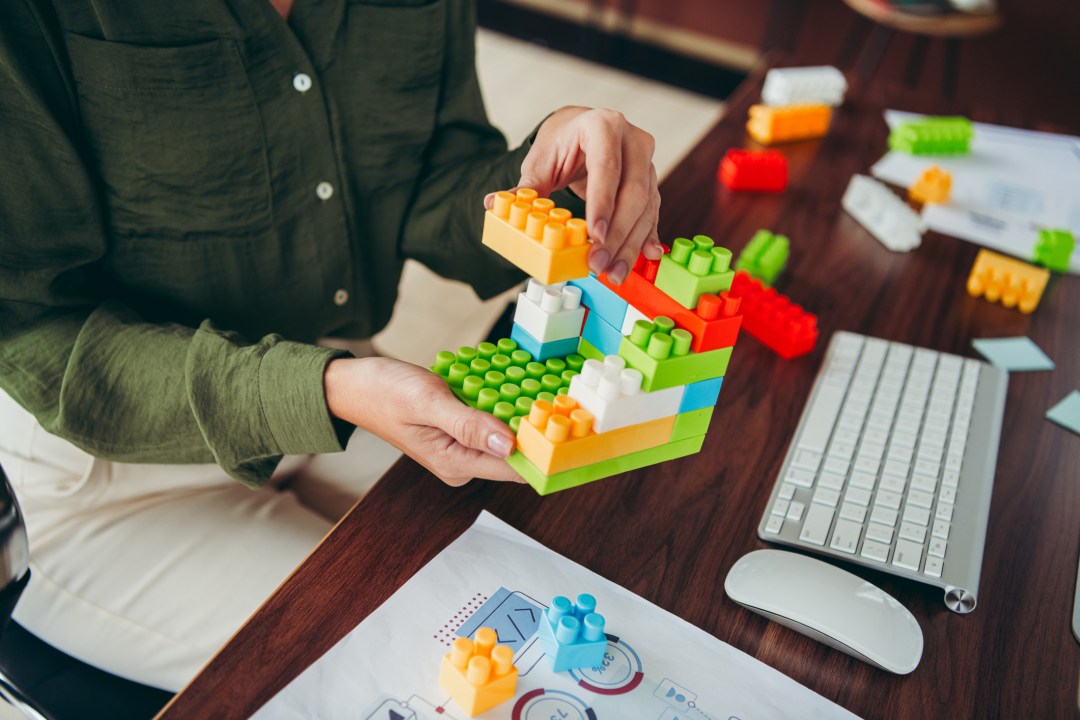
What might appear strange to an older generation – overlooking their own love of train sets – is that this mid-life interest in toys is not unusual. Far from us following the Biblical recommendation for adults to “put away childish things,” a survey conducted by analytics firm Circana last year suggests that adults that now account for 28 percent of toy sales globally. And that’s not because they’re buying them for kids.
Nostalgia is surely at play here: age typically brings the discretionary income that might finally be splurged on filling the yawning chasms in our psyches opened decades ago by not getting the toy of our dreams, or by having lost it. A psychologist might also riff on the particular appeal of scale toys: one theory has it that being able to express a giant-like control over small worlds of our own making is a calming antidote to the madness of the chaotic outside world and the feeling of being completely helpless and adrift in it.
Add in that the some of the most potent shapers of pop culture since the 1970s are humongous and constantly evolving entertainment properties the likes of Star Wars, DC, Marvel, Harry Potter and, increasingly, anime – which in turn have become the powerhouses of toy making – and there’s a good chance that the life of anyone over 40 has likely fallen under their influence at least to some extent.
But that statistic is also weighty evidence for the sociologists who note there seems to be a growing resistance to growing up, even as these kidults typically rush to defend their purchases in grown up terms: they’re not toys, they say, they’re collectibles, no different to vinyl records or stamps or coins, just a whole lot more fun. Besides, the collection of comic books and sneakers have achieved some level of special acceptance, disguised as investments, and surely they’re no less kiddish.
And certainly sometimes the distinction is fair: there’s a category of “toy” – typically comprising scale-model vehicles or action figures, often made in Japan – that doesn’t just come with incredible detail, but also a hefty three and sometimes four figure price-tag. Definitely not right for bash and crash. Play with these more involves arranging them in display cabinets – and occasionally having to respond to the raised eyebrows of bemused houseguests.
Nostalgia is surely at play here
Indeed, there’s a twist in this tale. While adults are tucking into their trad toys, it seems that children are shunning them in favor of – you guessed it – anything involving a screen. That’s made the grown-ups an increasingly important market. Toymakers have been smart to reissue retro versions of the toys of yesteryear – right down to riffs on the original packaging. Appealing to adults is one maybe desperate way to get them into the kids’ hands too. But that the adults are buying for themselves also allows the toymakers to make ever more carefully crafted products – less constrained by safety standards, higher quality, more expensive and more profitable.
Of course, it’s all too easy to mock the man whose bevy of be-muscled figurines takes pride of place. And it would be facile to assume such behavior is limited to owners of the perpetually childish male brain: check out sales of Jellycat soft toys, or of Barbies, or My Little Pony. It’s women who are hoovering all that weirdness up.
But surely it’s those who have managed to either quietly maintain or joyfully reboot a role for their childhood toys in their more mature years who have it right. It’s only the cold logic of the modern world that insists we dutifully become worker bees as soon as possible – productive, reproductive, responsible, serious – which in turn has denigrated any association between adulthood and play, outside of the socially-sanctioned ones of making art or sport. Kicking a bag of air around a field of a Saturday afternoon, or using a stick to whack a ball into a hole – that’s just fine. Put your energies into arranging a diorama of the Empire’s AT-AT marching across the snowy plains of Hoth – well, that’s just silly.
Yet, excepting some dour human adults – those who have yet to rediscover the wonders of Corgi or Lego – all mammals play. That’s because it’s stimulating, relaxing, satisfying, good for our relationships and – something we’re misled to think of being a bad thing – deliciously free of some end goal, unlike so much else in life. “It is,” as Ralph Waldo Emerson once pointed out, “a happy talent to know how to play.” Too many of us have forgotten that skill. Buy yourself a toy today and see if you can remember.





Comments