Rosie Millard

How technology changed birdsong

From our UK edition

I was a beady, birdy child. I had binoculars, made lists and sewed a Young Ornithologist’s Club (YOC) patch on my M&S jeans. Every spring, our YOC leader, a cheery ex-Army man ‘Binks’ Williams would drive a minibus at 6 a.m. to Wimbledon Common, for us to experience the Dawn Chorus. This was more exciting in principle than reality, as unless I could see a bird through my bins, it didn’t really exist. I was hopeless at identifying birds through song alone.

The growing revolt against Arts Council England

From our UK edition

The acronym for Arts Council England is rather unfortunate at the moment. The organisation is being accused of many things: being overly close to government, underfunded and blinkered – but nobody thinks it is ace. Even friendly culture critics are losing patience. As the august arts commentator Richard Morrison recently wrote in the Times: ‘The Arts Council… seems determined to shift public subsidy on to supporting amateurs and community projects.’ ‘We are tempted to refuse our ACE grant and not spend so much time box-ticking’ Simple purpose has been replaced by a giant strategy paper, Let’s Create, which seems concerned with how ACE can insist on a policy of social engagement, rather than continue as an agency funding a range of professional arts organisations.

Glastonbury has become a singalong event for OAPs

From our UK edition

‘Well, it’s just not Glastonbury, is it?’ said my daughter aggressively, when told that our yurt featured an actual bed, wardrobe with hangers and electric points, and hot showers just around the corner. Our excuse was this was my and my partner’s first Glastonbury and we had a combined age of 125. ‘Anyway, why are you there?’ she said. ‘These are not your people, these are my people.’ Not from what I could see. With headliners such as Diana Ross, the Pet Shop Boys and Sir Paul McCartney, Glastonbury today is more a singalong event for people born in the 1950s (my husband) or 1960s (me) than anyone within shouting distance of GCSEs.

Running on empty: the government is out of fuel – and ideas

From our UK edition

39 min listen

In this week’s episode: is Boris Johnson running on empty or is a weak opposition giving him the momentum he needs? Kate Andrews asks in her cover story this week if Boris Johnson’s government has run out of ideas – as well as petrol. Katy Balls also writes in the magazine that the opposition seems unable to take advantage of the government’s failures. Katy and Kate join William on the podcast to give their takes on the state of both parties. (00:51) Also this week: what is behind China’s latest crackdown on cryptocurrency? Ian Williams writes in this week’s Spectator that the CCP’s latest move to criminalise anyone dealing in cryptocurrency is to clear the decks for China’s new, state-sanctioned digital currency.

In defence of Marvel

From our UK edition

The teaser for Spider-Man: No Way Home, out this Christmas, which had a record number of 355 million views in the first 24 hours of online availability, delivers three minutes of thrills. Tom Holland is back, in the titular role, with his girlfriend from the previous Spidey movie, his best friend Ned, references to Mysterion, jokes from Benedict Cumberbatch as master wizard Dr Strange, plus engagement with that most playful of Marvel concepts, the multiverse. Bring in the multiverse, and anything, everything, is possible. Are you old enough to recall that moment in Dallas when the shooting of JR was revealed to be a dream? Well, the multiverse does all that, and some. Time is not a constant.

Sale of the century: the contents of the Sitwells’ mansion are going under the hammer

From our UK edition

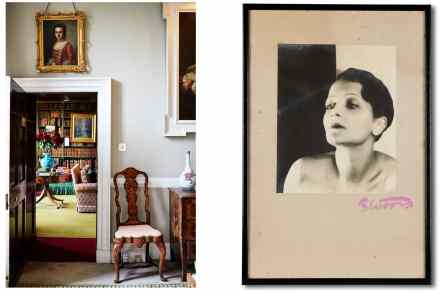
In my bedroom there is a small lidded laundry basket. It was designed by Geoffrey Lusty for Lloyd Loom, a company that has, since 1917, been producing surprisingly durable furniture made from lacquered woven paper fabric for the middle classes. The basket is globular and stands on three spindly legs. It is weatherbeaten, and slightly worn, because it was produced in 1957, at the dawn of the Space Era. Indeed, it is a Sputnik wicker linen basket, designed in the style of the famous satellite. Only 100 were ever produced. Why is this double design classic not in a museum? It may be that one is. As far as this one is concerned, however, I bought it at an auction in Bedfordshire last month for just over two hundred quid.

Welcome to the Impasse Ronsin – the artists’ colony to beat them all

From our UK edition

Of all creatives, visual artists are perhaps the least likely to work in isolation; the atomised life of garret-installed solitude is not for them. Artists have always bounced off one another, whether in colonies, studios, collectives or co-operatives. The YBAs would not have been a thing, let alone a now-unfashionable acronym, had a significant group of them not chosen to hang out together. There are outliers, of course, but for the most part artists seem to like rubbing along together, perhaps in the belief that the fumes of oil from one studio can inspire brushwork in the one next door. The Impasse Ronsin, a tiny cul de sac in the 15th arrondissement of Paris, was the artists’ colony to beat them all. It had everything: fame, obscurity, money, poverty, radicalism, outrage.

No success like failure

It is a standard narrative in all showbiz reporting — and one that arts hacks seem to be duty bound to abide by. It is the fairy tale of ‘Making It’: the story of a star whose career took time to get off the ground but, thanks to perseverance and self-belief, went stratospheric. It goes like this: ‘I was a nobody, and I was turned down from everything. And I nearly didn’t go to that final audition, but whaddya know? I turned up and... Shazam! Oscars raining down and a mini-series on Netflix.’ There is an encyclopedia of stars who toughed it out before making it big.

failure

Can VR help to sell art to kids?

From our UK edition

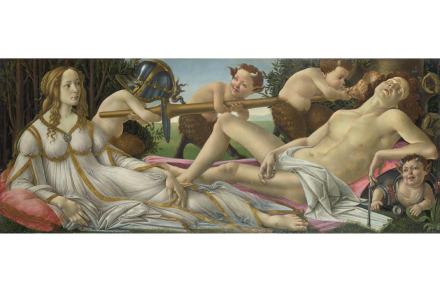
Some pictures are now so mediated that their actual physicality has long been dwarfed by a million reproductions. The ‘Mona Lisa’, obviously. ‘The Haywain’ is the subject of countless cushion covers and trays. ‘The Birth of Venus’ has marketed trainers, hair dye and the New Yorker. Now, Georges Seurat’s ‘Un dimanche après-midi à l’Île de la Grande Jatte’, possibly the most famous painting to have inspired an entire musical and which has, along the way, inspired umbrellas, duvet covers, dresses, socks and face masks, is the subject of an ‘immersive’ creative experience. This does not mean paintballing outside the Art Institute of Chicago, where the actual art work resides.

Claudia Winkleman’s new Radio 2 show gets off to a brainless start

From our UK edition

Last Saturday on Radio 2 Claudia Winkleman was inaugurated as the host of what was formerly Graham Norton’s mid-morning spot. She announced her arrival by playing ‘Help!’ by the Beatles and offering a line-up comprised solely of fellow Saturday-night TV presenters. Here was Sir Tom Jones, calling in from ‘a terrace overlooking the Thames’ and repeating more or less the same interview he had delivered on Graham Norton’s TV show last month. Half an hour later came David Walliams, and to round things off Ant & Dec were prevailed upon to talk about their ‘jampacked’ ITV show later on that day. ‘How do you not unravel doing it?

The Sistine Chapel as you’ve never seen it before

From our UK edition

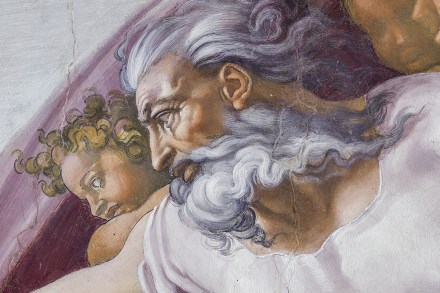
‘The World’s Most Lavish Art Book’ is a pretty big claim, but when two men lugged it through my front door I conceded that The Sistine Chapel is one monster tome. Three, actually. Three hardback volumes, each two feet-tall, each weighing nearly two stone, each in its own calico bag, comprising of digitally perfect photographic recreations of the artwork in the 15th-century chapel. The first volume deals with the masterpieces along the walls, while volumes two and three are a quasi-Greatest Hits, one covering the Sistine ceiling and one the ‘Last Judgment’, both of course by Michelangelo and one of the most famous art sequences on the planet.

Most artistic careers end in failure. Why does no one talk about this?

From our UK edition

It is a standard narrative in all showbiz reporting, and one that arts hacks seem to be duty-bound to abide by. It is the fairy tale of ‘Making It’; the story of a star whose career took time to get off the ground but, thanks to perseverance and self-belief, went stratospheric. It goes like this: ‘I was a nobody, and I was turned down from everything. And I nearly didn’t go to that final audition, but whaddya know? I turned up and… Shazam! Oscars raining down and a mini-series on Netflix.’ There is an encyclopaedia of stars who toughed it out before making it big.

Ed Balls thrives in bourgeois version of ‘I’m a Celebrity’

From our UK edition

Seeing the great and the good, from Edward Fox to Edward Balls, play Schumann on the piano in front of a packed house at King’s Place was rather like watching a live pitch for a bourgeois version of I’m a Celebrity Get Me Out of Here. Instead of reality stars (Joey Essex), or people from your distant youth (David Emanuel) doing utterly terrifying things such as eating bugs, this had thespians (Simon Russell Beale) and people from your distant youth (Fox) playing a Steinway grand in public. Which option was the more ghastly? I don’t know, but both were fascinating, since with both, you were utterly transfixed, simply thinking ‘Thank Christ it’s not me up there’.

Gary Kemp on David Bowie, Margaret Thatcher, and joining the establishment

From our UK edition

There was a funny gaffe on Radio 4 the other day, when the newsreader announced that Hitler’s favourite architect Albert Speer had been banged up in ‘Spandau Ballet’. Cue a lot of laughter across middle England. Gary Kemp, the founder of Spandau Ballet, the 1980s pop band (not the Berlin prison) was also rather amused, even if he’d heard it before. ‘When we first started,’ he recalls, ‘the inky press thought our name meant we were a new fascist movement in music, which was obviously nonsense.’ The real inspiration behind the Spandau name was David Bowie. ‘We were obsessed with Berlin, which had been validated by Bowie. We all went to the Blitz club and bought synthesisers.