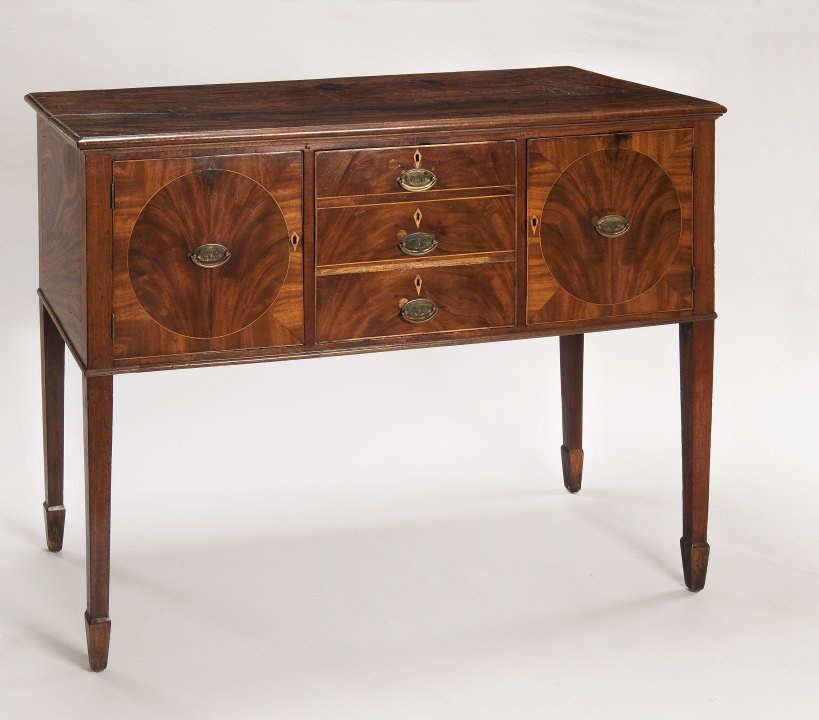
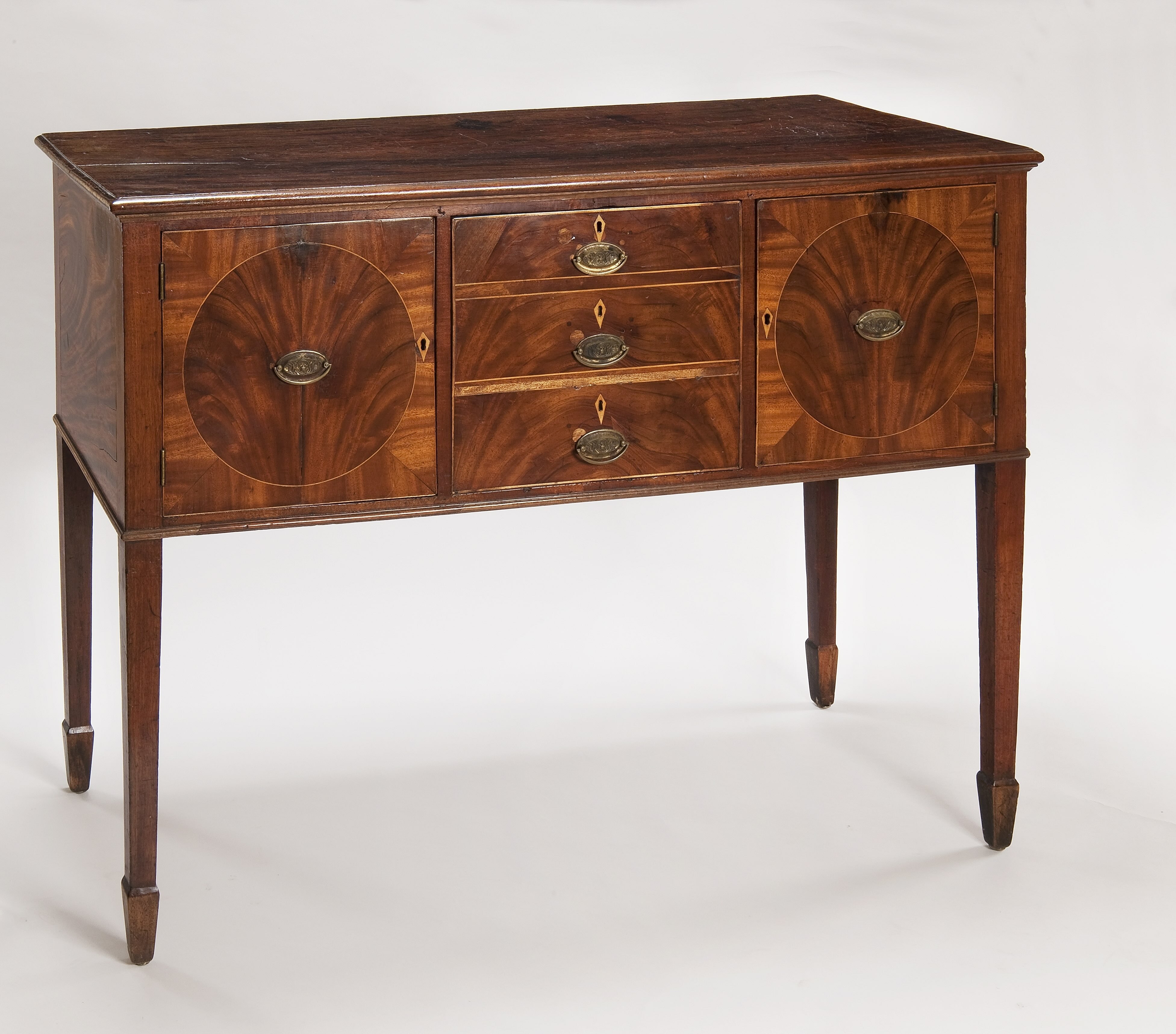
Throw out your grandfather clocks, the naysayers said, and banish your commodes to the scrapheap and junkshop. Brown furniture – invented in the Georgian and Regency eras and popularised for the mass market in the Victorian period – has been decreed by those tastemakers in the know to be as dead as Jacob Marley – a man who undoubtedly would have cherished those heavy mahogany bed frames and cabinets that were synonymous with his age – and showing even fewer signs of returning, even in spectral form.

The reasons for the apparent demise of brown furniture are less to do with a rejection of sturdy, well-built items that were once the pride and joy of any household and more because we are living smaller lives, in all senses. Once, even an ordinary middle-class household might have expected to run to three bedrooms, a sitting room, a dining room and perhaps even a few other ancillary spaces. These large, space-hogging items would have done extremely well to furnish these rooms. But a combination of reduced space, with people apparently needing far less square footage to live in than they did a generation ago, with a Conran and IKEA-influenced trend towards light-wood minimalism has meant that the era of antique walnut and rosewood appears to have met its Waterloo.
As someone who grew up surrounded by brown furniture, news of its demise is something that I hear with very mixed feelings. Both my parents had grown up around brown furniture and accepted it as the norm for home decoration. Bureaux, sideboards, vanity cabinets: we had pretty much all of them, dominating the sitting room, dining room and other parts of the house. It would have been difficult not to have noticed their ubiquity if you were visiting us. But then this was the same for my peers, and for my parents’ friends. There was a comforting solidity to the practical, if aesthetically unexciting, wardrobes and cupboards that dominated our house, just as it did most of the other homes that we spent time in.
This continued until we moved to a smaller house the other end of the country and had to jettison an awful lot of the brown furniture that I had grown up with. Back in the Nineties, antique dealers were still willing to buy the better stuff, rather than the half-arsed Edwardian botch-jobs that would, if one squinted, just about pass for Regency if you weren’t examining too closely.
A charity shop up the road from us had a large quantity of Victorian brown furniture fly-tipped outside it one night
When it came to this knock-off furniture, it was too large and ungainly to be transported in a removal van, and so we found ourselves in the near-farcical situation that it had to be disposed of however it could. Therefore, a charity shop up the road from us had a large quantity of Victorian brown furniture fly-tipped outside it one night, in the hope that its patrons would themselves be in the market for a commode that might just, if you squinted hard enough, pass muster as a Chippendale.
At the time, this seemed like a great pity, but over the next few decades, it appeared that very few people were interested in any dark wood, whatever its provenance. After about 2004, sale prices at auction began to decline precipitously, meaning that items that would have sold for thousands, even tens of thousands, a couple of decades before would now realise a few hundred at best. As an inveterate auction-haunter, albeit one mainly concentrating on the antiquarian books, I began to dread the spectacle of unloved-looking bookcases mournfully haunting these auction houses, ready to be sold for a risible amount after their (often far more expensive) cargo had been dispatched separately.
Perhaps, in extremis, these items might be worth more chopped up and turned into firewood. In the Roald Dahl short story ‘Parson’s Pleasure’, the fraudulent antique dealer Mr Boggis cons some farmers into selling him a valuable Chippendale commode for a few pounds, suggesting he will be using it for scrap, and, when he departs, rubbing his hands together in glee at his con, the farmers chop up the item to save him the inevitable bother that he would face. Dahl presented this as an ironically ghastly situation, but now many might think that the farmers were doing most people a genuine favour, even if Chippendale has not quite gone the same way as less highly respected craftsmen.
Yet there are some small indications that the tide is turning as people resent the tyranny of Scandi minimalism and instead choose to embrace a more quintessentially English style of maximalism. Sales reports from major auction houses like Christies and Bonhams suggest that, for the first time in decades, buyers are once again paying top whack for high-quality items, with a Mayhew & Ince Georgian mahogany bookcase selling for £312,500 in March 2025, against a higher estimate of £250,000, and a Sotheby’s sale from March this year reported 87 per cent of the furniture items – predominantly dark wood – selling, something that would have been unthinkable even a few years ago.
This may yet be a false dawn, partly driven by American and Asian buyers taking advantage of sterling’s relative weakness to get a bargain, as well as giving their homes that patina of old English charm. But it also reflects a growing sense that sturdy and well-made furniture may not be stylish in the way that a Conran glass-topped coffee table might be, but it is considerably more likely to endure beyond voguish items.
Therefore, if you still have a bureau, a writing desk or a library table and are wondering whether it still serves a purpose, don’t despair. Hang on a few years and there is every chance that this much-maligned style of wooden craftsmanship will once again return to the prominence, and respect, that it deserves.





Comments