It’s a shame that Jane Austen can’t profit from selling the adaptation rights to her novels. In her own lifetime, she made but a modest living as a writer. Today, she would be fabulously wealthy.
As it is, the copyright has long expired, so it’s all fair game. In the last three decades alone, Austen’s stories have spawned over a dozen adaptations. That’s not counting a host of marvelously titled retellings, my favorite of which include Bride and Prejudice (the Bollywood remake), Pride and Prejudice and Zombies (self-explanatory), From Prada to Nada (the Latina Sense and Sensibility), Clueless (90s Beverly Hills Emma), and Furst Impressions (a canine Pride and Prejudice).
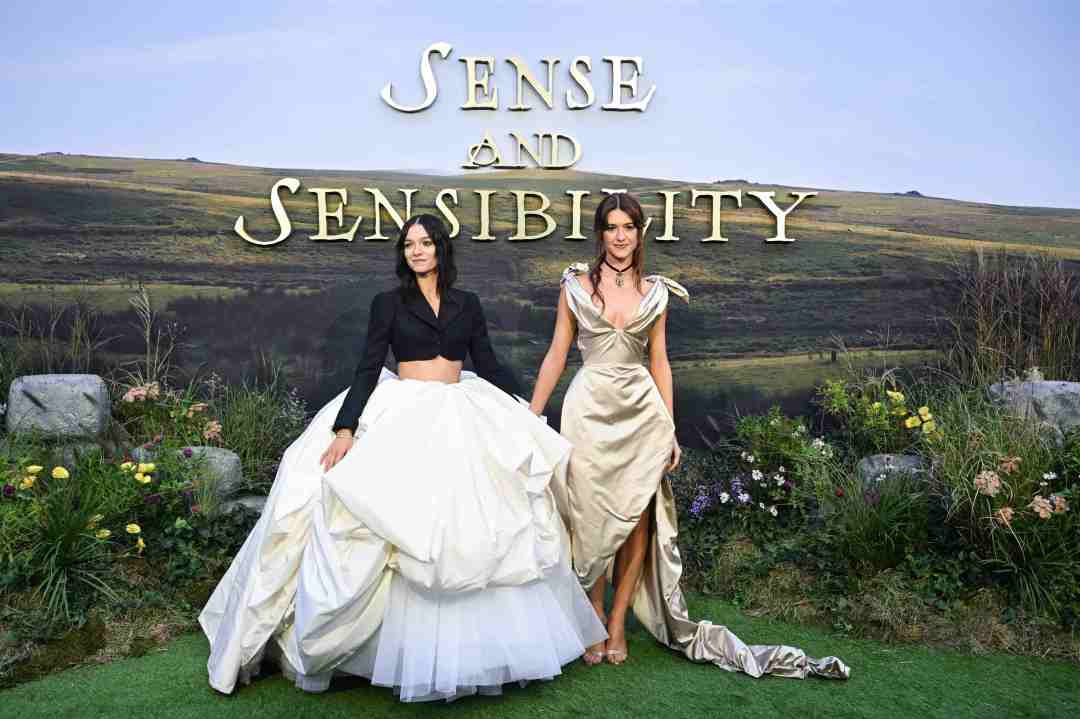
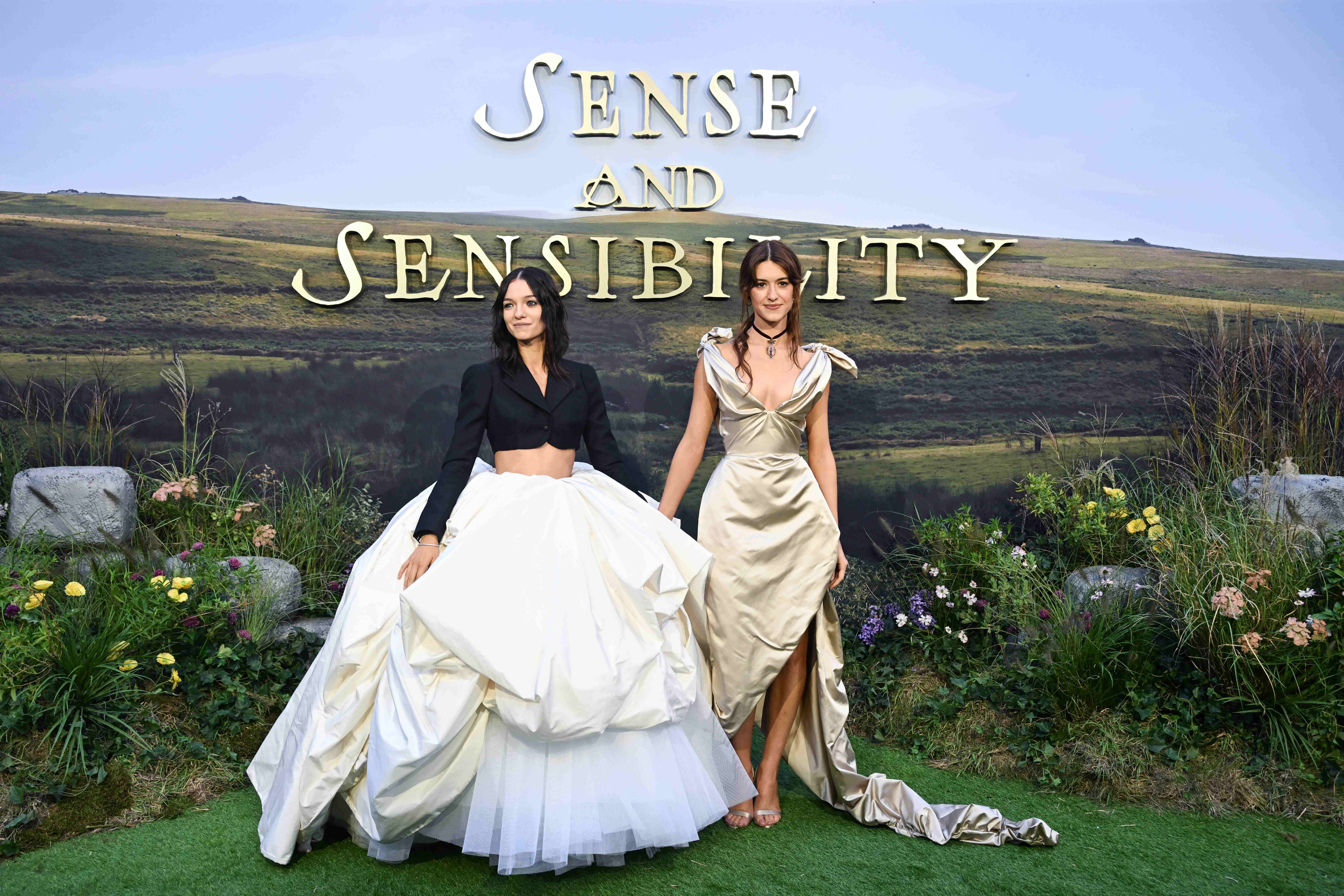
Two new adaptations will join the hallowed halls of the Austen multiverse later this year: a Sense and Sensibility film starring Daisy Edgar-Jones as Elinor Dashwood, and a Pride and Prejudice mini-series with Emma Corrin and Jack Lowden as Lizzie Bennet and Mr. Darcy. Both productions appear to take themselves – and their intended audience – more seriously than the octopus-nightmare-fiasco that was the 2022 Persuasion adaptation (look it up). Are new versions of these familiar stories needed? Probably not. Will I still watch them the moment they’re released? Very likely.
Because whether they’re needed is not really the point. The better question is why we’re always ready for more Austen stories on our screens. Academics like to praise Austen for her social satire and subtle exploration of class, but that’s not why people are drawn to her. What the average Austen reader looks for is the comfort of predictability. Her novels have moments of conflict, but they also all end with a wedding. It’s not, as many literary scholars will say, a shallow, sentimental reading of Austen to suggest that she writes about love. Her stories are about what constitutes a good marriage. Austen expert John Mullan once remarked that he only finally “got” Austen at the age of 26, after he grasped that the person you choose to marry is a rather important part of the rest of your life. I think that, at its core, is Austen’s universal appeal.
I remember picking up Pride and Prejudice as a 14-year-old and wondering how old I would be when I would eventually get married. I imagine I’m far from alone in having had this experience. Yet for many millennial and Gen Z women, marriage is unlikely to happen until later in life, if at all. Marriage rates are at an all-time low, and cohabitation rates are declining for Gen Z. More young people are shrinking even from online dating. Communication between men and women is, in many ways, breaking down entirely.
If Austen’s marriages used to be aspirational, now they are a form of escapism. But I’m not sure that women of my generation have fully realized it. In a recent interview for British Vogue on the upcoming Sense and Sensibility film, actress Daisy Edgar-Jones mentioned that the relationship between the characters of Elinor Dashwood and Edward Ferrars, the main couple in the story, reminded her of the 2020 pop culture phenomenon Normal People, in which she also played the female lead: it has “a real Connell and Marianne feel to it, because so much is unsaid.” She’s not entirely wrong. Elinor and Edward are, like Connell and Marianne, introverts who are good at longing but bad at expressing their desires. But that’s where the similarities end. Marianne and Connell drift like the millennial characters that they are, loving deeply but also never fully committing. Elinor and Edward get married (sorry, spoiler alert) as soon as he is free to do so. We like Normal People because it’s a mirror of our own messiness. But we love Sense and Sensibility because it shows us what we no longer feel we can have. Will this new adaptation succeed in getting the point across?
Does Dolly Alderton know how to do justice to the source material?
And what about the new Netflix Pride and Prejudice? Dolly Alderton, who provided the script for the miniseries, famously runs an agony aunt dating column. She knows the downfalls of modern dating better than anyone, but does she know how to do justice to the source material? Netflix has already turned one Austen novel into two hours of millennial dating cringe with the 2022 Persuasion. I hope Alderton has stayed well clear of that.
Can encountering Austen’s marriage stories fix our plummeting marriage rates? Perhaps not. But even if reading Austen is purely an act of escapism, it’s still immensely valuable. We can’t survive without holding out the hope that relationships between men and women can, at least sometimes, be a source of great joy. For every Sally Rooney who shows us relationships as they are, we need a Jane Austen to show us what they could be.



Comments