Have you ever heard of Gorizia? Probably not, and yet it is decidedly pretty. It sits in the far north-eastern corner of Italy, where the Latin map frays into the Slavic. The centre is all pink arcades, pistachio green shutters, and palazzi painted in faded yellow. Beyond everything is the great pale wall of the Julian Alps.
The town has had at least three names – Gorizia, Görz, Gorica – because for centuries it was Habsburg, then Austro-Hungarian. That is to say: it was a quintessentially multilingual city, full of Italians, Slovenes, Friulians, Germans and Jews, halfway between Trieste and Vienna. Some called it the ‘Austrian Nice’. Imperial officials came here to die of tranquil old age.
The morning after my arrival, I sit at a table in the autumn sun, eating a slice of strudel – flaky, warm, delicious. Close to my table stands a statue of a slender young man. His name was Carlo Michelstaedter, and he was the town’s youthful philosopher. In October 1910, aged just 23, he finished his masterpiece, on the impossibility of living authentically in the modern, nationalistic world – and shot himself the very same day. Which makes him emblematic. Because here’s the strange truth of Gorizia: every suicidal catastrophe modern Europe has inflicted upon itself also happened, quite intensely, in this one dainty town. You can walk them in a day. And so, strudel finished, I do just that.
First, I stroll down to the Isonzo river, which threads around Gorizia. There are whooping kayakers out this morning, sitting in hulls bright as old-fashioned boiled sweets. In 1915, when Italy declared war on Austria-Hungary, this exquisitely, absurdly turquoise river became a front line. Twelve gruesome battles were fought along it; hundreds of thousands of men died for a few kilometres of barren karst. Gorizia itself was shelled many times; it was taken, lost, then taken again. When it was all over, the empire was dead, and the town was Italian.
The Fascists arrived soon after, and took against the Slovenes, who were the majority in the surrounding villages. Slovene schools were closed, their societies dissolved, the language banned from public life. Slavic surnames were Italianised by decree. A mixed town was ordered to unmix.
Then came the next war, and new tragedies. A brisk walk from the river brings me to the narrow main street of the old Jewish ghetto: Via Ascoli. The synagogue is still there, sober and quiet. But the ancient community it served has entirely gone. On 23 November 1943 they were rounded up and sent north. Among them was Michelstaedter’s mother. She was 89. Of the 73 deported to the camps, just two came back. Beside the synagogue there is now a small garden. It is dedicated to Bruno Farber. He was gassed at Auschwitz. He was three months old.
In May 1945 the war ended, but for Gorizia it didn’t end, not really. Tito’s partisans held the town for 40 days, and in those 40 days hundreds of people – awkward Italians, inconvenient Slovenes, someone hated by someone – were arrested, and marched east. Like the Gorizian Jews, most were never seen again.
The new frontier was so insane it supposedly ran under a cow in a yard
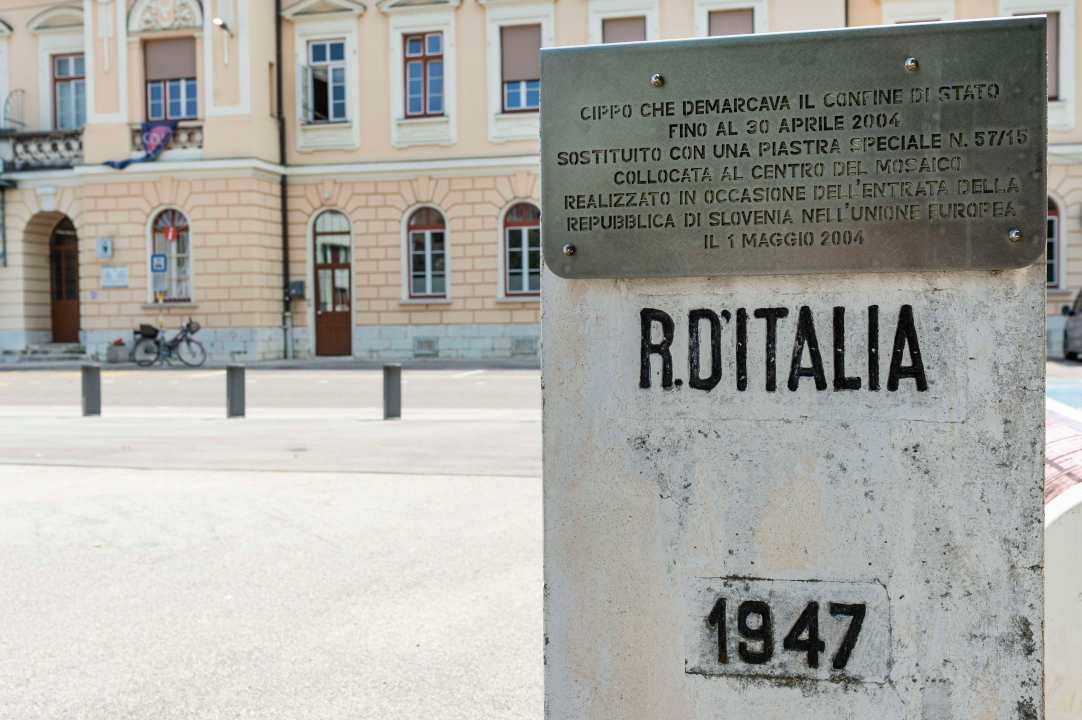
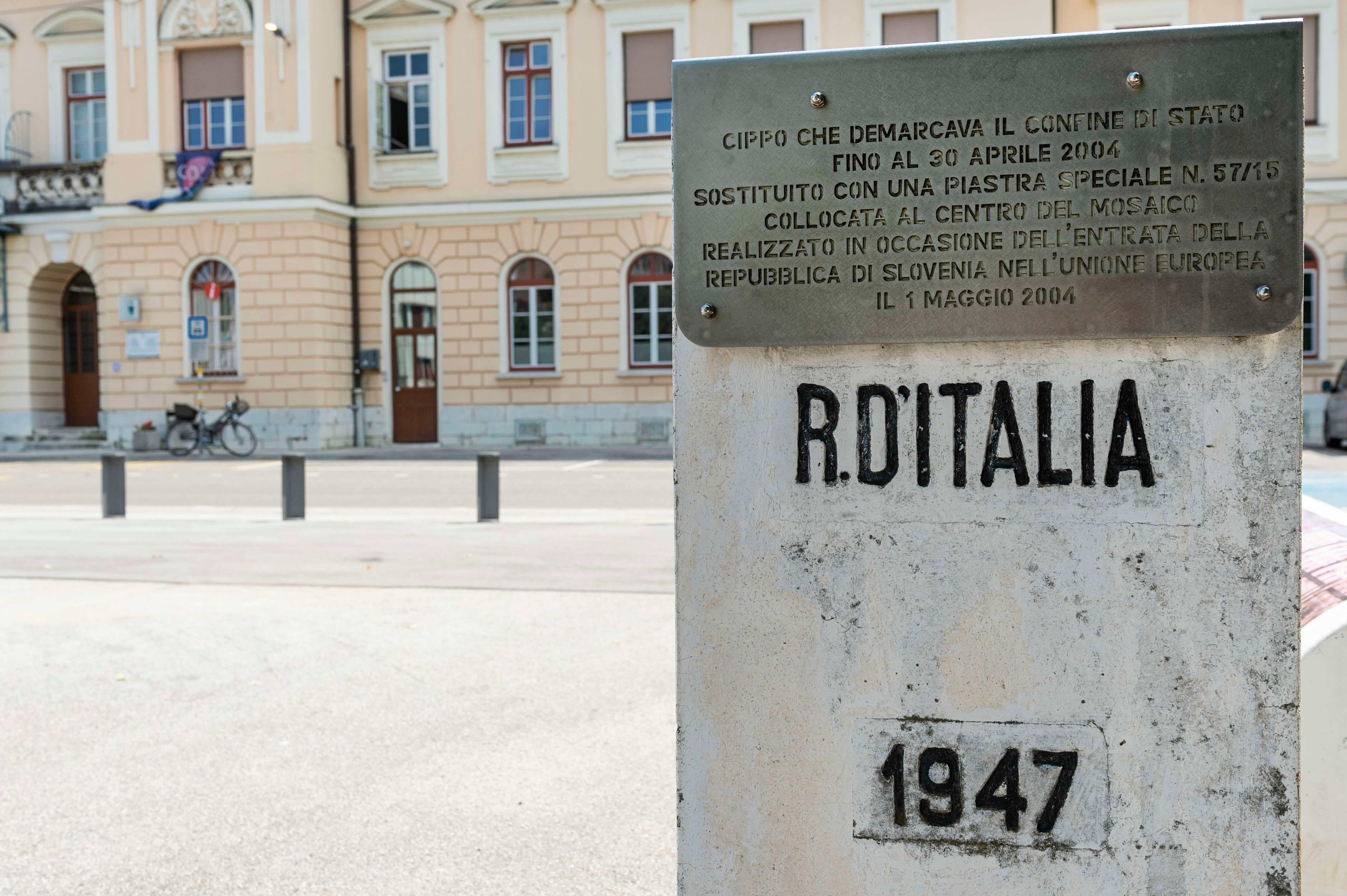
Then, finally, real peace arrived, but in Gorizia peace did this: it drew a new border right through the centre of the town, dividing democratic Italy from communist Yugoslavia. The railway station ended up in the Eastern Bloc. So did a cemetery. On the far side, Tito built a brand-new socialist city, Nova Gorica, to stare back at the old one. The new frontier was so insane it supposedly ran under a cow in a yard. For decades, sundered relatives waved to each other, through the barbed wire.
Thankfully that didn’t last for ever, as we know. Communism fell; Slovenia joined the EU; Schengen followed. The walls came down, and today you can stand on the station square – with one foot in each country. And yet the happy ending was never truly attained. The garrison left, the customs officers left, then the young left. As I walk the handsome streets I count the lowered shutters; when I explore the pretty market it is nearly empty. Demographically, Gorizia is old, and getting older, and, like old people, it shrinks.
As a final irony, there are incomers, but they are not exactly wanted. Today, Gorizia sits in the middle of the ‘Balkan route’ of illegal migration. Everywhere in the town I notice young men, and a few women – from the Middle East and Africa. They carry rucksacks, they sleep in the parks, they shuffle in their socks and sliders. The Gorizians watch them and say little.
My Gorizian day is nearly done; I have one more thing to see. Under Gorizia’s castle runs a tunnel, excavated in the 1940s and once used as a bomb shelter. This year, it is something else. For the town’s recent stint as European Capital of Culture, shared with Nova Gorica, a hundred metres of this dark void have been filled with a living light display, by the Turkish artist Refik Anadol.
The artwork, called Data Tunnel, uses AI to convert the algorithms of nature – growth, life, decay – into an extraordinary spectacle of colour and light. One moment you seem to be underwater in a haunting dream; the next you are inside a blood vessel, pulsing with gold and violet. Locals use the tunnel as a shortcut across town: as I stand there, gawping, an old lady wheels her bicycle past me, through these sumptuous, throbbing, machine-dreamt depths. It is the most beautiful video art I have ever seen, anywhere on earth. It will be switched off at the end of the year.
Evening arrives. I linger in the Piazza della Vittoria with an aperitif, looking up at the onion domes of Sant’Ignazio. After a day like this, I’d like to offer some hope for Europe. But Gorizia has made me wonder how long a civilisation can go on surviving itself, when it is so intent on self-harm. As I write, fresh reports of violent unrest are emerging from France. Once again, Europe seems determined to turn its fury upon itself.
But even if Europe herself is doomed, her art, music, and ideas will endure. Likewise, her tastes. Take the drink in front of me: an Aperol spritz. It began hereabouts, in Friuli and the Veneto, when Austrian soldiers splashed soda water – gespritzt – into the potent local wines. Now it is drunk from Bali to Bangkok, Buenos Aires to Baltimore, by millions who have no idea it was born in this bruised corner of the beautiful continent. It’s not much, but it is consoling. And so I sit here, alone, and my drink glows orange, in the last of the light.




Comments