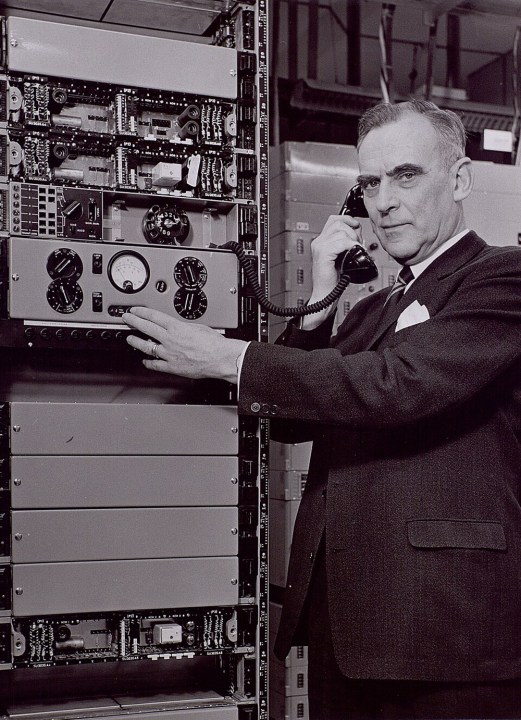
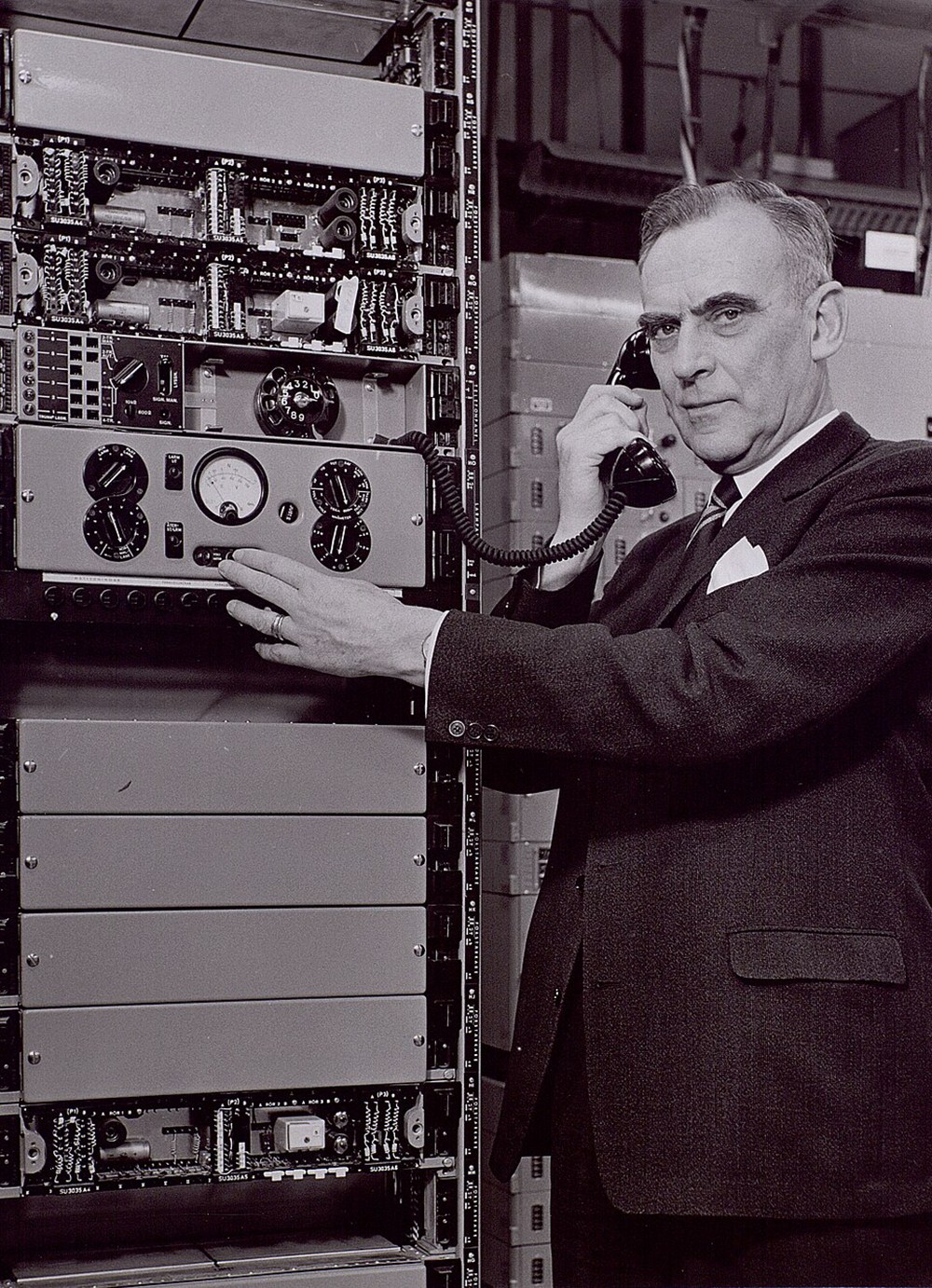
Stay-behind cells in the second world war and the Cold War are familiar to students of intelligence and military history. These were groups of men who, during an invasion, would hide in concealed bunkers from which they would clandestinely emerge to report on enemy positions, possibly also to sabotage them. There are still an unknown number of such hides, neglected and forgotten, in Kent and Sussex woodlands. During the Cold War, units of the British Army were tasked with occupying similar hides on the continent. None was expected to survive for long.
It is less well known that neutral Sweden had a similar organisation. It originated from several initiatives during the second world war, among them one called the Tuesday Club and another formed by Swedish intelligence called Homeland Stewardship. The enterprise was formalised in January 1943 by a Swedish government directive instructing the entire population to resist an invader at all costs. It remains in force to this day.

Following that war, as Russia’s expansionist aspirations became impossible to ignore, the enterprise was rekindled in great secrecy. On 20 June 1949, the then prime minister Tage Erlander issued handwritten letters of authorisation to four individuals, commissioning them to ‘form a committee for the purposes of planning a resistance organisation that shall become active in the event of any part of this country being occupied by a foreign power’. The individuals comprised the director of an insurance company, the head of the army, the director general of the Swedish telecommunications authority and the head of the Swedish Agricultural Federation. They were joined by the minister of the interior and the chairman of the Swedish Metalworkers’ Union.
The enterprise was later given the name Operation Metro. Its tasks included maintaining radio contact with remaining western democracies and exfiltrating to Britain the royal family and surviving senior members of the government. This was not to be seen as a ‘shameful escape’ by an elite, but as the means of ensuring that a constitutional government-in-exile survived to co-ordinate and legally enable the continuing fight against the invader. Throughout the 1960s and 1970s, some 400 to 500 Swedes were involved, later expanding to four figures. Some were trained by MI6.
Headed for many years by Thede Palm, a former historian of religion likened to John le Carré’s fictional George Smiley, it was perhaps the most secretive of all Swedish intelligence organisations. This was partly because it had no parliamentary oversight or official existence (like MI6 until 1994) and partly because of a justified fear of Russian penetration of the Swedish government, evidenced by a series of spy scandals. There was also Sweden’s ideological and romantic commitment to neutrality which meant that any organisation thought to be close to western intelligence services – the CIA especially – was liable to be mistrusted and condemned. In fact, from its founders onwards, all involved in Op Metro scrupulously ensured that it was run by Swedes for Swedes. It accepted help from friendly western services, but not direction.
Another element that helped maintain secrecy was the decades-long unity of Swedish political culture, the absence of a permanent them-and-us confrontation. From its earliest days Op Metro engaged both employers and unions. As Johan Wennström observes: ‘Worker-employer cooperation in the labour market on the one hand, and cooperation within the resistance organisation on the other, gave rise to mutual trust and shared commitment.’ This meant that no one who was in on the secret had any interest in revealing it, while those outside, who might have relished blowing it wide open, had no knowledge of it.
It took Wennström a great deal of research to put this detailed, thoughtful and unique account together. There is no single, coherent archive but rather various papers, letters and diaries scattered throughout Sweden’s public and not-so-public collections, often with opaque titles such as ‘Regarding authorisation of the Minister of the Interior to appoint a committee for the management of certain activities etc.’ He also interviewed participants and the families of the dead, uncovering much else that is not widely known outside Sweden, such as that it planned to build an atom bomb.
The result is more an academic exploration of Swedish political and bureaucratic culture than tales of would-be derring-do. Wennström concludes that Sweden’s corporate welfare state and national defence counterpart ‘reflected, and in some measure shaped, each other’. Thus, in a very Swedish way, the stay-behinds were structurally more a movement than a public body. And perhaps all the better for it.
Op Metro was discontinued at the end of the (first) Cold War on the assumption that ‘war could never again come to Sweden’. Post-Ukraine and Sweden’s hitherto-unthinkable accession to Nato, it’s reasonable to assume that it or something like it is being revived. If it’s anything like its predecessor, it’ll be a while before we know about it.


Comments