Spectator Life

Spectator Life

An intelligent mix of culture, style, travel, food and property, as well as where to go and what to see.

We don’t need more Austen adaptations. Or do we?

It’s a shame that Jane Austen can’t profit from selling the adaptation rights to her novels. In her own lifetime, she made but a modest living as a writer. Today, she would be fabulously wealthy.   As it is, the copyright has long expired, so it’s all fair game. In the last three decades alone, Austen’s stories have spawned over a dozen adaptations.

smell

The history and importance of smell for our antiseptic age

For smell historians and experts, of whom there are gratifyingly more than you’d think, a standard assumption to be skewered is that olden ages stank; the modern world doesn’t because hygiene and chemicals have banished stinks in the name of progress. According to this reading of history, banishing odors is a sign of progress. Civilization doesn’t smell. Neither Bjørn Berge nor William Tullett stand for this. For them, older times may have been smellier, but people were comfortable with living alongside middens, rotting corpses and foul tanneries. Smell in the modern age is now under threat and at risk of extinction or of being even more marginalized – Tullett uses the word “ephemeralized” – than it already is in this age of visual primacy and screens.

Brown furniture isn’t dead

Throw out your grandfather clocks, the naysayers said, and banish your commodes to the scrapheap and junkshop. Brown furniture – invented in the Georgian and Regency eras and popularized for the mass market in the Victorian period – has been decreed by those tastemakers in the know to be as dead as Jacob Marley – a man who undoubtedly would have cherished those heavy mahogany bed frames and cabinets that were synonymous with his age – and showing even fewer signs of returning, even in spectral form.   The reasons for the apparent demise of brown furniture are less to do with a rejection of sturdy, well-built items that were once the pride and joy of any household and more because we are living smaller lives, in all senses.

brown furniture

Americans can’t write funny novels

If I recommended you an American novel called Stoner, what would you think? You’d probably assume it was some hallucinogen-inspired rubbish from the 1960s by someone who once met Allen Ginsberg. You wouldn’t think it was a plangent, devastating story about the failed life of an English literature academic. That’s because, if a campus novel like this were British, it would have been written by Kingsley Amis, Howard Jacobson or Evelyn Waugh. It would never have had such a terrible title and would also be comic rather than achingly sad. That’s the difference between British and American novels: American novels aren’t funny.

The Renoir heist was entirely predictable

Things are tough for French museums right now. A dawn raid on Tuesday at the Musée Renoir in Cagnes-sur-Mer resulted in the theft of two paintings by Renoir worth $10.5 million (another two were stolen but swiftly abandoned). On long term loan from the Musée d’Orsay, the paintings were seized when thieves sliced through the museum's garden fence with an electric saw. Following a spate of thefts from French museums in July, France’s patrimoine is undeniably under threat. The Louvre heist was inspirational While British museums (The Horniman, Pitt Rivers, Ashmolean, Fitzwilliam and occasionally British Museum) busy themselves with the return of their artifacts, the French, it would seem, struggle to keep hold of theirs.

coffee

Coffee-drinking is a cult

Ten years ago, I started getting migraines. They were so bad that when one struck, I babbled nonsense, couldn’t speak, type or write. The swelling in my head, which caused the migraine, was pressing on the language department of my brain. Once recovered, I was confused for days, repeating words three or four times in a row and not quite understanding what was being said to me. This all had to stop immediately, as communication is key to the smooth operation of my life. It was suggested to me that coffee is a common migraine trigger and if I was looking for a culprit I ought to start right there. I immediately cut out the black stuff and the migraines stopped.

Welcome to the Silicon Valley cinematic universe

Yesterday, a teaser dropped for Artificial, a biopic directed by Luca Guadagnino based on Sam Altman’s brief ouster from OpenAI in 2023. Earlier this summer, a trailer was released for The Social Reckoning, Aaron Sorkin’s Meta drama, which is a follow-up to his 2010 film about Mark Zuckerberg and the founding of Facebook, The Social Network. And in the past few days, audiences at the Venice and Telluride film festivals have been hyping up Nathan Fielder’s documentary You Can See Everything about the Theranos founder/fraudster Elizabeth Holmes, as well as Alex Gibney’s Musk documentary. (Gibney made an earlier documentary about Holmes, who has already been the subject of a biopic, played by Amanda Seyfried in The Dropout.

We don’t swear like we used to

In the halcyon, innocent year of our lord 2004, there was a minor political scandal, if you can imagine such a thing. Then-Vice President Dick Cheney was questioned by a Democratic senator about his financial ties to a government contractor during a photo op. Cheney’s response was short but far from sweet: the inquisitive senator was told to go “fuck yourself.” A few years later, reminiscing happily about the moment during a radio interview, Cheney doubled down on his mot juste, saying “You’d be surprised by how many people liked that. That’s sort of the best thing I ever did.”  A sad state of affairs indeed, and I’m not talking about the long decline of inter-party discourse. I mean the decline of swearing, in its quality, if not quantity.

How Charles de Gaulle won over Gen Z

It turns out that this summer’s cinematic hero is not Spiderman or even Odysseus, but the French wartime leader Charles de Gaulle who has knocked both Marvel and Homer into a kepi (the French military hat he favored).   De Gaulle, a two-part, six-hour epic directed by Antonin Baudry has been a surprising hit in France and is in demand from all the major international markets, including those of Latin America, India and China. The buzz is remarkable for a foreign-language film starring a person who, although a national hero in his homeland, is not a global household name.

New Yorkers don’t get DC

I was in New York all summer, making a big fuss about DC to all those sophisticated cosmopolitans. They think it’s boring. They assume it’s full of squares and policy nerds and they’re right, but that characterization doesn’t do the capital justice. It’s my job as a Washington ambassador to accurately portray the city to the snobbish coastal elites, even to sex it up a bit (though it really doesn’t need my help in this respect). Regardless, it’s a job I take seriously. The obvious hook is, of course, espionage. Espionage is chock-full of charge and my choice motifs are all borrowed from the weighty catalogs of 007 and Richard Nixon’s Watergate scandal – wiretapping, martinis, guns, honeypots.

Wendell Berry’s homecoming

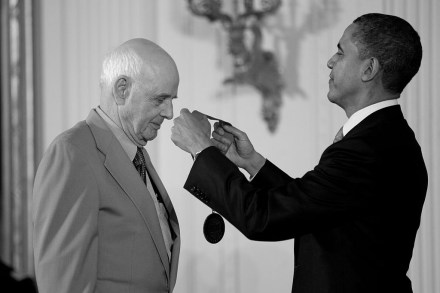
Wendell Berry, who died Monday aged 92, was a man who loved the soil and the soul. Writing from Kentucky, where his family has lived and farmed for generations, Berry built up, over more than sixty years, a corpus of fiction, non-fiction and poetry – all genres in which he distinguished himself – which, when taken as whole, reveals a profound and coherent philosophy of the earth and how it relates to human community.  Unfortunately, the average person probably doesn’t know who Berry is. Even those who have heard of him might only know his incendiary 1987 Harper’s essay “Why I Am Not Going to Buy a Computer” or his watershed 1977 takedown of maximalist agricultural practices, The Unsettling of America.

wendell berry

Why Wendell Berry mattered

Like most adults who write their thoughts down regularly, I was raised in a home by a mother who maintained piles of books strewn around the house. There were more books than anyone in our home could read combined, but you could find our favorites open on tabletops and dressers with a pencil, or another book, pinned in them to hold a page. Most of these books that were propped open were my mother’s and they included dozens of Wendell Berry’s works. I slowly absorbed a version of Berry’s way of thinking: through reading, through my mom’s infatuation with his work, through osmosis as I watched Cartoon Network next to open copies of Hannah Coulter and What are People For? Berry has begun to suffer the same literary fate as C.S.

wendell berry
clean cocaine

‘Clean cocaine’ isn’t worth it

Cocaine has a tendency to get the press all aflutter. So it's probably no surprise that the Daily Mail had a splash earlier this summer with a feature about a legal energy supplement compared – at least in the headline – to “clean cocaine.”  What on earth is this product, I wondered. It turns out that the reality is slightly less dramatic than the tabloids might suggest: Wildkraut – also known as Energy Sniff – is a powdered supplement from Austria which combines the dosage of caffeine you might otherwise get from a Red Bull with some esoteric alpine herbs. The one thing that it does have in common with cocaine is that it is intended to be snorted.  As someone more than partial to energy drinks, I was immediately curious.

Why the Japanese don’t need fat jabs

“You can never be too rich or too thin”: so said Wallis Simpson, would-be consort to Edward VIII. Or perhaps Dorothy Parker. Or perhaps Joan Rivers. No one really knows. But whoever said it, Japan appears to have had it engraved on its national escutcheon. Japan is officially the world’s thinnest rich country, with an obesity rate of just 4.3 percent of the population. By comparison, it’s 40 percent in the US. A close comparison to Japan is Bangladesh, where the rate is 4.5 percent – but where one in ten people is dangerously undernourished. These are extraordinary statistics. What on earth is going on?  The most reached-for reason is diet. Japanese food, so it is thought, is healthy and lean.

Real men don’t look like Clavicular

One of my favorite one-I-made-earlier aphorisms is “Men are the sum of their parts; women are some of their parts.” But now I’m wondering if it’s a bit out of date. When I thought it up, women were the only ones who bothered with “tweakments” and cosmetic surgery and generally turning themselves into living dolls, hoping to hook what in the common parlance is known as “a live one.” But now, with transplants for receding hairlines and male film stars no longer looking like their passport photos, I don’t think this is true anymore. Becoming a “lad” once meant swerving Sports Day, drinking beer and generally letting oneself go Where there is still a gap in male and female attitudes to looks is in dieting.

Gen Z are falling in love with Morrissey

There is a Smiths lyric for almost every moment. Whether it’s telling a friend that their jokes just aren’t funny anymore or being herded into the corner of a club and contemplating hanging the DJ, every song that contains Morrissey’s melodramatic teenage misery becomes useful vocabulary for the most mundane scenarios. Including visiting troops in Ukraine, as the British Prime Minister proved earlier this week. Gen Z is proving rather less doctrinaire about culture than previous generations Perhaps that is just one reason that helps explain why, more than 40 years after The Smiths first appeared, they are finding a new audience among those who were not even alive when the band split up, let alone released their first album.

Why climate skeptics are winning

Travis Cook is a man on a mission. Armed with just a sandwich board (“There is no Climate Crisis”), an array of literature and formidable scientific knowledge, the 32-year-old former mechanical engineer is on a 1000-mile walk around the UK to talk to people and try to dispel the climate gloom that we are customarily bombarded with. His is a message of climate realism (what the BBC might call “climate denialism”) and of hope. Far from being the lost cause this might once have seemed, he believes his message is beginning to be accepted. Fight the battles you can win “I love it,” he tells me of his daily interactions (he was at Hayling Island in Hampshire when we spoke). “It’s a good news message, so it’s easy to deliver, and it brings me joy.

Does Yogi Bear have a connection to yoga?

“Well, we all have areas of ignorance,” said my husband with a little too much relish, I thought. He was responding to my admission that I had reached a ripe old age without realizing that the words yoga and yoke had the same origin. Yoke has been used in English for more than 1,000 years and yoga only since about 1785, but it had been in use in Sanskrit since the first millennium BC. The meaning of yoga was held to be either the yoking and reining in of the senses, or the yoking and joining oneself to the Prana (life force), the Om (absolute) and the Universe.

wood yoga

If we allow dogs at weddings, why not a python?

Three women in my Tuesday weights class are getting married. While we squat and thrust and fling our kettlebells around, there’s nonstop talk of veils, decorations, modes of transport to the venue and whether anyone eats wedding cake these days. Men are allowed in this weights class but, oddly, none ever shows up. The major update from one of the brides this week was that the local register office had given permission for her dog to attend the ceremony. She duly bought “a little tux” for Badger, so he could look the part. How do we feel about dogs at weddings?

dogs

A much-deserved revival of John McCabe, a formidable British composer

Grade: B+ “Cheltenham Symphonies”, they used to call them – a catch-all term for the kind of large-scale, traditionally inclined postwar works that found a natural home at the Cheltenham Music Festival. But it was also a sneer: a dig at the supposedly parochial nature of British music in the 1960s and 1970s. Over in Europe, the avant-garde was doing whizzy things with Marxism and electronics. British music, went the narrative, was suburban, outdated and drab. Now listen to John McCabe’s Third Symphony of 1978. McCabe’s orchestration is as gorgeous as a bird of paradise; it shimmers like the colors on the surface of a bubble. Not that there’s anything fragile about McCabe’s musical engineering.

mccabe

How a young inventor with no printing experience revolutionized the newspaper world

Here’s a quiz for you. On the third floor of the New York Public Library is a vast mural painted by Edward Laning in the 1930s. It’s called “The Story of the Recorded Word” and it’s divided into four scenes, each one a pivotal stage in the development of writing. Can you guess what they are? I daresay you managed to picture something resembling the third scene: a bearded Johannes Gutenberg showing off a page of type from his new invention, the printing press. I think you might have got the second one, too: a medieval monk, with quills and inkpot, copying out a manuscript in his scriptorium. Perhaps, if you’re religiously inclined, you even guessed the first: Moses receiving the Ten Commandments carved into stone. But what about the fourth scene?

type

Apple Music has redeemed itself

Just two weeks ago I was ready to cancel my subscription to Apple Music. I’d stumbled across its “Composer Essentials” – a list of 100 composers so significant that they merit their own curated playlists. It includes Bonds, Boyle, Caccini, Dawson, Dett, Perry, Poldowski, Sohy, Strohl and Walker. If those names don’t ring a bell, how about the composers who are missing? Albéniz, C.P.E. Bach, Bellini, Berg, Bizet, Borodin, Chabrier, Kodály, Martinu, Messiaen, Mussorgsky, Nielsen, Poulenc, Schoenberg, Walton, Weber and Webern. See what I mean? The “Essentials” list is stuffed with DEI hires. Which – an analogy to Cambridge University comes to mind – does no favors to the black and female composers who deservedly feature in it, such as Joplin and Beach.

wagner apple music

What happened to Will Self?

It is usually taken as a given, for better or worse, that the Grand Old Men of English letters tend to move, if not necessarily to the right, to an accommodation with conservatism and the status quo as they grow older. It is, after all, harder to rail against the establishment when you have been weighed down with CBEs, honorary doctorates and the adulation that comes from being a much-loved writer. However, nobody seems to have told this to the novelist, polemicist and one-time enfant terrible Will Self, and the results have been, depending on your perspective, either disappointing or bleakly amusing. Self has published an extraordinary 7,000-odd word open letter to Andy Burnham on his X account, as part of what he calls his “Sitreps.

will self
corporate

How corporate twaddle makes us less productive

Bandwidth is troubling, because it’s just one of many phrases that assume we are mere cogs in the machine Allow me to totter onto my rickety soapbox for a second, and say: business jargon has gone too far. Buzzwords have become so entrenched into working life that they have, in effect, become a second language. One that, like a much-needed laxative, we are forced to digest to keep daily operations running smoothly. If you don’t use (or at least nod energetically along with) phrases like “low-hanging fruit” or suggest that someone “circle back” so that you can “create synergy,” and instead choose to communicate like an unlobotomized person, you’ll find yourself a virtual pariah.

The car crash appeal of Charles Bukowski

My reading experiences with the poet and novelist Charles Bukowski (1920-94), once described by Time magazine as the “laureate of American lowlife,” have taught me an important truth about literature: that characters you hate can be at least as compelling as those you admire.    Take Henry Chinaski, the depressive, alcoholic protagonist of Bukowski’s five semi-autobiographical novels (he wrote six in total, as well as hundreds of poems and short stories). One of these in particular I have read so many times that the jacket is falling off: Women (1978), in which Bukowski’s alter-ego Chinaski enjoys – if that’s the right word – the rewards of literary fame after decades of obscurity.

I suspect a lot of TV is AI-generated

AI slop is not a new phenomenon. But it is becoming more prevalent as the lazy, the modish and the subliterate take advantage of an apparently beneficial and cost-free leap in technology that will save them the time and effort formerly required to construct a speech, résumé, article or image. I only started picking up on it myself quite recently. But now, when I get the feeling I’m being fed AI-generated pictures, I react like those dogs in the movies that are trained to spot Terminators. Thanks to the proliferation of sites such as Netflix, Amazon Prime, Apple TV, etc., there’s an awful lot of cable-TV slop about these days, as there has to be with all that space to fill, all those subscription costs to justify.

tv

Reveling in the music of words

There’s a chapter in this mostly illuminating and occasionally irritating book in which the author – the award-winning writer of The Hours and other acclaimed novels – explains why he no longer reads reviews of his work. The decision was prompted first by an “excoriating” hatchet job by Michiko Kakutani, erstwhile lead literary critic of the New York Times. “A worse review is difficult to imagine,” Cunningham notes, claiming that he has “mostly repressed the memory” of its contents, though he does share his rather macabre plan for revenge: to slip a copy of the book into her coffin so that “extra-terrestrial archaeologists” will assume she wanted to be buried with it.

cunningham

The new Spider-Man is a triumph of Hollywood professionalism

Remember Peter Parker? By the end of the last installment of the Spider-Man movies, No Way Home, we were the only ones who could. Following a complicated but deft collision of multiverses, young Peter (Tom Holland) had realized that the only way to save the world (again) was by getting Doctor Strange to cast a spell that made everybody – including his best friend Ned (Jacob Batalon) and girlfriend MJ (Zendaya) – forget that he’d ever been Spider-Man. He therefore began his Brand New Day alone in his apartment with only a highly evolved piece of AI for company. Sure, he’d returned to his roots of capturing local crooks by the dozen. But while this restored the hero status that J.

spider-man
wildfires

Tears and terror on the front line of the French wildfires

Provence As soon as I opened my front door I could smell it. Along the path, flakes of white ash landed on my arms. Looking north beyond the cliff, I saw a rapidly increasing plume of brown-black smoke. Before long it filled a third of the sky. Not again. Ten years ago, almost to the day, the concrete shack I was renting in the woods a few miles from the village was almost engulfed. Jeremy was having a break and staying with me when a wildfire broke out in the valley below. The smoke and flames looked about a quarter of a mile away and firefighting Canadairs flew low overhead. Friends told us to leave but I refused. I’d left everything behind in Scotland 18 months before and couldn’t face doing so again. Jeremy asked if he’d have to knock me out and throw me over his shoulder.