Politics

Read about the latest political news, views and analysis

Could Labour drop its plan for a no confidence vote?

The working assumption in Westminster at the moment is that Theresa May will lose Tuesday’s meaningful vote on her Brexit deal, and then the Labour Party will table a motion of no confidence in the government. The Tory whips certainly seem as concerned about that no confidence vote as they are about the Brexit vote, given they are resigned to losing one but have a good chance of winning the other. But I’m not sure that this is the case any more. The public language from the Opposition has changed in recent days to suggest that there will not be a separate vote after all - or at least not one tabled by the Labour Party.
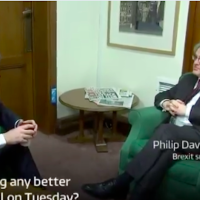
Watch: Chief Whip’s failed attempt to woo Philip Davies over Brexit

Oh dear. With the government on course for a historic defeat next week on Theresa May's deal, this is the point in the campaign that Downing Street had hoped to see MPs coming round. Alas not. So, it was a curious choice by the government to allow ITV exclusive access to Chief Whip Julian Smith's attempts to woo unruly MPs. Smith was filmed trying to convince Leaver Philip Davies to back the deal: https://twitter.com/itvnews/status/1070727441776328706 What ever the intention, Mr S know who he thinks emerges as the voice of reason...

The problem with a ‘People’s Vote’

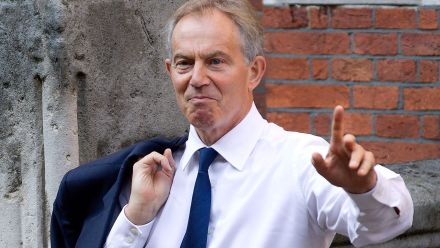
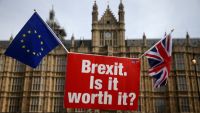
Surprise! The Economist has come out in favour of a new referendum on Brexit, joining Sadiq Khan, Tony Blair and possibly the entire cast of Strictly in calling for a People’s Vote. It observes sagely: “no one can claim to intuit what the people want. The only way to know is to ask them”. And of the PM’s peculiar tour of the nation to flog her plan (why?), it declares that it is an exercise in “pantomime” democracy:“May is right that MPs should take into account what the public think. So should she: not by guessing, but by calling on them to vote”. But on what?

Gove is right to keep the lynx out of Northumberland

Over the few years, a battle has been quietly simmering between farming communities and a conservation organisation who want to reintroduce the Eurasian lynx to the UK. The cats have been extinct in the UK for well over a thousand years, and while farmers worry that the big cats will threaten their sheep, Lynx UK – the trust behind the plans – argue that the animals would help the economy, and cause little damage to livestock. But now Defra secretary Michael Gove has rejected a request to release six lynx into Kielder Forest, in Northumberland. The reasoning given for their decision included a lack of support from locals and major landowners, adding that the ‘socio-economic benefits of the trial were unclear’.

Why politicians should fear Project Fear

‘Project Fear’ didn’t work out in the 2016 Brexit referendum, with voters turning against the ‘experts’ maligned by Michael Gove and other Leave campaigners. So it’s strange to see the Conservatives reigniting it again in the run-up to Tuesday’s vote on Theresa May’s Brexit deal, warning of six months of disruption at Dover and other ports in the event of no deal. There’s no evidence that this squeeze message is really going to work on Tory MPs and whittle down the scale of the expected defeat next week. The return of Project Fear is also a reminder of the danger of a second referendum for those who hope that it might lead to Britain voting to Remain after all.

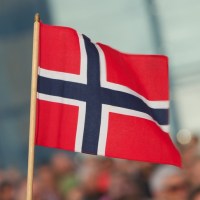
Why the Norway model wouldn’t work for Britain

In the corridors of Westminster and the salons of some remainers, there is a lot of excited chatter about the “Norway option”. This would involve being a member of the EEA and single market, but not of the EU. Depending on who is pushing, Norway is presented as either a temporary or permanent alternative to Theresa May's troubled deal. But there are problems with this quick fix. The well discussed issue that being in the EEA doesn’t end freedom of movement is one; another is the fact that the Norway option doesn't end EU budget contributions. But more fundamentally, few appreciate just how a regime that (sort of) suits Norway is completely unsuitable for the UK.

Barometer | 6 December 2018

Big defeats Could the vote on the Brexit deal set a record for a government defeat in the Commons? Aside from opposition day motions and other votes where nothing substantive is at stake, the post-1945 record is shamefully held by MPs who voted against the Major government’s attempt to limit pay rises for MPs (motion lost by 215 votes). Other hefty defeats (with the margin of defeat): 1978 (Labour, Jim Callaghan) Opposition amendment demanding income tax basic rate be cut from 34% to 33%, 108 votes.} 2014 (Coalition, David Cameron) Under-occupancy rules for social housing, 75 votes. 1978 (Labour, Jim Callaghan) Clause on Wales devolution referendum, 72 votes. 1975 (Labour, Harold Wilson) Disclosure of government economic forecasts, 71 votes.

Beyond May

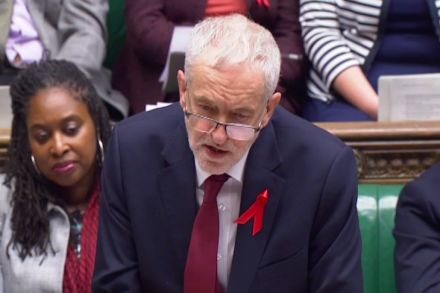
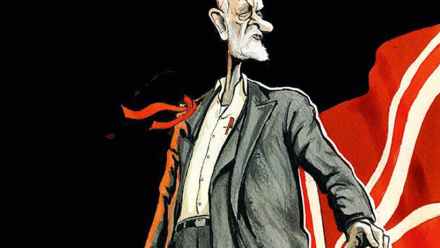
On Tuesday, MPs will face something rare: a Commons motion which really does deserve to be described as momentous. It will set Britain’s place in Europe and in the world for years to come. The vote will place an especially heavy burden on Conservative MPs, for they have the power to inflict a hefty defeat on their own government, an administration which has no majority and which governs thanks only to a confidence and supply agreement with the DUP. It is all too easy to see where defeat on Tuesday could lead: to the collapse of the government, a general election and the arrival of Jeremy Corbyn in Downing Street. Theresa May’s deal has been rejected by MPs on the left and the right, by radicals and moderates.

The Spectator’s notes | 6 December 2018

Inside the Dominic Grieve amendment carried on Tuesday is the embryo of a new political party. Any parliamentary majority for what Sir Oliver Letwin, who voted for the amendment, calls ‘something real’ (‘Norway plus’) if Mrs May’s deal falls would depend on the support of a good many Labour MPs. After three months’ work, the organisers believe they have got 75 such on board, led by Chuka Umunna. These are anti-Brexit, chiefly Blairite Labour MPs who cannot bear Jeremy Corbyn. If their number held up (a big ‘if’), the organisers calculate, the House could carry ‘Norway plus’, with the government and most Conservative backbenchers supporting, even if the ‘hard’ Brexiteers opposed. Labour would be split.

Stephen Lloyd’s baffling decision to resign the Lib Dem whip

Brexit has left the three main parties that stand in England in an existential mess, split not just over the fundamental question of Leave vs Remain, but also over how to approach the deal that Theresa May has brought back from Europe. One of the odder splits tore open today, with Eastbourne MP Stephen Lloyd announcing he was resigning the Liberal Democrat whip so that he could back the government next week.

If Brexit is abandoned, will it ever be worth voting again?

Earlier this year I was approached at a party by a prominent and slightly oiled ‘Remainer’. Amid other pleasantries she asked me, interrogatively: ‘You voted “Leave”, Douglas. Can you give me one good reason why we should still leave the EU?’. Having watched the last two-and-a-half years from the sidelines, depressed by almost the entire political debate in the UK, I could think of no argument that would be new to her. We’ve all been round this too many times before, and almost no one has conceded anything new on the subject for years. So I decided to relay the feeling that was (and still is) foremost in my mind. The feeling which has disturbed me the most.

The Lib Dems’ big Brexit split

Anyone watching the Conservatives tear themselves apart at the moment might be tempted to think that a political party could not possibly be any more divided. Well, the Tories may now have at last some stiff competition, as the Liberal Democrats face a remarkable split over their Brexit position. Since the coalition years, the Lib Dems have vowed to never sell out their principles again like they did over tuition fees, which led to their disastrous showing in the 2015 election. Which explains why they have since relentlessly focused on the one key issue that sets them apart from the other main parties in Westminster: backing Remain and supporting a second Brexit referendum.

What does a leaked recording reveal about Boris’s Brexit stance?

I’ve been sent a recording of a presentation made on Tuesday by the great champion of Brexit, Boris Johnson, over breakfast in Amsterdam. He was talking to “chief risk officers” of financial firms at an event called RiskMinds International, that was sponsored by, among others, the huge accounting firm PWC and the management consultancy McKinsey. Days before that big vote on Theresa May’s version of Brexit, which Johnson passionately opposes, he talks about the importance of politicians, like his hero Churchill, taking a stand against the establishment and “gambling” – making a “giant bet” – to do the right thing.

Theresa May’s meetings with her MPs are making things worse

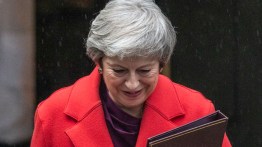
Theresa May is continuing her efforts today to persuade Tory MPs to back her Brexit deal. It is clear that she is not going to get Commons approval for that deal on Tuesday, and is too late to drop it beforehand without another vote. What’s unclear is whether the Prime Minister is actually making the situation any better. The tally of Tory MPs who have declared in public that they will vote against the deal isn’t falling, but rising, even as backbenchers are summoned into meetings in Number 10 and the Prime Minister appears in the Commons dining rooms to try to sweet talk her party.

What happens next?

Parliament is in deadlock over Brexit. So what can we expect in the coming days and weeks after the vote? These are the scenarios currently being war-gamed. May’s deal passes A political shock: Theresa May squeaks over the line after convincing Brexiteers that it was her deal or no Brexit — and Remainers that it was her deal or a no-deal Brexit. The DUP then rains on May’s parade. Seething over the backstop, it declares that the confidence and supply agreement is over for good. This scenario could involve delaying the initial vote in the hope this gives MPs time to come around. It passes on a second vote Theresa May’s deal fails to pass first time round by 50 votes.

Brexit’s crunch point

Unless Theresa May delays the vote, 11 December 2018 might be about to become one of the most important in recent British history; more important even than 23 June 2016. If MPs vote down Theresa May’s withdrawal agreement, as nearly all ministers expect them to, they will set Britain on course for either the softest possible Brexit or a second referendum. In the process, they may well split the Tory party. Theresa May’s strategy has been to play chicken with Parliament. Her team saw virtue in intransigence and calculated that at the last moment MPs would get out of her way. They thought that fear of no deal would bring former Remainers into the fold. Simultaneously, Leavers would reluctantly take this imperfect Brexit over the risk of no Brexit at all.

Who’s really to blame for the Crossrail fiasco?

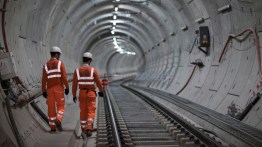
There’s been a strong sense of pre-Christmas turkeys coming home to roost in this week’s news, as stories I’ve written about for months or years have reached, if not a denouement, then at least a new twist in the plot. Saddest of these is Crossrail, London’s east-west mass--transit system that was originally scheduled for its royal opening next week: now we hear it needs ‘hundreds of millions’ more of public money if it is to meet its delayed completion a year hence, though even that date no longer looks a safe bet. Its chairman Sir Terry Morgan has announced that he’s waiting to be sacked, both from Crossrail and from the chairmanship of the possibly even more troubled HS2 project.

Lord save us from Le Carré

Thank the blessed Lord it’s over. Not Brexit, or Theresa May’s flailing and spastic governance. I’m talking about John le Carré’s The Little Drummer Girl, which has been serialised on the BBC on a Sunday evening, just when people want to watch something interesting. I watched it with the missus, and by episode two decided I would much rather spend my Sunday evenings assaulting my own head with a claw hammer. But we persisted with this expensively shot garbage because we are a married couple and therefore think it right and proper to engage in joint activities and stick with them regardless of how distressing and unpleasant they may be — such as watching The Little Drummer Girl or having sexual intercourse.