Politics

Read about the latest political news, views and analysis

Government in a pickle over contempt proceedings

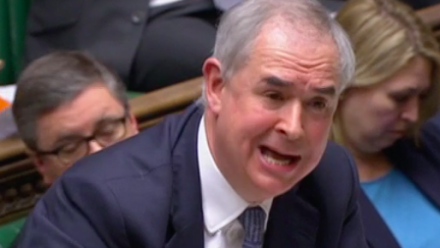
It's just another day in office for Theresa May's shaky government. Today MPs will enjoy the first of many days of debate over the seemingly doomed EU withdrawal agreement but before they get to that ministers must try and avoid being found in contempt of Parliament. After the government refused to publish the full legal advice on May's Brexit deal (following an Opposition Day debate calling for it), Attorney General Geoffrey Cox appeared in the Chamber in a bid to satisfy MPs by answering questions on the agreement. Although Cox did manage to charm a number of attendees his attendance was not enough to silence Opposition demands. This lunchtime MPs will now hold an emergency debate on whether ministers are in contempt of parliament for refusing to release the advice.
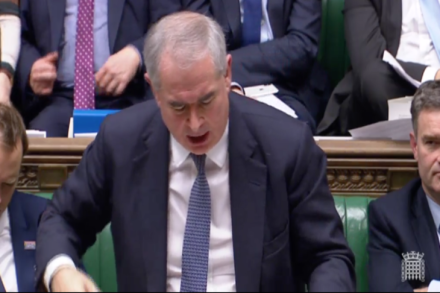
Watch: Geoffrey Cox heckled over Brexit backstop

Theresa May is taking a break from defending her Brexit deal in Parliament – giving the chance to her Attorney General to have a go instead. But Geoffrey Cox's sales pitch to MPs on the Brexit backstop isn't going entirely to plan. Cox confirmed to Parliament that there is 'no unilateral right' for Britain – or the EU – to 'terminate' the arrangement. In response, a Tory MP yelled out: 'So it's a trap!'   Mr S thinks it is fair to say that, with only eight days until the big Parliamentary vote, MPs could do with a bit more persuading...

If Britain can’t keep the lights on this winter, will the EU be to blame?

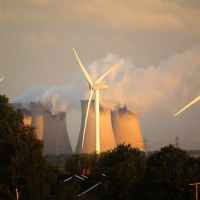
Britain’s ability to keep the lights on has just been thrown into doubt by the European Court of Justice. It has ruled that the backbone of the UK’s capacity market energy scheme, which pays power stations to generate electricity, is illegal state aid and must be suspended. To call this a body blow for energy security is a gross understatement; as you read these words Whitehall is desperately trying to reassure generators and very nervous investors. Payments to power stations through the capacity market have now been stopped until the Government can get permission from the European Commission to restart them, but this could take years.

The question May’s Brexit deal critics must ask themselves | 3 December 2018

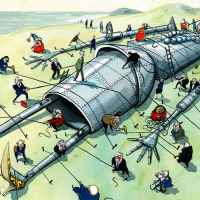
Brexit is an accident born of misunderstanding. One of the biggest miscalculations is about the EU and how it works. Troublingly, that misjudgement, embraced by both unwise Leavers and imprudent Remainers, could just lead Britain off a cliff, for the second time in three years. I attended my first EU summit in 2001 and stopped counting the number of Council meetings, ECOFINs and other EU gatherings when the figure passed 50 some time early in the financial crisis. I’ve seen a lot of British politicians go to Brussels (and elsewhere, in those innocent days before the Belgians captured all council meetings for their capital) and pursue the British national interest, with varying degrees of success.

Emmanuel Macron is leading France towards disaster

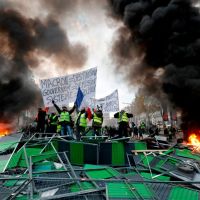
I would say we’ll always have Paris. But maybe not. It was only a few weeks ago that French president Emmanuel Macron promised a red carpet for bankers fleeing Brexit Britain. As matters have unfolded, the carpet has become one of broken glass. On the Avenue Kléber, one of the toniest streets in Paris and heart of the district where Macron will have been expecting to resettle his beloved bankers, fleeing London like the sans culottes, every bank has been attacked, every shop window broken, upscale apartments have been attacked and every Porsche and Mercedes within blocks set on fire. Invest in France? Emmanuel Macron is undoubtedly brilliant. He won all the glittering academic prizes. He had a supersonic ascent into the stratosphere of the French civil service.

Watch: Maybot’s awkward This Morning interview

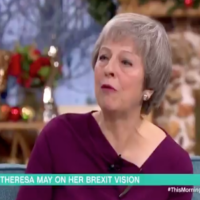
Theresa May has just over a week to go until her Brexit deal is voted on in the Commons, and while all the signs suggest she is facing a thumping defeat, the Maybot is still sticking to the script. In an interview with Phillip Schofield on This Morning, May was asked what will happen if she loses the vote. May did her best to dodge the question: PS: What happens to you if they vote you down? The next day, what will you be saying? TM: I'm, I'm, I'm very clear. I have got a duty as PM to deliver PS: But if you don't? TM: I've got a duty.. PS: But if you don't? ... My question was: what happens if you don't (get it through)? Will you resign? TM: I am focusing on getting that vote through....There is going to be a lot of debate.

Andrew ‘Calamity’ Cooper boosts Theresa May

And so another hellish week for Theresa May begins. The Prime Minister must somehow avoid publishing the Attorney General's legal advice for all MPs and then convince 100 Conservative MPs to put their doubts aside and back her deal ahead of next week's vote. So far, the signs are not good. But there is at least one piece of good news for the beleaguered Prime Minister: Andrew Cooper has said she can't go on.

What’s the point of having a Brexit debate between May and Corbyn?

I can see that there is a moral case for a General Election, as demanded by Jeremy Corbyn. An election which Corbyn would win, by some margin, I suspect. The government is inept, hopelessly divided, derided and May will not get the majority she needs to push her Brexit deal through the Commons. There is a strong practical as well as moral case for an election then. I get all that. What I do not get is why this TV debate should be between May and Corbyn. If Corbyn had a clear line on Brexit then maybe. But he does not, he has been, on the issue, evasive to the point of obscurantism and even now I do not know what he wants to happen. In the Brexit debate he is a total irrelevancy.

Theresa May’s nine days to save her world

Theresa May (and I) are just back from Argentina. And she is about to enter the most important week of her political life and the most important week in this country’s political and constitutional history for decades. It starts tomorrow with the publication of a summary of the legal advice on the PM’s Brexit plan - which will expose an irreconcilable contradiction at the heart of the so-called backstop to keep open the border on the island of Ireland. On the one hand, if the UK were to trigger the backstop at the end of 2020, which would effectively take us into the EU’s customs union, the UK would never have the unilateral right to leave it.

Sunday shows round-up: the Plan B for Brexit

Keir Starmer - Government may be in contempt of Parliament Sophy Ridge began the day by speaking to the Shadow Brexit Secretary Sir Keir Starmer. Starmer authored an article for this morning's Sunday Telegraph, in which he announced that Labour would work with other opposition parties to declare the government to be in contempt of Parliament. The row concerns the publication of legal advice that the government received from the Attorney General, Sir Geoffrey Cox, which it has since been ordered to reveal in full. The government is reluctant to release more than the summary. Ridge asked Sir Keir to elaborate: https://twitter.com/RidgeOnSunday/status/1069156690854141952 SR: You’ve talked about contempt of Parliament proceedings. What does that mean and what can it actually do?

Spectator competition winners: misguided love poems

You seemed to embrace the latest challenge – to supply seriously misguided love poems – especially wholeheartedly, and I admired your powers of invention in finding so many ways of making my toes curl. Even Brexit got a look-in: ‘Let me be your Brexit backstop/ I will never set you free…’ (Ian Barker). Dishonourable mentions go to Hamish Wilson and David Shields. The winners take £25 each. The extra fiver is Brian Murdoch’s. Brian Murdoch Let me compare thee to this bag of chips, For you are as desirable. They taste Just slightly salty, like a woman’s lips And steam invitingly, fresh, hot, and chaste. In shape each single chip is uniform And you are also slim, pale, not too long, And nicely firm. Your body is as warm As these.

Labour’s war with the media moves up a gear

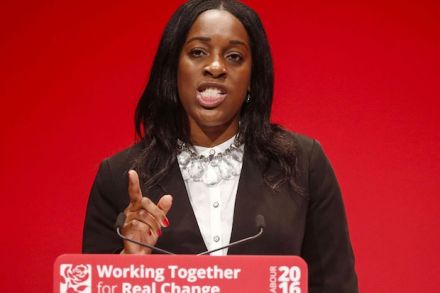
Oh dear. It's no great secret that under Jeremy Corbyn there is little love lost between the Labour party and the mainstream media. The Labour leader and his supporters rarely miss a chance to take a jab at hacks – whether it's calling for press reforms or simply booing journalists at party events. However, the latest episode in the saga still manages to surprise. Labour MP – and Corbyn ally – Kate Osamor did not take kindly to a Times reporter turning up her address to ask her for comment on reports that she appeared to issue false statements over her son’s conviction for drug offences. Osamor told the reporter, she 'should have come down here with a bat and smashed your face in' before concluding that he should 'f--- off'.

George H.W. Bush, the last great liberal Republican

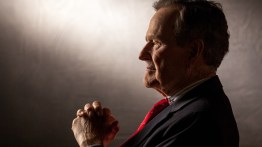
George H.W. Bush, who died on Friday at the age of 94, oversaw the end of the cold war. Together with Secretary of State James Baker and National Security Adviser Brent Scowcroft, he helped to ensure that the dissolution of the Soviet empire and the reunification of Germany took place peacefully. Even as hawks in Washington, DC warned that Mikhail Gorbachev was simply a more nefarious version of his predecessors, Bush ended up embracing him. He represented a realpolitik, a mixture of caution and prudence, that was the obverse of what his son, George W. Bush, ended up practicing as president. Though the right has always awarded the credit for winning the cold war to Ronald Reagan, Bush deserves plaudits for displaying a diplomatic dexterity that would likely have eluded his predecessor.

Sam Gyimah’s resignation shows the limitations of Project Fear

Theresa May has sought to frame her deal as a battle between the forces of common sense and wreckers - either Brexiteers or Remainers. Sam Gyimah’s resignation complicates this narrative due to the type of politican he is. Not a firebreathing Eurosceptic allergic to the idea of compromise, not an Adonis-style hyperventilater who never recovered from losing the referendum. He’s a moderate, who tried his best to reconcile himself to Theresa May’s deal - and a young MP who, unlike her, will be around to deal with the consequences. She had hoped that the longer people had to reflect on her deal, the more people would see her deal as a sensible middle way.

Why no deal planning should be stepped up

No-go-day was meant to be yesterday, I say in The Sun. This was the moment when the Department for Exiting the EU wanted the principal purpose of government to become getting the country ready for leaving the EU regardless of whether there was a deal or not. Number 10 argued that a vaguer deadline of late November / early December was better. They thought that this would give more time to tell whether full on ‘no deal’ prep was necessary or not. But now, Number 10 is indicating that it wants to hold off until after the meaningful vote on the 11th of December. This is not a good idea, though. Those inside the machine estimate that it would take four months of intense preparations to get this country into a place where it could make no deal manageable.

What Sam Gyimah’s Brexit resignation means for May

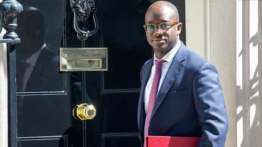
Here we go again. After a relatively quiet week on the resignation front for Theresa May’s shaky government, Sam Gyimah has announced that he has left his role as Universities and Science Minister. Gymiah puts his decision down to concluding that he could not vote for the EU Withdrawal agreement. He tells the Telegraph: ‘Britain will end up worse off, transformed from rule makers into rule takers. It is a democratic deficit and a loss of sovereignty the public will rightly never accept.’ Notably Gyimah does not rule out supporting a ‘People’s Vote’ on the final deal: ‘We shouldn’t dismiss out of hand the idea of asking the people again what future they want, as we all now have a better understanding of the potential paths before us.

Could Theresa May’s latest attack on Corbyn backfire?

The Prime Minister might have been a bit too clever when attacking Corbyn’s and Labour’s opposition to her Brexit deal. Some four hours in to her 14 hour flight to the G20 leading nations’ summit in Argentina, she told journalists: “What they are doing is advocating rejecting the deal we negotiated with the European Union without having any proper alternative to it. “They say they don’t want ‘no-deal’ but by appearing to reject a temporary backstop they are effectively advocating no-deal, because without a backstop there is no deal”. So she is accusing Labour of ushering in the kind of economic no-deal calamity – a devastating recession that would see the income of the U.K.

Letters | 29 November 2018

The Irish border Sir: Contrary to the assertion that the Irish border ‘only hit the headlines’ after Leo Varadkar became Taoiseach in June 2017, as Liam Halligan claims (‘Irish troubles’, 24 November), the negative impact of Brexit on the peace process and the Good Friday Agreement was clearly signalled during the referendum campaign itself, including by the Irish government and by two former British prime ministers, Sir John Major and Tony Blair. There was no discontinuity in policy when Leo Varadkar succeeded Enda Kenny as Taoiseach, as reflected in the latter’s statement in February 2017. ‘The Irish government will oppose a hard border… This is a political matter, not a legal or technical matter.

Theresa May’s deal is not Canada Plus – it’s Remain Minus. Why pretend otherwise?

While some may doubt Donald Trump’s claim to be a friend of Britain’s, his intervention in the Brexit debate this week has been timely and depressingly accurate. The deal that Theresa May has brought back from Brussels, and which she will put before the Commons on 11 December, is indeed a good deal for the European Union. Brussels retains control over the British economy but no longer has to deal with the British in its various voting procedures. Britain agrees not to become more competitive through regulatory reform, and its chances of striking trade deals are slim. So Trump was merely saying, in his usual offhand manner, what other world leaders have been thinking. His thoughts are echo-ed in Australia, which had been looking forward to doing a trade deal with the UK.