Anthony Browne

Anthony Browne is a former economics correspondent at the BBC, and former Conservative government minister

Why the BBC keeps getting it wrong

From our UK edition

The double-decapitating explosion over BBC bias is a gift for commentators, but much of the commentary misses a key central point. It is not just that the BBC is paid for by a compulsory tax on television ownership, which people are sent to jail for not paying. But just as importantly, it enjoys a position of unrivalled, semi-monopolistic power in our national debate. This BBC morning editorial meeting is group think in institutionalised form Some of those on the left often love to complain, normally alluding to one Rupert Murdoch, about concentration of power in the media, and the need for diverse sources of journalism.

Why Brits are no good at learning foreign languages

From our UK edition

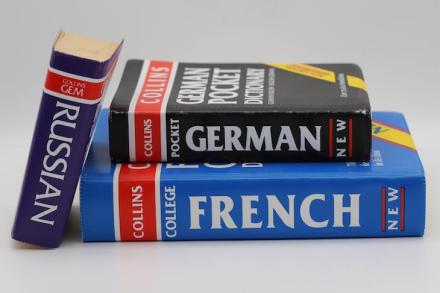
The British media has got into one of its regular funks about Britons not learning foreign languages. As the only monoglot in a family of polyglots, it is an issue I have had a lifelong sensitivity about. But as always, the national hand-wringing displays more ignorance than insight. The wailing follows a regular pattern – we Brits are lazy, it damages our international reputation, and is bad for the economy. But given that our children are leading the Western world in reading, writing and arithmetic, it is unlikely that they are noticeably more lazy than those of other countries.

The Peter Jay I knew: the BBC’s aloof, brilliant economics editor

From our UK edition

I was the junior researcher, and he was the living legend. When I started working at the BBC on the Money Programme, I was assigned to work with Peter Jay, who was presenting various documentaries, and I had never previously met anyone quite so aloof. I had no idea if he even knew my name, and it was many months before I had evidence that he did. But in the end, my entire career at the BBC, ultimately as economics correspondent appointed by him, was interwoven with his, and I developed a certain fondness. Jay was ferociously bright, which often manifested itself in slightly strange ways Peter always had an otherworldly sense of being rather helpless.

What journalists don’t understand about being an MP

From our UK edition

At the end of the last Parliament, I was the only MP who had previously been in the Lobby – the elite cartel of political journalists, who rejoice in having a parliamentary pass (I was once the chief political correspondent of the Times). I used to be in the Press Gallery looking down at the Chamber, but as an MP I was in the Chamber looking up at the Press Gallery. Famously, journalists have power without responsibility – you can shift national debates and kill off careers without having to worry about the consequences. As an MP, you have responsibility without power: you are held accountable for pretty much everything, with virtually no power to do anything about any of it.

A vision for the future: Can Britain become a biotech superpower?

From our UK edition

30 min listen

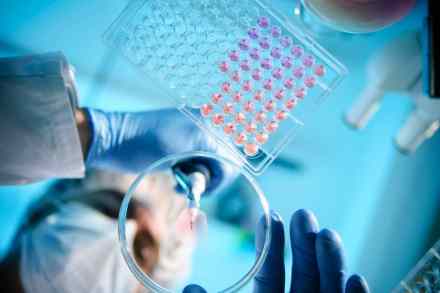
The UK's vaccine programme was hailed by the government as a success story for Global Britain. It became an example of how Britain could speed up regulation, reduce bureaucracy and become a worldwide home for tech and innovation in life sciences.  The government recently published a Life Sciences Vision, but how much vision was there? This podcast will look at the importance of the industry, the hurdles that it faces and its contribution to the government's Global Britain agenda.  Fraser Nelson, the editor of The Spectator is joined by Anthony Browne, Conservative MP for South Cambridgeshire; Zoe Martin, a policy manager at Cancer Research and Samin Saeed who is the medical director & chief scientific officer for Novartis Pharmaceuticals UK Ltd.

Why building more houses won’t bring prices down

From our UK edition

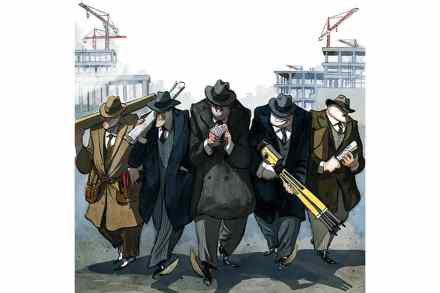
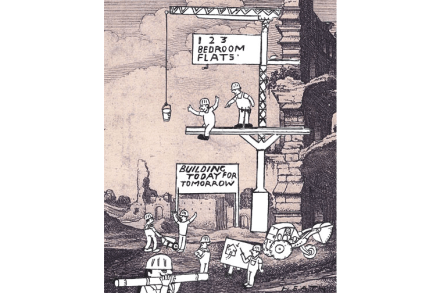
Does the law of supply and demand apply to housing? In other words, will building more houses and flats bring down prices? There is a growing economic consensus that the surprising, and rather counterintuitive, answer is: not to any significant extent. It is a conclusion that has revolutionary implications for housing policy, and what we need to do to help people realise their dream of owning their own home. Ian Mulheirn, chief economist at the Tony Blair Institute, concluded in a recent paper for the UK Collaborative Centre for Housing Evidence:  'The large body of literature on the responsiveness of house prices to supply indicates that even building 300,000 houses per year for 20 years would do little to reverse the price growth of the recent past.

Broken Trust: the crisis at the heart of the National Trust

From our UK edition

33 min listen

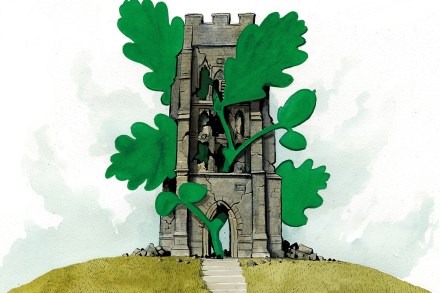
On this week’s podcast, we start with Charles Moore’s cover story on the failings of the National Trust. Why is the Trust getting involved in culture wars, and can it be fixed? Lara speaks to Charles, a Spectator columnist and former editor of the magazine, and Simon Jenkins, who was chair of the Trust between 2008 and 2014. Simon says that it’s ‘very odd’ for the organisation to become embroiled in controversy over Britain’s colonial past and contested history. ‘The National Trust’s relationship with the British Empire, let alone with slavery, is pretty tenuous. I don’t take this accusation against the Trust terribly seriously. This is just currently what I regard as a sort of cult’, he adds.

The ‘clean meat’ revolution is coming

From our UK edition

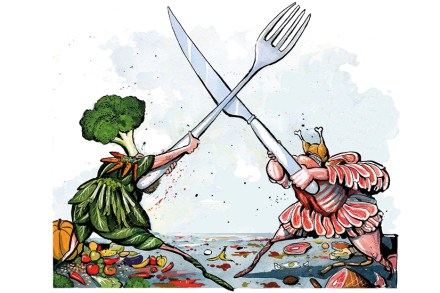
On 19 December last year, some chicken nuggets were sold in a restaurant called 1880, in Singapore. This doesn’t sound like a significant turning point in history, but it was. That small plate of chicken nuggets might well have been the start of a major industrial, social and cultural revolution — one the UK needs to prepare for. That Singaporean chicken nugget was the first time in history that meat that did not come from a slaughtered animal had been sold commercially. It was genuine chicken meat, not a substitute, but it had been cultured from cells in a vat called a bioreactor.

The Budget could be an awkward moment for fiscal conservatives

From our UK edition

There is no getting around the fact that these are awkward times for fiscal conservatives, such as myself. It has never been harder to make the case for lower taxes. We have the largest national debt for half a century as we come out of the worst recession for three hundred years, with zero political appetite for public spending cuts. It is essential – for both the Conservative party’s political prospects and the country’s economic prospects – that the UK retain our reputation for sound finance. This is why the Treasury Select Committee have been gathering evidence on the options for tax after coronavirus, with our recommendations to be published tomorrow. One thing is clear: there are no easy options for the Chancellor in his budget this Wednesday.

The EU is stepping up its raid on the City of London

From our UK edition

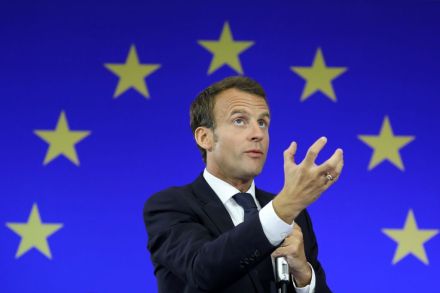
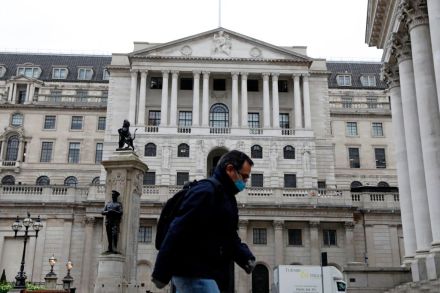
It is not usual for the Governor of the Bank of England to ask permission to make a statement about a completely unrelated issue when giving evidence on inflation to the Treasury Select Committee. So we knew it was serious when Andrew Bailey yesterday told us his concerns about Brussels trying to force banks to relocate their euro clearing from London to the EU.  It is not a surprise that the EU wants to do this – France has been pushing for this for years before Brexit, leading to it losing a case to the UK at the European Court of Justice – but what is concerning is the desperate extremes the EU seems prepared to go. It was, Mr Bailey said, bordering on the illegal.

A proportional property tax would be a disaster

From our UK edition

Two of the most unpopular taxes in Britain are stamp duty and council tax, property taxes both, seen as economically damaging and unfair. So it is not surprising there is a noisy campaign, gaining widespread coverage, to abolish them both and replace them with a simple 'proportional property tax'. The more your home is worth, the more you pay — what could be fairer and simpler? Although well intentioned, this new property tax is a genuinely bad idea. To be revenue neutral for the Treasury, campaigners estimate it needs to be set at 0.48 per cent of the value of the property per year — so that someone with a £1 million home will pay £4,800 a year in this tax.

Britain should now brace itself for a barrage of Brussels red tape

From our UK edition

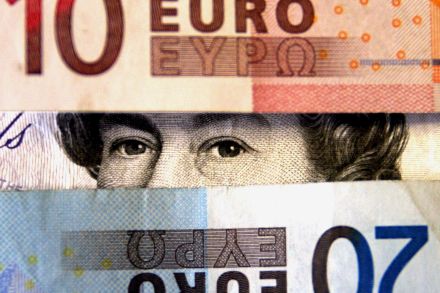
Should we be worried that the UK didn’t get all that it wanted for financial services in the UK-EU Trade deal, as the PM mentioned to the Sunday Telegraph? Financial services are our biggest export industry by some margin, including to the EU, as well as (arguably) our biggest taxpayer, so anything that hampers it could have serious economic repercussions. The EU for its part has said that it will consider in its own time if it will grant ‘equivalence’ to UK financial services, making it easier for UK based institutions to serve customers in the EU, and will only do so if it is in the EU’s interest. The Chancellor, Rishi Sunak, has already unilaterally granted EU equivalence status, providing continuity for EU financial services companies operating here.

Britain is leading the world in the fight against Covid. Seriously

From our UK edition

How is Britain doing in the battle against coronavirus? Many have repeatedly declared we have the worst track record of any country, with both the highest death rate in Europe and suffering the highest economic hit. Newspaper headlines have constantly loud-hailed our alleged failings, from the shortage of ventilators to putting ourselves at the back of the vaccine queue by not joining the EU’s programme. The only trouble is that this is just not true. In many ways, the UK’s response to coronavirus is quite literally, dare I say it, world-beating. Clearly there have been many setbacks and hiccups. Clearly there are many lessons to be learned. But just as clearly, we are leading the world in many of the most important ways.

Only France would try to blow up the Brexit talks

From our UK edition

That France was the country to throw a grenade threatening to blow up the UK-EU trade talks just as they were about to pass the finish line, does not come as a surprise to seasoned euro-watchers. No other EU member would so brazenly promote its own domestic self-interest at the cost to other EU members such as Germany and Ireland. To the British it has echoes of de Gaulle saying ‘non’, when vetoing the UK’s first attempts to join the Common Market. Many of the EU’s problems and (in my view) the ultimate reason Brexit happened, is down to a fundamental cause that is little remarked on in the UK.

Extinction Rebellion’s plan for eco-oligarchy

From our UK edition

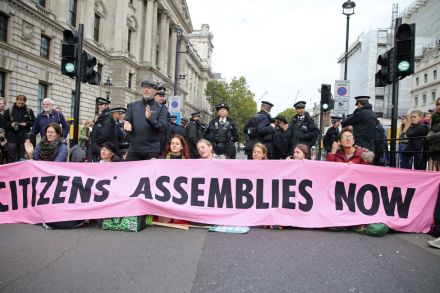
It is very rare (although not unprecedented) for law breakers to attempt to be law makers. But Extinction Rebellion is trying to do both, simultaneously. This weekend they are planning to illegally blockade airports and Parliament, reportedly launch cyber-attacks, while pushing a new law to be laid before Parliament when it reopens this week by Caroline Lucas, the sole Green Party MP. It is called the Climate and Ecological Emergency (CEE) Bill. I have huge sympathy for the objectives of Extinction Rebellion – we have an absolute moral duty to pass on a sustainable world to the next generation, and it must be a political priority for which tough decisions need to be made. But I do not agree with their methods.

A tale of two lockdowns

From our UK edition

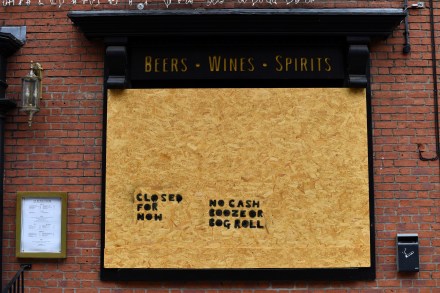
In all the reporting on the impact of the pandemic on employment, one important factor has gone unnoticed. It is the private sector that is taking the entire hit, with public sector jobs almost untouched. That 25 per cent drop in GDP over the last six months is overwhelmingly contraction of the private sector. Throughout the pandemic I have been talking every day to people in the public and private sector, and there is a complete difference in attitude. It is like two different worlds. Private sector workers are grateful if they still just have a job, aware that so many are losing theirs. Entrepreneurs have been desperately struggling to save businesses they have been building up for decades.

What Britain should learn from Belgium: history can be reappraised

From our UK edition

Is it best to erase history, or reappraise history? We haven’t started taking down statues of royalty in Britain yet, but they have in Belgium: statues of King Leopold II were vandalised across the country last week and taken down. It was no surprise – in the bloody history of colonialism, he was one of the bloodiest rulers. He took personal control of the Congo, effectively enslaved everyone, ruled by sadistic brutality (hand and foot removal were a common punishment), killed about half the population, and extracted great wealth. However, the lesson to learn from Belgium is not statue removal, but what they have done to the enormous monument that King Leopold and his successors built to pay tribute to their colonial endeavours.

The challenge we face coming out of lockdown

From our UK edition

The public reaction to the Dominic Cummings saga shows how difficult many people have found the lockdown. It has disrupted the lives of everyone in the country and the education of all schoolchildren, caused an unprecedented recession, soaring unemployment, kept families and lovers apart and led to worrying mental health problems. Tens of thousands have died. Many people were not able to say good-bye to or go to funerals of loved ones. So it is perhaps rather surprising that a poll for the Daily Mail a week ago found that actually many people seem to be liking it. Asked if they were enjoying being at home more, 43 per cent said yes and just 25 per cent said no. More feel better off financially (33 per cent) than worse off (29 per cent).

Don’t panic about how Britain will afford its coronavirus bill

From our UK edition

Having a passionate national debate now about specific future tax and spending plans is like having a debate about how to fund the restoration of Notre Dame while it is burning down. It is too early for many reasons, but mainly because we just don’t know yet what the shortfall is. Put the fire out, assess the damage, get estimates for the cost of repairs, and then work out how you will fund it.  Our budget discussion is hampered by the fact we don’t know the depth of the recession, how quickly the economy will bounce back, what the national debt will be at the end of it, nor – very importantly – what the annual budget deficit will be. Estimates of the post-pandemic national debt range wildly, and annual borrowing was already predicted to grow from 2.

Corbyn is wrong to say coronavirus proves the need for socialism

From our UK edition

Jeremy Corbyn’s claim that the Conservative government’s economic response to the coronavirus package shows that his policies were right proves what an astonishingly poor grasp of economics he has. The economic rescue package has involved a massive increase in spending and borrowing, and also a temporary part nationalisation of people’s wages – both things he has argued for. But the circumstances are totally different and what helps in an unprecedented crisis can be massively damaging if carried out in normal times. In medicine, some life-saving treatments can be life-threatening if inflicted on a healthy patient. If someone’s heart has stopped, it can be right to put electric pads on their chest to give them an electric shock to restart the heart.