Politics

Read about the latest political news, views and analysis

Tory leadership row brewing over CCHQ ‘stitch-up’

Inevitably, the Tory leadership contest is developing a row about process and possible stitch-ups. Party grandees have been suggesting limiting the number of candidates to prevent ‘chaos’ (which suggests an interesting reading of the current political turmoil as not being chaotic). Iain Duncan Smith thinks there should be a higher threshold for nominations and more candidates knocked out at each round, while members of the 1922 Executive committee are also proposing limiting the numbers of candidates to around a dozen. There is a split though on whether this would be fair or whether the ‘widest debate possible’ is more important.
Theresa May’s tuition fee review is a grave political mistake

Reforms to the funding of higher education over the past decade, although not perfect, have been broadly successful. There’s now record levels of individuals and investment in English universities. Theresa May, though, thought differently. Immediately after the last election, in response to a staggering number of young people turning their back on the Tories, she commissioned the Augar Review, promising major reforms to tuition fees. Much like the emergence of her flagship net migration target, the idea was actually first floated – unofficially – by her then First Secretary of State Damian Green.

The message Tory leadership candidates need to hear

I’ve been the victim of a robbery. In broad daylight. As an average Brit, more than 40 per cent of everything I produce is taken by the government for whatever they want to spend it on. In theory they ask my opinion on what that should be. But they ask me only every five years, and even then, the chance of my vote making a difference is literally millions to one. That’s why many – or most of us – don’t bother to vote at all and most of the rest simply give the major parties a big two fingers. Even mediaeval serfs only had to work a third of their time for their masters. We work two-fifths for ours. That’s the equivalent of labouring non-stop, from 1st January to today, 30th May, solely for the government.

Fighting fit

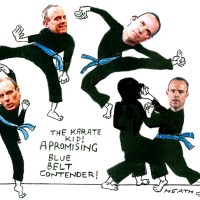
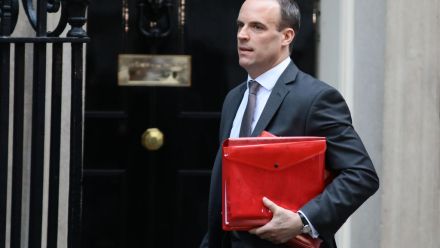
At a dinner in the Irish embassy in London last November, Dominic Raab believed he was on the brink of a Brexit breakthrough. In a meeting with Simon Coveney, Ireland’s Minister for Foreign Affairs, the Brexit secretary sought to find a compromise on the issue of the backstop. He explained that parliament would never agree an open-ended pledge in the way the EU envisaged: pushing things too far would end in the failure of talks. But Britain could make separate guarantees on the border, he said, leading to a ‘win, win’ for both sides. Coveney seemed interested, and suggested he would consider it. Just days later, the idea was dropped by Leo Varadkar, the Taoiseach. But why?

Can the Tories save themselves?

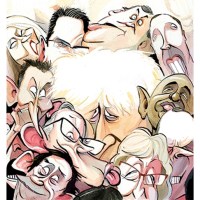
Parties don’t get rid of their leaders unless things are going very badly. But this Tory crisis is different in scale and size to anything we have seen in recent decades. The question is not whether the Tories can win the next election, but whether they can survive. The dire state that the Tories are in hasn’t put anyone off running to be leader, however. We suddenly have the most crowded field we have ever seen in a leadership race.Whoever wins will become prime minister without having to go through a general election. It’s quite a prize. Given the unpredictability of Tory contests and the frontrunners’ ability to destroy each other, everyone thinks they have a chance. The parliamentary rounds of this contest are best thought of as similar to Wimbledon.

Can Carrie make Boris woke?

Philip May seems a decent cove. He’s been stoic and loyal but I can’t help hoping that the next prime minister’s spouse will be a bit sparkier — and give us something to talk about other than Brexit. I suspect that it will be a woman. If so, who? We have Lucia, Jeremy Hunt’s wife. He famously could not remember whether she was Japanese or Chinese. Then there’s Dominic Raab’s Brazilian wife, Erika, a marketing executive at Google. We discovered from a newspaper profile that the Raabs have a duck-egg blue and cream kitchen in their Surrey home. Sarah Vine, wife of Michael Gove, is well known for her acidic columns in the Daily Mail. If she makes it to Downing Street, will she be allowed to keep writing them?

Five myths about the European parliament election results

In the analysis of last week’s European Parliament elections, a number of claims which should be categorised as 'myths' have emerged. Here, I’ve singled out five of them that should be challenged:   1. The 'major development' that the centre-right EPP and centre-left S&D lost their majority isn't a major development For the first time since 1979, the centre-right European People’s Party (which included the UK Conservatives until 2009) and the centre-left S&D group (to which Labour belongs) do not command a majority of seats in the European Parliament.

Labour’s Tan Dhesi is wrong about ‘Islamophobia’

I like Tan Dhesi, the Labour MP for Slough. I’ve known him since we were both fresh-faced university students. We last met at this year’s Vaisakhi reception at Downing street and he was as cordial as ever. It was a proud moment for us all, when he was elected as the first turban wearing Sikh in parliament. I’m always intrigued by what colour turban he will next be wearing whilst eloquently articulating constituent concerns in the Commons – purple, peach, or perhaps pink? That said, I’m afraid he’s got it wrong on the issue of defining ‘Islamophobia’, which includes attacks on Sikhs or the ‘Muslim looking other’.

The Boris Brexit court case isn’t as bad for his leadership bid as some hope

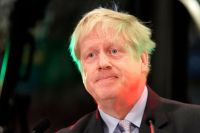
Will Boris Johnson being told to answer to allegations of misconduct in a public office derail his leadership campaign? The former foreign secretary has been told he must appear in court to answer the claims, brought in a private prosecution by campaigner Marcus Ball, who objects to his claim during the referendum that the UK sends £350 million a week to the EU. Today a district judge ruled that there was sufficient evidence to proceed with a trial. This prosecution will naturally be seen by someone of Johnson's enemies as a chance to undermine him while he's the frontrunner in the Conservative leadership contest. But this isn't likely to have the effect they hope.

Operation Stop Boris is backfiring. Again

As the race to replace Theresa May heats up, Operation Stop Boris is now in full swing. Boris Johnson remains the clear frontrunner to win the Tory leadership contest and his critics are determined to prevent him doing so at any cost. But his detractors should learn an important lesson from the referendum campaign: going after Boris is bound to backfire. Boris’s critics are determined to have another go, with his Tory rivals queuing up to take a pop. Matt Hancock is the latest to hit out with his jibe ‘f**k ‘f**k business’, a reference to Boris’s comments about lobbyists warning of the damage of a no-deal Brexit. Jeremy Hunt has also targeted Boris. So, too, has roaming leadership candidate Rory Stewart.

Nigel Farage cashes in

Will anything end Nigel Farage's winning streak? The Brexiteer famously walked into a Ladbrokes in June 2016 and placed a £1,000 bet on Leave winning the EU referendum campaign – a decision that pocketed him a tidy £2,500 sum. In April, ahead of the European parliament elections, the Brexit party leader decided to chance his arm once again, revealing that he had placed a £1,000 bet at 3/1 on the Brexit party winning the most seats in the European parliament. And, as the results on Sunday night showed, it was yet another act of foresight as his party came top in the UK with 29 seats, 13 ahead of the second placed Lib Dems. All of which would leave the Brexit party leader £3,000 better off at the end of the night.

Matt Hancock has missed the point about Boris’s business jibe

If it was in a playground in one of the rougher parts of town, which increasingly it resembles, this could easily escalate. One candidate remarks that he thinks the party should ‘f**k business’ so another one wades in to argue ‘f**k 'f**k business'’. And perhaps by lunchtime some other candidate you have never really heard off will be tweeting that instead the party should ‘f**k, 'f**k, f**k business'’. Before long, the Tory party leadership contest will start to look like the bits that were edited out of a Malcolm Tucker rant in The Thick of It for being too sweary. And yet the row spectacularly misses the point. Of course the Conservative party should be pro-business. But that is not quite the same thing as being pro-Big Business and its lobbyists.

Graham Brady meets with an old hand at campaigns

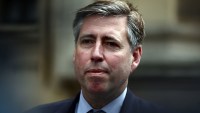
With twelve candidates so far declared for the Tory leadership contest, more MPs are expected to announce in the coming days. Those rumoured to be planning on throwing their hat into the ring include Mark Harper, Steve Baker and 1922 chairman Graham Brady. On Friday, Brady recused himself from a Conservative Party statement on the leadership timetable – on the grounds that he might himself run. So, Mr S was intrigued to learn of a meeting Brady attended on Tuesday at the MC Saatchi office in London. Steerpike's advertising man-in-the-know reports that Brady was spotted meeting Tory peer – and former chairman – Maurice Saatchi.

Boris Johnson’s court appearance is nothing to celebrate

I have often wondered what would happen if politicians were bound by the same rules as advertisers, or if manifestos were brought within the scope of the trading standards laws. What if we could take legal action against a government for failing to provide the extra NHS beds or school places they had promised? Given the propensity for governments to excuse themselves from their own legislation when it suits them – Blair’s government simply passed a clause excluding political parties when Labour’s women-only shortlists fell foul of sex discrimination legislation – it is hard to imagine such a law being passed by Parliament. But on 14th May, Westminster Magistrates heard an attempt to create one through political precedent.

Why the green wave didn’t hit Sweden

The European parliament election campaign in Sweden was unlike any other in its history, characterised by several scandals and conflicts amongst individual candidates – both within and between the major parties. The elections in Sweden – as elsewhere – were also an ideological struggle between parties calling for more or less EU integration. But perhaps surprisingly, the green wave witnessed in other countries around Europe didn't hit Sweden. Swedish voters largely opted for parties who called for the EU to have less influence. Compared to 2014, the results of the election rewarded centre-right parties who expressed soft Euroscepticism – seeking EU reform while remaining firmly in favour of continued membership.

What I’ve learned from talking to Americans about Brexit

I’m an Oxbridge graduate in my twenties and a native speaker of a Romance language. I’m a citizen of nowhere rather than somewhere, and two years ago I moved to the United States. I could be the illustrated dictionary’s definition of a Remoaner. And I am. So why is it that, whenever I have a proper conversation with a liberal, knowledgeable American who criticises the idiocy of leaving the EU, I find myself leaping to the defence of Camp Brexit? For a few minutes, mid-conversation, I’m manning the barricades of Thanet with Nigel Farage, throwing real ale at the Provençal set. Except that, being British, I don’t dare voice my objections. I nod and smile while the repute of my country is crushed like a bulldog sat on by a bison.

The UK needs to spend more on researching green energy

On the sidelines of the 2015 Paris climate summit, then-UK prime minister David Cameron and 19 other world leaders made a promise to double green energy research and development by 2020. The United Kingdom is on course to break that promise. As a percentage of GDP, spending on low-carbon energy R&D has stayed sluggishly around 0.02 per cent since 2015, according to data from the International Energy Agency (IEA). The United Kingdom is not alone. IEA data shows rich OECD countries are spending just 0.03 per cent of GDP on low-carbon energy R&D – a percentage that has not changed since the vow was made. Climate policy has been littered with broken promises ever since the 1992 Earth Summit in Rio de Janeiro.

How Rory Stewart can save the Tories

What does Rory Stewart’s time at the helm as prisons minister tell us about his fitness to lead the Conservative party and our country? In January last year, I wrote an open letter to his boss, Justice Secretary David Gauke with some thoughts on how to deal with Britain’s shameful prisons crisis. In it, I referred to Gauke’s new prisons minister, who, ‘given his diplomatic experience in conflict zones, will know a bullshitter when he sees one, which can only be good news when he meets the people who are running the wreckage of our probation system.’ I was right about Stewart’s low tolerance for bureaucratic abstractions and managerial verbiage.