Politics

Read about the latest political news, views and analysis

The equality watchdog’s probe leaves Labour with a painful choice

Today’s confirmation that the Equality and Human Rights Commission (EHRC) is launching a formal investigation of the Labour party has huge personal significance for me. I was the chief operating officer for the Commission between 2012 and 2015, responsible for redesigning the approach to statutory enquiries and investigations. I also had a role in making the Commission a warmer house for Jews. The EHRC I joined was not an organisation beloved of the state. Unfortunately this was not a function of its fearless independence, more that it wasn’t taken terribly seriously with a poor reputation amongst ministers. Budget cuts and obsessive introspection by some staff who regarded the body as a pressure group for leftist causes had seriously imperilled its very existence.
Britain’s Brexit split is finally out in the open

I love everything about the European Parliament election results. As a Brexiteer, of course I love that the Brexit Party came out of nowhere to obliterate the Tories and Labour and induce yet another outbreak of Brexit Derangement Syndrome among the chattering classes. But I also love the fact that Remain parties did well, too. I’m happy that the Lib Dems, with their sneering, juvenile, anti-democratic slogan of ‘Bollocks to Brexit’, came in second place. And I’m pleased that the Greens, for whom Brexit is a calamity on a par with the climate catastrophe they breathlessly drone on about, also had a good showing. Why? Because the victory of a proper Brexit party on one side and of the Bollocks to Brexit lobby on the other is a wonderfully clarifying moment.

Alastair Campbell expelled from Labour party

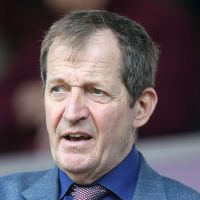
Alastair Campbell has been something of a Labour party fixture for the last twenty years – but not any longer. Blair's former spin doctor has just been given the boot from the party for revealing that he voted Lib Dem at the European elections. Campbell said he was 'sad' and 'disappointed' to get an email from Labour expelling him from the party: 'I am and always will be Labour. I voted Lib Dem, without advance publicity, to try to persuade Labour to do right thing for country/party. In light of appeal, I won't be doing media on this. But hard not to point out difference in the way anti-Semitism cases have been handled.

Tory leadership candidates avoid the C-word

Kit Malthouse's entry into the Conservative leadership contest has created quite a problem for the other candidates, not so much because he appears to offer a serious threat to the more established campaigns, but because he is the architect of the 'Malthouse Compromise', which once promised to solve all of Theresa May's Brexit problems. The trouble with the Malthouse Compromise is that its name includes a now highly-toxic C-word. Theresa May used 'compromise' so much in the weeks before she finally gave up and announced she was resigning that no leadership candidate worth their salt wants to drop it into conversation now. Even those who think that the best way through the Brexit deadlock really will involve a lot of compromise know they can't use that word.

Watch: Rory Stewart called out over made-up Brexit ‘fact’

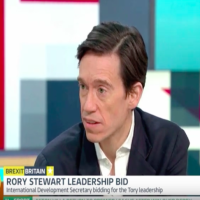
Rory Stewart is emerging as something of a dark horse in the Tory leadership contest. But while the international development secretary is an impressive candidate he is not immune to making a mishap. Richard Madeley reminded him this morning of a particular low point for Stewart: his made-up 'fact' about Brexit –that 80 per cent of people backed Theresa May's deal – during a radio interview last year: RM: Why did you say that? RS: It was a weird thing to say. It was straight after it was announced, and I wanted to say that I felt the vast majority of the country were in the centre ground and I couldn't have been more wrong. Actually as soon as I said it, I apologised 15 seconds later.

What Hunt’s no deal warning reveals about the Tory leadership contest

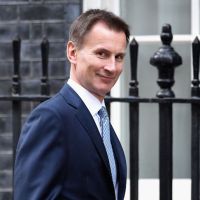
The Conservative leadership contest doesn't officially commence until June but that hasn't stopped the various contenders parading their credentials. With ten candidates now declared, the expectation is that this number will rise to at least fifteen before the nomination period starts. Jeremy Hunt is seen as one of the favourites and has today set the news agenda with an article for the Telegraph in which he suggests pursuing a no deal Brexit amounts to 'political suicide' – as it would mean going into a general election before Brexit had been delivered (as – he says – Parliament would block it): 'Attacked by the Brexit Party on the Right and the Liberal Democrats on the Left, we will face extinction.

Labour’s Welsh wipeout should terrify Jeremy Corbyn

Elections in Wales are supposed to be boringly predictable. Until the 2019 European election, Labour had come first in 38 of the last 39 Wales-wide election contests, including all 26 of the last general elections, in a run that began in 1922. But all good – or bad – things tend to come to an end eventually. To describe what happened in the European election as an electoral earthquake in Wales seems almost to understate the magnitude of what happened. The Brexit Party, who did not even exist until six weeks ago, got more than double the Labour vote share, and came first in 19 of the 22 local authority areas in Wales.

Why Eurosceptics still won’t be able to crash the EU Parliament

The results from the European parliamentary elections shows how EU politics is increasingly polarised. It also demonstrates how old party allegiances are fading in favour of loyalties for parties with more specific ideological and policy platforms. Against the backdrop of Brexit and divisions convulsing global politics, these elections – which have been marked by issues such as immigration and climate change becoming inextricably linked to the role of the EU – saw the highest participation in 20 years. Fragmentation that is shaking up politics domestically has been transferred to the European level. So what do these elections mean for the health of the EU project?

Corbynistas turn on one another over EU election meltdown

There's a lot of soul-searching in the Labour party after Sunday's abysmal results in the European elections. On Monday, Corbynista commentator Paul Mason was one of the first out of the blocks, with a lengthy autopsy of Labour's electoral failure. He placed the blame squarely on Corbyn's Brexit-leaning advisors, and urged those responsible to be fired. 'Three point plan for Labour. 1. A members ballot on Remain/Reform as the new line. 2. Sack the officials responsible for this fiasco. 3. Defend Corbyn against the inevitable coup. More from me tomorrow - sign our petition here https://www.left2030.org/petition/ ' https://twitter.com/MarkDiStef/status/1132940829335654400 Unsurprisingly, the column didn't go down well in all quarters of the hard left.

Can Sajid Javid tell the story of Sajid Javid?

"I entered politics to do my best for this country,” says Sajid Javid in the video that launches his campaign, “the country that has done so much for me". A good point, which he didn't elaborate. A shame, because a powerful point lies therein - a point that explains who he is and his claim for the job. Had his parents stayed in Punjab and not emigrated to Britain in the 1960s, he’d have grown up in poverty there, rather than here. What would his life have been like then? And why was it better here? The answer isn’t about natural resources or the weather: the answer lies in politics. Sometimes, the characteristics that make Britain great are best described (and appreciated) by those who are mindful that, for a twist of fate, they would have grown up somewhere else.

Jesse Norman keeps his fans waiting

Is Jesse Norman standing for the Tory leadership? The Conservative MP has just taken to Twitter to provide an answer. But unfortunately 33 tweets later we are no closer to finding out. Norman wrote: ‘In recent days I’ve been asked a lot if I would stand for Leader of the Conservative Party. It’s already a crowded field, and my reply has been that the views of my constituents, party members and colleagues should shape that decision, and I will carefully consult among them’ So is it a ‘yes’ or ‘no’? Norman followed that tweet up with thoughts on the nature of ‘true conservatism’, Burke, Disraeli and Baldwin.

Boris Johnson is the big winner from the Tories’ election drubbing

I never thought I would live to see the Conservative and Unionist Party, dominator of British politics for centuries, falling to a vote share of nine per cent in a national election. Hindsight is mind-bending, which means I now find it impossible to believe that David Cameron could ever have conceived that holding an EU referendum would bring peace, stability and strength to the divided Tories. And as for Theresa May she will be seen by many as guilty of a strategic error to rival any in the history of this democracy, with her failure to establish what kind of withdrawal from – and future relationship with – the European Union would command a majority in the Commons before negotiating her deal with the EU.

Ditching Jeremy Corbyn won’t solve Labour’s woes

If the United Kingdom is going to leave the European Union – which, thanks to the Brexiteers who keep voting against Brexit in the House of Commons is no longer as certain as it once seemed – it can at least say that it went out with a crash, a bang, and one heck of a wallop. Britain’s elections to the European Parliament were never as entertaining as this. In that respect, for once the best was saved for last.  If the Tories had a thoroughly miserable night it was also a battering they deserved. The Conservatives decided to make themselves the party of Brexit and then failed to deliver Brexit. The Prime Minister must take her portion of blame for that but so must the backbenchers who voted against the withdrawal agreement she negotiated.

The Tories will now regret not giving Nigel Farage a peerage

Nigel Farage has been on the radio this morning, almost plaintively offering to be part of a Government team renegotiating the Brexit Withdrawal Agreement. Maybe it’s a genuine offer in good faith. Maybe it’s a political wheeze, meant to make him and his Brexit Party sound like a proper, grownup organisation. And maybe it’s revealing something about Farage and what he really wants. I don’t claim to know Farage well, or even at all. I’ve interviewed him several times and spoken to him many times less formally. I’ve also spoken to many people who have worked with him over the years. And one abiding impression I’ve taken from all that is that Nigel Farage, the ultimate outsider, wants to be accepted and embraced by the insiders.

Will Jeremy Corbyn bow to pressure on a second Brexit referendum?

Has Labour finally got the message on Brexit? Since the referendum, the party has attempted to be all things to all people: keeping Brexiteers happy while doing its best not to alienate remainers. But in the wake of the party’s disastrous performance in the European elections overnight, it seems that the fence-sitting might now finally be over. Labour came third, with its share of the vote falling by 11 per cent to just 14 per cent – a message from voters that has this morning led John McDonnell, the shadow chancellor, to apparently come out in favour of a second referendum: https://twitter.com/johnmcdonnellMP/status/1132911401750679552?ref_src=twsrc%5Etfw This looks like the clearest indication yet that Labour will back another vote on Brexit.

A green wave has just swept Europe

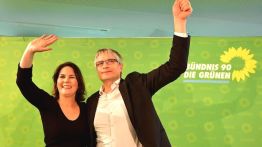
As Brits understandably focus on Brexit and populism, another story is emerging: the green wave. It is especially focused in amongst the young and in cities: Greens took nine of Germany’s ten largest cities, sometimes by large margins. Across Germany, Die Grünen relegated the Social Democrats to third place. In France, Les Verts came from nowhere to finish third, greens came second in Finland and broke into double digits in Austria and The Netherlands. In Ireland, Greens trebled their share of the vote and won their first European Parliament seat for 20 years: an exit poll showed 90 per cent of voters thought the Irish government needs to do more on climate change. And it was a doubling of the Green vote that forced the Tories into a humiliating fifth place in the UK.

The remarkable resurrection of Vince Cable

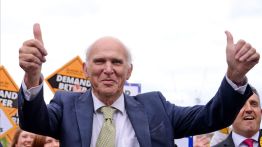
If all political careers end in failure, as Enoch Powell once said, how can you possibly explain the remarkable resurrection of Vince Cable last night? The Lib Dem leader, who has announced that he will be stepping down on 23 July, achieved a historic result for his party, securing 20.3 per cent of the UK national vote in the European elections and sending 15 MEPs to Brussels – five more than Labour and second only to the Brexit Party. In a sign of the party's wide support across the country, the Lib Dems managed to win the most votes in Stockport, (which has voted for Labour in general elections since 1987) and received more votes than the Conservative party in Windsor and Maidenhead, Theresa May's constituency. It is a remarkable turnaround of fortunes.

Listen: Lib Dem MEP on Brexit Party: ‘They are not a real party’

The Brexit Party has convincingly won the European elections, picking up nearly a third of the vote. But it seems that their success still isn't enough for some. One Lib Dem MEP – Barbara Gibson – dismissed Nigel Farage's outfit, saying it is 'not a real party'. Gibson, who was elected in the East of England alongside three Brexit Party MEPs, said she didn't recognise the legitimacy of the Brexit Party – despite the group getting nearly twice as many votes as the Lib Dems in the region in which she won her seat. Here's what she had to say: 'They are not a real party. They have not even published a manifesto. They could not do this in a general election.' Interviewer: 'Do you not recognise the validity and legitimacy of those three MEPs?' 'I don't, no.