Hardeep Singh

Hardeep Singh is deputy-director at the Network of Sikh Organisations

Labour has failed the victims of ‘grooming gangs’ again

From our UK edition

In January, the Home Secretary pledged £5 million for five locally led inquiries into ‘grooming gangs’, in the wake of public outcry led by the richest man on the planet Elon Musk. Yesterday, on the last day before Easter recess, the government watered down its promise to victims and survivors of rape gangs. The £5 million in funding may now also go towards ‘locally-led work’ following feedback from local authorities. The Conservatives had previously called for a national statutory inquiry into ‘grooming gangs’, but a proposed amendment attached to the Children's Wellbeing and Schools Bill was voted down at the beginning of the year. Not surprising, given the Labour government’s majority.

The ‘Islamophobia’ working group is unbalanced and opaque

From our UK edition

Membership of Angela Rayner’s new ‘Islamophobia’ working group has been announced. The group has been set up ‘to provide government with a working definition of Anti-Muslim Hatred/Islamophobia which is reflective of a wide range of perspectives and priorities of British Muslims’. The Labour party, the mayor of London and many Labour-led councils previously adopted the contested all-party-parliamentary group (APPG) definition, but Keir Starmer’s government distanced itself from the definition last year, confirming it wasn’t ‘in line’ with the Equality Act 2010, due to its conflation of race and religion. Islamophobia, the definition claimed, was a ‘type of racism’.

Why are masked men shouting ‘down with India’ in cinemas?

From our UK edition

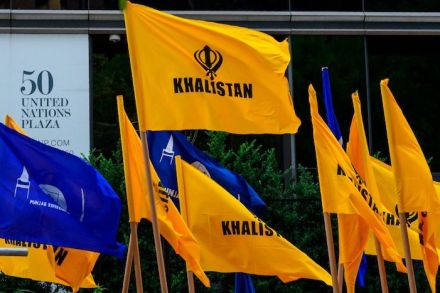
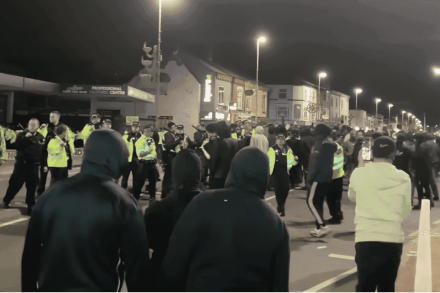
On Sunday night a screening of the controversial Bollywood film Emergency was disrupted in Vue cinema in Harrow, West London, when a group of 30 masked men barged in and started shouting ‘down with India’. Most viewers left the screening, with one eyewitness describing the behaviour as a ‘frightening and intimidating experience’. Censorship of Emergency has extended to other parts of the country too, with screenings cancelled in places like Wolverhampton and Birmingham. A video of the unruly behaviour Harrow shows the group shouting ‘Khalistan zindabad’, or ‘long live Khalistan’ (Khalistan is the would-be name for a conceptual Sikh homeland). A woman confronting the group responds with ‘Bharat Mata Ki Jai’ – which translates to ‘victory to Mother India’.

What’s the real reason Labour is reluctant to hold a grooming gangs inquiry?

From our UK edition

Keir Starmer is facing growing pressure to a launch a national review into grooming gangs, but so far the Prime Minister is holding firm. 'This doesn’t need more consultation, it doesn’t need more research, it just needs action. There have been many, many reviews…frankly, it’s time for action,’ he said yesterday. Starmer's comments reinforce the position of Jess Phillips, the safeguarding minister, who last week refused Oldham Council’s request for a government-led public inquiry into grooming gangs in the town. But what's the real reason Labour is so reluctant to probe these appalling crimes? Is Phillips reluctant to give the go ahead to an inquiry that might ask difficult and sensitive questions about the identity of the perpetrators?

Labour’s landslide is a triumph for Britain’s Sikhs

From our UK edition

For years, there have been very few Sikhs – who make up around one per cent of the population of England and Wales – in the Commons. Labour's landslide victory has changed that. Among the hundreds of new MPs are a dozen Sikh heritage MPs: more than there’s ever been in parliament’s history. There's some poetic justice in particular in Juss's victory: he represents Enoch Powell’s former constituency The achievements of Sikhs in British politics have historically been overshadowed by the incredible electoral success of Sikhs across the pond in Canada. It wasn’t long ago that Canadian prime minister Justin Trudeau boasted to an American audience, ‘I have more Sikhs in my cabinet than Modi does’.

Leave, convert or perish: The fate of Afghanistan’s minorities

From our UK edition

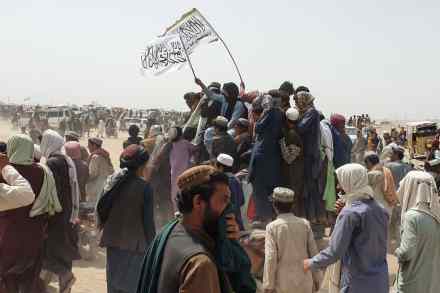
President Biden’s decision to ‘end the war in Afghanistan’ means the complete withdrawal of 3,500 US troops by the 20th anniversary of 9/11. However, what may be domestically popular — particularly among Trump voters — will soon have consequences for the Afghans left unguarded by foreign troops. The Taleban and other jihadist militias are already making significant territorial gains while nuclear Pakistan will be strengthened by the vacuum left by the US military. But it is Afghanistan’s non-Muslims who will really suffer. Extinction is a word normally associated with dinosaurs — but it’s no exaggeration to say some minority religions (including my own) will now face that fate at the hands of Isis, Al-Qaeda, and a resurgent Taleban.

Starmer should think twice before listening to ‘The Muslim Vote’

From our UK edition

A grassroots campaign group called ‘The Muslim Vote’ is aiming to capitalise on the success of pro-Gaza candidates at the local election by issuing a set of 18 ‘demands’ of Keir Starmer. The organisation seeks to 'punish' MPs who fail to back a ceasefire between Hamas and Israel. It says that Labour must 'return the Zionist money', bin the government’s new extremism definition and slap a travel ban on pro-war Israeli politicians. The group says its members will turn to other parties if Starmer doesn't listen up. Not all the demands made by ‘The Muslim Vote’ relate to Gaza On the question of Gaza, Labour is in an almighty pickle.

Why China benefits from the Maldives’ spat with India

From our UK edition

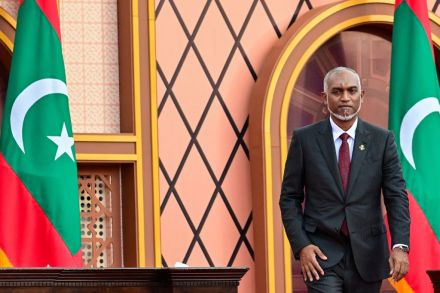
Think of the Maldives and you’re likely to conjure up images of expensive honeymoons and golden beaches, but the archipelago is also the focus of an extraordinary spat with India. The Maldives’ high commissioner was summoned by the Indian government last week after three Maldivian deputy ministers published derogatory posts on X/ Twitter, labelling Indian prime minister Narendra Modi a ‘terrorist’, ‘clown’ and ‘puppet of Israel’. One message even compared India to cow dung. The fallout from this imbroglio has been swift. The trio were suspended and the posts have now been deleted. But India is furious: the hashtags #BoycottMaldives and #ExploreIndianIslands have been trending and there have been reports of a significant drop in holiday bookings.

Why did it all kick off at a Kabaddi tournament in Derby?

From our UK edition

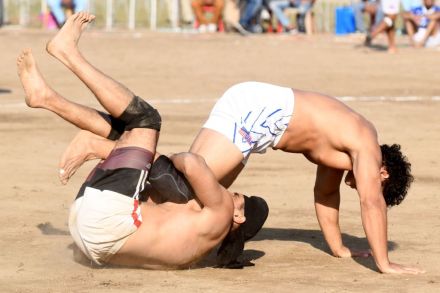
News of a ‘large-scale disturbance’ at a Kabaddi tournament in Alvaston, Derby over the weekend has left a community in shock. Four people ended up in hospital, and four men were arrested on suspicion of possession of a firearm and violent disorder. Video footage of the disorder has been widely shared on social media – several sent it me via WhatsApp – and it makes for grim viewing. In one video, gun shots appear to be fired, with crowds fleeing the scene and someone saying ‘there is the gun’ in Punjabi. Another video shows chaotic scenes with men brawling. Some can be seen brandishing weapons (including swords); some have hoodies up and faces covered. What’s normally a family friendly environment for Kabaddi fans was quickly and tragically turned into a war zone.

When will the world wake up to the persecution of Nigerian Christians?

From our UK edition

More Christians are killed in Nigeria for their faith than anywhere else in the world. Of the 5,621 people murdered worldwide in 2022 for their belief in Christ, almost nine in ten died in Nigeria, according to the charity Open Doors. On average, this equates to 14 Christians killed every single day last year in Nigeria. Many more Christians are being kidnapped, and there is little sign of this terrible violence ending any time soon. Such horrifying figures are hard for us in the West to comprehend; we take freedom of religion – a protected right enshrined in law – for granted. But despite the unending and seemingly escalating cycle of persecution, few outside Nigeria seem to care. The devastating reality for many Nigerians is becoming increasingly hard to ignore.

Does Britain have a problem with ‘Sikh extremism’?

From our UK edition

Terror threats from Islamist and far-right terrorists are depressingly familiar to Brits, but other faiths are not immune from the plague of extremists who might seek to harm others. A recent report by Colin Bloom, the government's faith engagement advisor, touched on lesser-known ideologies like ‘Buddhist nationalism’ and ‘Hindu nationalism’. It also raised concerns about ‘Sikh extremism’. But how much of a problem is this particular form of radicalism in Britain? ‘Small pockets of Sikh communities’ in Britain are involved with ‘subversive, sectarian and discriminatory activities,’ according to the report. The numbers here are small. According to the 2021 census, there are 524,000 Sikhs in England and Wales, which equates to just under 1 per cent of the population.

India’s war on the BBC

From our UK edition

BBC documentary India: The Modi Question, the second part of which airs tonight, has had a muted reaction in Britain. But the same cannot be said for India, where the country's government has invoked emergency laws to block the broadcast of the programme. The Modi Question focuses on the trouble that broke out in the western Indian state of Gujarat back in early 2002: at least 1,000 people, many of them Muslim, died during the riots. The violence erupted after 59 Hindu pilgrims, including women and children, died on a train that had been set on fire. The incident was blamed on members of the Muslim community – and the country's PM Narendra Modi, who was then chief minister of Gujarat, was accused of not doing enough to quell the violence that lasted for a few days.

Why Sikhs love King Charles III

From our UK edition

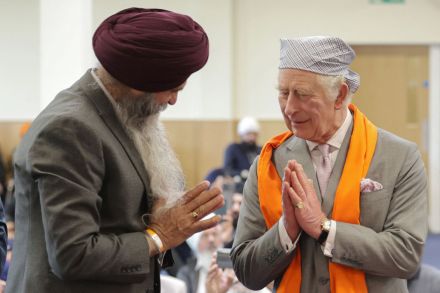
Poor old King Charles has had a tricky start to his reign. Harry and Meghan’s tell-all Netflix show, in which they drop various ‘truth bombs’ about their time as serving royals, continues to dominate the headlines. The Royals are also recovering from the fallout from the drama sparked by Lady Hussey, the Queen’s long-serving lady in waiting, asking a guest at a Buckingham Palace reception where she was ‘really’ from. But amidst the various royal ruptures, Charles deserves praise: for fulfilling his promise to be a 'defender of faith'. The monarch showed this commitment clearly last week when he paid a visit to a gurdwara (Sikh temple) in Luton. His visit has bolstered the warm feeling that many British Sikhs, including myself, have for Charles.

Fake news is fuelling trouble on the streets of Leicester

From our UK edition

Leicester is sometimes held up as a success story in multicultural Britain. The city is a melting pot where people of all creeds and colours live side-by-side. However, recent events have tarnished that reputation. Over the weekend, once again there were violent clashes between Hindus and Muslims in the east of the city. Leicestershire Police announced last night that a total of 47 arrests have been made, for offences ranging from assault to violent disorder. On Saturday, an ‘unplanned protest’ by a group of Hindu young men triggered a counterprotest by members of the Muslim community. Young men can be seen in video footage with their hoods up and faces covered (wearing covid masks and balaclavas), walking the streets in large groups looking menacing.

Nigeria’s Christians are under attack, but does the West care?

From our UK edition

The scene is medieval in its horror: a woman stoned, beaten and set on fire by a mob shouting 'Allahu Akbar'. But this didn't happen hundreds of years ago: it took place a week ago in Nigeria. The victim was a Christian student named Deborah Samuel, from Sokoto in the north west of the country. Samuel's 'crime', for which she paid with her life, was to have allegedly posted a ‘blasphemous’ comment on a WhatsApp group against the prophet Mohammed. Even in a nation riddled by decades of ethnic and religious conflict where thousands of Christians have been killed, the incident has sparked uproar. But this outrage has mostly been confined to Nigeria itself; much of the Western world turns a blind eye to the horrors unfolding in Africa.

Will India’s neutrality on Putin’s aggression backfire?

From our UK edition

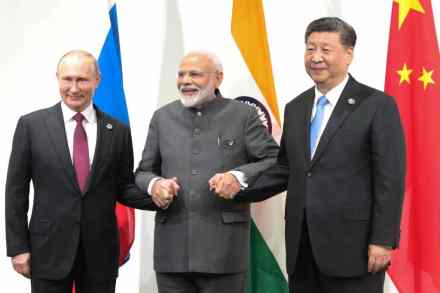
As the western world tightens sanctions on Russia, India is opting for a different strategy: sitting on the fence. 'We are on the side of peace,' India's prime minister Narendra Modi insists. In reality, this means keeping shtum when it comes to condemning Putin's aggression and abstaining at the United Nations General Assembly on a resolution criticising Russia. India's stance has, unsurprisingly, sparked a backlash. President Biden has said any country which effectively supports Putin would be ‘stained by association’. While he didn't single out India by name, it was obvious who he was talking about. Closer to home, Tory MP Johnny Mercer has pinpointed India for its stance on Russia: ‘In 2021/22 we are giving £55.

Britain is finally remembering its forgotten soldiers of empire

From our UK edition

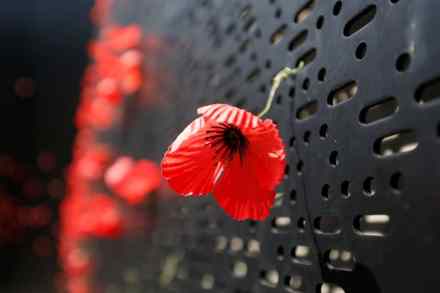
Each year, flowers of remembrance are left on the tomb of the unknown soldier in Westminster Abbey. The memorial marks the resting place of a nameless British soldier who fell on the battlefields of Europe during the First World War. But this hero is far from alone in his identity being lost to history. More than a century on from the end of the Great War, the contribution of half-a-million Punjabis who fought has been all but forgotten. The Punjab, or ‘land of the five rivers’ – a region now divided between what is post-partition India and Pakistan – remarkably provided more soldiers (Sikhs, Muslims and Hindus) towards the allied war effort than Australia. Yet until now, this contribution has gone largely unnoticed. Is this now about to change?

The fatal flaw in the Assisted Dying Bill

From our UK edition

The push for legalised assisted dying for the terminally ill is back with a debate on Baroness Meacher’s private members’ Bill on the subject today in the House of Lords. It’s an emotionally charged issue which goes to the heart of medical ethics. It is also true that euphemistic language is often deployed by advocates of assisted dying to frame the narrative. Another way of describing ‘assisted dying’ is of course the grislier ‘assisted suicide’, or ‘assisted killing’. Even euthanasia, which is the act of intentionally ending a life to relieve suffering means ‘good death’.

Why is the UN’s Human Rights Council ignoring the Taliban’s atrocities?

From our UK edition

The United Nations Human Rights Council (UNHRC) held its thirty-first special session this week to address the ‘serious human rights concerns and situation in Afghanistan’. This discussion was led by the Taliban friendly Pakistan and a copy of the draft resolution was shared on Twitter by the brilliant Hillel Neuer, international lawyer and executive director of United Nations Watch. These documents make for an interesting but rather revealing read. On the current refugee problem, the draft refers to, ‘the generous hospitality demonstrated by Afghanistan’s neighbours’ and goes on to urge ‘the international community to assist Iran and Pakistan as the major host countries to address the refugee problem’.

Why Sikhs are worried about the Indianapolis mass shooting

From our UK edition

Last week, the New York Times mapped the location and number of casualties of mass shootings that have occurred on US soil in 2021. It’s a ‘partial’ list, but remarkable, nevertheless. March alone saw the senseless killing of ten people in Colorado, four in California, eight in Atlanta, four in Indianapolis and another four in Maryland. More remarkably still, the shootings occurred unabated throughout the Covid-19 pandemic and lockdown. Last Thursday saw yet more mindless carnage in America, with the third mass shooting in Indianapolis this year. A FedEx facility was targeted, and half the victims were local Sikhs (there is a 10,000 strong community across Indiana).