Bjorn Lomborg

Bjorn Lomborg is president of the Copenhagen Consensus Center

What the new GCSE in global warming should teach

From our UK edition

For years, environmentalists have campaigned for children to study global warming as a subject rather than simply as a part of geography. Their wish has now been granted in England with a new GCSE in natural history, starting from 2025. We know nothing yet about the syllabus but it’s quite the opportunity to ask what our planet’s problems really are, and how effective the net-zero agenda is as a solution. Rather than be scared to death about the future of the planet, pupils should instead be encouraged to take a rationalist approach. They might ask whether the obsession with climate change in recent decades has taken attention away from the many other major problems facing the planet.


A question of priorities: should tackling climate change trump all else?

From our UK edition

24 min listen

In the last episode of this miniseries on climate change, Bjorn Lomborg argues that climate change is important, but solving it shouldn't come above all else. So what are the trade offs involved with a green agenda, especially when it comes to lifting the poorest in the world out of poverty? Kate Andrews discusses with Bjorn and Matt Ridley and asks - is it really an either/or?Bjorn Lomborg is the President of the Copenhagen Consensus Center and author of False Alarm. Matt Ridley is a Conservative peer, journalist, and author of How Innovation Works. To hear all episodes in this series, click here.

Is innovation the answer to climate change?

From our UK edition

20 min listen

Can human innovation stop climate change, or will it simply manage and delay the challenges it poses? In the second of this mini podcast series featuring Bjorn Lomborg and Matt Ridley, host Kate Andrews discusses with Bjorn and Matt whether their optimism is misplaced.

Don’t Panic! How to talk about climate change

From our UK edition

23 min listen

Can the conversation around climate change all too often get heated, hysterical, and panicked? Should we be appealing for more calm in the climate debate? In the first of this mini podcast series featuring Bjorn Lomborg and Matt Ridley, host Kate Andrews challenges Bjorn and Matt on their views over the best way to conduct what some say is the most important debate of our lifetimes.

The UK needs to spend more on researching green energy

From our UK edition

On the sidelines of the 2015 Paris climate summit, then-UK prime minister David Cameron and 19 other world leaders made a promise to double green energy research and development by 2020. The United Kingdom is on course to break that promise. As a percentage of GDP, spending on low-carbon energy R&D has stayed sluggishly around 0.02 per cent since 2015, according to data from the International Energy Agency (IEA). The United Kingdom is not alone. IEA data shows rich OECD countries are spending just 0.03 per cent of GDP on low-carbon energy R&D – a percentage that has not changed since the vow was made. Climate policy has been littered with broken promises ever since the 1992 Earth Summit in Rio de Janeiro.

The flawed thinking at the heart of the renewable energy swindle

From our UK edition

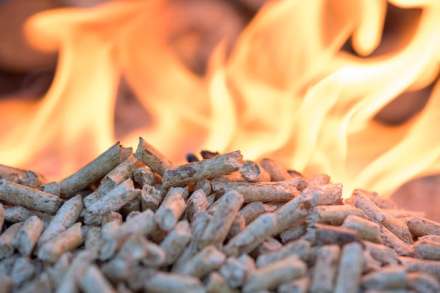
A new report revealing that using wood pellets to generate electricity can actually speed up global warming should be the final nail in the coffin for the flawed policy of biomass subsidies. Policies designed to incentivise green energy use are not only having a dubious effect on climate change, they are destroying biodiversity and even killing many thousands of people. Wood (or to use the technical term covering wood, wood pellets and other burning matter like animal dung, biomass) is by far the most significant renewable energy source. In both the US and the EU, biomass is the single largest source of renewable energy. Owing to poverty, around three billion people globally cook and heat their homes with wood, twigs and dung.