Politics

Read about the latest political news, views and analysis

The biggest mistake Change UK made was to become Change UK

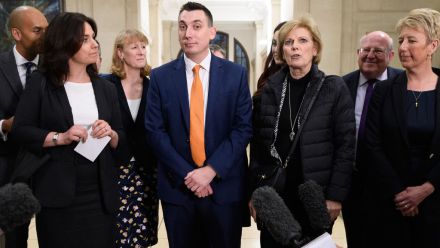
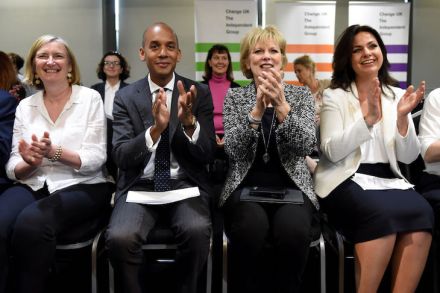
Why did Change UK end up splitting? Well, there were the personality clashes. And then there was the failure to attract more MPs who were supposed to break off from their existing parties to join the quest to change politics. But the biggest reason the party ended up in this mess was that simply it became a party. When it started off as the Independent Group, its members seemed keen to cast their new caucus as something loose and exploratory, rather than a formal political party. In fact, I understand that three of the MPs - Gavin Shuker, Angela Smith and Luciana Berger - who announced they were leaving today were very resistant to the idea that the group should register as a political party. But in the end they were overruled, particularly by Chris Leslie.
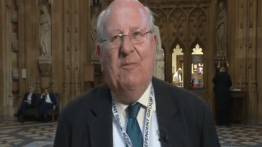
Mike Gapes: Change UK is like an acorn

If it wasn't already, Change UK is now surely on its last legs. Six of the party's MPs – including leader Heidi Allen – have quit. But those left behind still remain defiant. In a Sky News interview, Mike Gapes – who defected from Labour earlier this year – said the party was alive and kicking. He then compared Change UK to an 'acorn' that could grow into a 'big tree': Kay Burley: Mike, you've lost your party, you're going to lose your seat at the next election. You knew you would, which is why you didn't go for a by-election...Now, half of the party that you set up has left you. It's all over. Mike Gapes: Politics is a long haul. The fact is, polls come up and go down. British politics needs a change, and those of (us)...

A ‘turquoise wave’ is on its way: interview with Peterborough Brexit party candidate Mike Greene

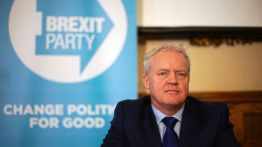
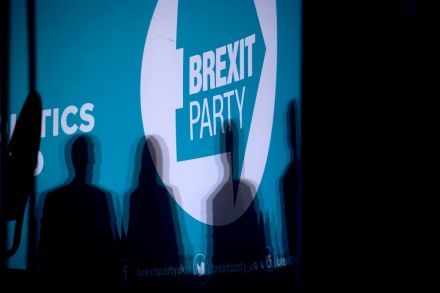
'We’re going to give this everything we’ve got until 10 o'clock on Thursday.’ There's only two days to go until the Peterborough by-election, and it's fair to say that Brexit party candidate Mike Greene is determined to win. In his campaign headquarters in Peterborough, the businessman, Secret Millionaire and former Tory supporter revealed he hadn't placed a bet on himself like Nigel Farage (his Mum told him to never bet against the bookies), but is 'confident', though not complacent, that the Brexit party can win here this week. Peterborough has always been a tightly contested marginal seat that has either voted for Labour or the Tories since the second world war.

Donald Trump has done Britain a favour with his NHS grab

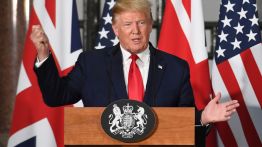
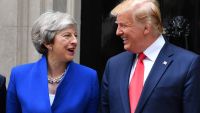
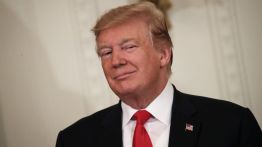
“Everything with a trade deal is on the table...so NHS or anything else, a lot more than that". That was Donald Trump talking about a possible UK-US trade deal after Britain leaves the EU’s common trade policy. Cue political drama, headlines and Conservative leadership contenders trying to work out what to say when someone asks them if they would be willing to include NHS procurement in any future trade talks. (Not for the first time, Matt Hancock was first off the blocks, tweeting to rule it out.) There will doubtless be a great deal of good analysis of what this comment means for the Tory leadership race: does it harm Boris Johnson, whom Trump has previously endorsed? I have nothing to say on that.

Trump on Gove: ‘I don’t know Michael’

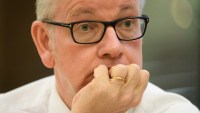
Over the weekend, Donald Trump endorsed Boris Johnson's leadership campaign. Boris 'would do a very good job', Trump said. At today's press conference, Jeremy Hunt was also backed by Trump. But one person who didn't quite make it was Michael Gove. When asked about the Tory leadership contest, Trump had this to say: 'So I know Boris. I like him - I've liked him for a very long time. I think he would do a very good job. I know Jeremy - I think he would do a very good job. I don't know Michael. Would he do a good job, Jeremy? Tell me.' https://www.youtube.com/watch?v=CeA1DS2C_UA&feature=youtu.be Michael Gove would be forgiven for feeling a little hurt given that he has met the president more than once.

Donald Trump: Why I snubbed Jeremy Corbyn

Jeremy Corbyn has made much of snubbing Donald Trump by refusing to attend a state dinner in his honour, but was it really Trump who got the cold shoulder? At a press conference this afternoon, Trump has just claimed that Corbyn wanted to meet Trump, but that it was he who turned down the Labour leader. Here is what Trump said: 'I don't know Jeremy Corbyn, never met him, never spoke to him. He wanted to meet today or tomorrow and I decided I would not do that. I think that he is, from where I come from, something of a negative force...so I've decided not to meet'. Mr S. thinks that this will not go down well with Corbynistas... Update: Labour has confirmed that Corbyn did seek a meeting.

Why have Brexiteers stopped making the case for Brexit?

For at least a year the Brexit debate has been conducted almost entirely on negative ground – arguing over how harmful it might be if we leave with no deal, or whether leaving the EU is already threatening the economy. There has been rather less discussion of the benefits of Brexit – what Britain will be able to do in the future which it can’t do as a member of the EU. It was this, after all, which won the 2016 referendum for Leave, so why have leavers been so shy about continuing to make the case for Brexit? This week, though, comes one positive contribution in the shape of a paper on the financial services industry by the Institute of Economic Affairs (IEA).

Why the Brexit Party might be wise to form a pact with the Tories

The no-deal Catch 22 for the Tories is well-established, bringing comfort to those who oppose no-deal (and Brexit) and worry to those who rightly see no-deal as the only way of actually leaving the EU. The idea is that the Tories cannot fight an election until Britain has genuinely left the EU, but that it will be impossible to leave without an election that would put Corbyn in power and stop Brexit altogether. The conclusion drawn by some Tories is that the new prime minister, whoever it is, will have to ask for another extension. But that's wrong. And while there is an existential issue for the Tories, there could be an even worse one for Labour – and even a dilemma for the Brexit Party: should they seek a pact with the Tories?

When it comes to Trump, Corbyn is another metropolitan elitist

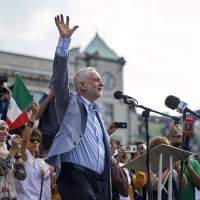
In refusing to come out for a confirmatory referendum as the primary aim of Brexit policy, Jeremy Corbyn and his allies - Len McCluskey, Karie Murphy, Seumas Milne, and Andrew Murray - have signalled they would not want to turn their backs on Labour's traditional working class voters, many of whom are Brexiters and do not wish Labour to become the party of the lefty London middle classes. So it's a bit confusing that Labour's leader has chosen not only to boycott the state banquet for Donald Trump tonight, but tomorrow Corbyn will be the most important speaker at the anti-Trump rally. Because in being the figurehead for the anti-Trump movement, Corbyn is playing explicitly to the metropolitan middle class gallery.

Why standing for Tory leader could hinder Tory MPs’ careers

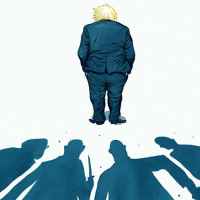
Why would you stand for the Tory leadership? If you're someone like Dominic Raab, Boris Johnson or Jeremy Hunt, you've been planning this for months, with a team in place since at least the start of the year because you really think you can win this. But there are other entrants who are highly unlikely to get anywhere near the final two but are still standing. Some of these MPs may think they genuinely have an outside chance, but others have made a variety of calculations. Rory Stewart, for instance, is building a proper profile for himself as someone unafraid to walk around in public asking people what they think (which is rare for politicians today). This will set him in good stead for another leadership contest.

Back Boris: Johnson tries to prove his electability in campaign video

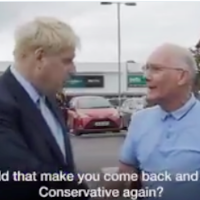
The Tory leadership race officially starts next week when nominations close for the first stage of the contest. Until then, each campaign is doing their bit to show they are not falling behind. Today the Boris Johnson campaign have stepped up a gear with the release of their campaign video. It comes after a series of mixed videos from contenders so far. Dominic Raab was mocked for a decisive head turn, Sajid Javid for using his Parliamentary office and Jeremy Hunt for mispronouncing Culloden. Boris Johnson's has tread a different path. In his campaign video, the former Mayor of London is seen out of Westminster meeting with ordinary voters. The idea behind it was to show that there is grassroots support for Johnson.

What the People’s Vote campaign should do about Jeremy Corbyn

The remain campaign’s political dilemma looks insoluble. Perhaps I am being overly pessimistic – gloom is my default state –  but it is certainly formidable because it requires remainers to simultaneously support and oppose Jeremy Corbyn. I can make the people who spell it out sound silly. I shouldn’t because some of the brightest and most committed men and women in the People’s Vote campaign are wrestling with the problem of how to break through in a first-past-the-post-system when a neo-Stalinist faction controls the opposition. Here is their argument. A new Tory prime minister will be with us by July.

In praise of Matt Hancock’s Brexit plan

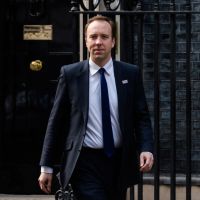
Matt Hancock is the youngest of the candidates running to be Conservative leader but he’s starting to look like the grown-up in the room. At the weekend he published the outline of a Brexit plan that might just prove the basis for a way ahead that averts either economic or political disaster. The plan, as I read it, entails accepting the Withdrawal Agreement as negotiated by Theresa May is the only viable way to avoid a No-Deal exit in October and shifting the focus of British ambitions to the Political Declaration on the future relationship between the UK and EU that would follow Withdrawal. That’s both sensible and smart.

The Conservative Party need to look beyond Brexit if they are to survive

The Conservative Party was founded 185 years ago and may not survive the next five. YouGov and Opinium both put the Tories in third place and on less than 20 per cent of the vote. They managed just 8.8 per cent in the European election, coming fifth behind the Greens and losing all but four of their MEPs. The primary cause of la crise actuelle is the government’s failure to deliver Brexit and it is to this which much of the Tory leadership conversation is addressed. However, there are other factors, structural and social, which have depressed the Tory vote and candidates to replace Theresa May are keen to prove they can win voters back to their party’s tarnished brand.

Sunday shows round-up: This country needs another referendum and I’d vote Remain, says Sam Gyimah

Sajid Javid - Our priority 'must be law and order' The Tory leadership race is becoming a crowded field, with thirteen candidates now setting out their stalls as they aim for the premiership. Andrew Marr spoke to two of the hopefuls, including Home Secretary Sajid Javid. Perhaps unsurprisingly, Javid wished to talk about boosting resources for the police if he attains the country's highest political office: https://twitter.com/BBCPolitics/status/1135132342643650562 AM: If you'd had your own way, we'd have more police on the beat now? SJ: Yes... A priority must be crime and law and order... If I was leader and Prime Minister, I would want to see more police on the streets, and I think it's justified.

Watch: Sam Gyimah joins Conservative leadership contest to “broaden the race”

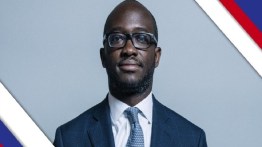
Sam Gyimah, the former Minister for Universities who quit in protest at Theresa May’s deal, has become the thirteenth Conservative leadership candidate, announcing his decision live on air on Sky today. When asked by Niall Paterson if he would like to be the next Conservative leader, Gyimah replied "Well, yes. I will be joining the contest to be the next Conservative leader and prime minister to broaden the race." He wishes to be the champion of that cause the Tory members are crying out for: a second referendum. "There is a wide range of candidates out there, but there is a very narrow view on Brexit being discussed” he said.

Trump pledges to “go all out” for a UK-US trade deal if Brexit talks fail

The message from the EU is clear: there will be no improvement to the deal rejected by Parliament. And if talks fail? Donald Trump today makes an offer: that the United States, the UK's No 1 customer, is standing by with its own free trade deal. It needn't take even a year, he says, as he'd go “all out” so Britain can do a lot more trade with the world's largest economy. The EU's deal, he says, is anyway ludicrous: the £39bn is too much money. And why, he asks, would the UK government agreed to a two-year moratorium on signing free trade deals? In an interview with the Sunday Times, he elaborates on the art of the deal. "If they don’t get what they want, I would walk away. Yes, I would walk away.

The next Tory leader will have even less flexibility than May on Brexit

In Choosing A Leader, what remains one of the best books published on British leadership contests (although I appreciate this is a niche market), Len Stark argued that the procedures parties used when selecting their leaders rarely made much of a difference. With a handful of exceptions, he demonstrated that the same candidate would have won, no matter how the party went about making its choice. Parties chose candidates who will unite them, he argued, after which what mattered was who was most electorally appealing or most competent – and they did that regardless of the rulebook. Yet there were exceptions, not all of them inconsequential.