Eamonn Butler

What would Adam Smith make of the AI revolution?

Today marks the 250th anniversary of the publication of The Wealth of Nations: Adam Smith's seminal text in the history of economics. Smith gave his name to the institute that I co-founded, so you might expect me to advocate for reading his most famous text. But you shouldn’t. It’s very long, written in elegant but spacious prose and full to exasperation of examples, observations and terminologies that puzzle a modern reader. Read my Condensed Wealth of Nations instead or wait for my cartoon graphic novel to come out later in the year. Smith would see the scale of government today as the greatest tyranny Nonetheless, modern unreadability doesn’t mean that The Wealth of Nations is unimportant.


Why Labour should avoid Gordon Brown’s stealth taxes

From our UK edition

During the election campaign, Chancellor Rachel Reeves made bold promises – no increases to Income Tax, National Insurance, or VAT. She also sought to echo the 'prudence' mantra of her predecessor as chancellor Gordon Brown, though his tenure was marked by significant spending increases rather than prudent restraint. True to form, over the weekend Reeves indicated the government could accept recommendations for above-inflation pay increases, of about 5.5 per cent, for NHS workers and teachers. The Institute for Fiscal Studies (IFS) estimates that a similar pay hike across public sector professions would cost about £10 billion, requiring more taxation or borrowing. This comes amid other ambitious plans for restructuring and investment, which will all cost even more money.

The message Tory leadership candidates need to hear

From our UK edition

I’ve been the victim of a robbery. In broad daylight. As an average Brit, more than 40 per cent of everything I produce is taken by the government for whatever they want to spend it on. In theory they ask my opinion on what that should be. But they ask me only every five years, and even then, the chance of my vote making a difference is literally millions to one. That’s why many – or most of us – don’t bother to vote at all and most of the rest simply give the major parties a big two fingers. Even mediaeval serfs only had to work a third of their time for their masters. We work two-fifths for ours. That’s the equivalent of labouring non-stop, from 1st January to today, 30th May, solely for the government.

At last, it’s Tax Freedom Day… but just wait until you find out when Cost of Government Day is

From our UK edition

Today is Tax Freedom Day. That means that the average person in Britain has to work 148 days of the year solely to pay taxes. Only on Tax Freedom Day do we at last start earning for ourselves. This year there is a faint chink of cheer, in that Tax Freedom Day falls three days earlier than it did in 2013. But we still have to labour for nearly five months just to meet the demands of the tax collectors. But what you pay in taxes this year isn't the whole story. Remember that the government spends even more than it raises, and it borrows the difference. Despite all the talk of ‘austerity’, the current government borrows about £1 for every £5 it spends.

The government must cut or even scrap capital gains tax

From our UK edition

When economists get things wrong– something rather easy, given the nature of their subject – they should admit that they got them wrong. Well, the Adam Smith Institute got it wrong. Two years ago we predicted that, if Vince Cable got his way and capital gains tax rates were increased to match income tax rates – up from 18 per cent to 40 per cent or even 50 per cent – the Treasury would not make anything out of it, and would actually lose £2.48bn in revenue. In the event, CGT was not raised to 40 per cent or 50 per cent. But it was raised to 28 per cent from 18 per cent for most asset sales. (The entrepreneurs’ rate, designed to encourage people to build up lifelong businesses, remained at 10 per cent.) The result? The Treasury is about £4.

Politicians shouldn’t meddle with energy prices

From our UK edition

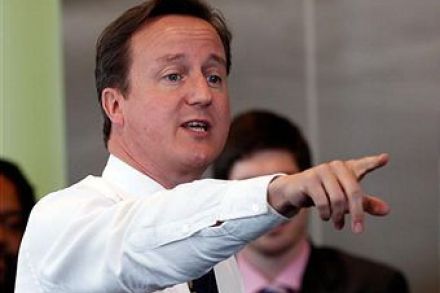
David Cameron's announcement in the House of Commons on Wednesday – that he would force energy companies to give people the lowest tariff – caused a stir. The Downing Street comms machine has been trying to clarify the new policy ever since and we're only just starting to see a clear idea taking shape. So what are we to make of it? Well, there is almost no competition in the energy market. There are only six big companies, and those are regulated within an inch of their lives. So with no proper competition, you could make the case that government has a role to make sure that customers are properly informed about prices, so that they won't be cheated.

Time to end the age of malinvestment

From our UK edition

Chancellor George Osborne's latest idea to stimulate the economy is to offer the banks money (£140bn) to lend to firms and households. The idea is that families will borrow more and spend the extra cash on goods and services, while firms will borrow more to invest in providing these goods and services. With one bound, the economy is free? Not quite.   Interest rates are already at rock bottom, where they have been for almost two years. Larger firms are actually sitting on mountains of cash that they are reluctant to invest because they do not see any sign of life coming back to the economy any time soon. Small investors and pension funds have plenty of money that they could lend to businesses if they chose to.

Has Osborne learnt the right lessons from Adam Smith?

From our UK edition

According to Rachel Sylvester in The Times (£) today, George Osborne’s love of soaking the rich — from the non-dom levy to the tycoon tax – stems from the importance he puts on the ‘empathy’ described in Adam Smith’s Theory of Moral Sentiments. If so, he’d better start re-reading his Adam Smith. Certainly, the Chancellor is familiar with Smith’s other great book, The Wealth of Nations (1776). He wrote an introduction to a recent edition of it. That book is a passionate call for free trade and for open and competitive markets, and a stinging critique of the mutual back-scratching between businesspeople and politicians — what today we would call crony capitalism.

Curing youth unemployment

From our UK edition

Youth unemployment in the UK has hit another record. More 16 to 24-year olds are out of work than ever. The unemployment rate in this group is now a shocking 20.5 percent, which amounts to nearly a million young people out of work. Of those, 600,000 have never had a job since leaving school or college. All unemployment is bad news, but youth unemployment is particularly bad news. We want young people who leave education to get a job, learn the skills and disciplines of work and build up the experience that will help them be upwardly mobile. That benefits them, obviously, and it benefits the whole community too. But instead of young people getting into the work stream, too many are getting into the welfare stream.

Lost in the woods

From our UK edition

The government’s plans for state forestry are so weak and feeble that it is hard to understand why there is so much fuss about them. Maybe people do not realise that three-quarters of the English woodland that they love so much is already privately owned. And those private owners face strict standards on public access and recreation, environmental quality, and conservation. So why is there so much fuss about selling the rest? People forget that broadleaf woodlands comprise just 8 percent of the Forestry Commission’s estate. The other 92 percent is farmland and conifer plantations, and it is hard to get worked up about who owns either of those.

Going for broke

From our UK edition

It won’t be for a while yet, but the UK seems headed for another financial crisis. And this time, the government won’t be able to blame the banks. The blame will lie squarely on our own determination to vote ourselves generous healthcare, welfare and pension benefits in the hope that our children will calmly pick up the bill. This giant welfare-state Ponzi scheme is bound to collapse sometime – though you can be pretty sure that the politicians running it won’t end up in the slammer alongside Bernie Madoff. An ageing population means that all those benefits we vote ourselves today will be simply unaffordable tomorrow. You believe the national debt will top out at 100 percent of GDP?

The Royal Mail – a tough sell

From our UK edition

Some day soon – unless the coalition has already lost its bottle – a bill will be introduced to 'part-privatise' Royal Mail. It has to be done. But it will be a tough sell, for four reasons. First, the market for the Royal Mail's product is shrinking. It's a big fish, but its pool is getting smaller. It carries 75 million letters a day, but that's down by 10 million just in the last five years. And 87 percent is mail sent by businesses. Apart from Christmas cards, the rest of us now correspond by email. Last year's pre-tax loss was £262m: the reality is that the business is insolvent.   Second, the Royal Mail is decrepit.

The legacy of a century of vain politicians

From our UK edition

Monday is the August Bank Holiday – at least in England and Wales, where it is the last weekend before the schools go back. In Scotland, the schools break up earlier (traditionally, so the kids could join in the work of lifting potatoes in the fields) but have already gone back. The August Bank Holiday is just one of eight permanent bank holidays in England and Wales (along with New Year, Good Friday and Easter Monday, the Early May Bank Holiday, the Spring Bank Holiday in late May, Christmas Day and Boxing Day). In Scotland there are nine – an extra day at New Year and St Andrew's Day to replace the August holiday). Northern Ireland has ten, which include St Patrick's Day and the anniversary of the Battle of the Boyne in 1690.

The family is the best agent of welfare

From our UK edition

Conservatives have long been strong on family. They believe that families are the glue that sticks us together, and that traditional nuclear families therefore plays an important role in sticking the whole nation together. As a libertarian, I believe that people should live as they choose. Too many young people of my parents' and grandparents' generations were forced into marriages that were or became deeply unhappy – but divorce was thought scandalous. So people – particularly women, who rarely had independent means or income enough to escape – endured that misery. Many, too, were humiliated, or prosecuted, for conducting relationships that we would happily accept today.

This is no time for salami slicing

From our UK edition

You can often achieve a lot more by doing things a bit at a time rather than attempting one bold and sweeping reform. In the 1970s, for example, the trade unions had extraordinary legal privileges; strike votes were done on a show of hands at works meetings (usually late at night when everyone except the Trotskyists had gone to bed); there weren’t even secret ballots for union elections. Edward Heath took the unions head on with his all-embracing Industrial Relations Act. It was a disaster: there were widespread demonstrations and strikes, and one of these confrontations forced him from office. Margaret Thatcher learnt from this and took things much more slowly.

The Star Chamber won’t re-structure government. Philip Hammond might

From our UK edition

You have a computer for years. It gets gummed up with old applications, many of which can’t do the job you need them for today. It hogs far too much memory, and – when it doesn’t freeze entirely – it runs painfully slowly. That’s Britain’s government: it is clogged with quangos and schemes and even whole departments that eat up vast quantities of tax and deliver very little output. So it’s time to re-boot government. Back up the useful bits, bin the rest, group your files more rationally, and re-start. Which seems to be what Britain’s coalition government now promises: but will they succeed? Several countries have been through the same mill – Ireland, New Zealand, Sweden, Canada all turned around big budget deficits.

The British constitution is in dire need of reform

From our UK edition

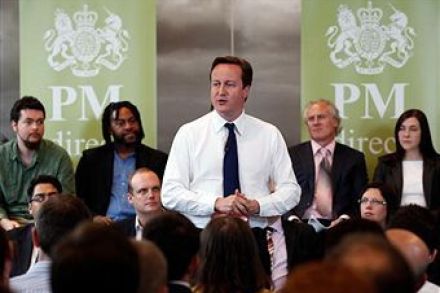
The UK Conservative leader David Cameron says that any Prime Minister not 'directly elected' by the public should be forced to hold a general election within six months. He has in mind his Labour opponent Gordon Brown, who in June 2007 was catapulted into the position by a secret ballot in his own party, rather than by an open election of the people. And if, after the forthcoming general election on May 6, Labour chose to ditch Brown and catapult that gap-year kid...ah, yes, David Miliband...into the top job in order to stitch up a coalition deal with Nick Clegg's Liberal Democrats, well, Cameron would give him only six months to get a public mandate too. On the surface, this looks like a good idea.

What to expect in the Budget

From our UK edition

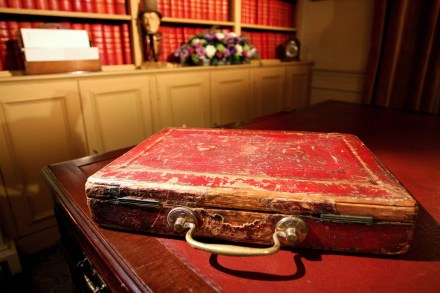
After a decade of reckless spending, the government’s kitty is bare and its debts are mounting. In November, Alastair Darling said the economy would shrink just 2%, but predicted, Micawber-style, that it would turn up in mid-2009. Well, the economists’ consensus is that it actually shrank 3.7%, and that it’s hardly going to turn up this year at all. Unemployment’s already 2 million, heading for 3.2 million. That’s a lot more people drawing benefits and not paying taxes. And there’s those expensive bank bailouts to pay for. So the Chancellor is borrowing wildly. Again, the economists’ consensus is that he borrowed £160 billion in 2008-09 and will need another £167 billion this year.