Politics

Read about the latest political news, views and analysis

The obvious failings of a ‘government of national unity’

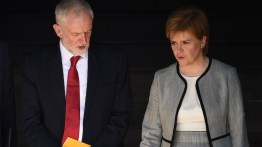
So that’s that, then. Just as the backers of a ‘government of national unity’ appeared to have their tails up, along comes shadow business secretary Rebecca Long-Bailey to scotch it, saying that Labour will back no such thing. It should come as no surprise. Corbyn wants to govern on his own terms – and be Prime Minister. He doesn’t want to be a junior minister in some outfit led by Yvette Cooper, Hilary Benn, or any of the other backbenchers who have spent the past three years trying to unseat him as Labour leader. He wants national disunity, followed by a general election.
It would be foolish to take Boris’s Brexit promises at face value

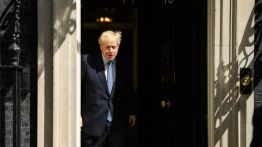
As the by-election result came through from Wales last week, one Tory Leaver tweeted this: “Brecon and Radnor is a timely warning to Brexiteers. Vote for the @brexitparty_uk and you will hand another seat to Remain. How could you be so stupid?”.  So stupid? The nerve, when after all, it was the the Brexit party that resuscitated the referendum result after a near death experience created by his party. I was furious at the arrogance. But he isn't alone; this view has now become the narrative popularised by some Tory grandees and voters, even though many of the latter loaned the Brexit party their votes in the Euro elections.  Yet without the Brexit party, it is likely that Theresa May would still be prime minister.

Will John McDonnell lock Tories up if Labour wins the next election?

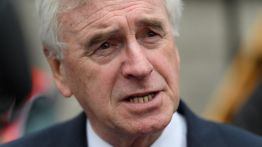
Smiley, fluent and softly spoken, John McDonnell sometimes comes across as a bit cuddly. Yesterday Labour’s shadow chancellor was interviewed by Iain Dale at the Edinburgh festival. He said he’s looking forward to a boating trip on the Norfolk Broads. ‘My wife and I sail. But we sail badly. People get off the water when they see us coming.’ He felt he deserved a break after working with the Tories on a cross-party approach to the Withdrawal Agreement. ‘No one should have to sit opposite Michael Gove for six weeks. I did it for the country.’ Iain Dale quizzed him about Labour’s immediate threat: Boris. ‘The guy’s reckless. The guy’s unstable,’ said McDonnell. ‘I will move heaven and earth to stop a no-deal Brexit.

How should the Tories respond to an SNP/Labour pact?

John McDonnell has caused a stir over recess with an interview he gave to Iain Dale at the Edinburgh Fringe. The shadow chancellor suggested that Westminster should not decide whether Scotland gets a second independence vote – instead it should be up to the Scottish Parliament. As Stephen writes on Coffee House, this is most definitely not the Scottish Labour line. The comments were also made within 24 hours of Nicola Sturgeon suggesting she’d be willing to work with Labour to 'lock the Tories out of government'. So, with a general election now seen as inevitable within the next six months – is the prospect of an SNP/Labour pact an open goal for the Tories?

Donald Trump is the best prime minister Britain never had

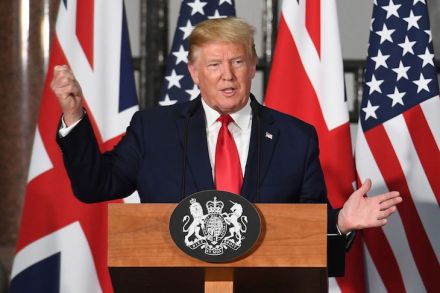
Britain has never had a better friend in the White House than Donald Trump. FDR may have bailed out Britain in its struggle against German imperialism, but the bailout carried the highest possible price: the surrender of Britain’s empire, and loans that weren’t paid off until 2006. By contrast, Trump asks for nothing that Britain isn’t already asking for: economic and political support as it escapes from the latter-day German imperialism of the European Union. And Trump is giving Britain much more. By omission as much as commission, Trump is cleaning up the messes that Britain left behind as it lost its empire.

John McDonnell has thrown Scottish Labour under the bus

That sound you just heard was the entire Scottish Labour Party — all 12 of them — slapping their foreheads in frustrated unison. In an interview with Iain Dale at the Edinburgh Fringe, John McDonnell confirmed that Labour would not stand in the way of the SNP holding a second referendum on Scottish independence. The Shadow Chancellor told the LBC host: ‘We would not block something like that. We would let the Scottish people decide. They will take a view about whether they want another referendum. Nicola Sturgeon said by late next year or the beginning of 2021. We would not block something like that. We would let the Scottish people decide. That’s democracy. There are other views within the party but that’s our view.

Brexiteers should be careful about setting fire to the British constitution

Revolutions, once started, are hard to stop. The fire that David Cameron so casually lit in 2016 has burned through many things that seemed like fixtures of British national life. Judicial independence; the Civil Service and the Bank of England; the Union; the Conservative party's faith in institutions; basic standards of journalism; and parliament itself: all have been pushed towards the the flames by chanting members of the Brexit death-cult. So it should be no great surprise that we’ve reached the stage where it is said that the Prime Minister of the day is prepared to set aside pretty much the most fundamental principle of representative democracy in the name of the precious Brexit.

Boris Johnson’s ‘million to one’ mistake

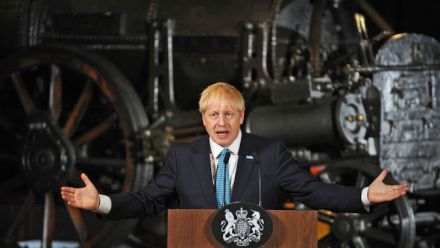
Boris Johnson’s premiership is in danger of being undermined by a single loose remark. No, not one involving burqas, Liverpool, Nazanin Zaghari-Ratcliffe, Darius Guppy and all the other many and varied ways he has offended people over the years. The remark which risks doing the real damage is his off-the-cuff comment in a hustings on 26 June when he claimed that the chances of a no-deal Brexit are ‘a million to one’. Really? That is not quite how the bookies see it – Betfair and Paddy Power are this morning offering 17/10 on a no-deal departure on 31 October, while Betfred is giving 6/4. Given that bookies live or die according to their ability to assess the chances of these sort of events I suggest that they are closer to reality than the Prime Minister.

Who’s bluffing: Boris Johnson or the EU?

Brussels believes that it has completed almost all the necessary no-deal planning, except it may try to organise improved communication between relevant national agencies and the EU Commission. It regards the idea being floated by many Brexiter MPs and the CBI that there will be mini deals before 31 October to lessen the shock of no deal as wholly laughable. 'The CBI stuff last week was desperate nonsense' said one EU source. 'It is not the EU's job to mitigate Brexit's impact on the UK. No deal means no deal – not mini deals'. So the main residual area of attention for the Commission is to work with Dublin on how to maintain the integrity of the single market in the absence of the backstop and how to limit the damage to the Irish economy.

Should the Brexiteers try and form an electoral pact?

In the wake of the Lib Dems’ victory in last week’s Brecon and Radnorshire by-election, there’s been a lot of talk on the Remain side about the need for an electoral pact between the anti-Brexit parties. After all, the Lib Dem candidate only beat the Conservative incumbent by a margin of 1,425 votes, so wouldn’t have won if the Greens and Plaid Cymru hadn’t agreed to stand down.

Could Boris Johnson be the last Prime Minister of the UK?

Now it gets messy. Lord Ashcroft’s poll putting support for Scottish independence at 52-48 (the cursed percentages) is the first to register a majority for separation since March 2017. It is, of course, a single poll; we have been here before. But recent polls have shown a gradual uptick in support for secession and if this survey is followed by others we will have a trend on our hands. In that case, though Boris Johnson will take a lot of the flak, it is more likely to be the Brexit he embodies than his newborn premiership that shifted the dial. Scotland voted overwhelmingly to Remain in the EU and now the talk is of no deal and WTO terms and stocking up on canned goods and antibiotics.

Can a vote of no confidence prevent no deal?

Talk of an early election has been on the rise in recent months as the Brexit arithmetic has looked increasingly shaky. This week it has hit fever pitch. Boris Johnson announcing extra funds for the NHS has been read as a sign the party is getting campaign ready while party chairman James Cleverly set the cat among the pigeons at the weekend after he used a broadcast interview to say only that the Tories would not 'initiate' a general election. The verdict: an early election is beginning to be seen as inevitable.

The Dominic Cummings approach to government: a beginner’s guide

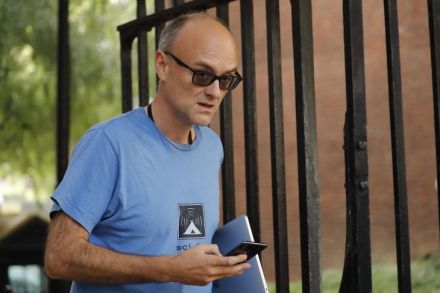
The appointment of Dominic Cummings as one of Boris Johnson’s top No. 10 advisors caused a media storm last week, with the former Vote Leave strategist cast as some kind of shadowy Brexit Svengali. Cummings is seen by a certain section of Remain activists as the calculating mastermind behind the Leave vote – the man who turned a normal political campaign into a ruthless battle of data black-ops. Equally, his decision to freeze certain sections of what is now the ERG out of the 2016 Brexit referendum campaign infuriated several Tory Brexiteer backbenchers. There have already been endless column inches devoted to what Cummings thinks and how that will play out in the Boris government. Luckily, our readers don’t have to speculate.

Sunday shows round-up: James Cleverly – We are not ‘going to initiate’ a general election

Niall Paterson stood in for Sophy Ridge this morning, interviewing the Conservative party chairman James Cleverly. Paterson asked Cleverly whether billions of pounds worth of spending pledges outlined by new PM Boris Johnson meant that the government was considering an early general election. Cleverly insisted that the government would not be pursuing this course of action, despite a vanishingly small majority in the House of Commons: https://youtu.be/SVXgUrRmYE4 NP: Tell me there isn't going to me a general election this year. JC: ...We are not going to initiate a general election. We have elections all the time... What we've got is a new Prime Minister who, during the leadership campaign, made a number of explicit commitments...

What I learned talking to Boris Johnson about religion

I don’t pretend to have had extensive discussions about religion with our new Prime Minister, but I did have a couple of brief ones when he edited my first Spectator articles. We once discussed Christian and Muslim ideas of martyrdom, and he was suddenly reminded of a hymn he liked at Eton which he proceeded to sing to me down the phone.  His tone towards religion in general was, as you’d expect, a bit guffawing: here’s a prime site for flippant jokes and the puncturing of earnestness. But, knowing that I took religion seriously, and seeing that we had an article to discuss, he was a tad constrained.

Why the onus is on the EU to do a Brexit deal

In the run-up to the referendum, a common argument against Brexit went like this:  “We should not leave the EU, because if we try, the EU will be capricious and irrational, it will not prioritise the welfare of its people, it will instead punish us, we must be afraid of that wrath, forget any merit, we must be prudent”. A similar argument is often discussed at length by Sir Ivan Rogers, and repeatedly published in The Spectator. It is both right and wrong. The people who believe it are not ‘Remoaners’, as some might claim: they are patriots. But I disagree. And for me, this argument is why I voted to leave. I am an autonomous and free human being. I am also a citizen of a society. I surrender my freedoms in order to make that society function.

What’s changed with Boris Johnson in Downing Street

10 days in to Boris Johnson’s premiership and the big change is, as I say in The Sun this morning, that the government machine now thinks no deal really might happen. Those involved in no deal planning meetings say that there is now an intensity to them that there never was before. Rather than querying whether no deal is desirable, officials are getting on with preparing for it. Ministers are also bound into this strategy. One of those who served in both May’s Cabinet and the new one says that under the previous Prime Minister Sunday’s Cabinet conference call would have led to a long discussion about the merits of no deal. But now all ministers are signed up to leaving on October 31st whether there’s a deal or not, it didn’t.

Corbynistas in a spin over Lib Dem by-election win

As the Liberal Democrats celebrate their win in the Brecon and Radnorshire by-election, other parties are licking their wounds. The Tories narrowly missed out and now must deal with the realities of being the governing party with a working majority of one. Labour meanwhile came a distant fourth – only just managing to hold on to their deposit. Corbynistas have struggled to keep their vitriol in check since Jo Swinson was elected as the leader of the Liberal Democrats and today was no exception. Did Labour join in the celebrations (along with the Remain alliance) that the Tories had lost a seat? Think again. Instead the Corbyn outriders were out in force to attack... the Liberal Democrats: https://twitter.com/Rachael_Swindon/status/1157278445178707976?

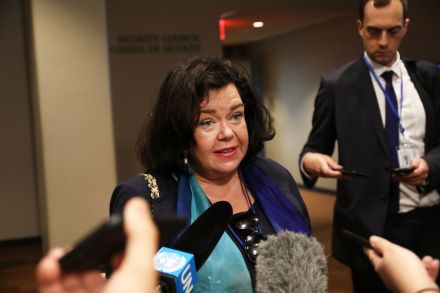
The Karen Pierce Edition

28 min listen

Karen Pierce is the UK's Permanent Representative to the UN. In this episode, she talks to Katy about her career ambitions when she was young, using Lewis Carroll to combat the Russians, and what day to day life is like in the UN.Presented by Katy Balls.