Charles Day

The Brexit wrangle shows exactly why we needed to leave in the first place

From our UK edition

Last Friday marked the signing of the Withdrawal Agreement. I know that some people in our country are still a bit upset. But what happened last week matters. We all know that we’ve just had three and a half difficult years. But we had them together - we shared them. Three and a half years of parliament being gloriously frustrating, entertaining and overall a bit odd. Three and a half years of our courts and our beloved institutions forcing us to try very hard to recall why we love them. Three and a half years of democracy. After these three and a half years, our parliament, the body of 650 parliamentarians we voted for, has only just told our Prime Minister that he could sign the agreement.
Let Big Ben bong for Brexit day

From our UK edition

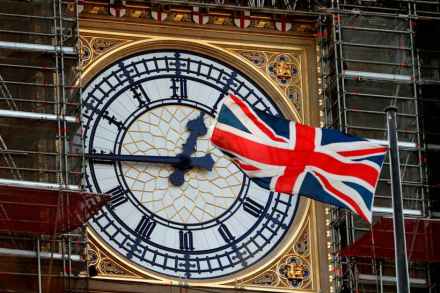
Something deeply embarrassing is happening in our country. It is not entirely clear why, but in an act of extreme pettiness, my fellow elite have decided that come hell or high water Big Ben must not Bong. Let’s be honest; almost no one will notice either way. It has never troubled my mind whether a particular bell will sound at a particular time when we formally leave the EU. What mattered to me was no longer paying vast amounts of money so that a dysfunctional club could compel me to abide by its poorly written laws. The total sum of ‘no one’, genuinely believes that it would cost the nation £500,000 to have one bell ring.

MPs have plenty of time to read Boris’s Brexit bill

From our UK edition

The Withdrawal Bill that has been published is pretty dull stuff – even by my standards. There are nonetheless rather frantic efforts to pretend it is in any way terrible. It isn’t. For one reason and one reason only. Like the 1972 Act, all the Bill does is bring the Withdrawal Agreement into UK law. I find that conceptually interesting. The way these treaties are only international law. The way that international law is irrelevant and pointless, unless and until it gets enacted into domestic law. These things comfort me as a reminder that nation states, democracy and the people still matter. It rather penetrates the confected pomp of those who pretend EU law is a real thing and not merely international law in a moustache and dark glasses.

Boris Johnson’s biggest Brexit deal victory

From our UK edition

In order to get anywhere in life, you have to compromise. Redrafting a deal foisted on you with no time and no majority has been Herculean. In doing so, the UK have made serious concessions so we can maintain good relationships with the EU. That must not get forgotten in the understandable (and shared) joy in getting a deal agreed in Brussels. Those who weakened our negotiating hand have a lot to answer for. What remains fundamental now is that all of us, whichever side we were once on, realise two things. That this dance has two stages and that the UK has made all its concessions in the first half. If we had our time again, perhaps those concessions may not have been necessary. Or perhaps instead, they should never have been even asked of us.

Lady Hale must recuse herself from Boris Johnson’s cases

From our UK edition

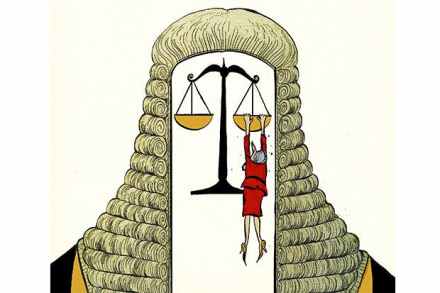
Brenda Hale is an incredibly clever and more importantly, kind, human being. On a human level you would do well to make a beeline for her at any party or stuffy function. Few judges have done more to help charitable causes and access to law. As I’m not a politician, you can trust me when I praise someone. It does though feel odd to do so. Lawyers never used to. Being nice or kind or even human; well that wasn’t really our thing. To be honest we have always been extremely vicious to each other – in private. I have a second favourite judge of all time when it comes to his legal opinions and arguments. I always loathed him as a person. That never struck me as a problem. That is why the current polarisation feels so utterly alien.

Why is the EU obsessed with forcing regulatory alignment on Britain?

From our UK edition

I still don’t quite understand the position of some ardent Remain supporters. I do not understand why allowing the UK to leave, and then starting up a campaign to rejoin was rejected. After all, that is what the last line of Article 50 invites the state to do by invoking the process in Article 49 (the process to re-join). Doing so would allow Britain to honour the democratic vote, which, contra to common perception, is what a lot of genuine believers in the EU themselves want us to do. It would end the word ‘remainer’ entirely. A word now unfortunately synonymous with a very negative campaign and a dark time in our national history. It would free fresh faces to make a wholly new argument about the merits of EU membership.

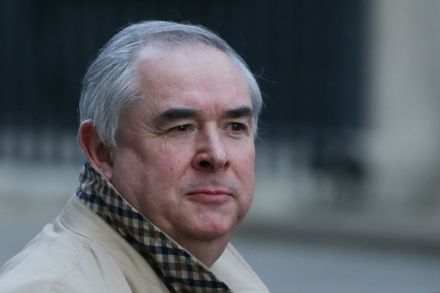
In defence of Geoffrey Cox

From our UK edition

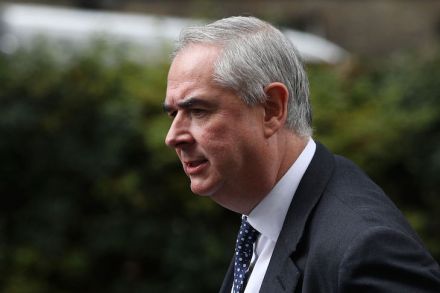
Something ugly has come out of the Supreme Court’s decision to change the law and our constitution yesterday. Instead of basking magnanimously in the fact that they won, there have been wholly unwarranted calls from Remainers for ‘heads on plates’. The cry has gone out for the Attorney General, Geoffrey Cox, to publish his legal advice and to resign. The rather bizarre premise is presumably that in giving advice to the government that the prorogation was lawful, he somehow did something wrong. Let me be unequivocal – he did not, and the calls for his resignation are both vindictive and inappropriate. How can I be so sure? Well, what the bloodthirsty are forgetting is that the High Court on 11 September thought the prorogation of parliament was legal.

The Supreme Court’s decision is a constitutional outrage

From our UK edition

Forty years of membership of the EU has taught us a lot. Many of us have learned a new language; most of us have learned new recipes for our supper; and our Judges have learned how to seize power from democratic institutions. For there has always been a fundamental cultural clash between us and most EU states – that of law. The UK (though Scotland is slightly different) is a common law country – like Australia, India, Canada, New Zealand and the USA. Most EU states are civil law countries. There are many differences, but the most striking one to ordinary people is the difference in how lawyers are treated. In common law countries, lawyers are the butt of most jokes.

Why the onus is on the EU to do a Brexit deal

From our UK edition

In the run-up to the referendum, a common argument against Brexit went like this:  “We should not leave the EU, because if we try, the EU will be capricious and irrational, it will not prioritise the welfare of its people, it will instead punish us, we must be afraid of that wrath, forget any merit, we must be prudent”. A similar argument is often discussed at length by Sir Ivan Rogers, and repeatedly published in The Spectator. It is both right and wrong. The people who believe it are not ‘Remoaners’, as some might claim: they are patriots. But I disagree. And for me, this argument is why I voted to leave. I am an autonomous and free human being. I am also a citizen of a society. I surrender my freedoms in order to make that society function.

Does this EU small print mean Brexit has already happened?

From our UK edition

The heady drama when Britain and the EU agreed on a series of Brexit extensions earlier this year is hard to forget. But amidst the chaos, it's worth asking: did Britain accidentally leave the EU on 1 June? A badly-drafted EU law – which also challenges the idea of EU competence – seems to suggest so. So how did this apparent blunder happen? And why has no one noticed? When Article 50 timed out on 29 March 2019, the UK and the EU agreed to extend to 12 April. When an extension is made it has to be done in both EU law and UK law. On that occasion, it was: both sides managed to pass proper laws. The EU one is here. As we know, another extension was then sought, and that's where the trouble begins. The UK again drafted our extension properly.

The EU was never capable of dealing with Brexit

From our UK edition

We are now meandering towards a real Brexit deadline. In typical British fashion, we’ve let the other two times that they bumped into us with their trolley in the supermarket go. In similarly typical fashion, the third time is about to be “not on”. But as we head towards the inevitable, it is worth understanding the simplest of truths: the EU was never capable of dealing with Brexit. And an even bigger truth must be whispered very quietly: they can’t conclude Free Trade Agreements. We turned insular immediately after the vote. We blamed ourselves and began a long internal debate which almost never mentioned the EU – just a lot of class warfare and Godwin’s law. But a Withdrawal Agreement (WA) is – and was – a distraction.

Will Britain really have a debt to the EU after Brexit?

From our UK edition

If a lawyer advises you to pay money which you do not owe, and you do so, then you can sue that lawyer to compensate you for the loss. That’s because the lawyer owes his client a duty to not give wrong advice. Does a politician or a journalist owe that duty? Can we sue them if their advice is wrong? We need to know an answer to this as a nation, because far too many people who should know better, are wrongly advising the British people that they owe a 'debt' to the EU. The people who use the word are not using it metaphorically, indeed how could they, we’ve been a net contributor to the club for years – there’s no moral debt. These people, like the MP Chris Bryant, often describe it as a 'legal debt', presumably to make it sound more believable.

The silence from Geoffrey Cox bodes ill for May’s deal

From our UK edition

The loudest sound this morning is the silence from Geoffrey Cox, the Attorney-General. The test for Theresa May's discussion with Brussels is whether it means the UK will be caught indefinitely in the backstop. And the person who decides this is Mr Cox. No10 misrepresented the nature of the backstop when it was signed: some (then) Cabinet members go further and say that they were lied to. Then No10's own representation of the Withdrawal Agreement was contradicted by the Attorney-General. This is what led us to this point: No10 has, alas, proved that it cannot be trusted to interpret legal advice. Cox has proven that he can be trusted.  Cox is said to be 'agonising' this morning and I can see why.

The ECJ wants to take back control of Brexit

From our UK edition

Given that the ECJ often takes years to give an opinion, the speed of its Brexit judgement is unprecedented. Now and again, the mask slips: in theory the ECJ’s court judicial, cares only about good law. In practise this is nakedly political – explicitly so this time, given the vote tomorrow. It’s being breathlessly reported that ECJ has said Britain can now abandon Brexit unilaterally, without permission. This is just wrong. Unilateral means on our own. We can’t do that under this judgement. Instead, see paras 73 to 75, the ECJ gets to sign off on whether or not we can revoke. The test is not abuse, as proposed by the AG.

The small print of today’s Article 50 opinion reveals yet another ECJ power grab

From our UK edition

The European Court of Justice is back in the headlines this morning. Its Advocate General, Manuel Campos Sanchez-Bordona, has declared that the UK might be able to cancel Brexit by revoking Article 50 unilaterally. So is that it settled? Not at all: nothing, with the ECJ, is ever that simple. In fact, the whole episode is a good chance to look at the ECJ and the way it works – and then ask if this is the kind of supreme court that Britain really wants to stay under. Take what happened this morning. We learn via a three-page press release what Sanchez-Bordona thinks about Article 50. An hour after that the ECJ released a one-minute video clip (not in English). An hour after that we got the legal opinion. So let’s look at that.

Can the UK cancel Brexit? We’re about to find out

From our UK edition

While it might have garnered less attention than the political drama around the withdrawal agreement, next week’s European Court of Justice decision on whether the UK can unilaterally revoke Article 50 – that is, cancel Brexit – could have serious ramifications. A bit of background on the case: in November 2017, a group of Scottish MPs, MEPs and MSPs – working with the anti-Brexit barrister Jolyon Maugham QC – asked the Scottish Advocate General to clarify whether the UK government had the right to revoke Article 50 if it wanted to.

If Jo Johnson is so worried about financial services, he should back Brexit

From our UK edition

Jo Johnson has noticed that Theresa May has managed to unite the country, in that both Leavers and Remainers worry that her deal will let the EU pass our laws and regulate our markets but leave us no say in that process. But why does he think that staying in the EU is a remedy for the problems he outlines? He focused on a supposed threat to the service sector, spelling out the damage he seems to think Brexit would do. Here’s what he has to say: “Even if we eventually secure a customs arrangement for trade in goods, it will be bad news for the service sector — for firms in finance, in IT, in communications and digital technology. Maintaining access to EU markets for goods is important, but we are fundamentally a services economy.

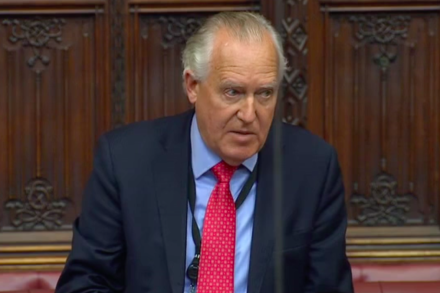
Peter Hain has fundamentally undermined the rule of law

From our UK edition

For all the praise heaped on Peter Hain for revealing the details of a legal case subject to injunction, there’s been depressingly little acknowledgement of what this really means: namely that a senior politician has fundamentally undermined the rule of law. Hain – who, unlike many of his peers, has never been a lawyer– has taken it upon himself to usurp the function of the courts. And not just any court – the Supreme Court, where the case was probably heading. In fact, the judge he overruled is Sir Terence Etherton, the head of the Court of Appeal and the second highest judge in the country (after the Lord Chief Justice).