Arts Reviews

The good, bad and ugly in arts and exhbitions

The Great European Disaster on BBC4 reviewed: propaganda worthy of Leni Riefenstahl

My favourite bit of The Great European Disaster (BBC4, Sunday) was the lingering shot that showed golden heads of corn stirring gently in the breeze. It was captioned ‘Europe’. I cannot even begin to describe what a powerful effect this had on my subconscious. It was worthy of Leni Riefenstahl. Indeed, when I experimentally turned off the colour, it was Leni Riefenstahl. ‘Bloody hell!’ I thought to myself. ‘Suddenly it all makes sense.’ But my journey of discovery and enlightenment was only just beginning. I haven’t yet told you what the Ukrainian peasant said. I forget his exact words, but it was something along the lines of, ‘When I think
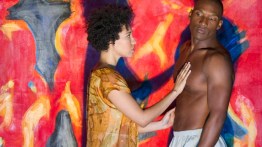
ENO’s Indian Queen reviewed: Peter Sellars’s bold new production needs editing

When is an opera not an opera? How much can you strip and peel away, or extend and graft on to the genre, before it simply ceases to be itself? These questions dominated a week in which directors turned vivisectors for new productions — reimaginings — of Purcell’s Indian Queen (ENO) and Mozart’s Don Giovanni (Silent Opera). Anyone familiar with Peter Sellars’s work will know better than to expect any paring back from the larger-than-life American. Amplification is the order of the day for Purcell’s semi-opera — expanded from a trim 50 minutes of unfinished music yoked to a play by Dryden and Howard to a three-and-a-half-hour musico-dramatic spectacle. If

Still Alice review: you can see why Julianne Moore won an Oscar but the film’s still boring

There’s always seemed something masklike about Julianne Moore’s face: she seems walled in by her beauty. When she smiles, the only thing that moves is her mouth; that superb fenderwork of bone remains as impassive as a sphinx. This very inexpressiveness gives her an air of trapped intelligence, which she used to great effect in the early part of her career playing a string of numbed-out beauties— her coked-up porn actress in Boogie Nights; her neurasthenic housewives in Safe and Far from Heaven, all dying behind the eyes. More recently, she has cut loose to channel something of Diane Keaton’s scatterbrained comedy in The Kids Are All Right, in which

Why George Bernard Shaw was an overrated babbler

When I was a kid, I was taught by a kindly old Jesuit whose youth had been beguiled by George Bernard Shaw. The provocative ironies of ‘GBS’ were quoted everywhere and he was, for several decades, the world’s leading public intellectual. But as a schoolboy I found it hard to assent to the infatuations of my elders and though I relished Shaw’s aphorisms (‘we learn from history that we learn nothing from history’) I conceived a suspicion that he was smug and overrated. A babbler. Perhaps even a bore. Man and Superman, rarely revived at full length, offers us GBS with all the taps running. Imagine Fry, Brand and Norton

Harry Potter star Rupert Grint makes a million

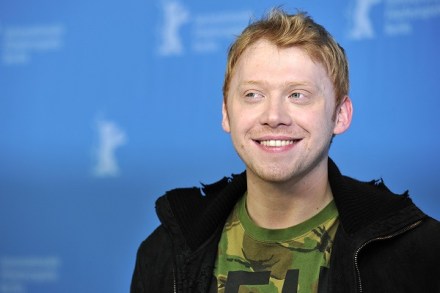
Since finishing filming Harry Potter, Rupert Grint has struggled to match the success of his former co-stars Daniel Radcliffe and Emma Watson in the acting world. The actor received mixed reviews for his recent turn on Broadway in  It’s Only a Play, with the Washington Post claiming his performance exhausted ‘the comic possibilities’. However, Mr S is happy to reveal that while his acting credentials may have taken a beating of late, financially the 26-year-old thespian is still sitting comfortably. According to annual reports posted on Companies House today for his company Clay 10 Limited, the actor has made a profit of  just under £1.1 million for the year ending August 2014. The company is owned by Grint and has his father Nigel acting

The Spectator declares war on bad public art

Like peace, love and lemon-meringue pie, ‘public art’ seems unarguably attractive. Who but a philistine curmudgeon would deny the populace access to the immediate visual thrills and the enduring solace of beauty that the offer of public art seems to promise? Public art is surely a democratic benefit. Never mind that in the past century its most forceful expression was the grim and malignantly deceitful narratives of Soviet socialist realism, with their ruddy-faced, grinning and buxom tractor drivers disguising a more real reality of starvation, intolerance and torture. Public art is here to be enjoyed at a desolate piazza near you. And then you begin to think about it. Has

Don’t mock Elvis’s style – he was ahead of the curve

In the giftshop at the new Elvis exhibition at the Dome, you can buy your own version of his flared white jumpsuits. I can’t think of anyone who could wear one and not look ridiculous — particularly if they had a bit of a weight problem. But Elvis, who would have turned 80 this year, managed to pull it off. This selection of the best Elvisiana from Graceland is full of the sort of kitschy excess that would sit so awkwardly on anyone else: his outsized solitaire diamond ring, the gold phone by his bedside table, the Harley-Davidson golf carts he used to rocket through Graceland’s grounds. It’s easy to

Sculpture Victorious at Tate Britain reviewed: entertainingly barmy

In the centre of the new exhibition Sculpture Victorious at Tate Britain there is a huge white elephant. The beast is not, I should add, entirely colourless. On the contrary, it has a howdah richly decorated in gold and green, and numerous trappings, and tassels covering its pale grey hide. Its whiteness is entirely proverbial. After all, what can you do with a porcelain pachyderm, standing over seven feet tall? The Victorian period, a text on the wall proclaims, was ‘a golden age for British sculpture’. This is perfectly true, in the sense that a colossal amount of the stuff was turned out during Victoria’s reign. But, as the exhibition

Paul Mason’s diary: My Greek TV drama

It’ll be a Skype interview, says the producer from Greek television, and not live. In TV-speak that usually means not urgent and not important, but I’ve become vaguely interesting to Greeks because of the ‘Moscovici draft’ — a doomed attempt to resolve the crisis, leaked to me amid denials of its existence. The interview goes on a bit and the tone is deferential. At the appointed time, I fire up Greek television to see how many clips they’ve used. Instead of me, a panel of five bearded men in an expansive studio are conducting an earnest preview of my interview. When it starts, my face is on a studio screen

The dos and don’ts of the Russian art scene

They’re doing fantastic deals on five-star hotels in St Petersburg the weekend the Francis Bacon exhibition opens at the Hermitage. With tensions between Russia and the west at their highest since the Cold War, ‘no one’, I’m told, wants to come here. No one, that is, except large numbers of elderly but well-heeled people from the Norwich area, many of them trustees and friends of the University of East Anglia’s Sainsbury Centre for Visual Arts — co-organisers of the exhibition — who have flown out here for the gala opening. If 2014’s UK-Russia Year of Culture passed virtually unnoticed for political reasons, the western visitor won’t experience the slightest sense

The Boy Next Door reviewed: a terrible new J-Lo movie that’s disturbingly enjoyable

Stateside critics, who panned Jennifer Lopez’s new film The Boy Next Door on its US release last month, may be unaware of the ability of the British to enjoy a film so bad it’s almost good. I suspect many Brits will shamefacedly delight in this so-called erotic thriller’s camp silliness, its truly dreadful script and its almost mockingly implausible premise. This is a film where a bespectacled Jenny from the Block plays a classics teacher (yes) who receives a pretty copy of Homer’s 3,000-year-old poem ‘The Iliad’ as a gift and quite sincerely exclaims, ‘Wow, is this a first edition?’ How can you follow a gem like that? The answer

Muswell Hill reviewed: a guide on how to sock it to London trendies

Torben Betts is much admired by his near-namesake Quentin Letts for socking it to London trendies. Letts is one of the few individuals who enjoys the twin blessings of a Critics’ Circle membership card and a functioning brain so his views deserve serious attention. The title of Betts’s 2012 play Muswell Hill shifts its target into the cross hairs with no subtlety whatsoever. Curtain up. Married couple, Jess and Mat, are nervily tidying their yuppie dream home in expectation of supper guests. Jess is a sex-bomb accountant. Mat is a blankly handsome scribbler whose debut novel keeps getting rejected. Then a missile strikes. Mat casually mentions his acquaintanceship with an

A legendary piece of iconoclastic dance returns. Does the piece still stand up?

Funny how things turn upside-down with time. A work of contemporary dance that made an iconoclastic splash decades ago is revived today, exactly as it was, as if it were a museum piece. Yet more long-standing dance traditions — such as flamenco and circus — are constantly being remodelled. The contemporary work is that legendary 1987 invention of Eurocrash by the Belgian dance-inventor Wim Vandekeybus, What the Body Does Not Remember. The icons it trashed included rules about the place of grace in dancing, even the place of knowledge — Vandekeybus was a photographer and experimental theatre performer when he made this, his first dance piece, never bettered. Those icons

Opera North’s Gianni Schicchi and La vida breve reviewed: a flawless double helping of verismo

Is there a more beautiful aria than ‘O mio babbino caro’ from Puccini’s Gianni Schicchi? There are more overwhelming moments in opera, to be sure, but few arias can rival it for the way its beauty kicks you in the back of the knees; its gentle rocking motion causes your shoulders to slump while the little floated top notes dilate the music’s gaze, drawing the listener irresistibly into its secret promise of untroubled bliss. Nor does it help that the aria’s whole point is to be irresistible. ‘Daddy dearest, I love him so,’ sings Schicchi’s teenage daughter Lauretta. She might equally be thinking of a doggy in a window: it

Critical on Sky1 reviewed: a new medical drama where everyone radiates an unusual degree of competence and concern

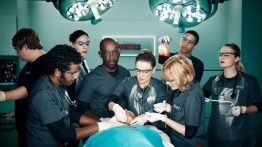
Sky1’s new hospital drama Critical (Tuesday) can’t be accused of making a timid start. Within seconds, an urgent request had come over the loudspeaker system for ‘the trauma corps’ to head to the emergency department, causing the main members of the cast to sprint down various corridors at impressive speed. Meanwhile, a patient was briskly wheeled to the same department from a helicopter on the roof, pausing only to cough up blood all over the lift. Moments after that, the trauma corps were already exchanging the kind of rapid-fire medical speak — ‘Dullness to percussion on the left side!’— that most viewers mightn’t entirely comprehend but that clearly translates as

The pleasures and perils of podcast listening

No phrase is better calculated to tense the neck muscles of a regular podcast listener than ‘We have something special for you now.’ Having your radio shows downloaded to your phone, music player or computer, rather than plucked out of the air the old-fashioned way, immediately grants the listener a great deal of extra freedom: you choose the feeds to which you subscribe, you decide which episodes to hear and in which order. But it also demands from the listener a measure of extra trust, or at least a ruthless readiness to skip, because what a producer puts on a feed can vary much more than in the scheduled-to-the-second world

Daffodils

These sprightly flowers are no cowards. They poke forth sun seeking heads, proudly proclaim when earth remains clenched in winter’s pale dead. See, before you rise to your day, these shattering yellows hold sway, say something we cannot, or have forgotten, in garden, park and verge, believe, before there is proof, of what will come, sun’s surer rays, a time for warmer                             weather. But for now an icy wind ripples and the daffodils shudder and shiver, stunned by the life within them.

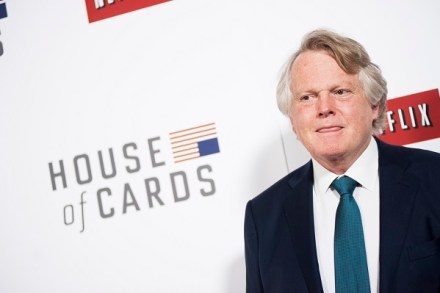
House of Cards creator reveals rift with BBC over ‘insensitive’ Margaret Thatcher plot

The third series of the American adaptation of House of Cards, which stars Kevin Spacey, will see the programme go in a different direction to the political trilogy on which it is based. Despite this, the House of Cards author Lord Dobbs is confident that he will be happier with the end product than he was with the BBC adaptation, which aired in the nineties. Speaking to the Radio Times, Dobbs says that he fell out with the production team during the final series over their treatment of the death of Baroness Thatcher. Dobbs was so appalled by the BBC’s changes to his political thriller that he asked for his name to

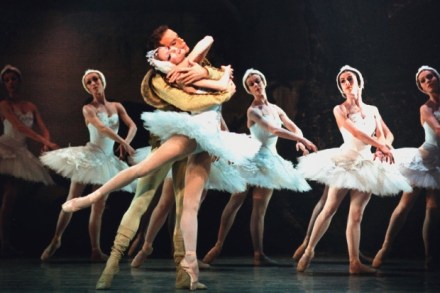
Will the real Swan Lake please stand up

It is the end of an era — the Royal Ballet’s extravagant Fabergé-egg Swan Lake production by Anthony Dowell is on its last legs. When this 28-year-old production finishes the current run on 9 April, that will be it for one of the most controversial classical productions of the past half-century. It’s the one set in Romanov Russia, festooned with ribbons and golden squiggles, with swans in champagne ball-gowns rather than pristine white feathers. Hallucinatory, glamorous and opulently symbolist? Or hectic, fussy and tatty? Adjectives divide between the adoring and the withering for Yolanda Sonnabend’s Gustave Moreau-esque designs and for Dowell’s hyperactive staging. Last month marked 120 years exactly since