Arts Reviews

The good, bad and ugly in arts and exhbitions

Results

The school holidays in the final furlong and the next new phase and term in clear sight. This is when the thousands receive their plain envelopes informing them whether they have made the grade, precisely. And we look on, remembering or not remembering a future built on hopes and inadequacy, not knowing what is right about our work and knowledge, and what is wrong, aware too of us in them and how things fade. We kiss them out the door and wait until they ring with hard facts that bring five years to a close. Then look in the bedroom where all the revision was done, revising too, seeing all

David Baddiel criticises Bafta for ‘working class’ Bob Hoskins snub

It was the night of Eton versus Harrow at the Baftas as Eddie Redmayne faced off competition from Benedict Cumberbatch to take home the Best Actor gong. Now, Bafta are under fire for leaving out the late Bob Hoskins in their tribute montage to actors who have passed away. David Baddiel, the comedian, took to Twitter to claim that the omission of the Who Framed Roger Rabbit actor was a sign of the demise of the working class actor. The omission of Bob Hoskins in the BAFTA remembrance montage seems symbolic of the erasure in modern times of the working-class actor. — David Baddiel (@Baddiel) February 9, 2015 One working class actor did at least

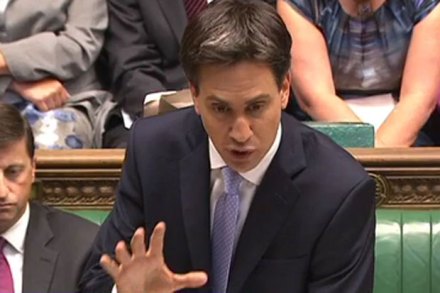
Spectator competition: ‘I really like Ed Miliband. Am I normal?’ Agony uncle Dan Brown responds (plus: a Samuel Pepys’-eye view of 21st-century London)

The Japanese novelist-turned-agony uncle Haruki Murakami is currently dishing out advice to fans on topics that range from cats and hate speech to parenting and infidelity. The call to cast a well-known writer, living or dead, in a similar role was an opportunity to check out the counselling skills of other literary greats — and not-so-greats. The standard was high. Mark Shelton’s Ted Hughes begins his reply to the question ‘how can I be more confident with girls?’ thus: ‘Stoat does not ask. Forefoot poised, he holds the crosshairs on his victim. The wicked waiting eyes glitter like wet berries. He is a cocked crossbow.’ I also liked Nicholas Holbrook’s

The art of Coke

In 1915 D.W. Griffith’s Birth of a Nation was premièred, Henry Ford manufactured his millionth Model-T (‘a million of anything is a lot’, he said), Kafka’s Metamorphosis was published and so, too, was one of Einstein’s critical contributions to his own general theory of relativity. Mixed into this modernist cocktail of extreme achievement and harrowing perceptions was something more banal, but just as enduring: the Coca-Cola ‘contour’ bottle. A century old this year, it is, in a disputed field, an undisputed ‘design classic’. And, like any classic in any genre, it can be read in many ways. Long before Apple and the Messianic Steve Jobs, Coca-Cola developed a business model

Arabian Motorcycle Adventures review: enthralling and constantly surprising

There were great numbers of young men who had never been in a war and were consequently far from unwilling to join in this one.(Thucydides, 5th century BC) I love that quote, inscribed on the walls of the Imperial War Museum, because it tells you so much both about the reason wars happen and about the nature of men. Most of us go through a phase where we think it would be terribly exciting to ‘see the elephant’. And for a lucky few, it’s everything they hoped it would be and more. One of those lucky few is an extraordinarily jammy sod called Matthew VanDyke. By rights this young American

Selma review: rich, nuanced, heartbreaking

Selma, the civil rights film that stars David Oyelowo as Martin Luther King, undoubtedly contains the best and most powerful performance of the year as not nominated for an Oscar. Oyelowo has said this is because Hollywood prefers black actors when they play ‘subservient roles’ and aren’t ‘the centre of their own narrative, driving it forward’, which, alas — and before I could help myself — immediately made me think of Driving Miss Daisy (nine nominations, and winner of Best Picture over Spike Lee’s Do the Right Thing). So, a useful reminder that, in congratulating ourselves on how far we have come, we should not forget how far we still

Tom Stoppard’s The Hard Problem review: too clever by half

Big event. A new play from Sir Tom. And he tackles one of philosophy’s oldest and crunchiest issues, which varsity thinkers call ‘the hard problem’. How is it that a wrinkled three-pound blancmange sitting at the top of the spinal cord can generate abstract thoughts of almost limitless complexity? In real life Sir Tom is said to have such a flair for philosophical chitchat that he can fire off searching observations about Descartes, mind-body dualism, the nature of immateriality, being and non-being, the ‘cogito’ and so on, until those around him have slithered into a coma. Which is not rude of them. It’s perfectly acceptable to pass out during an

Why we should say farewell to the ENO

It’s easy to forget what a mess of an art form opera once was. For its first 100 years it had no name, it had no fixed address, it didn’t really know who it was or what it was doing. You’d find it at schools, at weddings, at political functions. It was an artistic whore for hire. Embroiled in an epic tug-of-war as to which of the three art forms — word, music or dance — should be primary, it was also lithe and experimental. In fact, it was more like performance art than anything you’ll witness in a modern opera house. Why this historical detour? To remind us not

Approaching America

Our pilot on the Delaware offers to show you his laptop. These are the buoys, he says; I know exactly where I am to within a metre. This is the same way we track our missiles and drones. You stare for a moment and say oh. Then remembering your manners add thank you for showing me.

Ignore the naysayers: these Fitzwilliam bronzes are by Michelangelo (probably)

A bronze sculpture by Michelangelo is one of the lost Holy Grails of art history. We know he made them, but the most important – an over life-size figure of Pope Julius II – was destroyed by the enraged citizens of Bologna (who had a grudge against the pontiff) a few years after it was made. A bronze David by Michelangelo vanished during the French Revolution. So that, it has always been concluded, was that. Now the Fitzwilliam Museum has unveiled not one but two bronzes attributed to the great man: athletic naked men mounted on slightly weird feline beasts. It seems too good to be true, but I am

Night Will Fall review: the Hitchcock film they didn’t want you to see

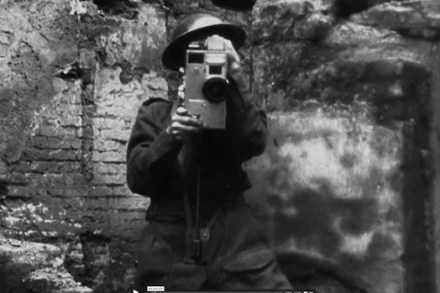
At the synagogue where I happened to be singing last Saturday, the rabbi wrapped up her regular notices with a timely exhortation to her congregants to try to watch the André Singer documentary Night Will Fall. In 1945, as the Allied forces fought their way across Europe, in the process uncovering the hideous network of Nazi death and slave-labour camps, film producer Sidney Bernstein was despatched by the Ministry of Information to lead a few dozen army cameramen tasked with documenting the astonishing extent of the German atrocities. The project was intended to serve not merely as a current affairs update for the edification (and/or mortification) of the British public,

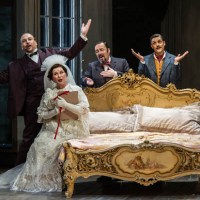
Les Contes d’Hoffmann, Met Opera Live, review: ‘superlative’

Les Contes d’Hoffmann Met Opera Live This was another excellent performance from the Met, though that house’s addiction to enormously elaborate scenery – most of which could be sold off to Las Vegas – reaches lunatic proportions, robbing the work of its dream-like or hallucinatory quality, though that must surely have been a large part of Offenbach’s intention. The paradox of Les Contes d’Hoffmann is that the finer the performance, the more frustrating the piece itself becomes. Perhaps it has that in common with its near-contemporary Carmen, another work that succeeds only on a superficial level. Neither, notoriously, reached a definitive form before its composer died, though Hoffmann is very

How Japan became a pop culture superpower

There is an island nation, just off the main body of a continent. It gained an empire from the force of its military and the finesse of its trading contracts. The empire withered, as they all do, under the gaze of history. But that didn’t finish the island nation off. It simply took over the world in a different way, with something greater than arms and economics: popular culture. Its territory is now the television in your lounge, and the headphones in your ears. Sounds like Britain, doesn’t it? We often boast of how, from the Beatles to this year’s Oscar nominations, our country punches above its weight culturally. But

No. 347

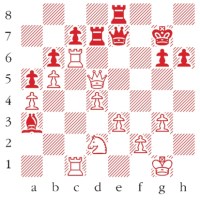
White to play. This is a variation from Carlsen-Aronian, Wijk aan Zee 2015. Black has just played his bishop to a3, uncovering an attack on the white queen while also threatening the c1-rook. How can White respond to this double attack? Answers to me at The Spectator by Tuesday 3 February or via email to victoria@spectator.co.uk or by fax on 020 7681 3773. The winner will be the first correct answer out of a hat, and each week I am offering a prize of £20. Please include a postal address and allow six weeks for prize delivery.   Last week’s solution 1 f4 Last week’s winner Trevor Lloyd, London WC1

Study

I’d tell you I came back here, that I’m writing in this room, if you had not found another and are happy, I presume. I’d tell you I returned and I have walked to you know where, if it were not to disturb you for so little, seems unfair. I’d tell you I have chosen the exact same spot to lie, and perhaps I’ll never say so or I may do, by and by.

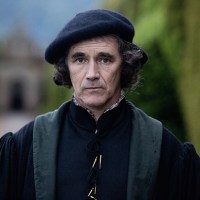
Could it be that Wolf Hall is actually the teeniest bit dull?

In January 1958, the British government began working on the significantly titled Operation Hope Not: its plans for what to do when Winston Churchill died. The plans, it turned out, wouldn’t be needed until January 1965 — but the intervening seven years were obviously well spent, because, as Churchill: A Nation’s Farewell (BBC1, Wednesday) made resoundingly clear, the farewell in question was a triumph. London came to a standstill and Big Ben fell silent as huge crowds watched the procession of the coffin from Westminster to the spectacular state funeral in St Paul’s — and its boat journey along the Thames afterwards. For the 50th anniversary, Jeremy Paxman talked us

The man who discovered Ebola

By some quirk of fate, just as news reached the papers that the Scottish nurse who had contracted Ebola while working in Sierra Leone was now recovered, the guest on that Radio 4 staple Desert Island Discs was the scientist who first identified the virus. This gave a programme that can seem rather outdated and superficial a whole new resonance, providing the back story to the news, adding that frisson of inquiry, of revelation. Did Professor Peter Piot, as a young researcher working at Antwerp’s Institute of Tropical Medicine almost 40 years ago, realise he was seeing something quite new and so dangerous? ‘It looked like war,’ he told Kirsty

An artistic crime is committed at the Royal Festival Hall

In one of the more peculiar concerts that I have been to at the Royal Festival Hall, Vladimir Jurowski conducted excerpts from Das Rheingold in the first half of the programme, and Rachmaninov’s little-known opera The Miserly Knight in the second half. The idea, I gleaned from a pre-concert chat by the conductor and others, was that the first half would shed some light on the second, showing that although Rachmaninov, at one time an industrious operatic conductor, almost certainly never conducted Wagner, he was strongly influenced by him. The point seems academic, unless you are interested in the minutiae of musical history. Anyway, the Rheingold excerpts failed miserably, on