Arts Reviews

The good, bad and ugly in arts and exhbitions

Sargent, National Portrait Gallery, review: he was so good he should have been better

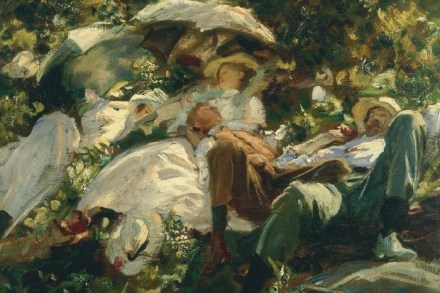
The artist Malcolm Morley once fantasised about a magazine that would be devoted to the practice of painting just as some publications are to — say — cricket. It would be filled with articles extolling feats of the brush, rather than the bat. ‘Well painted, sir!’ the contributors would exclaim at an especially brilliant display of visual agility. ‘Fine stroke!’ If such a periodical had existed in the late Victorian and Edwardian ages, no one would have been heaped with more praise than John Singer Sargent (1856–1925). Sargent: Portraits of Artists and Friends at the National Portrait Gallery is filled with mesmerising displays of his skills. There are so many,
Annie’s Fish

It hangs, a mobile in the stairwell, always in motion however slight. Each silver scale as it sparkles there a neighbourly lodestar guiding us home to where we shall meet for ever in friendship beyond the darkness of your loss. Nothing you made that did not shine, nothing you dreamed can leave us now. And so we give thanks for this precious gift as it swims through the air to the sound of your laughter.

The Heckler: how funny really was Spitting Image?

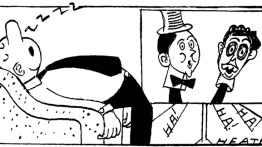
Hold the front page! Spitting Image is back! Well, sort of. A new six-part series, from (some of) the team behind Fluck and Law’s puppetry satire show, will be broadcast on ITV this spring. Called Newzoids, it promises to provide a ‘biting look at the world of politics and celebrity’. Cue ecstatic reports in all the papers about how hilarious the original was, and how much we’ve all missed it. There’s only one problem with this analysis. Whisper it on Wardour Street, but Spitting Image wasn’t actually all that funny. Yes, the voices were pin-sharp (shout-outs for Rory Bremner, Steve Coogan, Hugh Dennis, Harry Enfield, Alistair McGowan and a host

UKIP: The First 100 Days, Channel 4, review: a sad, predictable, desperate hatchet job

Just three months into Ukip’s shock victory as the party of government and already Nigel Farage’s mob are starting to show their true colours: morris dancing has been made compulsory for every able-bodied male between the age of 30 and 85; in ruthlessly enforced union flag street parties, brown-skinned people are made to show their loyalty by eating red-, white- and blue-coloured Battenberg cakes until they explode. And what is that acrid smell of burnt fur now polluting Britain’s hitherto gloriously carbon-free air? Why it is all the kittens that Nigel Farage and his evil henchmen are tossing on to beacons from John O’Groats to Land’s End in order to

How to Hold Your Breath, Royal Court, review: yet more state-funded misanthropy

‘We hate the system and we want the system to pay us to say we hate the system.’ The oratorio of subsidised theatre rises, in triumphant blast, at the Royal Court whose current empress Vicky Featherstone has chosen to direct an interesting new play by Zinnie Harris. I’d call it a quasi-symbolist extraterrestrial tragicomic chicklit road-movie spoof with Chomsky-esque anti-corporate neo-collectivist socioeconomic textual underpinning but I fear this may lend it a clarity of purpose, and a firmness of character, which it doesn’t quite possess. We start with Dana, a chippy frump on the last lap of her sex life, bedding a UN drudge named Jarron who claims to be

Fifty Shades of Grey, review: ‘Use a condom!’ my sister shouted

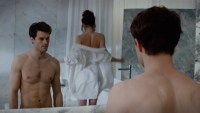
And so, in the end, I went with my sister, Toni, to see Fifty Shades of Grey and we saw it at noon on Valentine’s Day at the Odeon in Muswell Hill. In the audience on that particular day at that particular time there were eight other women, all around our age, and all on their own. The Fifty Shades phenomenon has been described as ‘soft porn for middle-aged housewives’ and it’s said as an insult, but it sounds rather good to my sister and me. Indeed, after what feels like a lifetime of pairing socks and putting meals on the table and basically performing the role of main drudge

La Donna del Lago, Metropolitan Opera, review: Colm Toibin on a night of masterful singing

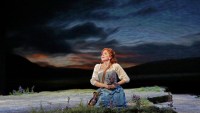
La Donna del Lago, based on a poem by Sir Walter Scott, is one of the nine serious, dramatic operas that Rossini wrote for Teatro San Carlo in Naples between 1815 and 1822. At the time the opera was produced he had at his disposal not only a great soprano, for whom he wrote with considerable flair, but two expert tenors and a contralto taking the part of the young male lover. In the first-ever production at the Met in New York that has just opened, the colours move from the sultry sky of Scotland in the first act to the starkness of a field after battle and then the

Dippygate: Natural History Museum’s diplodocus sacrificed on the commercial altar

There was outcry last month when it was announced that ‘Dippy the Diplodocus’ is to be removed from the Natural History Museum’s vast Hintze Hall, where he has been greeting visitors for the last 35 years. Instead a giant skeleton of blue whale will be suspended from the ceiling, in what they spin as an ‘important and necessary change’. Officially, ‘the blue whale symbolises’ the museum’s ‘desire for people to be completely engaged in current issues about humans’ impact on the natural world and our chance to build a sustainable future.’ Or so a spokesman of the museum says. However, a source tells of a more cynical explanation for the

La Donna del Lago, Met Opera, review: Colm Tóibín on a night of masterful singing

This is an extract from this week’s magazine, available from tomorrow. La Donna del LagoMetropolitan Opera, New York, in rep until 14 March La Donna del Lago, based on a poem by Sir Walter Scott, is one of the nine serious, dramatic operas that Rossini wrote for Teatro San Carlo in Naples between 1815 and 1822. At the time the opera was produced he had at his disposal not only a great soprano, for whom he wrote with considerable flair, but two expert tenors and a contralto taking the part of the young male lover. In the first-ever production at the Met in New York that has just opened, the

Iolanta/Duke Bluebeard’s Castle, Met Opera Live, review: enterprising take on two masterpieces

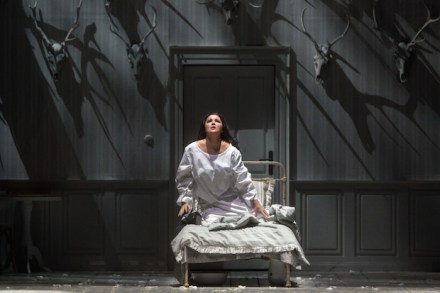
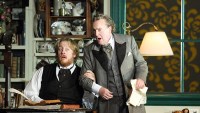
Iolanta / Duke Bluebeard’s Castle  Met Opera Live The Met’s antepenultimate relay of the season was an enterprising pairing of two operas, one of which we should see more often, and both of them done with intelligence and care. Tchaikovsky’s Iolanta, his last opera, inconveniently lasts about 100 minutes, so is especially hard to find a partner for. It is a strange, touching piece, though it has few of the characteristics we associate with him. There is hardly a memorable melody in it, and little that is overwrought, indeed the colours are pastel. Iolanta is a princess, blind from birth, but skilfully kept in ignorance of her condition, and surrounded in this production by bored

Where Van Gogh learned to paint

In December 1878 Vincent Van Gogh arrived in the Borinage, a bleak coal- mining district near Mons. He was 25 years old. He’d failed to become an art dealer. He’d failed to become a schoolteacher. Drawing was just a hobby — an artistic career was the last thing on his mind. He’d come here as a preacher, full of evangelical fervour, yet he proved a failure at that too. The problem was, he was far too pious. He gave away everything he owned. These miners didn’t know what to make of him. They called him ‘the Christ of the coal mines’. After six months, he was fired. With nowhere else

The future of the album lies in the gallery

The album is not what it was. It still exists, in record collections, as part of the torrential streaming of everything, and in the sentimental memories of those who lament the loss of what once seemed a permanent fixture and the most exciting, unimpeachably authentic way of capturing and keeping music. Many musicians refuse to relinquish the idea — length, number of songs, conceptual framework, illusory two sides, solidity, sound — of the album. It remains worth hearing what a musician like PJ Harvey might have to say about the album, because it is where she has worked for 20 years, and so she has built up enough momentum to

Bolivia

for Lucy Dallas Because they wanted to go home and some bit part, a rat in deep cover, raised the alarm (he had done harm himself, but legally, and hid his shame) or, falling in slow motion, the cashier, shot through the heart for moving a finger, reached with his last breath for the dead guard’s Peacemaker and returned fire – because of this taped riot I’m here watching the sun dance to our own live show, few words between us and the telling air, the sum of what was not but is now clear, how Redford in his larcenous prime loved Katharine Ross the schoolteacher and there was time

Better Call Saul review: the box set equivalent of a (very) well-made play

I lost count long ago of the number of dinner parties and pub conversations where I’ve had to utter the humiliating words, ‘Actually I haven’t seen Breaking Bad.’ The social isolation became even more shaming when my 81-year-old mother rang to ask me if I’d heard of the show and to explain how much she loved it. (‘But isn’t it very violent, Mum?’ I said. ‘Yes,’ she replied.) All of which means that I can approach Better Call Saul (Netflix) with what I like to think of as stern critical neutrality — rather than, say, ignorance. The main character is, or will become, Breaking Bad’s Saul Goodman, who, from a

Love Is Strange review: subtle and nuanced in ways which, I’m assuming, Fifty Shades is not

You will be wondering why I haven’t seen Fifty Shades of Grey as this is very much Fifty Shades of Grey week and although I’m as curious and excited as anybody — how has Sam Taylor-Johnson filmed a book which, let’s face it, is quite a bit shit? — there were no UK media screenings prior to going to press. This means I will now have to pay and see it at the cinema, which is something, I know, you little people do all the time, but still, who does one go with? As it happens, my mother (86) expressed an interest, but I had to tell her: no way.

A tatty new theatre offers up a comic gem that’s sure to be snapped up by the BBC

New venue. New enticement. In the undercroft of a vast but disregarded Bloomsbury church nestles the Museum of Comedy. The below-stairs space wears the heavy oaken lineaments of Victorian piety but the flagstones have been smothered with prim suburban carpeting, wall-to-wall. There’s a bar in one corner. Yes, a bar in a church. With prices high enough to make you take the pledge. The ecclesiastical shelves are crammed with books, magazines, scripts and photographs that summon up the ghosts of our comedy heroes. A big carved pew, centrally plonked, invites the worshipper to sit and read, let us say, the autobiography of Clive Dunn or the diaries of Kenneth Williams.

Mastersingers of Nuremberg, ENO, review: ‘a triumph’

ENO’s new production of Wagner’s The Mastersingers of Nuremberg is a triumph about which only the most niggling of reservations can be set. Every aspect — orchestral, vocal, production — works in harmony to effect one of the richest, most intensely absorbing, energising and delightful afternoons and evenings I have ever spent in the theatre. It is above all a team effort, and since individuality and teamwork are very much what Mastersingers is about, that made it still more satisfying. However, two people must be singled out: Richard Jones for the finest of all the productions of his I’ve seen. This one comes from Cardiff, where it was unveiled almost

The Associates at Sadler’s Wells reviewed: another acutely inventive work from Crystal Pite

The prodigious streetdancer Tommy Franzén pops up everywhere from family-friendly hip-hop shows by ZooNation, Boy Blue and Bounce to serious contemporary ballet by Russell Maliphant and Kim Brandstrup, but he’s a bit of a Macavity. He ought to be recognised as a star, but he effaces himself award-winningly in others’ work. That chameleon quality is a problem with his venture into the solo limelight, a Charlie Chaplin tribute, SMILE, on the Sadler’s Wells triple bill of associate choreographers last week. Franzén’s mercurial moves are always thrilling to watch, and his creative extension of Chaplinesque capering into some acrobatic popping and b-boying does OK in making the Little Tramp a street