Arts Reviews

The good, bad and ugly in arts and exhbitions

ENO must go…

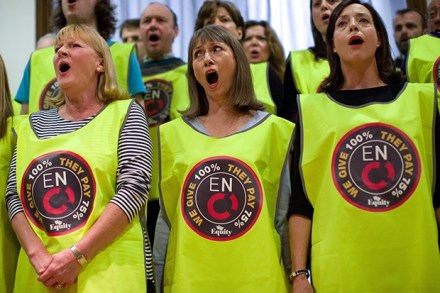
Last week Darren Henley, chief executive of Arts Council England, revealed that opera receives just under a fifth of the Arts Council’s total investment in our arts organisations, which amounts to many millions of pounds. Yet it accounts for ‘between 3 and 4 per cent of live audiences in theatres’. How can these figures possibly be justified? Especially when the art form is so obviously a plaything of the wealthy. Once upon a time there was an organisation that had the intention of providing opera at reasonable prices to the less well-off. It was based in a poor part of London, where it pursued its ideals by presenting everything in
Dying of the light | 25 February 2016

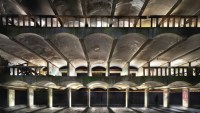
Finding St Peter’s is not straightforward. I approach the wrong way, driving up a pot-holed farm track between a golf club and a wood until a fly-tipped sofa blocks my way. Beyond the sofa, behind padlocked security fencing, stands an old stone bridge. Someone has sprayed ‘Go Home’ on the pillar. I prowl through the wood, hoping to find a way in, and scramble across a gorge to the rear edge of the building. More security fencing, through which I see tantalising glimpses of brutal, and brutalised, architecture. Two workmen appear, dressed like crime-scene investigators in blue hooded overalls, and I lean nonchalantly against the fence and talk about the

On the trail of Piero

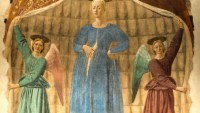
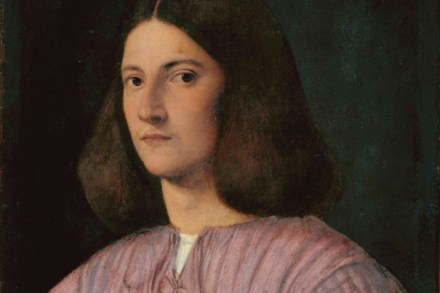
Piero della Francesca is today acknowledged as one of the foundational artists of the Renaissance. Aldous Huxley thought his ‘Resurrection’ ‘the best painting in the world’. His compositions marry art and science with cool precision and a sophisticated grasp of perspective — he was, after all, a mathematician. But he was only rediscovered in the mid-19th century after centuries of relative obscurity. Following his death in 1492, his artistic achievements faded in the memory and he became known chiefly as a geometer (his numerous writings include an innovative treatise on solid geometry and perspective). This is not wholly surprising. Many of the most impressive paintings in Piero’s oeuvre are not

Sweet and sour | 25 February 2016

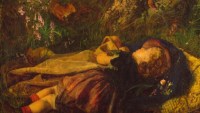
Dear, good, kind, sacrificing Little Nell. Here she is kneeling by a wayside pond, bonnet pushed back, shoes and stockings off, while she rests her blistered feet. She scoops a palm of water with cupped hands and tenderly washes those of her grandfather: her feckless, gambling, on-the-lam grandfather. It is an old Oscar Wilde chestnut, but one would have to have a heart of stone to look at William Holman Hunt’s portrait of Charles Dickens’s saintly ‘Little Nell and her Grandfather’ (1845) without laughing. Likewise Arthur Hughes’s ‘The Woodman’s Child’ (1860), a portrait of a tousle-haired country mite sleeping in the woods, attended by a squirrel and robin, their red

Brothers grim

One of the more obscure winners in recent years of the Berlin film festival’s Golden Bear was a version of Shakespeare’s Julius Caesar by the esteemed Taviani brothers, Paolo and Vittorio. The film, called Caesar Must Die, consisted of prisoners staging the Roman drama in their own high-security jail in Italy. The most dedicated Shakespearean or, indeed, lover of Italian cinema will have found it quite hard to enjoy. It was a tough, depressing watch. But that’s the Berlinale all over. It favours a certain toughness and prides itself on films that engage politically, that are nakedly ‘art’ rather than obviously mainstream. Often it goes out of its way to

Internal affairs

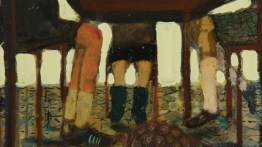
The ten vignettes that punctuate the white walls of the Ingleby Gallery invite us to step into the many-chambered mind of Andrew Cranston. These densely textured and patterned figurative scenes of obscure meaning enthrall, drawing the viewer into a peculiar realm of fantasy where tortoises crawl for ever and infants abandon their toys to stare out of viewless windows. Cranston’s painting is the kind that provokes extravagant responses from observers uncomfortable with art that refuses clearly to state its purpose. Read profiles of the artist and you will find much pontificating about ‘the despondent poetry of the creative process’, and so on. To my eyes, Cranston’s painting is about surface,

Marty’s way

Vinyl (Sky Atlantic) — the much-anticipated series, co-produced by Martin Scorsese and Mick Jagger, about the 1970s New York record industry — began on Monday with a two-hour episode directed by Scorsese himself. The result was, as you’d expect, an exhilarating watch. So why did it also create an undeniable feeling of slight disappointment? One reason, I suppose, could just be that modern TV viewers are spoiled rotten. So many American dramas since The Sopranos have shown such a miraculous mixture of breadth and depth that the problem is no longer believing how ambitious television can be, but simply keeping up with them all. (More bloody golden eggs? Why can’t

The write stuff | 18 February 2016

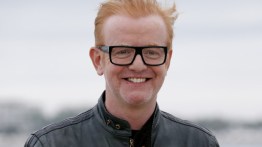
The deadline for Radio 2’s 500 Words competition falls next Thursday. Children between the ages of five and 13 are invited to send in a story, no more than 500 words, to compete for the prize, the chance to have their story read on air, live to ten million listeners on the Chris Evans Breakfast Show. Evans, the irrepressibly enthusiastic Radio 2 DJ, came up with the idea in 2011 (mainly because as a child he was not at all interested in books or reading but belatedly began to realise what he had missed out on), and from the beginning it has been a huge hit, gathering more than 120,000

Kerching, Mr Bing

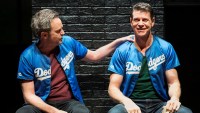
Here’s how to set yourself up for a fall. You stage the world première of your debut play in the West End and you cast yourself in the lead role. Matthew Perry (Chandler Bing from Friends) has invited a critical monstering by brazenly challenging all-comers like this and the result is a terrible let-down. For the reviewers, that is, who have mindlessly attacked this breezy, stylish new dating comedy. It’s not perfect but it succeeds on many levels. It’s pacy, original and easy on the eye. It’s funny throughout (apart from a bizarre scene in a maternity unit, which suggests, rather bafflingly, that no member of the creative team has

Not a pretty sight

‘Forget Downton Abbey!’ exhorts David Pountney in the programme for Figaro Forever, Welsh National Opera’s season of Beaumarchais operas, The Barber of Seville, The Marriage of Figaro and Elena Langer’s Figaro Gets a Divorce. ‘A televisual age in which the vast narrative panorama of a “series” strung out across many episodes seems to capture people’s imaginations is perhaps exactly the right moment to follow the fortunes of the Count and Rosina, their servant Figaro and his fiancée, Susanna,’ he continues. What WNO’s artistic director means is the opposite of what he says. The reader is in fact being asked to remember Downton and make an improbable connection between the unpredictable

Notes on a scandal

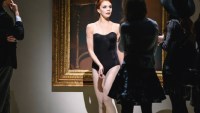
How could it possibly go wrong? The magnetic, seething Russian star Natalia Osipova playing the tragic woman in John Singer Sargent’s magnetic, enigmatic portrait of Madame X, all alabaster skin, black dress and arrogantly sexy profile. A Mark-Anthony Turnage-commissioned score, a top-prestige Bolshoi co-production, and enough scenery to rebuild Canary Wharf. If only Christopher Wheeldon’s new Covent Garden ballet Strapless were a scandal, like the portrait itself when originally unveiled in Paris in 1884, or like Kenneth MacMillan’s Manon at its première. If only it could be dubbed a tasteless exhibition of an undesirable type of female. Instead, it’s just a polite little flop, vastly over-decorated, overcomplicated, and with a

Whodunnit?

On 7 February 1506, Albrecht Dürer wrote home to his good friend Willibald Pirckheimer in Nuremberg. The great artist was having a mixed time in Venice: on the one hand, as Dürer explained, he was making lots of delightful new acquaintances, among them ‘good lute-players’ and also ‘connoisseurs in painting, men of much noble sentiment and honest virtue’. However, there was also a very different type lurking in the early 16th-century Serenissima: ‘the most faithless, lying, thievish rascals such as I scarcely believed could exist on earth’. Dürer hints that among these latter were painters, perhaps including some whose works will be seen in a forthcoming exhibition at the Royal

In excess

Judging from its website, Hebden Bridge’s tourist office considers the fact that BBC1’s Happy Valley is filmed in the town something of a selling point. Personally, I can’t see why. (Perhaps points of especial tourist interest might include the cellar where Sergeant Catherine Cawood was almost battered to death, or the caravan site where drug dealers fed heroin to the teenage girl they’d kidnapped and raped.) And now that it’s back for a second series, viewers of Sally Wainwright’s Bafta-winning drama are still unlikely to confuse Hebden Bridge with, say, Chipping Norton. In Tuesday’s opening scene Catherine (Sarah Lancashire) filled in her sister on the events of her day. ‘Three

The big reveal

Much ado about Radio 4’s latest venture into the new smart world of aural selfies. Reaction Time, on Thursday mornings, is a compilation of mini-recordings by listeners telling us about their lives (overseen by Kevin Core). No tape machine needed or sound recordist. Just a listener with a smartphone and a thick skin. For these stories are not the kind of thing you would tell your nearest and dearest (unless they, too, have an equally thick skin). But rather they reveal disappointments in love, embarrassing date nights, ‘how I met my husband’, things you might unburden to a good friend over a couple of glasses — but would you do

Master of psychology

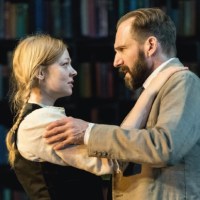
The Master Builder, if done properly, can be one of those theatrical experiences that make you wonder if the Greeks were a teeny bit overrated. Matthew Warchus’s version is four-fifths there. Ralph Fiennes is well equipped to play Halvard Solness, the cold, brilliant autocrat with a troubled past who falls into the arms of a gorgeous young suitor. But he’s the wrong age for the part. So is his opposite number, Sarah Snook, who seems too mature to suggest Hilde’s skittish frivolity. Fiennes, like all film stars, attends carefully to his looks and although he’s over 50 he could easily play ‘late thirties’. But the aged Halvard needs to be

Fashion faux pas

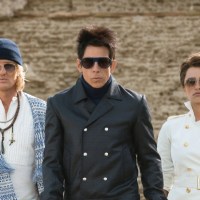
‘I’m pretty sure there’s a lot more to life than being really, really, ridiculously good-looking,’ said a pouty Derek Zoolander back in 2001. Well, apparently not. Because Zoolander 2, the long-awaited sequel to Ben Stiller’s cult hit undercutting the male-model industry, is a good-looking bore, a fashion faux pas where hot celebrities such as Kate Moss, Penélope Cruz and Kim Kardashian are parachuted in to make a relentlessly dreary script look good. Except they don’t. They can’t. What on earth was Stiller thinking? Or Owen Wilson, back here as the loveable frenemy Hansel. Or, for that matter, the endless parade of fashion and rock-star cameos? Anna Wintour, Justin Bieber, Sting.

Mozart magic | 11 February 2016

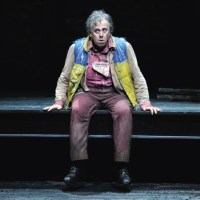
Centre stage, there’s an industrial-looking black platform, secured by cables. The Three Ladies snap the unconscious Tamino on a mobile phone. The Three Boys look like Gollum in a fright wig. And Papageno, dressed as an ageing vagrant, simulates urination (at least I hope that’s what it was) into an empty wine bottle. Simon McBurney’s production of The Magic Flute could have been designed to raise the collective blood pressure of Against Modern Opera Productions, the Zeffirelli-worshipping Facebook group that’s opera’s equivalent of the Mail on Sunday letters page. In fact, I sat through Act One with a growing feeling of joy, wonder and admiration for how comprehensively McBurney has