Arts Reviews

The good, bad and ugly in arts and exhbitions

Love at first sight | 31 March 2016

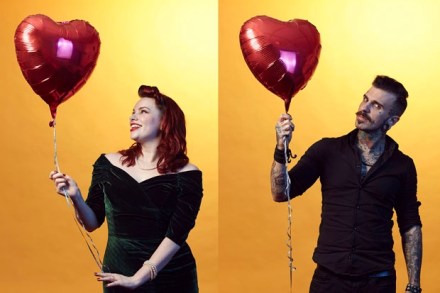
Now the kids are back for the school holidays, I have a licence to watch complete trash again. No more brooding Scandi dramas (though Follow the Money is shaping up very nicely — plus, as an added bonus, its anti-windfarm theme is really winding up Guardian readers) — just pure televisual soma, such as the masses use to anaesthetise themselves after another thankless day in their veal-fattening pens. First Dates (C4, Fridays), for example. You wouldn’t want to pig out on more than one episode at a time but it’s about as perfectly formed a TV experience as you’ll get: you laugh, you cry, you gawp, you cringe; you feel
Sins of the fathers | 23 March 2016

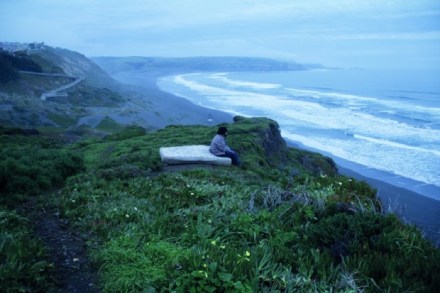
A feature film about priests who abuse children is being released on 25 March. Which happens to be Good Friday. Geddit? The sacrifice of the innocents. A conspiracy of religious hierarchs. Hand-washing by the secular authorities. I’m sure I can think of some more analogies if you give me time, but that’s enough to be going on with. Enough, certainly, for the distributors to boast that the movie is ‘controversially slated to be released on Easter [sic] Good Friday’. As publicity stunts go, this isn’t subtle. But the film is. The Club, directed by the Chilean Pablo Larraín, sets out to perplex us from the first frame until the last.

Born again

Six years ago, on Good Friday, the journalist Melanie Reid was thrown off her horse while on a cross-country ride in Stirlingshire where she lives. The accident broke her neck and back and left her tetraplegic, paralysed from the armpits downwards. On Easter Sunday on Radio 3 she’s Michael Berkeley’s guest on Private Passions, a timely guest, as he says, because she has recently written in her Sunday Times column about being ‘surprised by a small epiphany of happiness’, of experiencing a ‘rebirth’, if ‘rather cruel’. ‘You find joy in little things …I see all the things that I never saw in my busy life,’ she says, which coming from

Good cop, bad cop | 23 March 2016

Which is better, British TV drama or American? A couple of years ago, merely asking the question would have had the hipsters chortling into their obscure US box sets — and even now a strange cultural cringe seems to persist. Nonetheless, I’d suggest, British television drama these days really is in the midst of an era that will have commentators in 20 years’ time routinely (if a bit unimaginatively) reaching for the adjective ‘golden’. Already in 2016 we’ve had War and Peace, Murder, The Night Manager and Happy Valley — and that’s before the hugely welcome return of Line of Duty (BBC2), Jed Mercurio’s riveting thriller about a police anti-corruption

Slow burn

The big hitter this week is, of course, Batman v Superman, but if you want to learn something new, and meet characters that’ll stay with you long after, well, get yourself to Court. This is an Indian courtroom drama in which the wheels of justice grind so slowly you’ll want to scream, and now I can see I haven’t sold this well. ‘What do you fancy seeing at the cinema, dear? A courtroom drama in which the wheels of justice grind so slowly you’ll want to scream? Shall I book, or will you?’ But Court’s lassitude is kind of its point. It is one of those film in which not

Nuclear waste

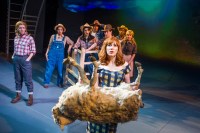
Miss Atomic Bomb celebrates the sub-culture that grew up around nuclear tests in 1950s America. The citizens of Nevada would throw parties and stage barbecues to coincide with the latest nuclear detonation in the desert. This musical has a lot going for it. The melodies are strong, and well sung. The high-kicking chorus lines are easy on the eye and the show has a zippy, innocent spirit. But the storyline gets sidetracked in a mass of contradictory directions. The main theme follows a homesick farm girl who becomes involved with a runaway soldier whose brother runs a Vegas nightclub where a beauty contest is being held that the farm girl

Finally: proof that the ‘Clarkson’ persona was all just an act

To the extent I have ever thought about him, I have always viewed Jeremy Clarkson as a slight irritant. This is largely because he personifies what a type of lazy leftist believes right-wingers to be like (uninterested in culture, cultivatedly thick, casually racist). But this weekend we learnt what some of us had long-suspected: that rather than being a scourge of our dishonest, molly-coddled, excuse-ridden culture, Clarkson may be one of its happiest and most comfortable creatures. Saturday’s Times carried a long interview with him. It is worth reading not because of Clarkson, but because of what it says about our culture. Because if you fell for the idea of Clarkson

Rebel angels

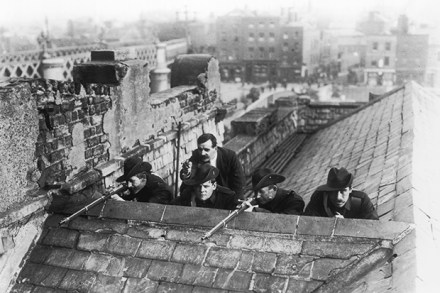
This is the first exhibition I’ve been to where the Prime Minister joined the hacks at the press view. A week after the Irish general election, the Taoiseach, Enda Kenny, came to the biggest show in Ireland devoted to the centenary of the Easter Rising. Kenny’s presence at the press launch just goes to show how the Irish rebellion against British rule at Easter 1916 is still the defining story of modern Ireland. In fact, the Easter Rising was a pretty good failure, although I didn’t suggest that to the Prime Minister at the press view. The rebellion lasted only six days before it was put down by the British

Repeat prescription

Walter Sickert was once shown a room full of paintings by a proud collector, who had purchased them on the understanding that they were authentic Sickerts. The painter took one look around, then announced genially, none of these are mine, ‘But none the worse for that!’ Were Giorgione to return to life, and take a stroll around the Sackler Galleries at the Royal Academy, he might echo those words. Few of the works on show, in all probability, were actually executed by Giorgione, but they are none the less magnificent for that. This is — wisely — not an exhibition that attempts to reassemble the artistic personality of that enigmatic

Home and away | 17 March 2016

Four programmes, four very different kinds of radio, from a classically made drama to weird sonic ramblings, via the best kind of all: first-person narrative, straight to mike. On Syrian Voices this week on Radio 4 (produced by David Prest), Lyse Doucet has been talking to Syrians whose lives have been utterly changed by the war, now passing its five-year mark. On Monday we heard from Sam, a 22-year-old student who lives in the government-controlled area of Daraa and studies English literature at the university. It was here that the uprising began after some students scrawled graffiti on a wall, ‘It’s your turn next, doctor’, calling for their country to

Greedy greenies

‘We have a problem. Yes. At the wind farm.’ Any conspiracy thriller with lines like that has definitely got my vote. Possibly most of you are unaware of this, because it’s not something I talk about often, but I happen to be not too fond of the things I call bat-chomping, bird-slicing eco-crucifixes — nor of the charlatans, crooks, liars and parasites who make their living out of them. Indeed, whenever I try to think of an industry that’s worse than wind farms I keep coming unstuck. At least landmines serve a useful purpose for force protection; at least Albanian prostitutes make a few men very happy. Wind, on the

Original sin | 17 March 2016

The Royal Opera has bitten the bullet so far as Musorgsky’s Boris Godunov goes, and opted to stage the original 1869 version, with no modifications or additions from his revised 1874 edition, which used to be called ‘definitive’ but which seems to be under a cloud nowadays. Rimsky-Korsakov’s version has been pushed right to the back of the doghouse, so that it might soon be revived for its historical interest. Before I launch into my praise of the new production, which is an unqualified triumph, I would like to register some reservations about the work itself, in any of its versions. It’s routinely said that the hero of the opera

Building block | 17 March 2016

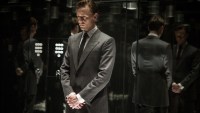
High-Rise is Ben Wheatley’s adaptation of J.G. Ballard’s novel, and it is deeply unpleasant, if not deeply, deeply unpleasant. (Ideally, I would wish to repeat ‘deeply’ several hundred times, but I do not have the space.) Based on the dystopian notion of tower-block residents regressing into a primitive state once societal norms and the class structure are removed, it sounded promising, like an adult mirroring of Lord of the Flies. But Wheatley is so in love with his own visual style and excesses that all allegory and satire is lost while the violence escalates and women are beaten then raped. Misogyny with social commentary comments on misogyny, but without that

Second thoughts | 17 March 2016

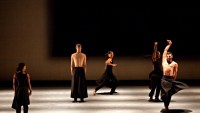
You revisit an old love with wariness. Time’s passed for both of you — sharp edges have been smoothed, and reputations built. But seeing Kaash again last week, Akram Khan’s tremendous debut ensemble work, made when he was 26, revived at Sadler’s Wells now that he is 41 and a world name, I felt the earth move just as before. Like Athene, born fully armed from Zeus’s head, Kaash leapt astonishingly out of the modest, watchful mind of Khan, then a superb classical Indian soloist embarking on his first choreography for other dancers. One of the great pleasures of this past fortnight for a veteran dancegoer has been seeing his

God’s messenger

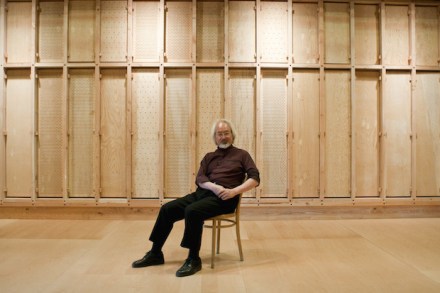
When the Japanese conductor Masaaki Suzuki leads his forces in a performance of a Bach cantata, does he worry that the non-Christians in his audience will face the fires of Hell? That seems a bizarre question to ask any conductor of Bach’s music, especially one from Japan, where only one per cent of the population is Christian. But when I met Suzuki in Copenhagen last Friday I asked it, because the 61-year-old founder of the Bach Collegium Japan (BCJ) is part of that one per cent. He’s an Evangelical Protestant, like Johann Sebastian Bach himself. Indeed, he adheres to an even fiercer interpretation of the Bible than the cantor of

Are theatre audiences getting out of hand?

Laurence Fox has this week joined an increasing band of actors hitting back at misbehaving audience members who seem to forget that they are in public rather than their own living room. He ramped up the drama by launching a foul-mouthed attack on a heckler before storming offstage during a live performance at a London theatre. During the play, The Patriotic Traitor at the Park Theatre, he was heard to say: ‘I won’t bother telling you the story because this cunt in the front row has ruined it for everybody.’ The audience member had been muttering and heckling during the play and apparently became so loud that, for Fox, it was impossible

Just what the doctor ordered

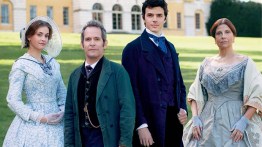
Every now and then, a costume drama comes along that’s so daringly unconventional as to make us re-examine our whole idea of what the form can achieve. ITV’s Doctor Thorne, though, isn’t one of them. Instead, Julian Fellowes’s adaptation of Anthony Trollope observes the usual rules with almost pathological fidelity. Extras dance gamely in ballrooms, scheming matriarchs stand in the way of sweet young lovers and characters express deep fury with the words, ‘Good day to you, madam.’ In the first scene, we even had a handy refresher on the genre’s use of hats as a social signifier. (Basically, toppers for the toffs, peaks for the proles.) The title role

Girl power | 10 March 2016

Hurrah for Radio 3 and its (long-overdue) efforts to give us music not just performed by women but composed, and conducted, by them too. Last year’s innovative day of programming for International Women’s Day introduced us to composers many of us had never heard of, such as Elisabeth Jacquet de la Guerre and Barbara Strozzi, Charlotte Bray and Anna Clyne. Yet to the surprise of even the most sceptical critics, the day was a huge success, proving that some of this music is really good. As Edwina Wolstencroft, producer last year and responsible for this year’s celebration of women in music, says, ‘We know that as many as 6,000 women