Andrew L. Shea

Philip Guston in the padded room

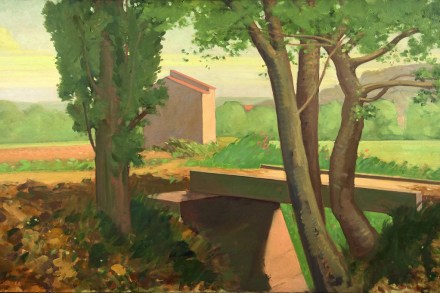
It was once a cliché of modern art that its principal aims included shocking its audience. Aesthetic aggression was the correlative of class warfare. It’s no accident, as the Marxists say, that avant-garde comes from the military lexicon. In painting, Gustave Courbet’s 1866 “L’origine du monde,” a rudely realistic, closely cropped view of an anonymous woman’s nude genitals, is often hailed as an early shot across the bow. Five years later, the artist would lead the Paris Commune in toppling over the Napoleonic Vendôme Column. For pugnacious creatives like Courbet and his descendants, consciousness-raising was always going to be a little bit uncomfortable. One can imagine how easily this gets out of hand.

guston

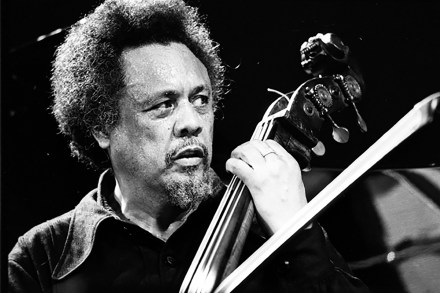
Charles Mingus at 100

"All the Things You Are” is an essential jazz standard, but in 1960 the bassist Charles Mingus gave it an update: “All the Things You Could Be by Now If Sigmund Freud’s Wife Was Your Mother.” It doesn’t take a psychoanalyst to peek under the hood of this composition. Like many Mingus tunes, the loose adaptation is fairly bipolar, picking up and dropping off in fits and starts, alternating between vacuum-tight swinging sections and meandering, tempo-less squabbles between members of the four-piece band. Mingus isn’t for the faint of heart, but on the centenary of his birth it’s worth confronting his life’s work, which surely places him among America’s most important composers.

Mingus

Precarious and thrilling

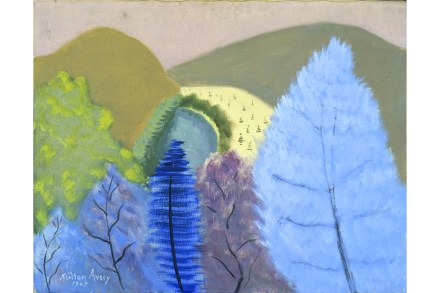
"Those trees are blue — I never saw a blue tree in Vermont,” a collector once argued to Milton Avery when looking at one of his New England forest scenes from 1945. The reticent artist parried: “That one was done in New Hampshire.” “Blue Trees,” the painting in question, is classic Avery (1885-1965): logically nonsensical but improbably believable, forcing us to re-question language’s tenuous hold on the slippery wonders of color. It’s also one of the standout examples included in a new retrospective of the American painter, set to open at the Wadsworth Atheneum Museum of Art (Hartford, Connecticut) on March 5, the middle leg of a three-venue tour.

Avery

A brush with Joan Mitchell

“I am not a member of the make-it-ugly school,” Joan Mitchell told Irving Sandler for an ARTnews article in 1957. No argument there. As the major retrospective of more than eighty significant paintings by the second-generation Abstract Expressionist (1925-92), now on at the San Francisco Museum of Modern Art, reminds us, Mitchell’s artistic life was an unabashed pursuit of the beautiful. Her paintings, derived from nature but fired in the kiln of memory and intuition, are testaments to that pursuit, showing us at once just how devilishly out-of-reach true beauty can be, and just how important it is to stretch one’s arms and go for it.

mitchell

Flagging energy

Paintings so nice you’ll see them twice. That’s the gambit of Jasper Johns: Mind/Mirror, the gargantuan ‘simultaneous retrospective’ that’s currently split between the Philadelphia Museum of Art and New York’s Whitney Museum of American Art. OK, so the concurrent presentations of painting and sculpture by the neo-Dada, quasi-proto-Pop artist aren’t exactly duplicates. The museums promise a sort of imperfect symmetry: ‘each half of the exhibition will act as a reflection of the other, inviting viewers to look closely to discover the themes, methods, and coded visual language that echo across the two venues’.

American Dream

Old Masters, new look

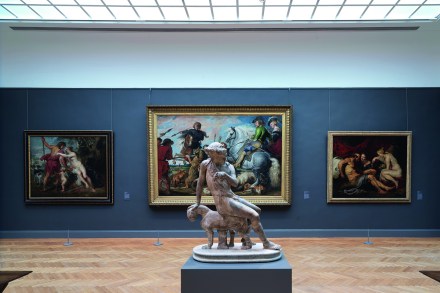
The Old Masters at the Metropolitan Museum of Art needed a new hat. The galleries are given pride of place in the expansive Fifth Avenue building, standing at the head of its enormous Beaux-Arts grand staircase. They contain many of the Met’s most popular treasures, but they weren’t showing pre-19th-century European paintings in the best of all possible lights. In 2018, Keith Christiansen, the chairman of the Department of European Paintings, embarked on the enormous project of renovating and modernizing the skylight system for the galleries. The museum is now about halfway through the four-year, $150 million endeavor. That’s a hefty price tag, but it’s a project that was long overdue.

met museum

Night at the museum

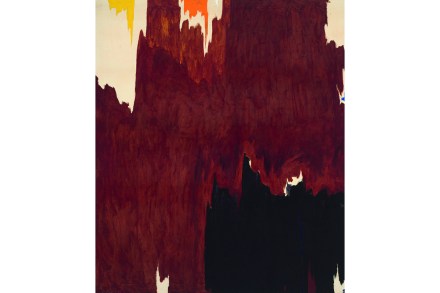
In the summer of 1961, Clyfford Still packed his family into a car and began driving south from New York City in search of a new home. In the Forties, Still had shocked audiences with monumental canvases covered in stormy walls of thick, dark, pigment: some of the first totally abstract paintings shown in New York. Subsequently Still had risen with the Abstract Expressionists to unprecedented heights of institutional and commercial success. But despite wielding profound influence as a founding dean of this New York School, torch-bearing wasn’t really Still’s thing.

baltimore

Culture and anarchy

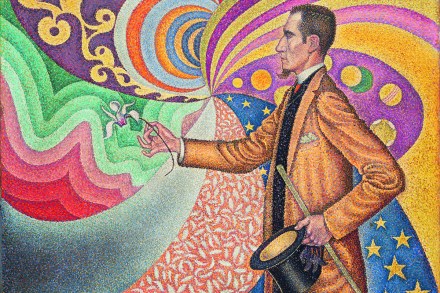
Paul Signac’s portrait of Félix Fénéon is a striking and historically important painting. But is it a good one? Its subject didn’t think so. Signac profiles Fénéon against a swirl of complementary colors and kaleidoscopic shapes, as if anticipating an acid-trip scene from a Roger Corman movie. This radioactively abstract background was bold stuff for Paris in 1890, when the picture was made, but contemporary critics disapproved, one finding the work ‘cold and dry’, another calling it ‘neither decorative nor comprehensible in terms of feeling’. Fénéon himself was similarly vexed by the final result, though he held onto the portrait throughout his life out of loyalty to his painter friend.

Féneon anarchy

Still painting after all these years

On March 14, 1847, Eugène Delacroix made a trip to the studio of his colleague and countryman Camille Corot. Later that day, Delacroix recorded in his journal a feeling of newfound appreciation for the painter’s landscapes: ‘Corot is a true artist. One has to see a painter in his own place to get an idea of his worth.’ The Corot paintings that Delacroix had recently viewed at the Paris Salon seemed to hold new meaning after his seeing the site of their creation. As to exactly what had changed, or what he saw that changed it, Delacroix does not — perhaps could not — tell us. Few modern painters can claim as close a kinship to the spirit of Corot as Paul Resika.

resika

Liberty and death: Jacob Lawrence’s struggle for freedom

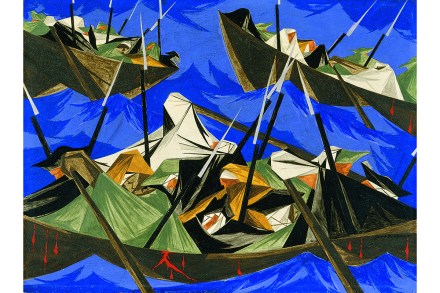
Few artworks could be more responsive to the current upheaval than Jacob Lawrence’s 1954-56 series ‘Struggle...From the History of the American People’. Painted during the dawn of the Civil Rights movement, the cycle of 30 panels tells a history of the American Founding through punchy modernist vignettes, engaging with timely and timeless topics such as brutality, race, memory, justice and our shared national heritage. At the Metropolitan Museum of Art, 24 of the original panels have been reunited for the most complete exhibition of the series since its original showing more than six decades ago. The exhibition will travel to Birmingham, Seattle and Washington, DC from New York.

jacob lawrence

The real McCoy

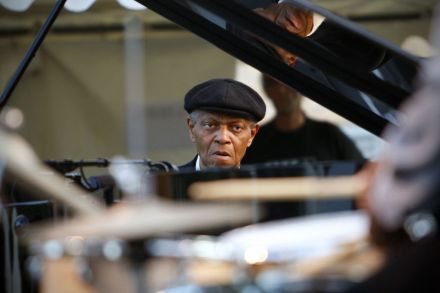
‘My current pianist, McCoy Tyner, holds down the harmonies, and that allows me to forget them,’ John Coltrane said in an interview in 1961. ‘He’s sort of the one who gives me wings and lets me take off from the ground from time to time.’ Tyner, who died on Friday at the age of 82, will be remembered for his crucial role supporting John Coltrane during some of the legendary saxophonist’s most creative years. But on the occasion of Tyner’s death it’s also worth recognizing that ‘the Real McCoy’ had a penetrating voice and lasting influence all his own.A son of west Philadelphia born in 1938, Tyner was encouraged by supportive parents and was playing piano by 13.

mccoy tyner

The soft power of Italian jazz

This article is in The Spectator’s January 2020 US edition. Subscribe here.New York City The singer and saxophonist Ray Gelato opens his set at Birdland with a cover of ‘That’s Amore’. But this isn’t the sleepy send-up of Neapolitan street waltzes that Dean Martin recorded in 1953. Gelato raises the tempo and swings it four to the bar. As he sprints his way through the verses, Philadelphia’s City Rhythm Orchestra drives the pace, piano, bass and drums holding down the shuffle while the four-piece horn section plays call-and-response to each other and his vocals. It’s the start of a fun, high- energy set, the two hours of which feel as if they pass in half the time. You don’t tap your feet to this music: you stomp.

italian jazz

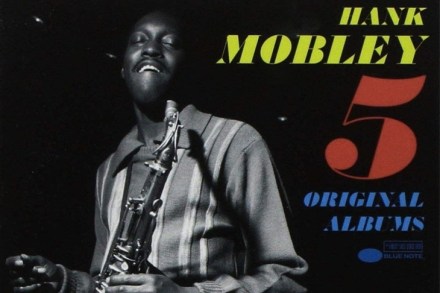
Hank Mobley, the greatest sax player you never heard

Jazz may be an egalitarian, collaborative music, but jazz musicians honor their best with the laurels of hierarchy. Everyone knows the royal monikers of ‘Duke’ Ellington and ‘Count’ Basie, and most people know that Billie Holiday was ‘Lady Day’. But there’s also a whole aristocracy of hip name-drops: ‘The Baron’ (Charles Mingus), ‘Pres’ (Lester Young), ‘The Court Jester’ (Ornette Coleman), ‘The High Priest’ (Thelonious Monk). The list goes on, and on. The mid-century saxophonist Hank Mobley (1930–86) was never ennobled in such fashion — unless you count Dexter Gordon’s hilarious handle for his friend, ‘The Hankenstein’.