Culture

Culture

The good, the bad and the ugly in books, exhibitions, cinema, TV, dance, music, podcasts and theatre.

How can anyone resist The Piano?

Television

One challenge facing any novel, drama or film about the Holocaust is to restore its sheer unimaginability. In Thomas Keneally’s Schindler’s Ark – filmed, of course, as Schindler’s List – when news reaches Krakow of what’s happening in Auschwitz, Keneally pauses for some editorialising. ‘To write these things now,’ he says, ‘is to state the commonplaces of history. But to find them out in 1942… was to suffer a fundamental shock, a derangement in that area of the brain in which stable ideas about humankind and its possibilities are kept.’ The Piano shamelessly seeks to move us – and shamelessly succeeds In The Tattooist of Auschwitz, the same fundamental shock is more gradual.

Adrianne Lenker is a treasure for the ages 

Pop

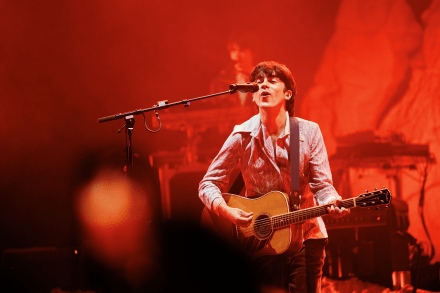
You could very well sum up their differing approaches to American roots music from how they were dressed. Both wore cowboy hats and both wore trousers, but Adrianne Lenker’s were faded denim, while Lainey Wilson went with shiny brown leather. Lenker, looking austere and speaking and singing softly, played music plucked from eternity, demanding you concentrate on her stillness. Wilson, on the other hand, was here to make the crowd feel good; a little melancholy on the big ballads, sure, but she’s an entertainer in the grand tradition of country music.

The mutilation of Radio 3

Classical

On Saturday 12 December 1964, Harold Wilson addressed his first Labour party conference as prime minister, George Harrison was photographed with his new girlfriend in the Bahamas, Pope Paul VI told Catholics they could drink alcohol ‘in moderation’ before Midnight Mass and, according to the Mirror, ‘two strip-tease girls fought in the nude in their dressing room after finishing their fan dance at a night club’. The station has become little more than a Spotify playlist interrupted by the disc-jockey burbling It was also the day that Record Review arrived in its Saturday morning slot on the BBC’s Third Programme, now Radio 3. And there it remained.

Cheesy remake of Our Mutual Friend: London Tide, at the Lyttelton Theatre, reviewed

Theatre

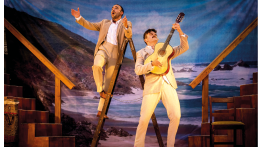
Our Mutual Friend has been turned into a musical with a new title, London Tide, which sounds duller and more forgettable than the original. Why change the name? To confuse fans of Dickens, presumably, and to keep the theatre half-empty while heaps of tickets are sold at a discount. At the end of Act One, an actor explains the entire plot. This might have been delivered earlier The plot is a cheesy Victorian whodunnit involving three main characters and multiple locations so it’s hard to follow the action as it flits from this lowly hovel to that seedy tavern. The chief personalities are a pretentious lawyer, a psychotic teacher and a shifty lodger who won’t reveal his name.

Taylor Swift’s new album is exhausting

Pop

How to explain the supercharged star power of Taylor Swift? An undeniably gifted artist, Swift’s albums 1989, Folklore and Evermore, in particular, are excellent. She has written a battery of terrific pop songs. She is a generous and skilled performer. To suggest she is overrated is not an insult, therefore, but simply a comment on the absurd critical mass of her popularity, in which every lyric, scrap of artwork, cultural reference and personal tit-bit is weighted with a monumental significance which, it is becoming apparent, does her work few favours. Anybody listening to Swift’s new album without prior knowledge of the layers of gossipy context surrounding it might well wonder what all the fuss was about.

You could have built a tent city from all the red chinos: Aci by the River reviewed

Opera

The Thames cruise for which Handel composed his Water Music in 1717 famously went on until around 4 a.m. The boat trip downstream that formed part of the London Handel Festival’s Aci by the River was a bit zippier. We piled onto a chartered Thames Clipper at Westminster Pier, and a quartet of wind players were already huddled in the gangway, playing suitably aquatic Handel favourites. A bassoonist gave an anxious grimace as the captain floored the throttle and the boat lurched forward. If our craft had been wrecked on some enchanted isle, we could have built a tent city from the red chinos You do get to see an older, more Hogarthian city from the river, even if the skies were London-drab rather than the hoped-for Canaletto blue.

Why garage punk is plainly the apogee of human achievement

Pop

How is it that a group that sounds like the Hives are selling out the Apollo? In a world configured according to expectation, the highlight of their year would be an appearance at the Rebellion punk festival in Blackpool, probably high up the bill on the second stage. They’d headline their own shows at places like the Dome in Tufnell Park to an audience made up of three-quarters old blokes and a quarter skinny young kids, suited and booted like it’s 1966 and Antonioni’s about to shout ‘Action!’. Afterwards, a DJ would play the Sonics and the Electric Prunes and the Chocolate Watchband.

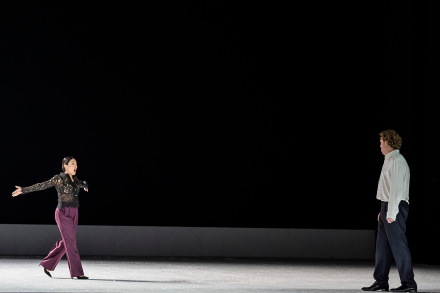
Baffling and vile: ETO’s Manon Lescaut reviewed

Classical

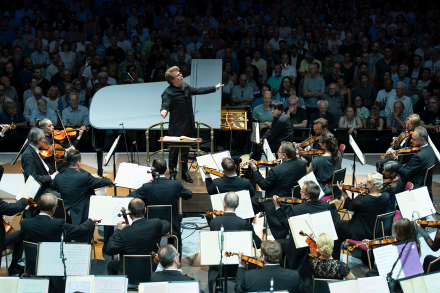
In 1937, John Barbirolli took six pieces by Henry Purcell and arranged them for an orchestra of strings, horns and woodwinds. Nothing unusual about that: arranging baroque music for modern symphony orchestras was what famous conductors used to do. Beecham and Hamilton Harty re-upholstered Handel. Mahler did something similar with Bach, then directed the result from a grand piano, and wouldn’t you give anything to have heard him? All good clean fun in those innocent days before the advent of historically informed performance. ‘Can you tell me what was happening?’ asked a woman on the way out It’s unusual to hear these things revived now, and curiouser still when the person doing the reviving is Thomas Adès, currently artist in residence with the Hallé.

A teacher like Michael Tanner would never survive in today’s university climate

I came up to Corpus Christi College, Cambridge, on a rain-sodden October evening in 1976. I'd flown from spring sunshine in South Africa to this misery – the weather having turned abysmal after the best summer of the century, just as one would expect. I didn't know what a Cambridge porter was meant to do as I plonked down my bags at the lodge, anticipating assistance. The porter, a stocky, tough military type, hardly gave me a glance, saying 'Pick 'em up and follow me'. This, I was soon to find out, was the legendary Jaggard, the porter with the most fearsome reputation in the university, upon whom Tom Sharpe's Skullion in Porterhouse Blue was based.

Pop musicians, be proud of your middle-class upbringings

Tracey Thorn’s was ‘by no means luxurious.’ Brett Anderson had a ‘small, very small’ one. Miki Berenyi’s was ‘shabby and dirty.’ The unwritten rule that the best rock music comes from the street can create a challenge for edgy post-punk musicians writing their memoirs. What if you grew up in comfortable circumstances or had a boring childhood? Downplaying the state of the house you lived in is one approach – but others are available. Take Brett Anderson’s Coal Black Mornings (2018). Anderson can reasonably claim to have come from a social position below the rest of his band, Suede. His parents were arty but they did, undeniably, live in a council house.

Why has the National engaged in this tedious act of defamation of the Brontës?

Theatre

The Divine Mrs S is a backstage satire set in the year 1800, when flouncy costumes and elaborate English prose were common cultural ornaments. On press night the venue was full of resting actors and theatrical hangers-on who adored the show’s in-jokes and rehearsal-room wisecracks. Titus Andronicus is ‘an experimental play about a pie’, says an actor. Another thesp demonstrates how to enliven a dreary line by pretending that one’s character is in love. This tedious act of defamation belongs in the bin. Or the Radio 4 early-evening comedy slot The production looks immensely stylish and the company are clearly having a ball, but the ordinary punter may find it tiresome. A few minutes of pastiche is amusing but this lasts well over two hours and it takes nothing seriously.

What would Tanner say?

Classical

On the train home from the Royal Festival Hall I learned of the death of Michael Tanner, who wrote this column from 1996 to 2014 and beyond. The Orchestra of the Age of Enlightenment had been playing Sibelius’s Fifth Symphony, and it’s not strictly true to say that the news made me wonder about his likely reaction to their performance, had he been able to hear it. But that’s only because, for anyone who came of age reading his criticism, asking ‘What would Michael say?’ is already a reflex – and will be for as long as we think or write about music.

I’m ashamed that I used to think ABBA wasn’t cool 

Radio

One of the joys of listening to archive BBC interviews with pop stars is the chance to hear long-discarded hipster jargon served up in its original setting. Near the beginning of Radio 2’s ABBA at the BBC, marking 50 years since the group won Eurovision with ‘Waterloo’, a prime example was unearthed from the immediate aftermath of their success. ‘If you were one of the 500 million Eurovision viewers, you may be wondering which was more important in getting the song through to number one,’ said the host. ‘Was it the music or the way-out gear?’ I think we can safely conclude that it was the music, although the sight of Anni-Frid Lyngstad and Agnetha Faltskog in spangled velvet can’t have hurt.

In defence of noise music

Classical

It’s curious to consider what a venerable old thing noise music is. That this most singularly untameable of musics – the place where melody, harmony and pulse all go to die – is an Edwardian invention. It first arrived in this country 110 years ago when futurists Filippo Marinetti and Luigi Russolo set up camp at the London Coliseum a month before the start of the first world war and, over ten consecutive nights, blasted the West End audience with their ‘noise-tuners’ or intonarumori, alongside diverse variety acts. I say blasted but making a decent racket was the one thing these homemade instruments were incapable of doing. ‘It could have been drowned easily by a good tympanist,’ noted the Musical Times. The artist C.R.W.

The greatest British symphonist you’ve never heard of

The Listener

Grade: A Rejoice! A glorious symphonic cycle by a British composer has been issued as a set for the first time. George Lloyd (1913-98) was treated with lofty condescension by the musical establishment because his twelve symphonies contain barely a single dissonance. They’re sprinkled with jaunty tunes that have the feel of an Ealing Comedy – heresy! Also, it didn’t help that for decades Lloyd made his living as a mushroom farmer in the West Country. But he was no amateur: he could write perfect fugues as a teenager and by his early twenties had a fine opera under his belt. Then in 1942, the ship on which he was serving as radio engineer was hit by a torpedo. Lloyd nearly drowned in oil; shell shock ruined his health and he and his wife retreated to their smallholding.

The mayhem ‘Born Slippy’ provoked felt both poignant and cathartic: Underworld, at Usher Hall, reviewed

Pop

On the same night Underworld played the second of two shows at the Usher Hall, next door at the Traverse Theatre, This is Memorial Device was midway through a short run. Seeing both within a matter of hours, I felt an exchange of currents, a renewed awareness of the short distance we travel between euphoria and sorrow when we start mixing music and memory. The short play, adapted and directed by Graham Eatough from the novel by David Keenan, concerns the brief, wayward life of a (fictional) 1980s cult band from Airdrie. We see how the group’s complicated yet charismatic personal dynamic, intense improvised music and quasi-occult power was once revered by a handful of diehards.

Wise, passionate and soul-stirringly withering: remembering the great Michael Tanner (1935-2024)

Michael Tanner, who died yesterday at the age of 88, lived two parallel lives. To many Spectator readers, he was the magazine's peerless opera critic: wise, passionate, thrillingly disputatious, intensely funny, extremely generous with the Semtex. Essential reading. He wrote The Spectator's weekly opera column from 1996 to 2014 and continued to review – and raze to the ground where necessary – concerts, books, albums and opera, whatever we flung at him, right up until 2022.  To countless others, however, he was one of the great philosophical scholars.

Choreographers! Enough with the reworkings of Carmen and Frankenstein!

Dance

Carmen and Frankenstein are without a doubt two of the most over-worked tropes in our culture, the myths of the evasively seductive gypsy and the human monster machine being lazily recycled and plundered and vulgarised in various forms to the point at which their authentic primal power has been altogether deflated. So it was with a heavy sigh that I anticipated their two latest danced iterations. No surprises were likely, and none were delivered.

Exhilarating: MJ the Musical reviewed

Theatre

If you’ve heard good reports about MJ the Musical, believe them all and multiply everything by a hundred. As a music-and-dance spectacular, the show is as exhilarating as any Jackson produced while he was alive. The sets, the costumes, the choreography and the live band deliver an amazing collective punch. When he removes his black trilby he looks like Rishi Sunak at a karaoke bar The script, by Lynn Nottage, takes us into Jackson’s twisted personal history. He was one of ten children raised in a four-room shack in Gary, Indiana, by weirdo parents. His mother was a Jehovah’s Witness who refused to celebrate birthdays or Christmas.

Clever, beautiful and sonically witty: Beyoncé’s Cowboy Carter album reviewed

The Listener

Grade: A+ Carter is a useful surname to have if you’re making a country album. So it is with Beyoncé: she married into the name when she got hitched to Jay-Z, but he is from New York, not Poor Valley, VA. Helps if you’re from Texas too – just to convince folks that this bit of genre-hopping is rooted in authenticity. It isn’t – but who cares? This is a clever, beautiful and sonically witty album. Country music’s conventions draw out of Beyoncé perhaps the most sublime melodies she has written, or part-written. There are cameos from Dolly Parton, half-forgotten black sharecropper’s daughter Linda Martell, Willie Nelson and the ghost of Chuck Berry, but – the last excepted – they don’t add much to this sprawling but magnificent double album.

Why Easter is the most rock and roll religious holiday 

Easter is by far the most rock and roll religious holiday. Christmas might be the time when the pop vultures circle, plucking from the bones of garish sentiment, but the wham-bam narrative mic-drops of Holy Week are of a different order. Easter has provided a dramatic template for every rock opera, concept album, heroic comeback and combustible band dynamic this side of the Chatterley trial and the first Beatles LP. ‘Jesus died for somebody’s sins, but not mine,’ runs the opening line on Patti Smith’s debut album, Horses. Maybe so, but she understood the innate power of this stuff. Smith’s second LP is called Easter, and it is replete with overtly Christian imagery.

Death of a choir

Classical

Always make your redundancy announcement when the people at the receiving end of it are on a high. This seems to be the favoured method of today’s managing executives, who perhaps imagine that adrenalin will somehow anaesthetise the blow of getting the sack. For the Cambridge student choir St John’s Voices, the news of its imminent disbanding and the redundancy of its director Graham Walker came just two minutes after the light was switched off at the end of a three-day recording session of Russian choral masterpieces last week. Does egalitarianism have to be promoted at the expense of up-and-running excellence?

If you hate the Irish, you’ll adore this play

Theatre

Faith Healer is a classic Oirish wrist-slasher about three sponging half-wits caught in a downward spiral of penury, booze, squalor, sexual repression, bad healthcare, murderous violence and non-stop drizzle. The mood of grinding despair never lets up for a second as the healer, Frank Hardy, along with his moaning wife and their Cockney sidekick, motors around the British Isles trying to cadge pennies from cripples in exchange for bogus cures. Every cliché in the rich thesaurus of Celtic misery is brought together in this rancid melodrama about mob justice.

From the sublime to the ridiculous: Royal Ballet’s MacMillan triple bill reviewed

Dance

My feelings about the genius of Kenneth MacMillan have always been volatile, but in the course of the Royal Ballet’s current triple bill, they veered even more wildly than usual between uncomplicated delight, awed reverence and embarrassment. A revival of his early Danses Concertantes, firing off Stravinsky at his most effervescent and designed with exuberantly colourful Festival-of-Britain jazziness by Nicholas Georgiadis, provided half an hour of pure joy. Stylistically an exercise in the neoclassicism that dominated the postwar era, it’s witty, chic and upbeat, exploring sharp angles rather than smooth curves and lyrical lines. MacMillan’s choreographic invention is profligate, with little twists and unexpected turns, all infused with an infectious spirit of playfulness.

Think flute-playing Sir Keir will rescue opera? Look at Labour-run Wales

Opera

A tale of two opera companies from the Land of Song. After its distinctly gamey new Cosi fan tutte, Welsh National Opera has sprung dazzlingly back to form with a new production of Benajmin Britten’s final opera, Death in Venice. It’s directed by Olivia Fuchs, in collaboration with the circus artists of NoFit State, and in a word, it’s masterful. Fuchs’s Serenissima is a city of shadow, its landmarks glimpsed distantly in smudged, restless scraps of black and white film. The tourists and locals wear monochrome period dress; only Aschenbach (Mark Le Brocq) is in a noncommittal grey. The colour has drained from his world and from the peripheries of the stage he gazes, impotent, at the figures who dance and sport in the light, played by the acrobats and aerialists of NoFit State.

The joy of jump-scares in gaming

More from Arts

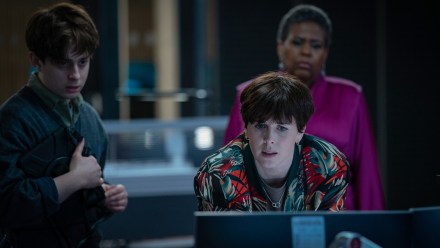
Grade: A- One thing videogames are surprisingly good at is scaring the willies out of you. Claustrophobia, unease, jump-scares, anxious-making camera-angles... Gamers of my generation will not have forgotten the spooky crackle of the Geiger counter in Silent Hill; nor needing fresh trousers after that dog jumps through the window in the first Resident Evil. The granddaddy of them all was Alone in the Dark – which, when it came out in 1992, essentially invented the survival horror genre. It sent you crawling through a spooky old mansion solving puzzles, fretting about your inventory and being jumped by sluggish monsters. Now a lavish and loving reboot stars B+-listers David Harbour and Jodie Comer. The former is grizzled PI Edward Carnby; the latter his employer Emily Hartwood.

The horror of London’s music venues

Pop

There were headlines last month about the plight of live music in Britain. More than a third of grassroots venues are making a loss; more than 100 of them are ceasing to put on live music or closing altogether. Cue the stories about how, if it wasn’t for these broom cupboards giving musicians the opportunity to learn their trade, you’d never have got all those acts you know and love. All true, of course. We need small venues, and not just for the health of the music industry but for the simple pleasure of sipping a pint watching a young band in a small room. What use is a venue when a couple of hundred people can’t even see the stage? But dear God, the bigger venues that accommodate graduates of the grassroots circuit need to up their game, too.