Culture

Culture

The good, the bad and the ugly in books, exhibitions, cinema, TV, dance, music, podcasts and theatre.

Lang Lang’s wretched new album

The Listener

Grade: F At the end of his life Sviatoslav Richter decided to try his hand at the Gershwin Piano Concerto. It was a ghastly experiment, but his admirers were used to his quirkiness, knew his powers were fading and so sensibly forgot about it. Now we have Lang Lang playing Saint-Saëns. It’s an even more wretched mismatch than Richter and Gershwin – but I learn from a Deutsche Grammophon press release that fans of the ‘Chinese superstar’ have pushed this horrible album to the top of the UK classical charts. The liner notes are beyond parody. I counted ten photos of the superstar, in which he’s clutching a flower, playing air piano or resting his head on the keyboard. ‘In the Orient, music is sometimes just an idea, a mood, or a smell,’ he explains.

As dry as a ghost’s burp: Donmar Warehouse’s The Human Body reviewed

Theatre

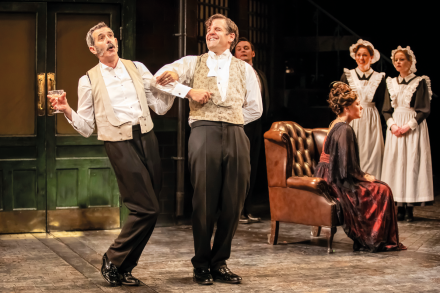
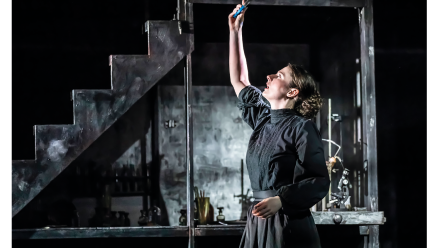
Set in 1948, The Human Body is about four heroic women fighting to create the NHS despite opposition from right-wing extremists led by the ‘snob’ and ‘warmonger’ Winston Churchill. One of these heroic women is a Labour councillor, another is a physician on a bike, the third works at Westminster for a socialist MP and the fourth is a hard-working mother married to a violent drunk. What’s odd about Lucy Kirkwood’s new play is that these four women co-exist within a single figure: Dr Elcock (Keeley Hawes).

The Black Crowes’ latest album shows they truly are the American Oasis

Pop

Leonard Cohen used to speak self-deprecatingly about his sole ‘chop’ – that mesmeric, circular minor-key guitar pattern deployed on so many of his earliest and greatest songs. It was a classic Cohen humblebrag, the implication being that, in popular music, practical competence at just one thing was acceptable – but any artist with multiple ‘chops’ was to be viewed with great suspicion. The slightly strange notion that anyone peacocking their technical mastery is covering up for some other inadequacy – usually a lack of heart or, worse, of ‘authenticity’ – has found widespread acceptance in the field of music criticism over the years.

It’s disturbing how proud some music-lovers are about detesting Bruckner

Classical

There was a pleasing simplicity about the Glasshouse’s Big Bruckner Weekend. Five concerts, five major works, just one composer. You went big or you went home, and in truth that’s usually the deal with old Anton; in the words of the The Bluffer’s Guide to Music: ‘Bruckner just didn’t write pleasant little recommendable pieces.’ But it was striking how much more manageable he felt in this context. With a single work per concert, even the most obstinate Brucknerphobe was confronted with no more than 80 minutes of music at a sitting. No distractions, then – with the added sweetener of hearing a state-of-the-nation showcase of four leading British orchestras before teatime on Sunday. It certainly made for a fascinating thought experiment.

What would Balanchine say? New York City Ballet, at Sadler’s Wells, reviewed

Dance

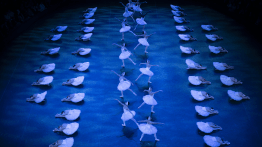
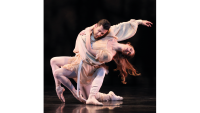
It’s been 16 years since New York City Ballet appeared in London, and its too-brief visit to Sadler’s Wells offered a welcome chance to encounter a previously unseen range of repertory and personnel. Perhaps the company can never be what it was when I first saw it as a youngster – its founder George Balanchine still in charge, the likes of Suzanne Farrell and Edward Villella in their prime – but one cannot live off misty memories and what has emerged now certainly has living, evolving force. Yet the evening’s highlight for me had to be its ‘heritage’ element – the exquisite performance by Megan Fairchild and Anthony Huxley of Balanchine’s mysteriously beautiful miniature Duo Concertant from 1972.

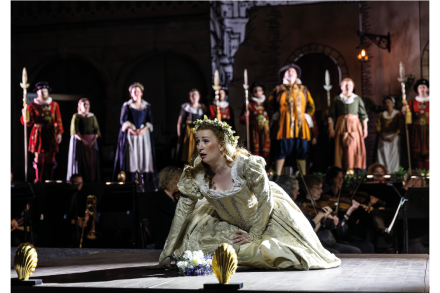
Homework, not theatre: WNO’s Cosi fan tutte reviewed

Opera

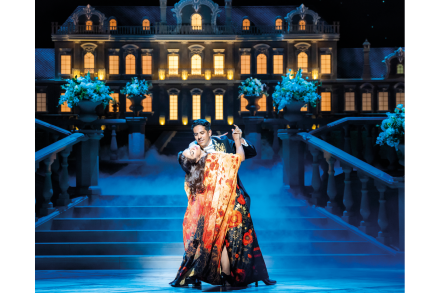
Mozart’s Cosi fan tutte hasn’t always been taken seriously. In fact for much of the 19th century it wasn’t even reckoned to be very good (Donald Tovey described its characters as ‘humanly speaking, rubbish’). For the modern director, there are several potential approaches. One – the hardest – is to try and evoke in the audience an approximation of a late-18th-century mindset. Another, scarcely easier, is to go all-in on psychological subtlety – the path taken by Tim Albery in the current Opera North production. A third is simply to play the whole thing as a saucy romp with a beautiful score, and that’s the choice that Max Hoehn has taken in his new staging for the Welsh National Opera.

The joy of meat-and-potatoes rock

Pop

‘Meat-and-potatoes rock’ is the pejorative term critics use when describing groups of white men with guitars who play loud, uncomplicated music. Why would anyone enjoy such stuff, when there are the ceviches of hyperpop, the flavoured foams of experimental hip-hop, the chargrilled seasonal vegetables of jazz? Don’t they know the world has moved on? Unfortunately, the world has a habit of not listening to the critical consensus. The highest new entry in last week’s album chart came from the Snuts, a meat-and-potatoes guitar band. This week’s No. 1 album is all but guaranteed to be by Liam Gallagher and John Squire, the Toby Carvery of meat-and-potatoes rock.

The Last Dinner Party are sadly rather good

The Listener

Grade: A- There is something decidedly fishy about this convocation of terribly well-bred young ladies who became a kind of sensation two years ago, before they had even recorded a single song – and now have their first album at number one, a sell-out tour in the US and a Brit award. All a bit too good to be true. Do they write their own stuff? Are they music industry nepo-kids, like everybody claimed Clairo was? For the first time, a glimmer of trouble afflicted them last week when a member of the five-piece band seemingly announced that people didn’t want to hear about the cost-of-living crisis. Cue outrage from the lefty music press. But don’t worry, they quickly released a statement ranting about living in a time of National Emergency, etc. Lots to dislike, then.

In Bermondsey I heard the future – at the Barbican I smelt death: new-music round-up

Classical

To Dalston to witness the worst gig of my life. The premise of the Random Gear Festival was simple and rather inspired: gather some arbitrary objects; get people to play them. In previous iterations, the offerings had included an ice skate, a wet baguette and an exercise bike. This time we had a trampoline, a microwave, a dead fish. I kept an open mind. I was reminded that years ago at Cafe Oto I had seen the then chief conductor of the BBC Scottish Symphony Orchestra Ilan Volkov rub two blocks of polystyrene together with the subtle virtuosity of Martha Argerich at a Steinway. I was reminded too of what the composer Hector Berlioz had declared in his 1844 Treatise on Orchestration: ‘Every sounding object employed by the composer is a musical instrument.

Serious composers write ad music too

Arts feature

Next month in London, they’re celebrating a composer you’ve probably never heard of, but whose work you’re sure to have heard. If you’ve watched much British TV or cinema in the past half century, you’ll already know his music, and better than you think. A quick test of age: do you remember ‘The Right One’ – the song that used to advertise Martini (‘any time, any place, anywhere’) in a haze of wah-wah pedal and 1970s hair? How about Dennis Potter’s sci-fi swansong Cold Lazarus, or more recently, the Bafta-winning Édith Piaf biopic La Vie en Rose? Still no? Then picture David Suchet as ITV’s Poirot: and come on, surely you can already hear that smoky sax curling across the titles?

Twisted, fuzzy, psychedelic pop: Slowdive, at the Liquid Room, reviewed

Pop

Rachel Goswell, one of Slowdive’s two singers, has cool hair. It is dyed half black and half white, and by the end of this show I had a feeling it might have been trying to tell us something. Slowdive broke up in 1995 having made three albums. They reunited in 2014 and have since made two more. Can we spot the join tonight between the two eras? I think we can. When they first arrived on an independent music scene still subordinate to the critical whims of Melody Maker and NME, Slowdive were not exactly beloved. Back in the early 1990s they were more or less the whipping boys and girls of what was known as ‘shoegaze’.

Precious nonsense: Pina Bausch’s Nelken, at Sadler’s Wells, reviewed

Dance

Fifteen years after her death and the shrine to Pina Bausch is still thick with incense and adulation. Whether one acknowledges her as a genius or not, there’s no doubt that her influence has been baneful – a cult that has spawned a thousand imitators, all following her absurdist idiom, all mesmerised by subversions of everyday logic, all ultimately trapped in a vacuous dead-end aesthetic in which anything goes, the weirder the better. ‘Nonsense, yes,’ cries the aesthetic Lady Saphir in Gilbert and Sullivan’s Patience. ‘But oh! What precious nonsense!

Gleefully silly: Scottish Opera’s Marx in London! reviewed

Opera

A bloke was working the queue outside the Theatre Royal, selling a newspaper called the Communist. ‘Marxist ideas, alive today!’ he shouted into the Glasgow drizzle. Was he part of the show; a Graham Vick-style touch of Total Theatre? In any case, he didn’t seem to be shifting many units. He might have been even more disappointed by the opera itself: Jonathan Dove’s Marx in London!, here receiving its first UK production, is a new opera buffa with Karl Marx as the protagonist of a gleefully silly period comedy.

He barely knows what he’s doing: Oliver Anthony, at the O2 Shepherd’s Bush Empire, reviewed

Pop

What does a chubby, bearded American feller wearing a plaid shirt and singing about his dog and truck have in common with a chic, sonically adventurous Irish art-pop star? Both, last year, were inadvertently parachuted into the battlefields of the culture wars. Oliver Anthony recorded a song called ‘Rich Men North of Richmond’ – Virginia, not Surrey – that was picked up by MAGA-types from an obscure country music YouTube channel, became a talking point in the Republican presidential primary debates and ended up entering the Billboard Hot 100 at No. 1 last August. While the music is appealing enough, Anthony is an appalling lyricist.

The genius of Yoko Ono

Exhibitions

The first I heard of Yoko Ono was when my sister’s boyfriend brought home a little book of hers called Grapefruit. It was 1970, four years after John Lennon took the bite out of an apple that led to the break-up of the Beatles. The apple had been on a plinth in Ono’s 1966 exhibition at London gallery Indica with a price tag of £200, for which the purchaser was promised the ‘excitement of watching the apple decay’. Lennon then offered Ono an imaginary five shillings to bang an imaginary nail into her conceptual piece, ‘Painting to Hammer a Nail’ (1961). ‘I met a guy who plays the same game I played,’ she reported.

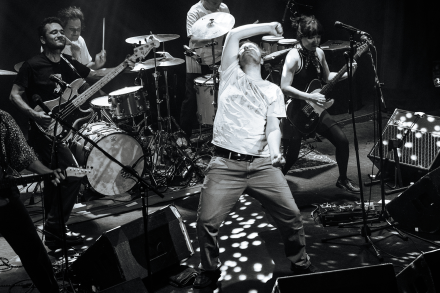
Why I was wrong to think Idles obvious and depressing

Pop

I never had Idles down as a great Bristol band, I confess. In fact, I never had them down as very much of anything at all. Through occasional and accidental contact, I associated the quintet with a cadre of unlovely groups – Sleaford Mods, Shame, Soft Play (formerly Slaves), Viagra Boys – that emerged in the 2010s and made shouty, angry music which wanted to Say Something Important about our times, most of it pretty obvious and deeply depressing. Idles had a song called ‘I’m Scum’. It was a hard pass from me – more or less sight unseen. Turns out I got it wrong; or perhaps Idles got it wrong. In any case, we’ve both changed our tune.

One of the great contemporary symphonies: The Hallé – Desert Music, at Bridgewater Hall, reviewed

Classical

Steve Reich describes his Music for Pieces of Wood (1973) as an attempt ‘to make music with the simplest possible instruments’. At the Bridgewater Hall five performers stood in a pool of light, each holding a pair of claves: plain sticks of wood. At first, unsurprisingly, it’s all about rhythm. Patterns weave and dissolve, building into a clattering digital tapestry of sound. You start to hear new timbres – even harmonies – and the mind locks on, allowing Reich to play tricks on the ear. Players drop out unnoticed, then re-enter in a flash of colour before you realise they’ve gone. By the end, you’re so thoroughly inside the music that even the final abrupt silence feels like high theatre. The Manchester audience gave an astonished gasp.

Lucid and lean: Metamorphoses, at the Theatre Royal Bath, reviewed

Dance

Literate, thoughtful and serious, Kim Brandstrup ranks as one of the most honest and honourable of contemporary choreographers. A proper grown-up, scorning bad-boy sensationalism or visual gimmickry, he compensates in solid consistent craft for whatever he may lack in striking originality, and the double bill he presented earlier this month as part of Deborah Warner’s season in the chapel-like Ustinov Studio behind Bath’s Theatre Royal is quietly and characteristically satisfying. Can we have a moratorium on the title of Metamorphoses? It’s become a tired cliché Its subject matter draws on that bottomless source, classical myth.

Cheekface are uplifting and witty but also very punchable: It’s Sorted reviewed

The Listener

Grade: B+ Cheekface are apt to divide opinion rather sharply. There are those who believe that the Los Angeles indie nerd-rock three-piece dissect late capitalism and the American psyche with an uplifting and insightful laconic wit. And then there are those who want to punch them repeatedly in the face, especially the singer Greg Katz – punch them and punch them until there is nothing left but broken teeth. I get that. I swing between both camps. In this respect, and several others, they are rather like Weezer, except a little less cute. In the end people decided that a punching was probably the right option for Weezer and they may, after time, decide the same for Cheekface.

An unmistakable hit: Till the Stars Come Down, at the Dorfman Theatre, reviewed

Theatre

Till the Stars Come Down is a raucous, high-energy melodrama set at a wedding in Hull. The writer, Beth Steel, focuses on three female characters and virtually ignores the men in her story which is just as well because her male characters all talk and act like planks. Her women are full of courage, craziness and fun. This is a hit. West End, easily Broadway, maybe. Pack your bags, girls We meet Sylvia, the anxious bride, who fears that her family won’t accept her Polish spouse, Marek. Her sister, Hazel, is facing a romantic crisis because her husband has stopped paying her attention in bed. And sexy Maggie harbours a secret that’s bound to spill out during the drunken festivities. The three shrieking women exchange ribald gags.

A stellar night at Celtic Connections

Pop

Sometimes I think, in the end, only the voice truly matters. Dress it however you wish, zhuzh it up with textural condiments: cool electronics, warm strings, harsh noise, romantic rhythm, ambient atmospherics. It’s all decoration. The human voice is what we respond to most fervently and instinctively in popular music. This – far from infallible – notion occurred to me while attending a concert celebrating 50 years of the Scottish Chamber Orchestra as part of Celtic Connections, Glasgow’s annual (and always inventive) festival of roots music. Led by American conductor Eric Jacobsen, the SCO opened with a lively rendition of Mendelssohn’s Hebrides Overture before providing supple, sympathetic support for four voices. Each was unique and evocative. One was truly transportive.

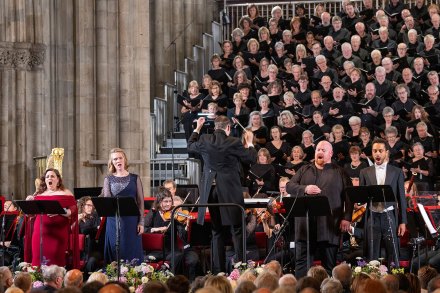
Top oratorio-mongering: Elijah, at the Barbican, reviewed

Classical

As a young music critic, Bernard Shaw poked fun at anyone who thought Mendelssohn was a genius. Shaw conceded that Mendelssohn was capable of touching tenderness and refinement and sometimes ‘nobility and pure fire’, but his music was marred by kid-glove gentility, conventional sentimentality and – worst of all – ‘despicable oratorio-mongering’. Shaw’s pet hate was St Paul, with its ‘Sunday-school sentimentalities and its music-school ornamentalities’. He was only slightly less catty about Mendelssohn’s other oratorio, Elijah. Although he acknowledged its ‘exquisite prettiness’, he concluded that its composer was ‘a wonder whilst he is flying; but when his wings fail him, he walks like a parrot’.

Why do choreographers keep adapting films they can’t possibly improve upon?

Dance

Ballet has always suffered from a shortage of stories that can communicate without the medium of the spoken word or a lengthy synopsis in the programme. Recourse has often been made to familiar fairy tale and legend, but recently popular films and novels have also become a favoured source – Matthew Bourne, for instance, has fed off both The Red Shoes and Edward Scissorhands, while Christopher Wheeldon turned to Like Water for Chocolate and Cathy Marston to Lady Chatterley’s Lover. The question that seldom seems to be asked in such cases is a basic one: can dance bring anything to the table, and can its language enlarge the source or create a new dimension? If the answer is pretty much no, then why bother?

Without Pitchfork, bands like the Clientele would never have attracted any attention

Pop

The whole world might have been different had Alasdair MacLean, singer and guitarist of the delicate, pastoral, slightly psychedelic band the Clientele, had his way. In 2006 he told music website Pitchfork about the time he was working for a publisher and strongly recommended they turn down a children’s fantasy novel that had been submitted. They overruled him and published Harry Potter and the Philosopher’s Stone anyway. We all know what happened to J.K. Rowling. MacLean ended up leaving the world of books, and in due course the Clientele got a music deal that enabled them to turn full time, though I have no idea whether they still survive solely on the tiny margins a working indie band can carve out.

Fresh as an April shower: Opera North’s Albert Herring reviewed

Opera

Opera North has launched its spring season with Giles Havergal’s 2013 production of Benjamin Britten’s Albert Herring, performed (as conceived) in the Howard Assembly Room – the company’s studio space next door to the Grand Theatre. The economics of opera are a dark and dismal science, but one of the few constants is that ticket sales are never the whole story. So if ON has revived a show that can only accommodate an audience of around 300, and which can’t tour, we should assume that’s all priced in. The problem here is that Havergal presents the opera in the round, a practice rarely seen on the unsubsidised stage but beloved by directors who don’t have to worry too much about the paying public.

Giselle is lovingly revived at the London Coliseum

Dance

Two archetypal ballet heroines have been facing each other across WC2: at the Coliseum, Giselle the blameless virgin, wronged in the first act, disembodied in the second; at Covent Garden, Manon the seductive, manipulative courtesan who can’t choose between love and money. Both in different ways are victims of a cruel world, and both must die. The men responsible for their downfall – of course – survive. Mary Skeaping’s staging of Giselle for the English National Ballet, first seen in 1971, divides opinion among the cognoscenti.