Culture

Culture

The good, the bad and the ugly in books, exhibitions, cinema, TV, dance, music, podcasts and theatre.

Delightful: Phoenix, at All Points East, reviewed

Pop

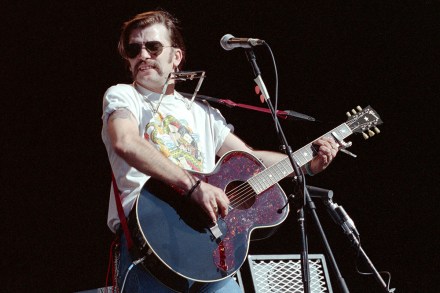
A few years ago, my nephew informed me that he and his friend were planning to come up to London for the weekend for the Wireless Festival. Did they need somewhere to stay? He looked at me like I was a mad old man. No, of course not. They were going to camp. In Finsbury Park. Because when you go to festivals, you camp. Thankfully, he didn’t turn up on the Victoria Line with his tent and then wonder why no one else was similarly equipped. Phoenix have the air of being as much a lifestyle choice as a pop group Inner-city festivals such as Wireless and All Points East are almost always a series of single-day events. APE is a ruthlessly programmed festival. Rather than try to be all things to all people, each day is targeted at some section of the festival-going population.

The unstoppable rise of stage amplification

Arts feature

Recent acquisition of some insanely expensive hearing aids aimed at helping me out in cacophonous restaurants has set me thinking about the extent that modern life allows us to filter our intake of noise. This is big business. As sirens wail and Marvel blockbusters and rock concerts crash through legal decibel levels, controlling sound levels has become an increasingly sophisticated operation, abetted by everything from silicone pastilles and the volume-control knob to the wireless earbud.

Aggressively jaded: Edinburgh’s Marriage of Figaro reviewed 

Opera

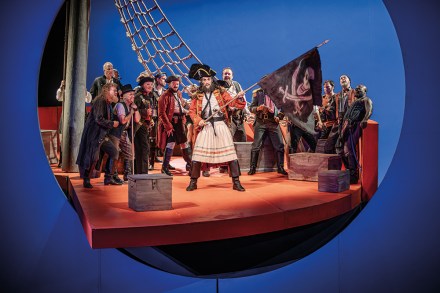
‘Boo!’ came a voice from the stalls. ‘Boo. Outrage!’ It was hard not to feel a pang of admiration. British opera audiences don’t tend to boo; we’re either too polite or too unengaged. But there we were in Act Three of Kirill Serebrennikov’s production of The Marriage of Figaro – just after the scene where Susanna, the Count and the Countess enjoy a three-in-a-bed romp while singing the trio ‘Soave sia il vento’ – and at least one person felt passionate enough to raise his voice. It was hard not to feel a pang of admiration. British opera audiences don’t tend to boo Obviously, there’s no such trio in The Marriage of Figaro.

The Ava Gardner of the ketamine age: Lana Del Rey, at Leeds Festival, reviewed

Pop

As the American superstar starts singing another slow, sad, rather beautiful song, my mind begins to drift. I’m thinking that our appreciation of music is so much about the who, the when and perhaps most crucially the where; the significance of place is an under-examined element in our relationship with what we’re hearing at any given moment. I’m also thinking that a massive over-reliance on concert revenue to sustain artists’ livelihoods means that nowadays bigger is almost always seen as better – even when ‘bigger’ comes at the obvious detriment of the music. And I’m thinking that an act’s popularity – and indeed their excellence – isn’t necessarily proportionate to their ability to successfully perform at the top end of the bill at a major music festival.

Artistically embarrassing but a hit: Shifters, at Duke of York’s Theatre, reviewed

Theatre

Shifters has transferred to the West End from the Bush Theatre. It opens at a granny’s funeral attended by the grief-stricken Dre, aged 32. Dre was raised by his ‘Nana’ as he calls her – rhyming it with ‘spanner’ – and he weeps when he realises that his mother has failed to show up. A beautiful young woman arrives unexpectedly. This is Dre’s teenage sweetheart and they exchange gossip over a glass of whisky while rummaging through Nana’s belongings. The press night crowd adored these flawless yuppies. An artistic embarrassment but a sure-fire hit The lovebirds met at school where they studied philosophy and outshone all their rivals in the class.

Why are these dead-eyed K-pop groups represented as some kind of ideal?

Television

On Saturday, Made in Korea: The K-pop Experience began by hailing K-pop as ‘the multi-billion-pound music that’s taken the world by storm’. Unusually, this wasn’t TV hype. Last year, nine of the world’s ten bestselling albums were by Korean acts (the sole westerner being Taylor Swift). Even odder for people over 40, according to such reliable sources as Richard Osman on The Rest is Entertainment podcast and my children, South Korea has replaced America as the cultural centre of the Earth for many British teenagers. Korean youngsters are trained for pop stardom on an industrial scale But this global domination hasn’t come about by chance. Korean youngsters are trained for pop stardom on an industrial scale.

Britain’s youngest summer opera festival is seriously impressive

Opera

Waterperry is one of the UK’s youngest summer opera festivals: it started up in 2018, at the northern limit of the species’ natural habitat. You leave the motorway at Oxford services and double back through the fields to the hamlet of Waterperry. Drive past the ‘Cats Crossing’ sign and the life-sized effigy of Rowan Atkinson (honestly) and you’re there. There’s a big house (slightly run to seed), a farm shop, a garden centre and a nursery containing the national saxifrage collection, which is not something you see every day. The opera festival squeezes in between them. Let’s do the show right here! Well, why not? The Barber was literally staged on the lawn. And if it rains? ‘We hope it won’t. Would you like a poncho?

Triumphant: Big Thief, at Green Man, reviewed

Pop

One of the first things I learned after seeing Big Thief triumph at Green Man is that some long-time fans are worried about them. There’s an extra percussionist; the bassist has been replaced; and the singer is now front and centre. Have they just become a conventional rock band, people mutter. Have they lost the intimacy they once had? I’d never seen Big Thief before, which is something of an error on my part. Not least because I can’t answer those questions: I have nothing to compare Saturday night’s performance with. I can only say that without caring about what they were in the past, they are extraordinary in the present: both grand and welcoming.

Too bombastic to be country music: Post Malone’s F-1 Trillion reviewed

The Listener

Grade: B Country music has become the acceptable route through which American pop stars resuscitate their floundering careers: sales are down, kid – shove a fiddle in the next one. And a pedal steel. And git some of those country dudes to collaborate. Especially Dolly. But also Hank Williams Jnr, if you can. Makes them look hip, makes you look real down home. So it is with the agreeably slobbering rapper Post Malone, born in NYC, raised in LA but here sounding like he jes swung in from some roadhouse barstool outta Shreveport, with bourbon and country blood trickling down over his stupid tattoos. His career has hit a hiatus of late and so this is an attempted revival.

Fun, frenetic and only a little gauche: Declan McKenna, at the Edinburgh Playhouse, reviewed

Pop

Towards the end of Declan McKenna’s snappy, enjoyable 90-minute set at the Edinburgh International Festival, something quite powerful occurs. The English singer-songwriter returns alone to the stage for the encore and proceeds to play a version of ABBA’s ‘Slipping Through My Fingers’ with only his electric guitar as accompaniment. It becomes a strange, emotionally layered moment. A young musician singing from the perspective of a parent ruefully reflecting on their child growing up, away and beyond reach; a predominantly teenage crowd singing those words back to him; and the older members of the audience, many attending with their own kids, staring blurrily into the middle distance.

In defence of Gilbert & Sullivan’s The Grand Duke

Opera

Artistic partnerships are elusive things. The best – where two creative personalities somehow inspire or goad each other to do better than their individual best – can seem so natural that they’re almost easier to identify by their absence. No one’s queuing up to revive Richard Rodgers’s Rex (lyrics by Sheldon Harnick). Pretending to rate Band on the Run above Revolver is a fun way to wind up boomers, but c’mon – honestly? With Gilbert and Sullivan, meanwhile, recordings have given us the chance to rediscover Grundy and Sullivan’s Haddon Hall and Gilbert and Cellier’s The Mountebanks: turkeys both.

Fantastic – and genuinely indie: Personal Trainer, at the Shacklewell Arms, reviewed

Pop

Remember when we all knew what indie meant? Indie was what John Peel played. It was music that was recorded, manufactured and distributed independent of the major labels. In practice, that tended to be music played by young white people, usually more in hope than expectation of either competence or success. As the years passed it came to be applied particularly to a kind of whey-faced, solipsistic music, played on guitars by people who were either too clever by half or too wimpy by half. By dusk, what had not long before looked like the seventh circle of hell had transformed These days, though, indie means whatever you want it to mean. Entirely mainstream soft pop acts with massive worldwide hits on major labels – such as Glass Animals – are classed as indie.

Welcome back to London City Ballet – but can they please change their name?

Dance

There’s sound thinking behind this summer’s resuscitation of London City Ballet – a medium-scale touring company popular in the 1980s that went bust in 1996. Given that larger institutions operating outside London such as Northern Ballet and Birmingham Royal Ballet are hamstrung by ever-tightening budgets that leave them increasingly risk-averse, there’s a crying need for something lighter on its feet and more adventurous in its repertory. This is what the new-form LCB under the direction of Christopher Marney sets out to provide, presenting new work alongside forays into the back catalogue.

Children have the Proms. Grown-ups head to Salzburg. Snob summer

More from Arts

Salzburg Festival doesn’t mess about. The offerings this year include an adaptation of Thomas Mann’s Magic Mountain in Lithuanian, a Soviet-era operatic treatment of Dostoevsky’s The Idiot, and Igor Levit tackling one of the Himalayan peaks of the piano rep. Kiddies, meanwhile, could enjoy the children’s opera Die Kluge (brilliantly done), a Nazi-era allegory on the rise of Hitler by Carl Orff, a composer they love here but whose politics are shall we say, um, complicated. (Pleasingly, I’m not sure the festival understands the concept of cancellation.) People always think Salzburg is pretty and fun. It’s not. It’s dark and primal, with a festival that is far more uncompromising and exhilarating than a global-elite bun-fight in provincial Austria has any right to be.

Forget the Proms and Edinburgh – the Three Choirs Festival is where it’s at

Classical

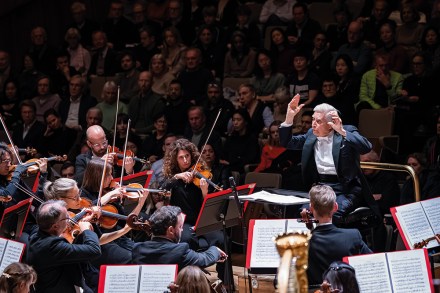
The Proms have started but there is a world elsewhere, and in Worcester Cathedral the 296th Three Choirs Festival set sail with a concert that couldn’t have happened anywhere else. A few years back I caused grave offence when I described the Three Choirs as a ‘home of lost causes’; as if, coming from The Spectator, that could ever be anything but a compliment. In truth, there’s still no classical music festival that provides such a sense of being plugged into a vital and ancient tradition – of being so close, as Elgar put it to ‘the living centre of music in Great Britain’.

Jack White’s new album will be of close interest to Led Zeppelin’s legal team

Pop

The ploy of releasing an album without any advance warning comes into play when an artist feels they are being paid either too much or too little attention. The stealth arrival of Jack White’s new solo album falls firmly into the second category. Putting out music in this way ensures additional media coverage and a certain level of intrigue I didn’t love White’s old band, the White Stripes, back when they were a garage-rock/blues revival phenomenon in the early 2000s. Since their demise in 2011, the world seems to be coming around to this way of thinking. Their most successful albums, Elephant and White Blood Cells, hold little cultural currency these days.

The most exhilarating ‘authentic’ Mozart I’ve ever heard

The Listener

Grade: A+ Yet another double bill of Mozart’s Piano Concertos 20 and 23! There’s an online database of 185 recordings of the first of these, the brooding K466 in D minor, and the classically perfect K488 in A major isn’t far behind. Can there really be anything new to say about either of them? The answer is yes, and in virtually every bar. Olga Pashchenko, a Russian-born pianist based in the Netherlands, here directs the top-flight period ensemble Il Gardellino in her second album of Mozart concertos. She’s playing a fortepiano, but don’t let that put you off: it’s a sweet-toned instrument whose soft action helps Pashchenko deliver cheeky ornaments at lightning speed. And cheeky is definitely the word.

Charismatic, powerful and raw: Patti Smith, at Somerset House, reviewed

Pop

There are certain long-established rules for describing Patti Smith. Google her name and the words ‘shaman’ and ‘priestess’ and you’ll see what I mean. For the best part of 50 years she’s been treated as though she’s a mystical object, a human convergence of ley lines, as much as a rock singer. In the courtyard at Somerset House, she didn’t exactly discourage the clichés. There was a long lecture on the power of the full ‘buck’ moon, which was hidden by clouds but still prompted the people in front of me to pull out their phones to check astronomy apps. There was a lengthy hymn to William Blake that concluded: ‘And then the children, the chimney sweeps, remembered him.

Shapeless and facile: The Hot Wing King, at the Dorfman Theatre, reviewed

Theatre

Our subsidised theatres often import shows from the US without asking whether our theatrical tastes align with America’s. The latest arrival, The Hot Wing King, is a Pulitzer Prize-winning play about unhealthy eating. The production opens in a luxury house in Memphis, occupied, rather strangely, by four gay men who dress gracelessly in cheap, flashy designer gear. They behave like overgrown babies and spend their time leaping about the place, bickering and bantering, singing songs, performing dance moves and exchanging cuddles. This cameo repeats the caricature of the foolish African crook. Why is the Globe perpetuating racial bigotry? One of the four man-babies wears a business suit and calls himself ‘a manager’ but the others appear to be unemployable. Yet they’re affluent.

Boring, corporate, imitative, inane and gutless: Kasabian’s Happenings reviewed

The Listener

Grade: D+ Happenings were interesting, or irritating, events staged from the late 1950s through to the early 1970s by performers who eschewed the corporate and bourgeois restraints placed on artists and veered into surrealism, parody, violence and, of course, situationism. Think Allan Kaprow and John Cage. In rock music, meanwhile, think the Fugs and the Pink Fairies. Happenings by our country’s most profitable faux-rawk outfit, Leicester’s Kasabian, is by contrast a celebration of everything happenings were most opposed to. It is boring, corporate, imitative, inane and gutless. I would almost rather listen to an album by Dua Lipa. It is 20 years since Kasabian’s first album and they have got no more interesting or challenging, but the cash flows in regardless.

Hard to love – but Shirley Manson is terrific: Garbage, at Usher Hall, reviewed

Pop

There’s nothing quite like the drama of a prodigal’s return. ‘I’ve been singing in this venue since I was ten years old,’ announces Shirley Manson, staring down nearly half a century of personal history at Edinburgh’s ornate Usher Hall. The fact that Garbage’s lead singer made the United States her primary residence many years ago lends this homecoming concert added potency. There are shout-outs to her dad, a ‘Happy Birthday’ serenade for her sister and what looks like a tear or two at the start of the encore. A ‘badass’ attitude is so sleekly applied it seems like a Che Guevara T-shirt in the racks at M&S For all the sentiment, it was obvious that Manson was right to leave not just Edinburgh, but the UK.

A major operatic rediscovery: Birmingham Opera Company’s New Year reviewed

Opera

This prophecy Merlin shall make, for I live before his time. One of the most thrilling aspects of the Tippett revival has been the discovery that his late masterpieces seem to have been fitted with a four-decade time-fuse. Works that prompted bafflement in the 1970s and 1980s, and then sat there for years looking like duds, are suddenly acquiring their targets. A quarter of a century after Tippett’s death, they’re blinking into life, locking on, and detonating in huge, psychedelic sunbursts of precision-targeted beauty and truth.

Complain all you like but Glastonbury has delivered the goods again

Pop

There’s yet to be a Glastonbury line-up that hasn’t provoked a chorus of naysaying. Refrains like ‘looks rubbish. I wouldn’t go’ and ‘not like it used to be’ are de rigueur. Dismissing the headliners as ‘crap this year’ rivals football as the nation’s favourite sport. Yet there’s something to be said for trusting the Glastonbury bookers: check out, say, the lower-tier bands on the 1994 poster and see how many greats they discovered before they were famous – Radiohead, Pulp, Oasis... Nowhere else in the world could hand written signs for toilets induce a Proustian yearning to return Glastonbury’s prestige and legendary ‘vibe’ are now such that the festival is bigger than any of the artists playing there.

Camila Cabello’s new album presents an existential threat to songwriting

Pop

It is always interesting to observe the ways in which pop stars try to negotiate first growing up, and then growing old. From teen scream to respected mainstay to elder states(wo)man is not an easy path to walk without a few stumbles. At certain times, it requires making some blatantly strategic moves. Cabello wants so badly to grow up that she evolves from a past incarnation practically into thin air Few readers will remember that the first solo single George Michael released after dissolving Wham! was called ‘I Want Your Sex’, a forgettable bump-and-grind with a steamy video designed purely to shift audience expectations away from all things teenybopper and towards a more adult-orientated market. The song was banned by the BBC during daylight hours.

‘Zings off the stage’: My Fair Lady, at Leeds Playhouse, reviewed

Opera

If you want to kill a musical, make it into a movie. Cats, Phantom of the Opera, South Pacific… cinema history is littered with dud remakes of world-conquering theatrical sensations. But it’s almost worse when a film musical succeeds on its own terms, and – like a mask eating into the face – proceeds to write over the original show in the collective memory. I once saw a newspaper describe a West End revival of The Sound of Music as a ‘stage version of the classic movie’, which is a bit like describing Pride and Prejudice as a novelisation of the hit BBC drama. Her coloratura is like sunlight on water.

Teenage Swifties restored my faith in strangers

Pop

Taylor Swift is the last of the monocultural pop icons. Put it this way: I bet you’ve heard of her. Your parents have heard of her. Your children have heard of her – and so have your grandchildren. This used to be commonplace – but not now. She transcends pop music. This might be why so much of the discussion of the Swift phenomenon has been about the facts and figures: hers is the first tour to gross more than $1 billion, while global leaders have begged for her to visit their countries due to the financial boost she brings. Not to mention her tendency to pump out new editions of her albums every 20 minutes to keep her top of the charts as loyal fans loyally part with their cash.

The genius of Frederick Ashton

Dance

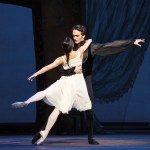
To defend my case that Frederick Ashton ought to be acknowledged as one of the major artistic geniuses of the last century, I would adduce three crucial pieces of evidence, garnered from the Royal Ballet’s ‘Ashton Celebrated’ festival at Covent Garden this month. Oberon and Titania’s love is an open contest between two unyielding wills: it can’t be danced gently The first is ‘Les Rendezvous’, dating from 1933 and one of his earliest enduring creations. Set in a Victorian park in which some harmless young people meet to flirt and circulate, it provides an object lesson in how to make something supremely but unaffectedly stylish out of a wafer-thin premise.

‘Left me stunningly bored’: Brat, by Charli XCX, reviewed

The Listener

Grade: C I don’t doubt the ingenuity. The mastery of a technology which now exists as a substitute for melody, heart, soul, rhythm and meaning. I get the manifesto, too – a pop music that in a certain shallow sense reflects the modern predilection for meta-fiction: novels which mash up all the genres, so that your detective story suddenly becomes magic realism and a little later, sci-fi. I understand, too, that this is probably the closest our Gen Zers have to a music which they can call their own, given that the technology required to produce it would cause an embolism in a Gen X listener or a Boomer. So I get all that. The trouble is, what if, when all is said and done, it’s basically rubbish?